
What is a budget deficit?
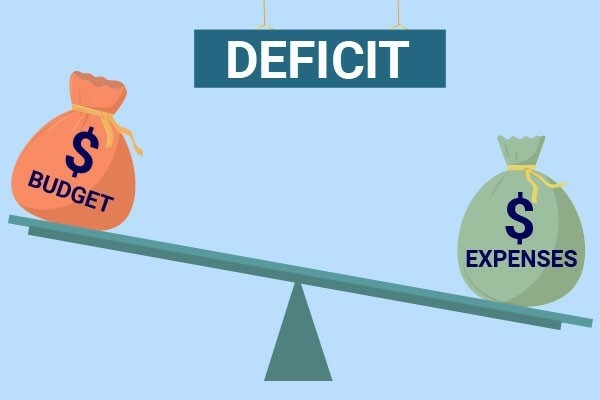
A budget deficit is one of the most discussed concepts in public finance, yet it’s often misunderstood. At its core, a budget deficit occurs when a government spends more money than it collects in revenue over a specific period, usually a fiscal year. While the idea sounds simple, the causes, implications, and debates surrounding budget deficits are complex and deeply tied to economic policy, growth, and stability.
Understanding the Basics
Governments generate revenue primarily through taxes—such as income tax, corporate tax, and sales tax—as well as through other sources like fees, tariffs, and profits from state-owned enterprises. At the same time, they spend money on public services like healthcare, education, infrastructure, defense, and social welfare programs.
When government expenditures exceed revenues, the result is a budget deficit. Conversely, if revenues exceed spending, the government runs a budget surplus. If they are equal, the budget is said to be balanced.
For example, if a government collects $500 billion in revenue but spends $600 billion, it faces a budget deficit of $100 billion.
Why Do Budget Deficits Occur?
Budget deficits can arise for several reasons, often reflecting a combination of economic conditions and policy decisions.
1. Economic Downturns
During recessions or economic slowdowns, tax revenues typically decline because individuals earn less income and businesses generate lower profits. At the same time, government spending often increases due to higher demand for unemployment benefits and social assistance programs. This combination naturally leads to a deficit.
2. Expansionary Fiscal Policy
Governments sometimes deliberately run deficits to stimulate economic growth. By increasing spending or cutting taxes, they aim to boost demand, encourage investment, and reduce unemployment. This approach is often associated with Keynesian economics, which argues that deficits can help stabilize economies during downturns.
3. Structural Factors
Some deficits are not tied to short-term economic cycles but instead reflect long-term imbalances. For instance, an aging population may increase pension and healthcare costs, while tax systems may fail to generate sufficient revenue to cover these obligations.
4. Political Decisions
Budget deficits can also result from policy choices, such as tax cuts without corresponding reductions in spending, or increased spending on large-scale projects, military operations, or social programs.
How Are Budget Deficits Financed?
When a government runs a deficit, it must borrow money to cover the gap. This is typically done by issuing government bonds, which are purchased by investors, financial institutions, or even foreign governments.
Over time, repeated deficits contribute to the national debt, which is the total amount of money a government owes. The larger the debt, the more the government may need to spend on interest payments, which can further strain future budgets.
Is a Budget Deficit Good or Bad?
The answer depends on context. Budget deficits are neither inherently good nor bad—they can be beneficial or harmful depending on how and why they occur.
When Deficits Can Be Beneficial
-
Economic Stimulus: During recessions, deficits can help revive economic activity by increasing demand.
-
Investment in Growth: Borrowing to fund infrastructure, education, or technology can boost long-term productivity and economic growth.
-
Crisis Response: In times of war, natural disasters, or pandemics, deficits allow governments to respond quickly and effectively.
When Deficits Can Be Problematic
-
Rising Debt Levels: Persistent deficits can lead to unsustainable debt, making it harder for governments to repay what they owe.
-
Interest Burden: Higher debt means higher interest payments, which can crowd out spending on essential services.
-
Inflation Risks: In some cases, excessive borrowing—especially if financed by money creation—can lead to inflation.
-
Reduced Investor Confidence: If investors fear a government cannot manage its debt, borrowing costs may rise, worsening the situation.
Types of Budget Deficits
Economists often distinguish between different types of deficits to better understand their causes.
1. Cyclical Deficit
This type of deficit occurs due to economic downturns. It is temporary and tends to shrink as the economy recovers.
2. Structural Deficit
A structural deficit exists even when the economy is performing well. It indicates a fundamental mismatch between revenues and expenditures.
3. Primary Deficit
The primary deficit excludes interest payments on existing debt. It helps assess whether current policies (excluding past borrowing costs) are sustainable.
Budget Deficit vs. National Debt
While related, a budget deficit and national debt are not the same thing.
-
A budget deficit is a flow variable—it measures the shortfall in a single year.
-
National debt is a stock variable—it represents the accumulation of past deficits minus any surpluses.
In simple terms, repeated deficits add to the national debt, much like ongoing credit card overspending increases total outstanding balance.
Real-World Examples
Many countries run budget deficits regularly. For instance, the United States has experienced deficits in most years since the early 2000s, especially during the 2008 financial crisis and the COVID-19 pandemic. Similarly, many European and developing countries use deficit spending to support growth and public services.
However, the size and sustainability of deficits vary widely. Advanced economies often have greater flexibility to borrow because investors view them as stable and reliable, while developing countries may face higher borrowing costs and greater risks.
Managing Budget Deficits
Governments have several tools to manage deficits:
-
Reducing Spending: Cutting back on public expenditures, though this can be politically difficult and may slow economic growth.
-
Increasing Revenue: Raising taxes or improving tax collection efficiency.
-
Promoting Economic Growth: A stronger economy generates more tax revenue without increasing tax rates.
-
Reforming Programs: Adjusting social welfare systems, pensions, or subsidies to ensure long-term sustainability.
Balancing these approaches requires careful planning, as overly aggressive deficit reduction can harm economic recovery, while ignoring deficits can lead to long-term financial instability.
The Ongoing Debate
Economists and policymakers often disagree about how much deficit is acceptable. Some argue that governments should aim for balanced budgets over the long term to ensure fiscal discipline. Others believe that deficits are a necessary tool for managing economic cycles and investing in the future.
Modern debates also consider factors like interest rates. When borrowing costs are low, governments may find it easier to sustain higher deficits. However, if interest rates rise, debt servicing becomes more expensive, increasing the risks associated with large deficits.
Conclusion
A budget deficit is a fundamental concept in economics that reflects the gap between government spending and revenue. While it can signal financial imbalance, it is also a powerful policy tool used to stabilize economies, respond to crises, and invest in growth.
Understanding budget deficits requires looking beyond the numbers to consider the broader economic context, policy goals, and long-term implications. When managed responsibly, deficits can support economic development. But if left unchecked, they can lead to rising debt and financial challenges that affect future generations.
Ultimately, the key lies in balance—using deficits wisely while maintaining a sustainable fiscal path over time.
- Arts
- Business
- Computers
- Jogos
- Health
- Início
- Kids and Teens
- Money
- News
- Personal Development
- Recreation
- Regional
- Reference
- Science
- Shopping
- Society
- Sports
- Бизнес
- Деньги
- Дом
- Досуг
- Здоровье
- Игры
- Искусство
- Источники информации
- Компьютеры
- Личное развитие
- Наука
- Новости и СМИ
- Общество
- Покупки
- Спорт
- Страны и регионы
- World

 English
 Russian
 French
 Spanish
 Deutsch
 Turkish
 Dutch
Dutch
 Italiano
 Arabic
 Romaian
 Portuguese (Brazil)
 Greek
Greek