
What Is Free Trade?
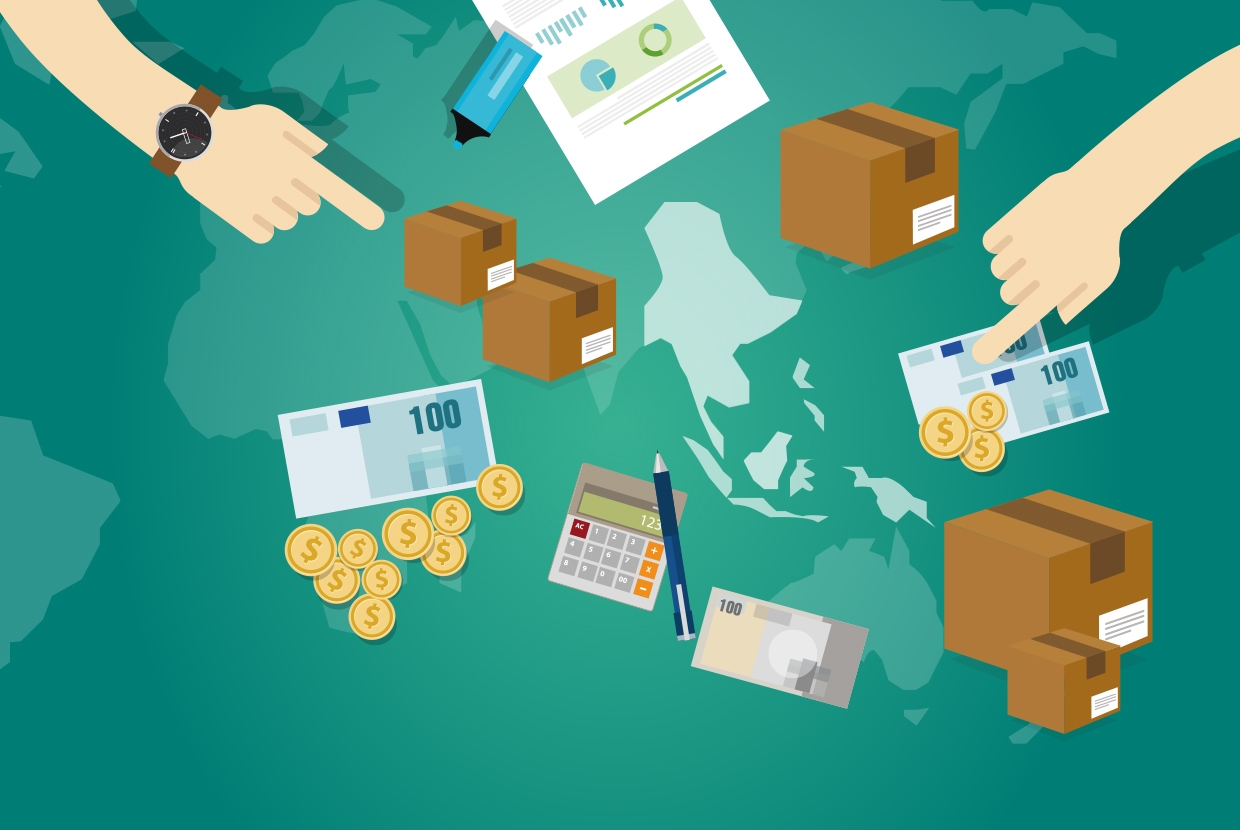
What Is Free Trade?
Free trade is an economic concept and policy approach that allows goods and services to move across international borders with minimal government interference. In a free trade system, countries reduce or eliminate tariffs (taxes on imports), quotas (limits on quantities), and other barriers such as complex regulations or subsidies that distort competition. The goal is simple: let markets, rather than governments, determine what is produced, where it is produced, and how it is exchanged globally.
Although the idea sounds straightforward, free trade sits at the center of some of the most important debates in economics, politics, and global development. To understand it fully, it helps to explore its origins, how it works, its benefits, and its criticisms.
The Origins of Free Trade
The intellectual roots of free trade can be traced back to classical economists like Adam Smith and David Ricardo. In his 1776 book The Wealth of Nations, Smith argued that economies function best when individuals and businesses are free to pursue their own interests in open markets. He criticized protectionism—the use of tariffs and restrictions to shield domestic industries—suggesting that it often benefits a few at the expense of many.
Ricardo expanded on this idea with the theory of comparative advantage, which explains why countries should specialize in producing goods they can make relatively more efficiently and trade for the rest. Even if one country is better at producing everything, trade can still benefit both sides because of differences in relative efficiency.
How Free Trade Works
At its core, free trade is about reducing barriers. These barriers can include:
-
Tariffs: Taxes on imported goods that make them more expensive.
-
Quotas: Limits on how much of a product can be imported.
-
Subsidies: Financial support for domestic industries that gives them an advantage.
-
Regulatory barriers: Rules that make it harder for foreign products to enter a market.
In a free trade system, governments either remove these barriers or keep them very low. This allows businesses to import and export goods based on market conditions such as cost, quality, and demand.
Modern free trade is often governed by international agreements. Organizations like the World Trade Organization help establish rules for global trade and resolve disputes between countries. Additionally, regional agreements such as the European Union or trade deals like NAFTA (now USMCA) aim to promote freer trade among member countries.
The Benefits of Free Trade
Supporters of free trade argue that it offers several important advantages:
1. Greater Efficiency
When countries specialize according to comparative advantage, resources are used more efficiently. This leads to higher overall production and economic growth.
2. Lower Prices for Consumers
Free trade increases competition and allows countries to import goods from places where they are cheaper to produce. As a result, consumers benefit from lower prices and a wider variety of products.
3. Economic Growth
Access to larger markets enables businesses to expand, innovate, and achieve economies of scale. This can lead to increased investment, job creation, and higher incomes.
4. Innovation and Technology Transfer
Global competition pushes firms to innovate. Trade also facilitates the spread of new technologies and ideas across borders.
5. Improved International Relations
Trade can foster cooperation between countries. Economic interdependence often reduces the likelihood of conflict, as nations become more invested in each other’s stability and prosperity.
The Criticisms of Free Trade
Despite its advantages, free trade is not without controversy. Critics highlight several downsides:
1. Job Losses in Certain Industries
While free trade can create jobs overall, it can also lead to job losses in industries that cannot compete with cheaper imports. Workers in these sectors may struggle to find new employment without retraining.
2. Income Inequality
The benefits of free trade are not always evenly distributed. Skilled workers and large corporations often gain more, while low-skilled workers may face wage pressure or unemployment.
3. Environmental Concerns
Some argue that free trade encourages companies to move production to countries with weaker environmental regulations, leading to pollution and resource depletion.
4. Dependence on Global Markets
Countries that rely heavily on imports may become vulnerable to global supply disruptions, as seen during crises like pandemics or geopolitical conflicts.
5. Loss of Domestic Industries
Developing countries, in particular, may struggle to protect emerging industries from established foreign competitors, potentially limiting long-term growth.
Free Trade vs. Protectionism
Free trade exists on a spectrum, with protectionism at the opposite end. Protectionist policies aim to shield domestic industries through tariffs, quotas, and subsidies. Governments often use these measures to:
-
Protect jobs
-
Support strategic industries
-
Promote national security
However, protectionism can lead to higher prices, reduced competition, and trade wars—where countries retaliate with their own restrictions.
In practice, most countries adopt a mixed approach, combining elements of both free trade and protectionism depending on their economic goals and political priorities.
Free Trade in the Modern World
Today, free trade plays a central role in globalization—the increasing interconnectedness of economies worldwide. Advances in technology, transportation, and communication have made it easier than ever to trade across borders.
Global supply chains now span multiple countries, with different stages of production taking place where they are most efficient. For example, a single smartphone might be designed in one country, assembled in another, and sold worldwide.
However, recent years have seen a shift in attitudes toward free trade. Rising concerns about inequality, national security, and economic resilience have led some countries to reconsider their trade policies. Trade tensions between major economies and the push for “reshoring” industries highlight the ongoing debate.
Is Free Trade Always the Best Option?
There is no simple answer. Free trade can generate significant economic benefits, but it also creates challenges that need to be managed carefully.
Economists generally agree that free trade increases overall wealth, but they also emphasize the importance of policies that help those who are negatively affected. These may include:
-
Job retraining programs
-
Social safety nets
-
Investment in education and skills
By addressing these issues, governments can make free trade more inclusive and sustainable.
Conclusion
Free trade is a powerful economic principle that promotes the open exchange of goods and services across borders. Rooted in the ideas of economists like Adam Smith and David Ricardo, it emphasizes efficiency, specialization, and competition.
While it offers clear benefits—such as lower prices, economic growth, and innovation—it also presents challenges, including job displacement and inequality. As a result, the debate over free trade continues to shape economic policy around the world.
Ultimately, free trade is not just about economics; it is about how societies balance openness with protection, efficiency with fairness, and global integration with national priorities.
- Arts
- Business
- Computers
- Jogos
- Health
- Início
- Kids and Teens
- Money
- News
- Personal Development
- Recreation
- Regional
- Reference
- Science
- Shopping
- Society
- Sports
- Бизнес
- Деньги
- Дом
- Досуг
- Здоровье
- Игры
- Искусство
- Источники информации
- Компьютеры
- Личное развитие
- Наука
- Новости и СМИ
- Общество
- Покупки
- Спорт
- Страны и регионы
- World

 English
 Russian
 French
 Spanish
 Deutsch
 Turkish
 Dutch
Dutch
 Italiano
 Arabic
 Romaian
 Portuguese (Brazil)
 Greek
Greek