
Why do currencies rise and fall?
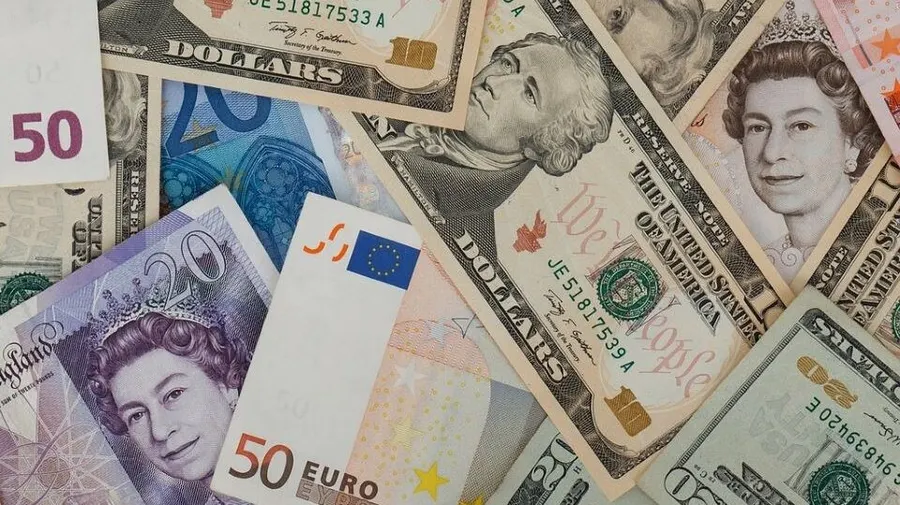
Currencies are often described as “strong” or “weak,” but those labels only make sense relative to another currency. Exchange rates—the price of one currency in terms of another—are constantly moving, influenced by a wide mix of economic forces, market expectations, and political developments. Understanding why currencies rise and fall helps explain everything from import prices to investment flows and global trade patterns.
Supply and Demand: The Core Driver
At the most basic level, currencies behave like any other asset: their value is determined by supply and demand. When demand for a currency increases, its value rises; when demand falls, it weakens.
Demand for a currency comes from several sources:
-
Foreign buyers purchasing a country’s goods and services
-
Investors seeking assets in that country (stocks, bonds, real estate)
-
Governments and institutions holding foreign reserves
Supply increases when residents of a country buy foreign goods, invest abroad, or move capital out of the country. The balance between these flows determines exchange rate movements in the short run.
Interest Rates and Monetary Policy
One of the most powerful influences on currency value is interest rates, typically set by central banks like the Federal Reserve or the European Central Bank.
Higher interest rates tend to attract foreign capital because investors can earn better returns. For example, if a country raises its interest rates, global investors may shift funds into that country’s bonds or savings instruments, increasing demand for its currency and pushing its value up.
Conversely, when interest rates fall, investors may look elsewhere for higher returns, reducing demand and causing the currency to depreciate.
Expectations matter just as much as actual changes. If markets anticipate that a central bank will raise rates in the future, the currency may strengthen even before the policy change happens.
Inflation and Purchasing Power
Inflation—the rate at which prices rise—also plays a major role in exchange rates. Countries with lower inflation tend to see their currencies appreciate over time because their purchasing power remains stronger.
In contrast, high inflation erodes a currency’s value. If prices rise quickly in one country compared to another, its goods become relatively more expensive, reducing demand for its exports and its currency.
For instance, persistent inflation problems in a country can lead to long-term currency depreciation, as both consumers and investors lose confidence in its stability.
Economic Growth and Performance
Strong economic performance generally supports a stronger currency. When an economy is growing steadily, it attracts investment, increases business activity, and boosts confidence among international investors.
Indicators that influence currency values include:
-
GDP growth
-
Employment levels
-
Industrial output
-
Consumer spending
A rapidly growing economy often leads to higher interest rates and increased investment inflows, both of which strengthen the currency. On the other hand, economic slowdowns or recessions can weaken a currency as investment declines.
Trade Balance and Current Account
A country’s trade balance—the difference between exports and imports—directly affects currency demand.
-
Trade surplus (exports > imports): Foreign buyers need the domestic currency to pay for goods, increasing demand and strengthening the currency.
-
Trade deficit (imports > exports): Residents need foreign currencies to pay for imports, increasing supply of the domestic currency and putting downward pressure on its value.
This is part of a broader measure called the current account, which includes trade in goods and services, income flows, and transfers. Persistent deficits can weaken a currency over time, while surpluses tend to support it.
Political Stability and Investor Confidence
Currencies are highly sensitive to political conditions. Stable governments, clear policies, and strong institutions tend to attract foreign investment, supporting the currency.
Political uncertainty—such as elections, policy changes, or geopolitical tensions—can have the opposite effect. Investors may withdraw capital to avoid risk, causing the currency to fall.
Events like referendums, leadership changes, or international conflicts often trigger rapid exchange rate movements as markets reassess risk.
Speculation and Market Sentiment
Currency markets are heavily influenced by speculation. Traders buy and sell currencies not only based on current conditions but also on expectations of future movements.
If traders believe a currency will rise, they may buy it in advance, driving up its value. If sentiment turns negative, selling pressure can quickly push it down.
This can lead to short-term volatility that may not always reflect underlying economic fundamentals. In some cases, large speculative flows can even amplify or accelerate currency trends.
Government and Central Bank Intervention
Sometimes governments or central banks actively intervene in currency markets to influence exchange rates.
They may:
-
Buy their own currency to strengthen it
-
Sell their currency to weaken it
-
Adjust monetary policy to indirectly affect its value
For example, a country might weaken its currency to make exports more competitive or strengthen it to reduce inflation. However, sustained intervention can be costly and is not always successful.
Global Events and External Shocks
Currencies do not exist in isolation. Global developments can shift exchange rates dramatically, including:
-
Financial crises
-
Commodity price changes
-
Pandemics
-
Wars or geopolitical tensions
For instance, during periods of global uncertainty, investors often move funds into “safe-haven” currencies like the U.S. dollar or Swiss franc, causing those currencies to rise.
Commodity-exporting countries are also affected by price swings. If oil prices rise, currencies of oil-exporting nations often strengthen, while importers may see their currencies weaken.
Exchange Rate Regimes
Not all currencies float freely. The way a country manages its exchange rate also affects how and why it moves.
-
Floating exchange rate: Determined by market forces (e.g., U.S. dollar, euro)
-
Fixed or pegged rate: Tied to another currency or basket (e.g., some smaller economies)
-
Managed float: Mostly market-driven but with occasional intervention
In floating systems, currencies can move freely based on economic conditions. In fixed systems, governments must actively maintain the exchange rate, often using foreign reserves.
Short-Term vs Long-Term Movements
Currency movements can be very different depending on the time horizon.
-
Short-term: Driven by news, speculation, interest rate expectations, and market sentiment
-
Long-term: Influenced by fundamentals like inflation, productivity, and economic growth
For example, a currency might weaken in the short term due to political uncertainty but strengthen over time if the country’s economic fundamentals remain strong.
Why It Matters
Exchange rate movements have real-world effects on economies and individuals:
-
Consumers: A stronger currency makes imports cheaper but exports more expensive
-
Businesses: Exchange rates affect competitiveness and profit margins
-
Investors: Currency changes can amplify or reduce returns on foreign investments
-
Governments: Currency strength influences inflation, trade balance, and economic policy
For example, a weaker currency can boost exports but may also increase the cost of imported goods, contributing to inflation.
Conclusion
Currencies rise and fall due to a complex interaction of forces, including supply and demand, interest rates, inflation, economic performance, and political stability. While short-term movements can be unpredictable, long-term trends usually reflect underlying economic fundamentals.
Understanding these drivers helps make sense of global economic developments and provides valuable insight for businesses, investors, and policymakers alike. Exchange rates are not just abstract numbers—they are a reflection of a country’s economic health, credibility, and position in the global economy.
- Arts
- Business
- Computers
- Jeux
- Health
- Domicile
- Kids and Teens
- Argent
- News
- Personal Development
- Recreation
- Regional
- Reference
- Science
- Shopping
- Society
- Sports
- Бизнес
- Деньги
- Дом
- Досуг
- Здоровье
- Игры
- Искусство
- Источники информации
- Компьютеры
- Личное развитие
- Наука
- Новости и СМИ
- Общество
- Покупки
- Спорт
- Страны и регионы
- World

 English
 Russian
 Spanish
 Portuguese
 Deutsch
 Turkish
 Dutch
Dutch
 Italiano
 Arabic
 Romaian
 Portuguese (Brazil)
 Greek
Greek