
Why do I procrastinate and feel guilty?
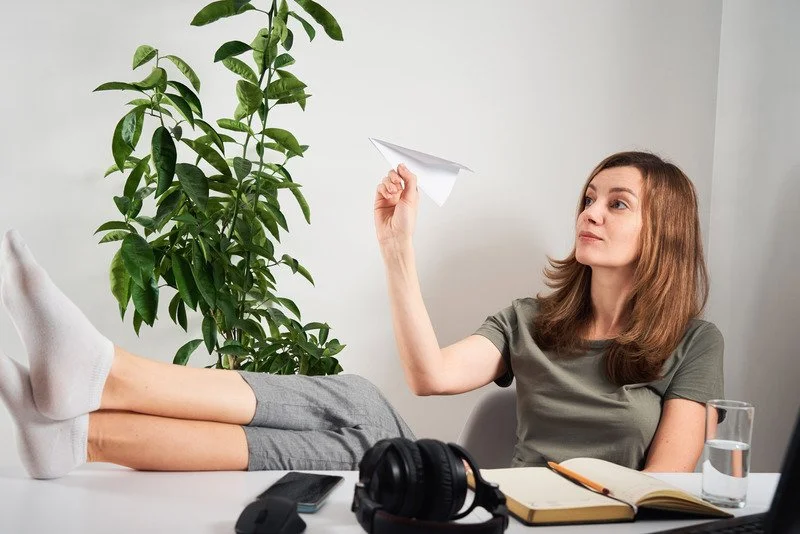
Why Do I Procrastinate and Feel Guilty?
Procrastination is rarely a neutral experience. It is often accompanied by a persistent, uncomfortable emotion: guilt. You delay something you know you should do, and instead of enjoying the break, you feel uneasy, self-critical, and mentally burdened. Even while procrastinating, part of your mind is still focused on the task you’re avoiding.
This combination—avoidance followed by guilt—is one of the most psychologically taxing patterns people experience. It creates a loop where you neither fully rest nor fully work. To understand why this happens, you need to look beyond surface-level explanations and examine the deeper interaction between emotion, cognition, and self-perception.
This article explores why procrastination and guilt are so tightly linked, and why they tend to reinforce each other over time.
The Nature of Procrastination: A Conflict, Not a Choice
Procrastination is not simply choosing to delay a task. It is a conflict between competing mental systems:
-
One part of you wants to complete the task (long-term goals)
-
Another part wants to avoid discomfort (short-term relief)
When you procrastinate, the avoidance system wins temporarily. However, the goal-oriented system does not disappear—it remains active in the background. This unresolved conflict is what generates guilt.
In other words, guilt arises because procrastination does not eliminate responsibility—it only postpones it.
Why Guilt Appears
Guilt is a self-conscious emotion. It arises when you believe your behavior does not align with your values or responsibilities.
When you procrastinate, you are typically aware of:
-
What you should be doing
-
Why it matters
-
The consequences of not doing it
This awareness creates cognitive dissonance:
-
“I value responsibility”
-
“I am not acting responsibly”
The brain resolves this tension by generating guilt.
Unlike simple regret, guilt is forward-facing. It pushes you to correct your behavior. However, when combined with procrastination, it often has the opposite effect.
The Emotional Avoidance Mechanism
To understand the paradox, you need to examine why procrastination happens in the first place.
Most procrastination is driven by emotional avoidance. The task you’re delaying is associated with negative feelings such as:
-
Anxiety
-
Stress
-
Boredom
-
Frustration
-
Self-doubt
Avoiding the task provides temporary relief from these emotions. This relief reinforces the behavior.
However, this creates a trade-off:
-
You avoid one negative emotion (e.g., anxiety)
-
You create another (guilt)
The brain chooses the more immediate relief, even if it leads to worse feelings later.
The Guilt–Procrastination Cycle
Once guilt enters the picture, a self-reinforcing loop often forms:
-
Task triggers discomfort
-
You procrastinate to avoid that discomfort
-
Temporary relief occurs
-
Guilt emerges
-
Guilt increases emotional burden
-
Increased burden makes the task feel even harder
-
You procrastinate again
This cycle can persist indefinitely.
Over time, the emotional weight of the task grows—not because the task changes, but because it accumulates layers of guilt and stress.
Why Guilt Doesn’t Motivate Action
At first glance, guilt seems like it should help. If you feel bad about procrastinating, shouldn’t that push you to act?
In practice, guilt often reduces action. There are several reasons for this.
1. Guilt Increases Emotional Load
Guilt adds another layer of negative emotion on top of the original discomfort. Now the task is associated with:
-
Anxiety
-
Stress
-
Shame or guilt
This amplifies avoidance.
2. Guilt Triggers Self-Criticism
People often respond to guilt with harsh self-talk:
-
“I’m so lazy.”
-
“Why can’t I just do this?”
This self-criticism lowers confidence and increases emotional resistance, making it harder to start.
3. Guilt Reduces Self-Efficacy
When procrastination becomes frequent, guilt can erode your belief in your ability to follow through.
You may begin to think:
-
“I always do this.”
-
“I can’t trust myself.”
This reduces motivation and increases avoidance.
4. Guilt Encourages Avoidance
Ironically, guilt itself becomes something you want to avoid. Since the task is now associated with guilt, returning to it means confronting that feeling.
So you delay again.
The Role of Shame vs. Guilt
It is important to distinguish between guilt and shame.
-
Guilt: “I did something wrong.”
-
Shame: “I am something wrong.”
When procrastination persists, guilt can evolve into shame. This shift is critical.
Shame is more damaging because:
-
It targets identity rather than behavior
-
It reduces motivation more strongly
-
It increases avoidance
Instead of thinking:
-
“I procrastinated today”
You may think:
-
“I am a procrastinator”
This identity-based thinking reinforces the cycle.
Time Awareness and “Background Stress”
One reason procrastination feels so uncomfortable is that the brain does not fully “let go” of unfinished tasks.
This is related to what psychologists call the Zeigarnik effect:
-
Unfinished tasks remain mentally active
-
They create a sense of tension
Even while procrastinating, part of your attention is still tied to the task. This creates:
-
Background stress
-
Reduced enjoyment of other activities
-
Persistent guilt
You are not truly resting—you are avoiding while mentally engaged.
Expectations and Internal Standards
Guilt is strongly influenced by expectations.
The higher your standards, the more likely you are to feel guilty when you fall short.
These expectations can come from:
-
Personal goals
-
Social pressures
-
Cultural values
For example:
-
High achievers often feel more guilt when procrastinating
-
People with strong responsibility norms are more affected
This means that caring more often leads to feeling worse when you delay.
Perfectionism and Guilt
Perfectionism intensifies both procrastination and guilt.
Perfectionists tend to:
-
Set unrealistic standards
-
Fear making mistakes
-
Delay starting until conditions feel ideal
When they procrastinate, they also:
-
Judge themselves more harshly
-
Experience stronger guilt
This creates a compounded effect:
-
Higher standards → more pressure
-
More pressure → more avoidance
-
More avoidance → more guilt
The Role of Stress
Stress interacts with both procrastination and guilt.
When stress levels are high:
-
Cognitive capacity decreases
-
Tasks feel more overwhelming
-
Avoidance becomes more likely
After procrastinating:
-
Deadlines approach
-
Time pressure increases
-
Stress intensifies
Guilt then adds emotional strain on top of this stress, making it even harder to act.
Neurological Perspective
From a brain-function perspective, this pattern involves competing systems:
Limbic System
-
Drives emotional responses
-
Seeks immediate relief
-
Promotes avoidance
Prefrontal Cortex
-
Responsible for planning and self-control
-
Supports long-term goals
When you procrastinate:
-
The limbic system overrides the prefrontal cortex
When you feel guilt:
-
The prefrontal cortex recognizes the mismatch between behavior and goals
However, guilt does not necessarily restore control. Instead, it can increase emotional intensity, strengthening the limbic response and perpetuating avoidance.
Why You Can’t Fully Enjoy Procrastination
A key feature of this pattern is that procrastination is not enjoyable.
This happens because:
-
You are aware of the task
-
You anticipate future consequences
-
You feel misaligned with your goals
This creates a state of “partial engagement”:
-
Not working
-
Not fully resting
The result is mental fatigue without productivity.
Long-Term Effects
If this cycle continues over time, it can lead to:
-
Chronic stress
-
Reduced productivity
-
Lower self-esteem
-
Increased anxiety
-
Burnout
The emotional cost often outweighs the time saved by procrastination.
Breaking the Cycle
To address procrastination and guilt effectively, you need to target both the behavior and the emotional response.
1. Reduce Emotional Resistance
-
Break tasks into smaller steps
-
Lower the perceived stakes
-
Focus on starting rather than finishing
2. Separate Behavior from Identity
-
Replace “I am a procrastinator” with “I delayed this task”
-
Keep the problem specific and changeable
3. Limit Self-Criticism
-
Recognize that harsh self-talk increases avoidance
-
Use more neutral or constructive language
4. Accept Imperfection
-
Allow work to be incomplete or flawed
-
Progress reduces guilt more effectively than perfection
5. Create Clear Starting Points
-
Define the first actionable step
-
Remove ambiguity
Reframing Guilt
Not all guilt is harmful. In moderation, it can signal that something matters to you.
The key is how you interpret it.
Instead of:
-
“I feel guilty because I failed”
You can reframe it as:
-
“I feel guilty because this is important to me”
This shifts guilt from a source of shame to a signal of value.
Conclusion
Procrastination and guilt are deeply interconnected because they arise from the same underlying conflict: the gap between what you intend to do and what you actually do.
You procrastinate to avoid immediate discomfort. But because you still care about the task, your mind does not disengage. This creates guilt, which adds emotional weight and makes the task even harder to approach.
The result is a cycle where:
-
Avoidance leads to guilt
-
Guilt increases avoidance
Understanding this dynamic is critical. It shows that the issue is not laziness or lack of care—it is the way the brain manages competing emotional demands.
Breaking the cycle requires reducing emotional resistance, changing how you respond to guilt, and creating conditions that make action easier than avoidance.
Ultimately, the presence of guilt is not evidence of failure—it is evidence that the task matters. The challenge is learning how to act despite discomfort, rather than waiting for the discomfort to disappear.
- Arts
- Business
- Computers
- Spiele
- Health
- Startseite
- Kids and Teens
- Geld
- News
- Personal Development
- Recreation
- Regional
- Reference
- Science
- Shopping
- Society
- Sports
- Бизнес
- Деньги
- Дом
- Досуг
- Здоровье
- Игры
- Искусство
- Источники информации
- Компьютеры
- Личное развитие
- Наука
- Новости и СМИ
- Общество
- Покупки
- Спорт
- Страны и регионы
- World

 English
 Russian
 French
 Spanish
 Portuguese
 Turkish
 Dutch
Dutch
 Italiano
 Arabic
 Romaian
 Portuguese (Brazil)
 Greek
Greek