
How long does it take to break procrastination?
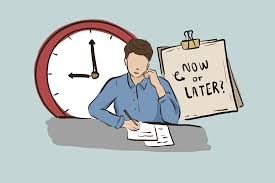
How Long Does It Take to Break Procrastination?
Procrastination is often treated as a simple habit—something you can “fix” quickly with enough motivation or a productivity hack. In reality, breaking procrastination is more complex because it is not a single behavior. It is a pattern made up of emotional responses, cognitive habits, environmental triggers, and reinforcement loops that develop over time.
So when people ask, “How long does it take to break procrastination?” the honest answer is: there is no single fixed timeline. It depends on what type of procrastination you have, how long it has been reinforced, and what systems you put in place to replace it.
However, we can still give a structured and realistic explanation of how procrastination changes over time and what “breaking it” actually looks like.
1. Procrastination Is Not a Switch—It’s a Pattern
One of the biggest misconceptions is thinking procrastination is something you either have or don’t have.
In reality, procrastination is a learned behavioral loop:
-
You face a task
-
The task creates discomfort (stress, boredom, confusion)
-
You avoid it
-
You feel temporary relief
-
Your brain learns: avoidance = relief
-
The habit strengthens
Over time, this becomes automatic.
Because of this, breaking procrastination is not about a single decision—it is about rewiring this loop.
2. What “Breaking Procrastination” Actually Means
People often imagine that breaking procrastination means:
-
Never delaying anything again
-
Always being productive
-
Having perfect discipline
That is unrealistic.
In practice, breaking procrastination means:
-
You start tasks earlier more consistently
-
You recover faster when you delay
-
You avoid long cycles of avoidance
-
You reduce emotional resistance to starting
So the goal is not perfection—it is control and reduction.
3. Why There Is No Fixed Timeline
The time it takes to reduce procrastination depends on several factors:
3.1 How deeply the habit is ingrained
-
Weeks of procrastination → easier to change
-
Years of procrastination → deeper neural habit loops
3.2 Emotional triggers
If procrastination is tied to:
-
Anxiety
-
Fear of failure
-
Perfectionism
-
ADHD-related attention issues
then it takes longer to address because emotional regulation must improve first.
3.3 Environment
If your environment constantly encourages distraction:
-
Phone use
-
Social media
-
Lack of structure
then change is slower.
3.4 Strategy used
Surface-level hacks (like “just try harder”) produce minimal long-term change.
System-based approaches (like routines and task breakdown) produce faster and more stable change.
4. The Realistic Timeline of Change
While exact timelines vary, most people experience procrastination reduction in phases.
Phase 1: Awareness (Days 1–7)
In the first week:
-
You start noticing procrastination patterns
-
You become aware of triggers
-
You may still procrastinate frequently
This phase is about recognition, not change.
Phase 2: Early Behavioral Resistance (Weeks 1–3)
During this stage:
-
You attempt to start tasks earlier
-
Resistance is still strong
-
You may relapse into old habits
This is the most frustrating phase because effort is high but results feel inconsistent.
However, neural rewiring begins here.
Phase 3: Initial Improvement (Weeks 3–6)
At this stage:
-
Starting tasks becomes slightly easier
-
Some procrastination cycles shorten
-
You recover faster after avoidance
You are not “cured,” but patterns begin to shift.
Phase 4: Stabilization (Weeks 6–12)
This is where noticeable change happens:
-
You delay less frequently
-
You begin tasks earlier more often
-
You rely less on urgency
New habits begin to replace old patterns.
Phase 5: Long-Term Reinforcement (3–6 months)
At this stage:
-
Procrastination is significantly reduced
-
You still experience occasional delays
-
But recovery is fast and controlled
The habit loop is largely rewritten.
5. Why Change Feels Slow Even When It’s Working
One of the most misleading experiences in behavior change is the feeling that nothing is improving—even when it is.
This happens because:
-
You still experience occasional procrastination
-
Progress is gradual, not dramatic
-
Your expectations are too high
In reality:
Reduction, not elimination, is the real indicator of progress.
6. What Actually Breaks Procrastination Faster
Certain strategies significantly speed up change:
6.1 Reducing task size
Large tasks create avoidance. Smaller tasks reduce resistance.
6.2 Starting before motivation appears
Action-first behavior rewires the brain faster than waiting for motivation.
6.3 Environment control
Removing distractions accelerates habit change significantly.
6.4 Consistent daily structure
Routine reduces decision fatigue and prevents relapse cycles.
6.5 Emotional regulation
If you can tolerate discomfort (stress, boredom), procrastination weakens faster.
7. Why Some People Take Longer Than Others
People who take longer to reduce procrastination often experience:
-
High perfectionism
-
Anxiety-driven avoidance
-
ADHD-like attention patterns
-
Chaotic environments
-
Irregular sleep or energy patterns
These factors increase resistance to change.
8. The Role of Relapse
Relapse is normal and expected.
Even after progress:
-
You may procrastinate again
-
Stressful periods may trigger old habits
The difference is:
You recover faster and with less damage to your overall productivity.
Relapse does not mean failure—it is part of the learning curve.
9. The Real Goal: Shortening the Delay Cycle
Instead of asking:
-
“Will I ever stop procrastinating?”
A better question is:
-
“How quickly do I recover when I procrastinate?”
People who have effectively “broken” procrastination still experience it—but:
-
They delay less often
-
They restart faster
-
They don’t spiral into long avoidance periods
10. What Makes Procrastination Feel Hard to Break
Procrastination persists because it is self-reinforcing:
-
Avoidance reduces discomfort
-
Relief reinforces avoidance
-
The brain learns this loop
This makes it feel like procrastination is “stronger” than willpower.
But in reality:
You are retraining a learned response, not fighting a permanent trait.
11. A Practical Reality Check
If you apply consistent strategies:
-
Within 1–2 weeks → awareness improves
-
Within 3–6 weeks → behavior starts changing
-
Within 2–3 months → noticeable improvement
-
Within 3–6 months → strong habit shift
But this only happens if you are consistent.
Inconsistent effort resets progress.
Conclusion
So, how long does it take to break procrastination?
The realistic answer is:
It takes weeks to months to significantly reduce it, and ongoing effort to maintain improvement.
But more importantly:
-
It is not a single transformation
-
It is a gradual rewiring of behavior patterns
-
It is a shift from avoidance-based behavior to action-based behavior
The key insight is:
You don’t “eliminate” procrastination—you reduce its power, frequency, and duration until it no longer controls your behavior.
With the right systems, consistency, and environment design, procrastination becomes manageable rather than dominant—and productivity becomes a stable habit rather than a temporary state.
- Arts
- Business
- Computers
- Juegos
- Health
- Home
- Kids and Teens
- Money
- News
- Personal Development
- Recreation
- Regional
- Reference
- Science
- Shopping
- Society
- Sports
- Бизнес
- Деньги
- Дом
- Досуг
- Здоровье
- Игры
- Искусство
- Источники информации
- Компьютеры
- Личное развитие
- Наука
- Новости и СМИ
- Общество
- Покупки
- Спорт
- Страны и регионы
- World

 English
 Russian
 French
 Portuguese
 Deutsch
 Turkish
 Dutch
Dutch
 Italiano
 Arabic
 Romaian
 Portuguese (Brazil)
 Greek
Greek