
Can procrastination cause stress or depression?
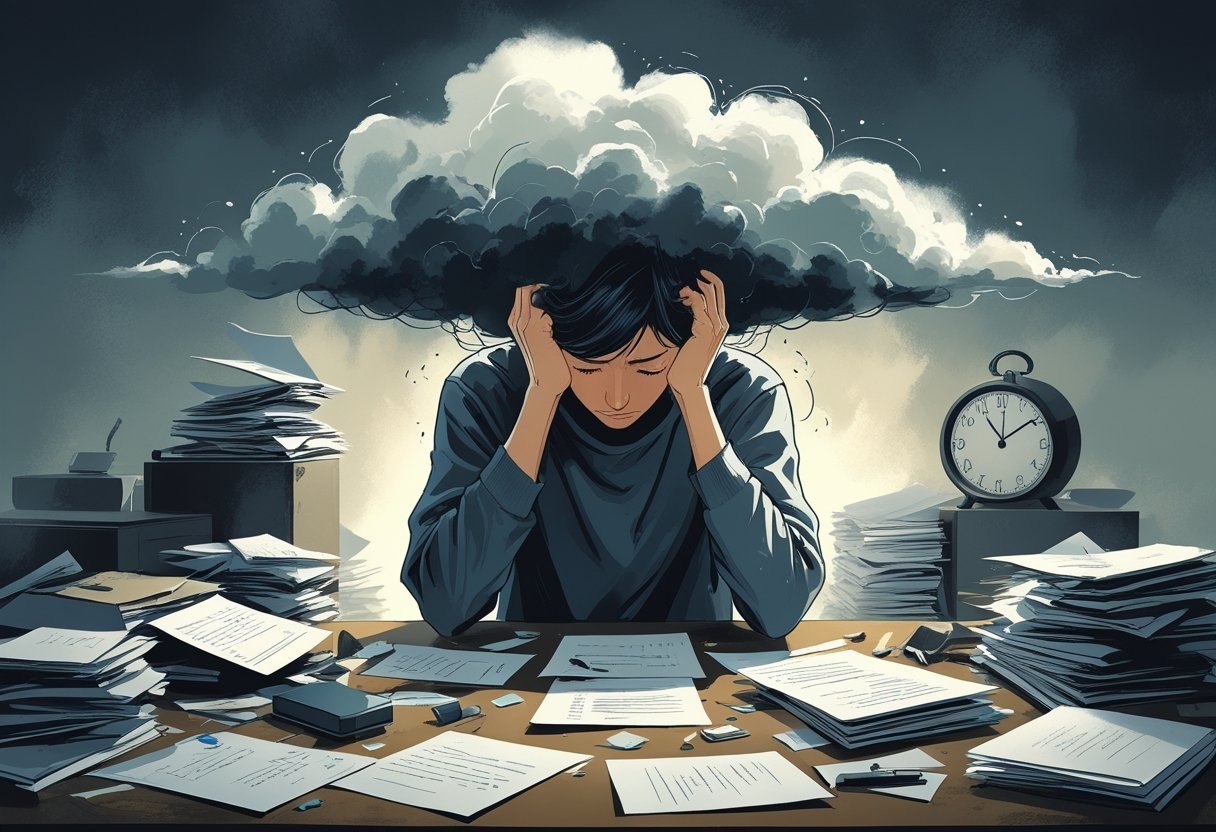
Can Procrastination Cause Stress or Depression?
Procrastination is often dismissed as a productivity issue—something that affects deadlines, study habits, or work output. However, for many people, procrastination is deeply tied to emotional well-being. It can contribute to chronic stress, persistent anxiety, and in some cases, depressive symptoms.
The relationship is not simple or one-directional. Procrastination does not “automatically cause” depression in every case, but it can be a significant contributing factor—especially when it becomes chronic, repetitive, and emotionally charged.
To understand this properly, we need to examine how procrastination interacts with stress systems, self-perception, cognitive load, and long-term emotional patterns.
1. Procrastination and Stress: A Direct Relationship
Yes—procrastination is strongly linked to stress. In fact, stress is one of the most consistent emotional outcomes of chronic procrastination.
This happens because procrastination creates a time-pressure cycle:
-
A task is assigned or recognized
-
It is delayed
-
Available time decreases
-
Pressure increases
-
Anxiety rises
The closer the deadline gets, the more intense the stress becomes.
This is not accidental—it is structural. Procrastination compresses time, turning manageable tasks into urgent problems.
2. Why Procrastination Creates Chronic Stress
Stress from procrastination is not just short-term. It can become chronic because of repeated cycles.
2.1 Constant mental background pressure
Even when you are not actively working, unfinished tasks remain mentally active:
-
“I should be doing this”
-
“I’m running out of time”
This creates ongoing cognitive stress.
2.2 Accumulation of tasks
When tasks are repeatedly delayed:
-
Work piles up
-
Responsibilities increase
-
Pressure compounds
The brain perceives this as an escalating threat.
2.3 Reduced recovery time
Instead of completing tasks steadily:
-
Work is delayed
-
Then rushed
-
Then followed by exhaustion
This prevents proper mental recovery cycles.
3. The Stress Loop of Procrastination
Procrastination creates a self-reinforcing stress loop:
-
Task feels stressful
-
You avoid it
-
Temporary relief occurs
-
Time pressure increases
-
Stress becomes worse
-
Task feels even harder
-
More avoidance happens
This loop intensifies stress over time.
4. Can Procrastination Contribute to Depression?
The relationship between procrastination and depression is more complex than stress. Procrastination does not directly “cause” depression in a medical sense, but it can contribute to depressive symptoms through several pathways.
5. How Procrastination Can Influence Depressive Symptoms
5.1 Reduced sense of control
Chronic procrastination can create the feeling:
-
“I can’t manage my life properly”
-
“I keep falling behind”
A reduced sense of control is strongly associated with depressive thinking patterns.
5.2 Lowered self-esteem
Repeated delays often lead to self-judgment:
-
“I’m lazy”
-
“I never do things right”
Over time, this can damage self-worth.
5.3 Increased hopelessness
When procrastination becomes chronic:
-
Tasks pile up
-
Stress increases
-
Progress feels impossible
This can lead to feelings of helplessness.
5.4 Social withdrawal
People who feel overwhelmed may:
-
Avoid responsibilities
-
Avoid social interactions
-
Withdraw to escape pressure
Isolation is a known risk factor for depressive states.
6. Important Distinction: Correlation vs Causation
It is important to be precise:
-
Procrastination can increase stress and contribute to depressive symptoms
-
But depression can also increase procrastination
This means the relationship is bidirectional.
7. How Depression Can Also Cause Procrastination
Depression is often associated with:
-
Low energy
-
Reduced motivation
-
Difficulty concentrating
-
Lack of interest in tasks
These symptoms naturally lead to delayed action.
So in many cases:
procrastination is not the cause, but a symptom of underlying emotional or cognitive strain.
8. The Shared Mechanism: Avoidance Behavior
Both procrastination and depression-related avoidance share a common mechanism:
-
Avoiding discomfort
-
Avoiding effort
-
Avoiding emotional strain
In both cases, avoidance provides short-term relief but long-term worsening.
9. Emotional Load and Cognitive Overwhelm
Procrastination increases mental load:
-
Unfinished tasks remain active in memory
-
Decisions are postponed
-
Attention is fragmented
This contributes to:
-
Mental fatigue
-
Irritability
-
Reduced cognitive clarity
Over time, this state can resemble emotional exhaustion.
10. The Role of Guilt and Self-Criticism
One of the strongest links between procrastination and emotional distress is guilt.
Cycle:
-
Delay task
-
Feel guilty
-
Criticize yourself
-
Feel worse
-
Avoid more tasks
This self-reinforcing loop increases emotional burden significantly.
11. Why It Feels Like Procrastination “Ruins Mood”
People often report:
-
Feeling constantly behind
-
Never fully relaxing
-
Persistent mental pressure
This is because procrastination creates unresolved cognitive tension.
Even during rest, the mind is occupied with:
-
“unfinished business”
12. Stress vs Depression: Key Differences
It is important to distinguish:
Stress from procrastination:
-
Task-related
-
Time-bound
-
Often reversible with completion
Depression-related symptoms:
-
Persistent low mood
-
Loss of interest
-
Ongoing fatigue
-
Not always tied to specific tasks
Procrastination can contribute to stress more directly than clinical depression, but it can influence depressive states indirectly over time.
13. Why Some People Are More Affected Than Others
Not everyone experiences strong emotional consequences from procrastination.
Factors that increase vulnerability:
-
Perfectionism
-
High self-criticism
-
Anxiety tendencies
-
Poor emotional regulation
-
High workload
-
Lack of structure
These increase the emotional impact of delay.
14. The Breaking Point: When Procrastination Becomes Harmful
Procrastination becomes emotionally harmful when:
-
It is chronic
-
It affects multiple life areas
-
It creates persistent guilt or stress
-
It reduces functioning ability
At this stage, it is no longer just a habit—it becomes a behavioral-emotional cycle.
15. How to Reduce Stress Caused by Procrastination
The most effective strategies target both behavior and emotion:
15.1 Reduce task size
Smaller tasks feel less overwhelming.
15.2 Start immediately with minimal action
Even small steps reduce pressure.
15.3 Break avoidance cycles
Interrupt distraction behaviors early.
15.4 Use structured planning
Clear steps reduce uncertainty.
15.5 Reduce self-criticism
Replace judgment with corrective action.
16. Can Improving Procrastination Improve Mental Health?
In many cases, yes.
Reducing procrastination can lead to:
-
Lower stress levels
-
Improved self-confidence
-
Greater sense of control
-
Reduced guilt cycles
However, it is not a standalone treatment for depression if clinical symptoms are present.
Conclusion
Procrastination does not directly “cause” depression in a clinical sense, but it can significantly contribute to stress and emotional strain. Through repeated cycles of avoidance, time pressure, guilt, and self-criticism, it can create conditions that resemble or reinforce depressive symptoms.
The key insight is:
Procrastination is not just a productivity issue—it is also an emotional regulation issue.
When unmanaged, it can increase stress and negatively affect mood and self-perception. When addressed through structured habits, emotional awareness, and consistent action, its psychological impact can be greatly reduced.
Ultimately, breaking the procrastination cycle is not only about getting more done—it is also about reducing unnecessary emotional burden and restoring a sense of control over daily life.
- Arts
- Business
- Computers
- Oyunlar
- Health
- Home
- Kids and Teens
- Money
- News
- Personal Development
- Recreation
- Regional
- Reference
- Science
- Shopping
- Society
- Sports
- Бизнес
- Деньги
- Дом
- Досуг
- Здоровье
- Игры
- Искусство
- Источники информации
- Компьютеры
- Личное развитие
- Наука
- Новости и СМИ
- Общество
- Покупки
- Спорт
- Страны и регионы
- World

 English
 Russian
 French
 Spanish
 Portuguese
 Deutsch
 Dutch
Dutch
 Italiano
 Arabic
 Romaian
 Portuguese (Brazil)
 Greek
Greek