
Why do I keep repeating this habit?
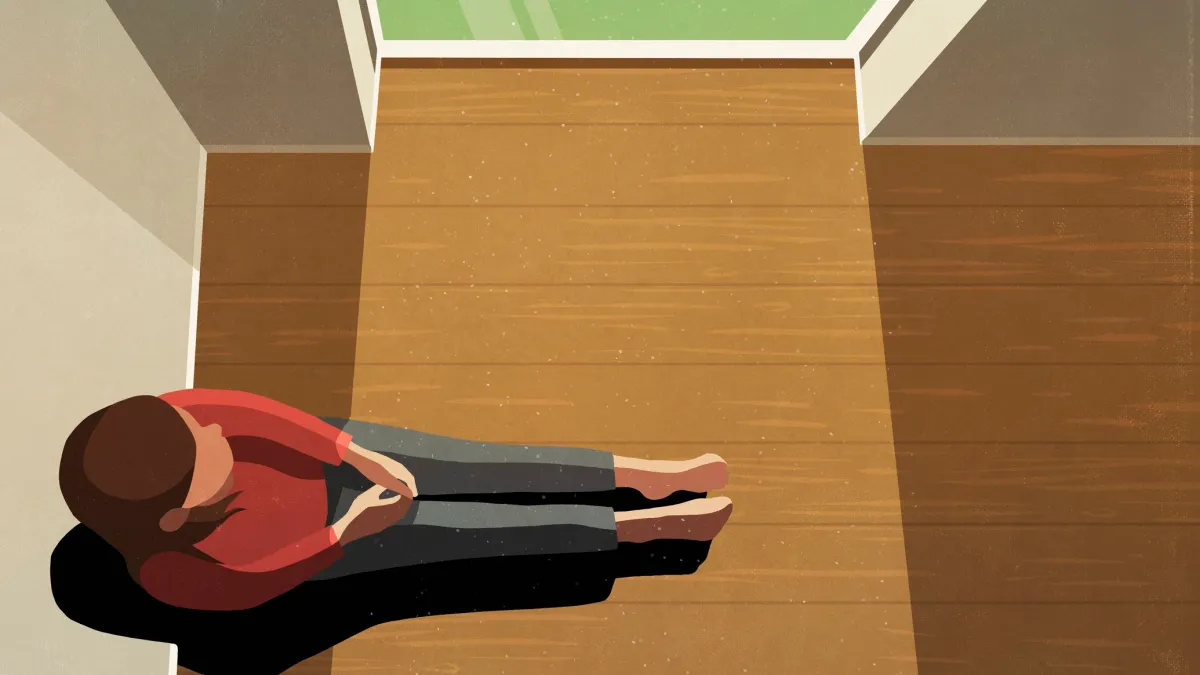
Why Do I Keep Repeating This Habit?
Repeating the same habit—even when you consciously want to stop—is one of the most frustrating human experiences. Whether the habit is procrastination, overeating, scrolling endlessly, or avoiding responsibilities, the core question remains the same: “Why do I keep doing this even when I know it’s harmful?”
The answer is not a lack of intelligence or awareness. In most cases, it is the result of deeply embedded behavioral loops, emotional reinforcement, environmental triggers, and cognitive shortcuts that operate automatically beneath conscious control.
To understand why habits repeat, you need to examine how habits are formed, reinforced, and maintained—not just at the level of behavior, but at the level of brain systems and emotional regulation.
1. Habits Are Designed to Repeat Automatically
At their core, habits exist to reduce cognitive effort. The brain is constantly trying to conserve energy, so it automates repeated behaviors.
A habit follows a simple loop:
-
Trigger (cue)
-
Behavior (action)
-
Reward (reinforcement)
Once this loop is established, the brain begins to execute it automatically.
This means:
You are not “choosing” the habit each time—it is being triggered.
2. Why Awareness Alone Doesn’t Stop the Habit
A common misunderstanding is:
-
“If I know it’s bad, I should be able to stop.”
But awareness operates in the conscious mind, while habits are stored in procedural memory systems.
So you can simultaneously:
-
Know a habit is harmful
-
And still perform it automatically
This disconnect explains why repetition continues even with full awareness.
3. The Role of Immediate Reward
One of the strongest reasons habits repeat is reinforcement.
The brain prioritizes:
-
Immediate reward
over -
Long-term benefit
If a habit provides:
-
Relief
-
Pleasure
-
Distraction
-
Comfort
even temporarily, it becomes reinforced.
Examples:
-
Procrastination → immediate relief from stress
-
Social media → instant stimulation
-
Avoidance → reduction of discomfort
The brain learns:
“This behavior makes me feel better right now.”
4. Negative Habits Often Solve Emotional Problems
Many repeated habits are not random—they serve emotional functions.
Common emotional drivers include:
-
Anxiety relief
-
Stress reduction
-
Avoidance of discomfort
-
Escape from boredom
-
Escape from uncertainty
Even harmful habits persist because they temporarily regulate emotional states.
So the habit continues not because it is “liked,” but because it provides relief.
5. The Habit Loop Strengthens Over Time
The more a habit is repeated:
-
The stronger the neural pathways become
-
The more automatic the behavior becomes
-
The less conscious effort is required
This is why long-standing habits feel “hard to break.”
It is not psychological weakness—it is neural efficiency.
6. Environmental Triggers Reinforce Repetition
Habits are heavily context-dependent.
Common triggers include:
-
Time of day
-
Location
-
Emotional state
-
Devices or apps
-
Social situations
For example:
-
Sitting at a desk may trigger procrastination
-
Lying in bed may trigger scrolling
-
Stress may trigger avoidance behavior
The environment often initiates the habit before conscious thought begins.
7. The Brain Prefers Familiar Patterns
Even when habits are unhelpful, they are familiar.
Familiarity creates:
-
Predictability
-
Reduced uncertainty
-
Lower cognitive effort
So the brain often chooses:
“What I know” over “what is better”
This preference for familiarity explains why change feels difficult even when desired.
8. Why Willpower Fails Against Habits
Willpower is:
-
Limited
-
Emotion-dependent
-
Easily depleted
Habits, however, are:
-
Automatic
-
Emotion-independent
-
Energy-efficient
This mismatch means:
-
Willpower loses to habit loops under stress or fatigue
So repetition continues even when motivation is high at other times.
9. Emotional States Trigger Habit Repetition
Certain emotional states strongly activate habitual behavior:
-
Stress → avoidance habits
-
Boredom → distraction habits
-
Anxiety → comfort-seeking habits
-
Fatigue → easy dopamine behaviors
This creates emotional conditioning:
“When I feel X, I do Y.”
Over time, emotions become reliable triggers for repetition.
10. The “Short-Term Relief Trap”
Many repeated habits follow this pattern:
-
You feel discomfort
-
You engage in the habit
-
You feel temporary relief
-
The discomfort returns later
-
The cycle repeats
This is extremely powerful because the brain prioritizes relief over consequences.
Even if consequences are negative, they are delayed and less emotionally salient.
11. Identity Reinforcement Keeps Habits Alive
Habits also persist because they are tied to identity.
Examples:
-
“I’m someone who procrastinates”
-
“I always get distracted”
-
“I’m not disciplined”
Once a habit becomes part of self-perception:
-
Behavior aligns with identity
-
Identity reinforces behavior
This creates a self-sustaining loop.
12. Lack of Alternative Behaviors Maintains the Loop
Habits repeat more easily when there is no clear alternative behavior.
If the brain does not have:
-
A replacement action
-
A structured response
-
A clear plan
it defaults to the existing habit.
So repetition is often a result of:
absence of better options, not resistance to change.
13. Cognitive Load Makes Change Harder
When the brain is overloaded:
-
Decision-making decreases
-
Automatic behavior increases
-
Habit strength dominates
So during:
-
Stressful periods
-
Busy schedules
-
Emotional exhaustion
habits become more dominant.
14. Why Habits Feel Hard to Control in the Moment
In the moment of action:
-
The habit feels automatic
-
The consequences feel distant
-
The reward feels immediate
This imbalance leads to repetition even when intention is strong.
15. The Reinforcement Problem
Every time the habit is repeated:
-
It becomes slightly stronger
-
The brain becomes more efficient at triggering it
-
Resistance slightly decreases next time
This is why habits feel self-perpetuating.
16. Breaking Repetition Requires Replacement, Not Just Removal
One of the most important truths about habits is:
You cannot simply remove a habit—you must replace it.
If you only try to stop:
-
A gap appears
-
The brain fills it with the old pattern
Replacement behavior is essential for long-term change.
17. Why “Trying Harder” Often Fails
People often respond to repeated habits with:
-
More discipline
-
More self-control
-
More punishment
But this approach fails because:
-
It does not change triggers
-
It does not change environment
-
It does not replace the reward
So the underlying loop remains intact.
18. How Repetition Can Be Reversed
To break repetition patterns, you need to disrupt at least one part of the loop:
18.1 Change the trigger
-
Alter environment
-
Avoid cues
18.2 Change the behavior
-
Replace habit with alternative action
18.3 Change the reward
-
Make the habit less satisfying
-
Make alternatives more rewarding
19. The Key Insight: Repetition Is Not Failure
Repeated habits often create self-judgment:
-
“Why do I keep doing this?”
But repetition is not a moral failure—it is a learned system operating automatically.
Understanding this shifts the focus from blame to design.
Conclusion
You keep repeating habits not because you lack awareness or discipline, but because the behavior is embedded in a powerful system of cues, rewards, emotional regulation, and cognitive efficiency.
Habits repeat because:
-
They provide immediate relief or reward
-
They are triggered automatically by context
-
They require less mental effort than alternatives
-
They are reinforced every time they occur
The key insight is:
Habits are not broken by force—they are changed by redesigning the system that produces them.
When triggers, rewards, and replacements are addressed systematically, repetition weakens and new behaviors gradually take over.
- Arts
- Business
- Computers
- Spellen
- Health
- Home
- Kids and Teens
- Money
- News
- Personal Development
- Recreation
- Regional
- Reference
- Science
- Shopping
- Society
- Sports
- Бизнес
- Деньги
- Дом
- Досуг
- Здоровье
- Игры
- Искусство
- Источники информации
- Компьютеры
- Личное развитие
- Наука
- Новости и СМИ
- Общество
- Покупки
- Спорт
- Страны и регионы
- World

 English
 Russian
 French
 Spanish
 Portuguese
 Deutsch
 Turkish
 Italiano
 Arabic
 Romaian
 Portuguese (Brazil)
 Greek
Greek