
What Is Office Management?
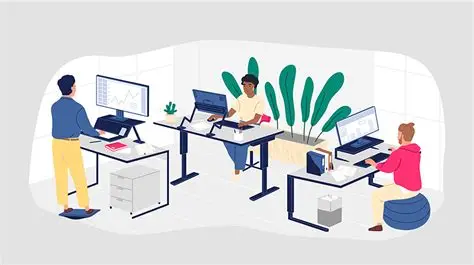
Office management is often described in simple terms: organizing tasks, overseeing operations, and ensuring that a workplace runs smoothly. While this definition is not incorrect, it barely captures the depth of what office management truly represents.
At its core, office management is about creating structure in an environment where many moving parts must coexist. It is the discipline that brings order to activity, clarity to communication, and continuity to daily operations. It is both visible and invisible—felt in the rhythm of a well-functioning office, yet rarely called attention to directly.
The Foundation of Organizational Flow
Every organization depends on flow.
Information flows between departments. Tasks move from initiation to completion. Decisions pass through layers of review and approval. Office management ensures that this flow is not interrupted.
Without it, even the most capable teams can become disorganized. Messages are missed, deadlines slip, and processes lose their shape.
Office management provides the framework that keeps everything aligned.
More Than Administration
It is easy to confuse office management with administrative work. While the two are closely related, they are not identical.
Administrative tasks are often specific and task-oriented: scheduling meetings, maintaining records, handling correspondence.
Office management, by contrast, is broader. It involves overseeing these tasks, ensuring they connect effectively, and aligning them with organizational goals.
It is not just about doing the work—it is about shaping how the work is done.
Coordination Across Functions
An office is not a single function. It is a collection of roles, departments, and responsibilities.
Office management acts as a bridge between these elements. It coordinates activities so that efforts are not duplicated, resources are used efficiently, and communication remains clear.
This coordination requires awareness—not just of individual tasks, but of how they relate to one another.
It is a continuous process of adjustment and alignment.
Creating Structure Without Rigidity
Structure is essential, but it must be flexible.
Office management establishes processes, guidelines, and systems that provide consistency. At the same time, it must allow for adaptation when circumstances change.
Too much rigidity can slow progress. Too little structure can create confusion.
The balance lies in designing systems that guide without constraining.
The Role of Communication
Communication is one of the most critical elements of office management.
It is not only about transmitting information, but ensuring that it is understood, timely, and relevant.
Office management supports communication by:
- Establishing clear channels
- Organizing information flow
- Reducing unnecessary noise
When communication is effective, teams can focus on their work without uncertainty.
When it breaks down, even simple tasks can become complicated.
Managing Resources Thoughtfully
Resources in an office include more than physical assets.
They include time, attention, and human effort. Office management ensures that these resources are used wisely.
This involves:
- Allocating tasks appropriately
- Monitoring workloads
- Maintaining access to necessary tools and information
Thoughtful resource management prevents bottlenecks and supports productivity.
Adapting to Change
No office remains static.
New tools are introduced, teams grow or shift, and priorities evolve. Office management must adapt to these changes without losing stability.
This requires a willingness to reassess processes and make adjustments when needed.
Adaptation is not a sign of instability—it is a sign of responsiveness.
The Influence of Technology
Technology has reshaped office management significantly.
Automation, digital communication platforms, and data systems have changed how tasks are performed and coordinated.
Office management now involves:
- Selecting appropriate tools
- Integrating systems effectively
- Ensuring that technology supports rather than complicates workflows
Technology can enhance efficiency, but only when it is used with intention.
Maintaining Organizational Clarity
Clarity is often underestimated.
When roles, responsibilities, and processes are clearly defined, work becomes more efficient. People understand what is expected and how their efforts contribute to the larger picture.
Office management supports this clarity by:
- Documenting processes
- Defining roles
- Providing accessible information
Clarity reduces friction and builds confidence within teams.
Supporting Workplace Culture
Office management also influences culture.
The way processes are designed, how communication is handled, and how resources are allocated all contribute to the work environment.
A well-managed office can foster:
- Collaboration
- Accountability
- Respect for time and effort
Culture is not created solely through statements—it is shaped through daily practices.
Balancing Efficiency and Human Needs
Efficiency is often a primary goal, but it should not come at the expense of people.
Office management must consider human needs—workload balance, communication preferences, and the need for clarity and support.
Systems that are efficient but difficult to use can create frustration. Systems that are intuitive and supportive encourage engagement.
The balance between efficiency and usability is essential.
The Invisible Nature of Success
One of the defining characteristics of effective office management is its subtlety.
When it works well, it is rarely noticed. Processes flow, communication is clear, and tasks are completed without unnecessary difficulty.
It is only when something goes wrong that its importance becomes visible.
This invisibility can make office management seem less significant, but in reality, it is foundational.
A Continuous Process
Office management is not a one-time effort.
It is ongoing, evolving alongside the organization. Processes are refined, systems are updated, and approaches are adjusted.
This continuous nature requires attention and commitment.
It is less about achieving a final state and more about maintaining alignment over time.
A Strategic Perspective
While often associated with day-to-day operations, office management also has a strategic dimension.
Decisions about processes, tools, and resource allocation influence how effectively an organization can achieve its goals.
By shaping how work is organized, office management contributes to overall performance.
It connects operational detail with broader objectives.
Final Thoughts
Office management is not simply about keeping things in order. It is about creating an environment where work can happen with clarity, consistency, and purpose.
It brings structure without rigidity, coordination without complexity, and efficiency without losing sight of human needs.
In many ways, it is the quiet architecture of an organization—the framework that supports everything else.
When understood in this way, office management is not just a function. It is a discipline that shapes how organizations operate, adapt, and succeed.
- Arts
- Business
- Computers
- Παιχνίδια
- Health
- Κεντρική Σελίδα
- Kids and Teens
- Money
- News
- Personal Development
- Recreation
- Regional
- Reference
- Science
- Shopping
- Society
- Sports
- Бизнес
- Деньги
- Дом
- Досуг
- Здоровье
- Игры
- Искусство
- Источники информации
- Компьютеры
- Личное развитие
- Наука
- Новости и СМИ
- Общество
- Покупки
- Спорт
- Страны и регионы
- World

 English
 Russian
 French
 Spanish
 Portuguese
 Deutsch
 Turkish
 Dutch
Dutch
 Italiano
 Arabic
 Romaian
 Portuguese (Brazil)