
Microeconomics vs. Macroeconomics: Two Lenses, One Uneasy Reality
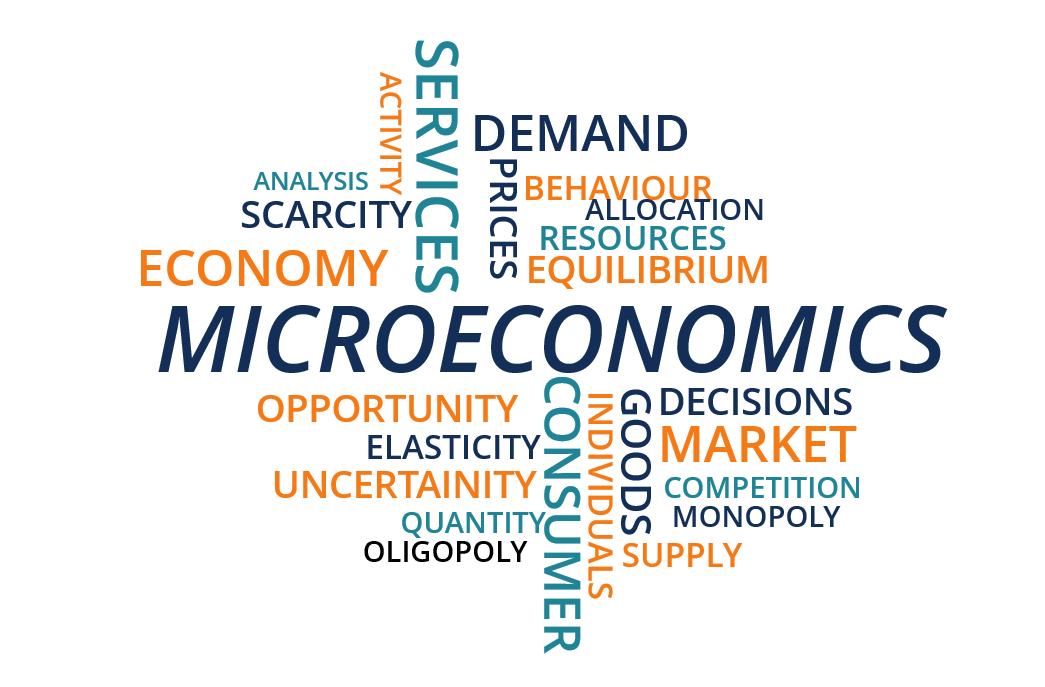
Microeconomics vs. Macroeconomics: Two Lenses, One Uneasy Reality
There is a familiar temptation in economics: to believe that if we can understand the smallest unit—a household choosing between rent and groceries, a firm deciding whether to hire—we can scale that logic upward and decipher entire economies. It is a seductive idea. It is also, more often than not, incomplete.
The divide between microeconomics and macroeconomics is not merely pedagogical. It is conceptual, methodological, and, at times, political. It reflects competing instincts about how the world works: whether outcomes emerge cleanly from individual choices or whether aggregate forces possess a logic of their own. And if that sounds abstract, consider this—policies built on the wrong lens can misfire in ways that are both predictable and costly.
Let’s take this distinction seriously.
What Is Microeconomics?
Microeconomics is the study of individual decision-making under constraints. It begins with a deceptively simple premise: people and firms respond to incentives. From there, it constructs a framework to analyze how prices, preferences, and resources interact.
At its core, microeconomics asks:
-
How do consumers allocate their income?
-
How do firms decide what to produce and at what cost?
-
How do markets reach equilibrium—or fail to?
The Architecture of Choice
Microeconomics is built on optimization. Consumers maximize utility; firms maximize profit. These are not just assumptions—they are analytical devices that allow economists to derive predictions about behavior.
But here’s where things become interesting. The elegance of microeconomic models often obscures their fragility. Preferences are assumed stable. Information is assumed accessible. Markets are assumed competitive—or at least tractable.
In reality, none of these assumptions hold consistently.
Consider labor markets. A worker’s wage is not simply the outcome of marginal productivity. It is shaped by bargaining power, institutional constraints, and, crucially, imperfect information. Microeconomics has evolved to incorporate these complexities—through game theory, behavioral economics, and contract theory—but the tension remains: how far can we stretch individual-level analysis before it loses explanatory power?
What Is Macroeconomics?
Macroeconomics, by contrast, steps back. It aggregates. It asks what happens when millions of decisions collide—when consumption, investment, and policy interact in ways that no single agent controls.
Its central questions are different:
-
Why do economies grow—or stagnate?
-
What causes inflation and unemployment?
-
How do fiscal and monetary policies shape outcomes?
The Problem of Aggregation
Macroeconomics confronts a fundamental challenge: aggregation is not neutral. When we move from individuals to the economy as a whole, new dynamics emerge.
Take unemployment. At the micro level, it may appear as a mismatch between skills and jobs. At the macro level, it can reflect insufficient demand. These are not competing explanations—they operate at different levels. But confusing one for the other leads to policy errors.
This is the crux of the issue: macroeconomic phenomena cannot always be reduced to microeconomic foundations without losing something essential.
A Data-Rich Comparison
To clarify the distinction, consider the following structured comparison:
| Dimension | Microeconomics | Macroeconomics |
|---|---|---|
| Unit of Analysis | Individuals, households, firms | Entire economy or large aggregates |
| Core Focus | Prices, incentives, allocation of resources | Growth, inflation, unemployment, cycles |
| Key Variables | Supply, demand, costs, utility | GDP, CPI, interest rates, national income |
| Methodological Approach | Optimization, equilibrium models | Aggregate models, dynamic systems |
| Policy Implications | Taxes, subsidies, regulation at sector level | Monetary policy, fiscal policy, stabilization tools |
| Typical Questions | Why did this price change? | Why is inflation rising? |
| Assumptions | Rational agents, localized interactions | Interdependent systems, expectations, shocks |
| Failure Modes | Market power, externalities, information asymmetry | Recessions, financial crises, systemic risk |
This table suggests clarity. In practice, the boundaries blur.
Where Micro Meets Macro—and Breaks
Economists have long sought to unify the two fields. The ambition is straightforward: derive macroeconomic outcomes from microeconomic behavior. This is the foundation of modern macroeconomics, particularly in dynamic stochastic general equilibrium (DSGE) models.
But here is the uncomfortable truth: the microfoundations project has not fully delivered.
Why?
Because aggregation introduces frictions that individual-level models struggle to capture:
-
Coordination failures: Individually rational decisions can lead to collectively suboptimal outcomes.
-
Expectations: What people believe about the future can shape the present in self-fulfilling ways.
-
Non-linearities: Small shocks can trigger large systemic responses.
Consider financial crises. No single household decides to collapse the banking system. Yet, when enough actors respond to perceived risk by withdrawing funds or cutting investment, the system itself becomes unstable.
Micro logic, in isolation, cannot explain this.
A Personal Lesson in Misplaced Confidence
Early in my career, I found myself drawn to the precision of microeconomics. There was something reassuring about its clarity—the idea that behavior could be mapped, predicted, and, to some extent, controlled.
I remember working on a policy analysis involving small business tax incentives. The microeconomic logic was impeccable: lower taxes would increase investment, which would increase employment. The models were clean. The conclusions were confident.
And yet, the policy underperformed.
What we had overlooked was not obscure—it was macroeconomic context. Demand in the broader economy was weak. Firms had no reason to expand capacity, regardless of tax incentives. The constraint was not cost; it was expected revenue.
That experience reshaped how I think about economics. Micro-level interventions, however well-designed, can fail if macro conditions are misaligned. Conversely, macro policies can falter if they ignore micro-level frictions.
The lesson was not that one lens is superior. It was that each is incomplete.
The Political Economy Dimension
The micro-macro divide is not purely technical. It has ideological implications.
Microeconomics often aligns with a view of the world in which markets, if left alone, allocate resources efficiently. Failures are localized and correctable. Policy interventions are targeted.
Macroeconomics, especially in its Keynesian tradition, emphasizes systemic instability. It recognizes that economies can settle into equilibria that are persistently suboptimal—high unemployment, low growth, financial fragility.
These perspectives shape policy debates:
-
Should governments intervene aggressively during downturns?
-
Are markets self-correcting, or do they require stabilization?
-
Is inequality a micro-level outcome or a macro-level concern?
There are no neutral answers here. The choice of lens influences the diagnosis—and the prescription.
Why the Distinction Still Matters
In an era of global shocks—pandemics, supply chain disruptions, geopolitical tensions—the interplay between micro and macro has become more visible.
Consider inflation. At one level, it reflects aggregate demand outpacing supply. At another, it is driven by sector-specific constraints—energy prices, labor shortages, logistics bottlenecks.
A purely macro response—raising interest rates—may address demand but leave structural issues unresolved. A purely micro response—targeted subsidies or regulations—may fail to contain broader inflationary pressures.
Effective policy requires synthesis.
Toward a More Integrated Framework
The future of economics likely lies not in choosing between micro and macro, but in integrating them more coherently.
This involves:
-
Embedding realistic micro-level behavior into macro models
-
Recognizing heterogeneity—across households, firms, and regions
-
Accounting for institutions, power dynamics, and historical context
It also requires humility. The economy is not a closed system with stable parameters. It evolves. It surprises. And it resists neat categorization.
A Provocative Conclusion
If there is a single takeaway, it is this: the distinction between microeconomics and macroeconomics is both necessary and misleading.
Necessary, because it helps us organize complex phenomena.
Misleading, because it suggests a separation that does not truly exist.
The economy is not divided into micro and macro realms. It is a layered system in which individual actions and aggregate outcomes are continuously intertwined. Policies that ignore this interplay risk being elegant—and wrong.
The real challenge is not to master one lens, but to know when each fails.
- Arts
- Business
- Computers
- Spiele
- Health
- Startseite
- Kids and Teens
- Geld
- News
- Personal Development
- Recreation
- Regional
- Reference
- Science
- Shopping
- Society
- Sports
- Бизнес
- Деньги
- Дом
- Досуг
- Здоровье
- Игры
- Искусство
- Источники информации
- Компьютеры
- Личное развитие
- Наука
- Новости и СМИ
- Общество
- Покупки
- Спорт
- Страны и регионы
- World

 English
 Russian
 French
 Spanish
 Portuguese
 Turkish
 Dutch
Dutch
 Italiano
 Arabic
 Romaian
 Portuguese (Brazil)
 Greek
Greek