
Why Do We Study Economic Theory?
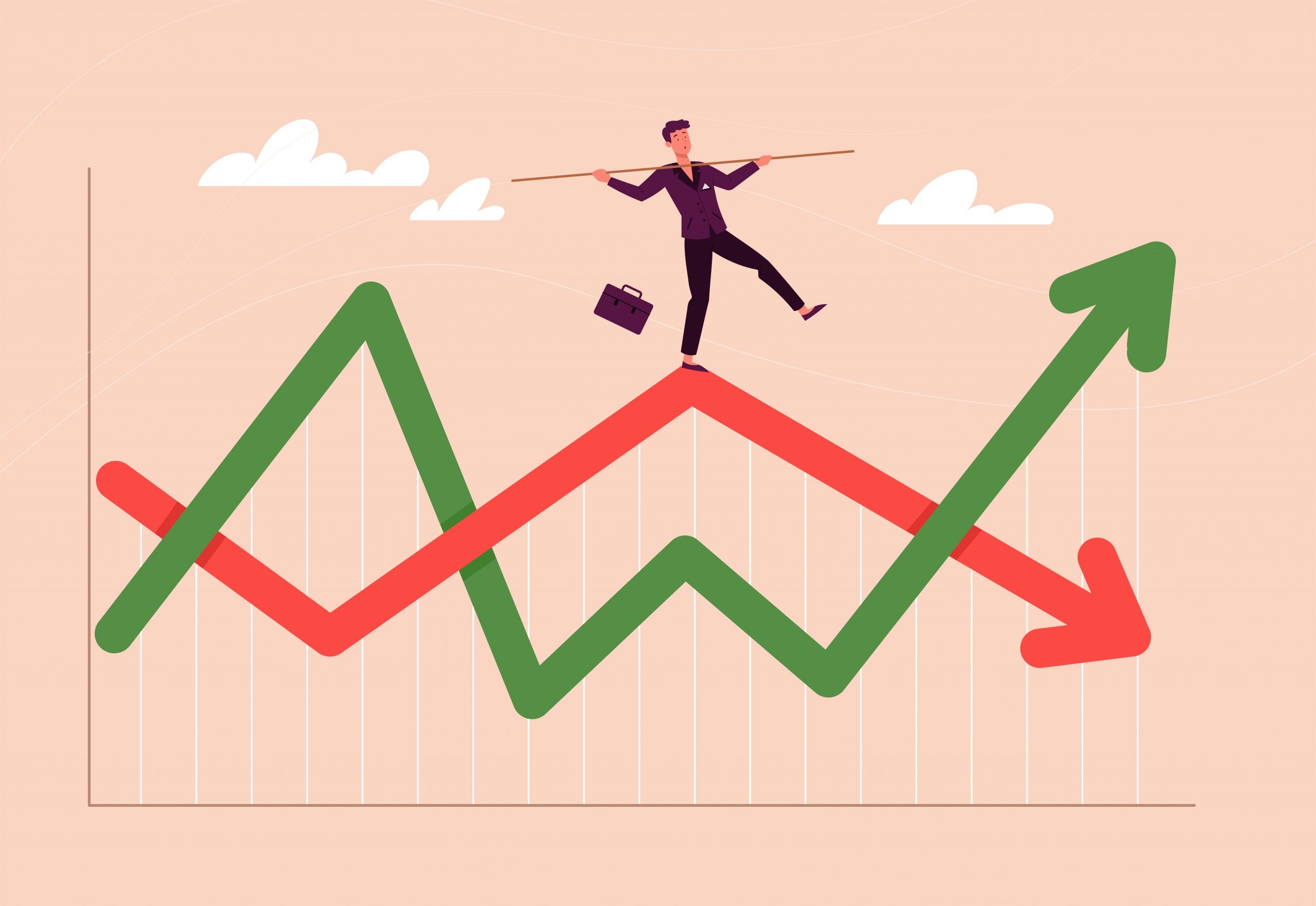
Why Do We Study Economic Theory?
The Puzzle That Refuses to Sit Still
A factory closes in one town and opens in another. Wages stagnate in one decade and accelerate in the next. A government intervenes to stabilize prices and instead triggers scarcity. These are not isolated curiosities; they are recurring patterns that demand explanation. Economic theory exists precisely because the world of markets, incentives, and institutions refuses to behave like a simple machine. It is, instead, a shifting architecture of human choices.
To study economic theory is to confront this architecture—not as passive observers, but as interpreters of a system that shapes prosperity, inequality, and power. The question is not merely academic. It is political, moral, and deeply practical.
Yet theory often appears abstract, even aloof. Equations, models, assumptions. Why invest time in such constructs when the world itself seems messy enough? The answer lies in what theory allows us to see—and what it prevents us from misunderstanding.
Economic Theory as a Language of Causality
At its core, economic theory is a disciplined attempt to answer a deceptively simple question: why.
Why do prices rise? Why do firms innovate? Why do some nations grow rich while others remain trapped in stagnation?
Without theory, we are left with anecdotes. With theory, we gain structure. A model—however imperfect—imposes order on chaos. It forces us to articulate mechanisms: incentives, constraints, trade-offs.
Consider a basic insight: when the price of a good increases, demand tends to fall. This is not a universal truth; it is a conditional statement embedded within assumptions about preferences, income, and substitutes. But it is a starting point—a lens through which behavior becomes intelligible rather than mysterious.
Economic theory, then, is not about certainty. It is about disciplined conjecture.
The Invisible Architecture of Decisions
Every economic outcome—whether a wage, a price, or an investment—is the result of countless decisions interacting. Theory allows us to map these interactions.
Individual Choices, Systemic Consequences
At the micro level, individuals maximize something: utility, profit, or survival. At the macro level, these individual decisions aggregate into outcomes that no single actor intends.
Inflation, unemployment, growth—these are emergent properties. They arise not from a central design but from decentralized behavior.
This is where theory becomes indispensable. It bridges the gap between the individual and the collective.
Institutions as the Hidden Variable
But theory does more than track choices; it embeds them within institutions. Property rights, legal systems, political constraints—these shape incentives in ways that are often invisible to the casual observer.
Why does entrepreneurship flourish in one country but falter in another? Why do some markets remain competitive while others become monopolized?
The answers lie not in individual brilliance but in institutional design. Economic theory provides the tools to analyze these designs systematically.
A Personal Lesson: When Intuition Fails
Years ago, I found myself convinced that raising the minimum wage would unambiguously reduce employment. The logic seemed airtight: higher labor costs should lead firms to hire fewer workers.
Then I encountered empirical studies—and more importantly, theoretical frameworks—that complicated this view. Under certain conditions, such as monopsony power in labor markets, higher minimum wages could increase employment.
That moment was instructive. My intuition had been guided by a partial model—one that assumed perfect competition. Economic theory did not eliminate uncertainty, but it exposed the limits of my reasoning.
The lesson was not that theory provides definitive answers. It was that theory disciplines intuition. It forces us to ask: under what conditions does this conclusion hold?
Competing Theories, Competing Worlds
Economic theory is not monolithic. It is a landscape of competing frameworks, each emphasizing different mechanisms.
A Comparative Snapshot
| Dimension | Classical Theory | Keynesian Theory | Behavioral Economics | Institutional Economics |
|---|---|---|---|---|
| Core Assumption | Rational agents, self-correcting markets | Demand-driven fluctuations | Bounded rationality | Institutions shape incentives |
| View of Markets | Efficient in the long run | Prone to instability | Often systematically biased | Context-dependent |
| Policy Implications | Limited intervention | Active fiscal and monetary policy | Nudge-based interventions | Structural reforms |
| Key Mechanism | Price adjustments | Aggregate demand | Cognitive biases | Rules and norms |
| Limitations | Ignores frictions | Risk of over-intervention | Hard to generalize | Difficult to model formally |
This plurality is not a weakness. It is a reflection of the complexity of the subject. Different theories illuminate different aspects of reality.
To study economic theory is to learn how to navigate this plurality—to understand not just what each theory claims, but where it applies and where it fails.
Prediction vs. Explanation: A False Dichotomy
Critics often argue that economic theory fails because it cannot predict crises or turning points with precision. There is some truth to this. But the critique misunderstands the purpose of theory.
Economic theory is not primarily a forecasting tool. It is an explanatory framework.
It tells us why a housing bubble might form, why it might burst, and why its consequences might propagate through the financial system. It does not claim to predict the exact timing of these events.
This distinction matters. A weather model that explains storms but cannot pinpoint their exact arrival time is still valuable. Similarly, economic theory equips us to understand mechanisms—even when precise prediction remains elusive.
The Political Economy Dimension
Economic theory is never entirely neutral. It carries implications for policy, and therefore for power.
Who Gains, Who Loses
Every policy recommendation—whether it concerns taxation, trade, or regulation—rests on a theoretical foundation. And every policy redistributes resources.
A tariff may protect domestic industries but raise consumer prices. A tax cut may stimulate investment but widen inequality.
Theory helps us trace these effects systematically. It forces us to confront trade-offs rather than ignore them.
Ideology vs. Analysis
There is a temptation to treat economic theory as a vehicle for ideology. But rigorous study resists this temptation.
By exposing assumptions, clarifying mechanisms, and testing predictions, economic theory creates a space where arguments can be evaluated on their merits.
It does not eliminate disagreement. But it elevates it.
Why Theory Matters in Practice
For policymakers, economic theory provides a framework for decision-making. For businesses, it offers insights into strategy and competition. For individuals, it sharpens understanding of everyday choices.
Policy Design
Consider monetary policy. Decisions about interest rates are not made in a vacuum. They rely on theoretical models linking inflation, unemployment, and expectations.
Without theory, such decisions would be little more than guesswork.
Business Strategy
Firms rely on concepts such as marginal cost, elasticity, and game theory. These are not abstract notions; they shape pricing strategies, market entry decisions, and competitive dynamics.
Everyday Life
Even at the individual level, economic theory offers clarity. Why save rather than spend? Why invest in education? These decisions involve trade-offs that theory helps articulate.
The Limits of Economic Theory
It would be a mistake to portray economic theory as omnipotent. Its limitations are real and consequential.
Simplification as Both Strength and Weakness
Models simplify reality. This is necessary. But simplification can obscure important factors—culture, history, and power dynamics.
A model that assumes rational agents may miss systematic biases. A model that ignores institutions may misinterpret outcomes.
The Problem of Measurement
Economic variables—such as utility or expectations—are often difficult to measure directly. This creates challenges for both theory and empirical validation.
Uncertainty and Complexity
The economy is a complex adaptive system. Feedback loops, nonlinearities, and unexpected shocks are inherent features.
Theory can guide us, but it cannot eliminate uncertainty.
Learning to Think, Not Just to Know
Perhaps the most important reason to study economic theory is not the knowledge it provides, but the way it trains us to think.
It encourages a particular kind of reasoning—one that is systematic, skeptical, and attentive to trade-offs.
Asking Better Questions
Instead of asking whether a policy is “good” or “bad,” economic theory prompts us to ask:
-
Under what conditions does it succeed?
-
Who benefits and who bears the cost?
-
What unintended consequences might arise?
These are not comfortable questions. But they are necessary.
Embracing Ambiguity
Economic theory does not offer simple answers. It offers conditional ones. This can be frustrating, but it is also liberating.
It reminds us that certainty is often an illusion.
A Discipline of Humility
If there is one enduring lesson from studying economic theory, it is humility.
The economy is too complex, too dynamic, and too intertwined with human behavior to be fully captured by any single framework.
Theory does not grant us mastery. It grants us perspective.
Conclusion: The Stakes of Understanding
Why do we study economic theory?
Because the stakes are too high not to.
Economic decisions—whether made by governments, firms, or individuals—shape the distribution of resources, opportunities, and power. They determine who prospers and who struggles.
Without theory, these decisions risk being guided by intuition, ideology, or short-term expediency. With theory, they are at least informed by a structured understanding of cause and effect.
But the value of economic theory lies not in providing definitive answers. It lies in sharpening our questions, disciplining our reasoning, and revealing the hidden mechanisms that drive outcomes.
In a world where economic forces are both pervasive and opaque, that is no small achievement.
- Arts
- Business
- Computers
- Games
- Health
- Home
- Kids and Teens
- Money
- News
- Personal Development
- Recreation
- Regional
- Reference
- Science
- Shopping
- Society
- Sports
- Бизнес
- Деньги
- Дом
- Досуг
- Здоровье
- Игры
- Искусство
- Источники информации
- Компьютеры
- Личное развитие
- Наука
- Новости и СМИ
- Общество
- Покупки
- Спорт
- Страны и регионы
- World

 Russian
 French
 Spanish
 Portuguese
 Deutsch
 Turkish
 Dutch
Dutch
 Italiano
 Arabic
 Romaian
 Portuguese (Brazil)
 Greek
Greek