
What is supply and demand theory?
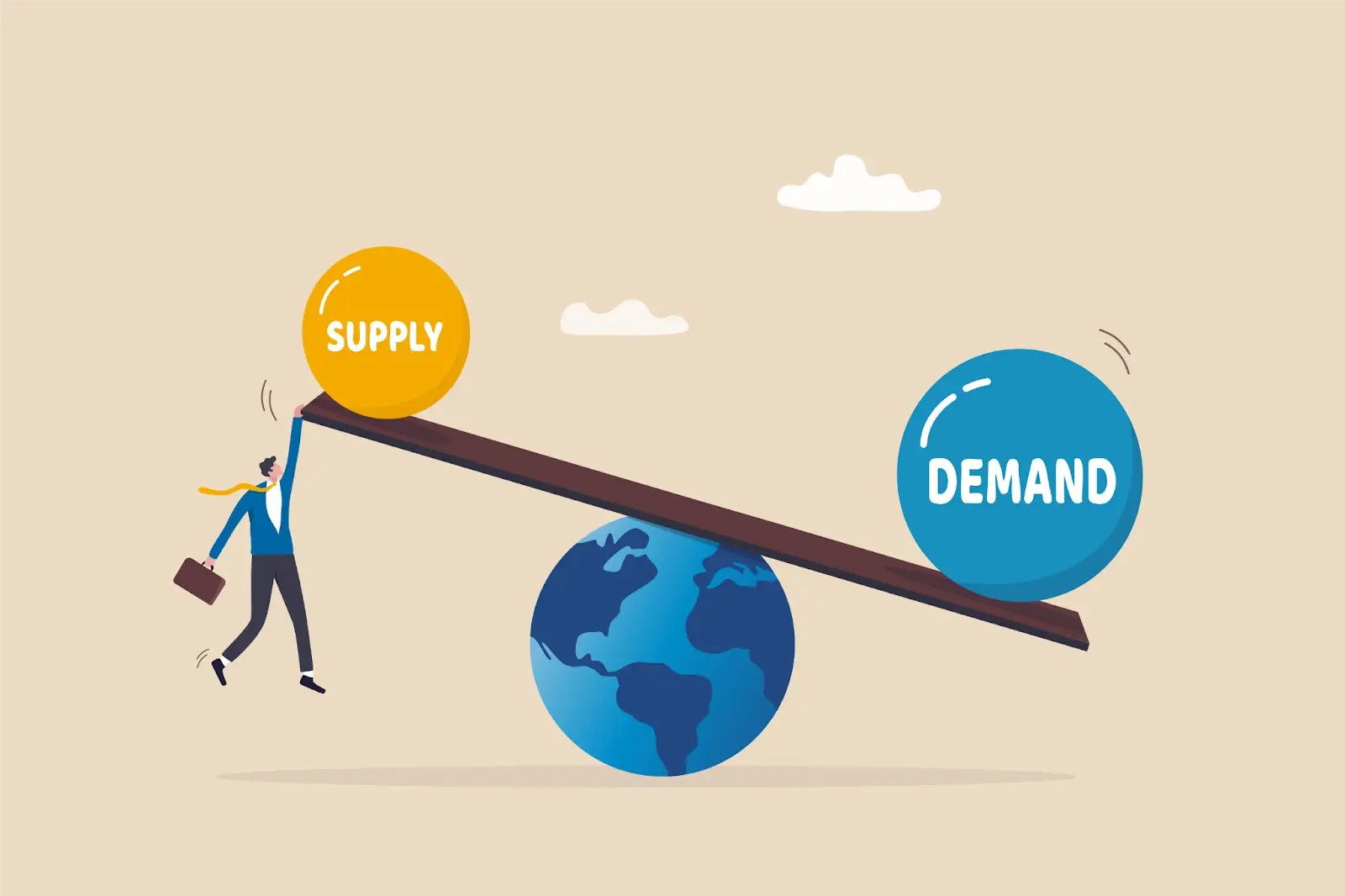
What Is Supply and Demand Theory?
A Price Tag, a Queue, and a Puzzle
I remember standing in a narrow alley in Istanbul years ago, watching a line form in front of a bakery that, at first glance, looked indistinguishable from the dozen others on the same street. The bread was not cheaper. The ingredients were not visibly superior. Yet people queued with a quiet determination, as though the act itself conveyed value. The owner, noticing my curiosity, shrugged and said, “People want what others want.”
That sentence, disarmingly simple, captures something essential about supply and demand—but also something it leaves out. For while the theory of supply and demand is often introduced as a mechanical relationship between prices and quantities, its real texture lies in the interplay between incentives, expectations, and institutions. It is not merely a diagram; it is a language for decoding human coordination under constraints.
The Core Mechanism: More Than a Diagram
At its most stripped-down level, supply and demand theory explains how prices and quantities of goods are determined in markets. Demand represents how much consumers are willing and able to purchase at various prices. Supply reflects how much producers are willing and able to sell.
When demand rises—holding everything else constant—prices tend to increase. When supply expands, prices tend to fall. Where the two intersect lies the so-called equilibrium: a price at which the quantity demanded equals the quantity supplied.
This description is tidy, almost too tidy. It suggests a frictionless world in which information flows seamlessly and agents respond instantaneously. But the real power of the theory emerges when we treat it not as a literal description, but as a framework for asking sharper questions: Why does demand shift? What constrains supply? Who holds power in the market?
Demand: Preferences, Income, and Social Context
Demand is often reduced to a downward-sloping curve, but behind that curve lies a set of assumptions that deserve scrutiny.
Consumers demand goods based on preferences, income, and expectations. Yet preferences are not fixed; they are shaped by culture, advertising, and social norms. Income is not exogenous; it is the outcome of labor markets, policy choices, and historical trajectories.
Consider housing demand. It is not simply a matter of how much individuals are willing to pay for shelter. It is also shaped by zoning laws, access to credit, and expectations about future prices. When buyers believe prices will rise, demand today increases—not because housing has become intrinsically more valuable, but because expectations have shifted.
This recursive quality—where beliefs about the future influence present behavior—is often underemphasized in textbook treatments but is central to understanding real markets.
Supply: Costs, Technology, and Constraints
Supply, too, is more than an upward-sloping curve. It reflects production costs, technological capabilities, and institutional constraints.
Firms decide how much to produce based on marginal costs—the cost of producing one additional unit. As production expands, costs often rise due to resource limitations or inefficiencies. This gives the supply curve its familiar upward slope.
But technology can reshape this relationship. A new production method can flatten the curve, allowing firms to produce more at lower cost. Conversely, regulatory barriers or supply chain disruptions can steepen it.
The pandemic offered a vivid illustration. Supply chains fractured, input costs surged, and firms faced constraints that had little to do with traditional notions of marginal cost. Prices rose—not because demand alone increased, but because supply became rigid.
When Supply Meets Demand: Equilibrium and Its Discontents
The intersection of supply and demand determines equilibrium price and quantity. In theory, this equilibrium is stable: if prices deviate, market forces push them back.
Yet equilibrium is not always benign. It reflects existing distributions of income and power. A market can be in equilibrium and still produce outcomes that are inefficient or inequitable.
For example, if a life-saving drug is priced at a level that only a fraction of the population can afford, the market clears—supply equals demand—but the outcome is socially troubling. The theory does not resolve this tension; it merely describes it.
A Closer Look: Key Drivers Compared
Below is a structured comparison of the primary forces shaping supply and demand:
| Factor | Affects Demand | Affects Supply | Mechanism of Influence | Real-World Example |
|---|---|---|---|---|
| Price | Inverse relationship | Direct relationship | Higher prices reduce demand, increase supply | Gasoline consumption vs. oil production |
| Income | Positive for normal goods | Indirect | Higher income increases purchasing power | Luxury goods demand rising with GDP |
| Preferences | Strong influence | Minimal | Cultural and social factors shift demand curves | Organic food popularity |
| Technology | Limited | Strong influence | Reduces production costs, shifts supply outward | Automation in manufacturing |
| Input Costs | Minimal | Strong influence | Higher costs reduce supply | Rising wages affecting service industries |
| Expectations | Significant | Significant | Anticipated future prices affect current behavior | Housing market bubbles |
| Government Policy | Taxes/subsidies affect demand | Regulations/taxes affect supply | Alters incentives and constraints | Carbon taxes, subsidies for renewables |
| Market Structure | Shapes elasticity | Shapes elasticity | Competition vs. monopoly affects responsiveness | Tech platforms vs. commodity markets |
The table makes one point unmistakably clear: supply and demand are not isolated forces. They are embedded in a broader system of economic and political variables.
Elasticity: The Sensitivity That Matters
Not all markets respond equally to price changes. This is where elasticity enters the picture.
Price elasticity of demand measures how sensitive consumers are to price changes. If demand is elastic, a small price increase leads to a large drop in quantity demanded. If it is inelastic, quantity changes little.
Similarly, supply elasticity measures how responsive producers are to price changes.
Elasticity matters because it determines how shocks propagate through the economy. When demand is inelastic—as with essential goods—price increases can impose significant burdens on consumers. When supply is inelastic, even small increases in demand can lead to sharp price spikes.
Energy markets provide a telling example. In the short run, both supply and demand are relatively inelastic. This is why geopolitical disruptions often lead to dramatic price swings.
Beyond the Basics: Market Failures and Power
The standard model assumes competitive markets where no single actor can influence prices. But many real-world markets deviate from this ideal.
Monopolies and oligopolies can restrict supply to keep prices high. Consumers may lack information, leading to suboptimal choices. Externalities—costs or benefits not reflected in prices—can distort outcomes.
Pollution is the canonical example. Firms may produce goods cheaply by emitting pollutants, but the social cost is borne by others. The market equilibrium, in this case, is inefficient.
Recognizing these limitations does not invalidate supply and demand theory. Instead, it highlights the need to integrate it with a broader understanding of institutions and incentives.
A Personal Lesson: When Theory Meets Reality
During my early career, I worked on a project analyzing agricultural markets in a developing region. The data suggested that farmers were not responding to price signals in the way the theory predicted. Higher prices did not lead to increased production.
At first, this seemed like a failure of the model. But a closer look revealed a different story. Farmers faced credit constraints, lacked access to modern inputs, and operated under significant uncertainty. The supply curve, in effect, was not upward-sloping in the conventional sense—it was constrained, almost vertical.
The lesson was not that supply and demand theory was wrong. It was that its assumptions—about flexibility, access, and information—were not satisfied. Once those constraints were accounted for, the behavior of farmers became intelligible.
The Dynamic Nature of Markets
Markets are not static. Supply and demand evolve over time, shaped by innovation, policy, and social change.
Consider the transition to renewable energy. As technology improves and costs fall, the supply of clean energy expands. At the same time, shifting preferences and policy incentives increase demand. The equilibrium moves—not abruptly, but through a series of adjustments.
This dynamic process underscores an important point: supply and demand are not endpoints. They are trajectories.
Why the Theory Endures
Despite its simplicity, supply and demand theory remains a cornerstone of economics because it provides a disciplined way to think about trade-offs.
It forces us to ask: What happens when a constraint is relaxed? Who gains, and who loses? How do incentives shape behavior?
These questions are as relevant today as they were when the theory first emerged. If anything, they are more urgent in a world characterized by rapid technological change and growing inequality.
A Provocative Closing: The Limits of the Invisible Hand
There is a tendency to treat supply and demand as a kind of natural law, an invisible hand guiding markets toward efficient outcomes. This interpretation is seductive—and incomplete.
Markets do not exist in a vacuum. They are constructed through legal frameworks, political decisions, and social norms. The curves we draw on a graph are abstractions of a much messier reality.
The real question, then, is not whether supply and demand determine prices. It is how the conditions under which they operate are shaped—and by whom.
If we ignore that question, we risk mistaking description for explanation, and equilibrium for justice.
- Arts
- Business
- Computers
- Jocuri
- Health
- Home
- Kids and Teens
- Money
- News
- Personal Development
- Recreation
- Regional
- Reference
- Science
- Shopping
- Society
- Sports
- Бизнес
- Деньги
- Дом
- Досуг
- Здоровье
- Игры
- Искусство
- Источники информации
- Компьютеры
- Личное развитие
- Наука
- Новости и СМИ
- Общество
- Покупки
- Спорт
- Страны и регионы
- World

 English
 Russian
 French
 Spanish
 Portuguese
 Deutsch
 Turkish
 Dutch
Dutch
 Italiano
 Arabic
 Portuguese (Brazil)
 Greek
Greek