
How to make realistic goals?
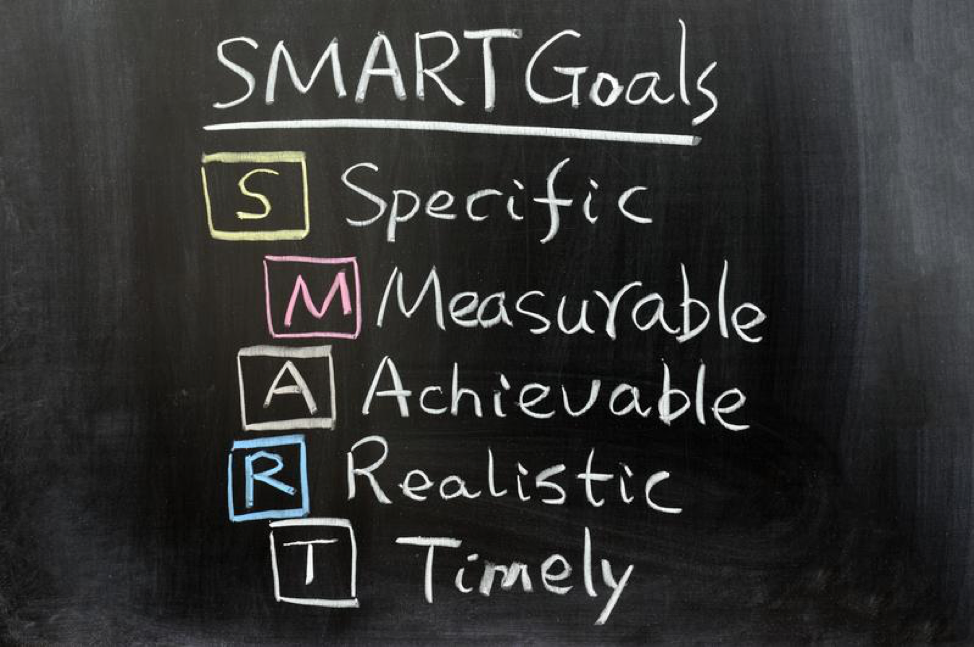
To set a realistic goal is to have an honest conversation with your limitations. We are often seduced by our "Peak Capacity Self"—that mythical version of us that wakes up at 5:00 AM, never gets distracted, and has boundless energy. We set goals for that person.
But that person doesn't exist.
Realistic goal-setting is about designing for the person who is tired, stressed, and has a sink full of dishes. It is about building a system that works when life is at its worst, not just when it’s at its best.
The Reality Check: Three Dimensions of "Can"
Before you commit to a goal, you must measure it against the three dimensions of your actual life: Time, Energy, and Skill.
1. The Time Audit (The "Real Estate" Rule)
Every new goal requires a "down payment" of time. If you want to spend five hours a week learning to code, those five hours must come from somewhere.
-
The Test: Look at your calendar for the last two weeks. Where are those hours going to come from? If you can't point to the specific activity you are going to stop doing, your goal is a fantasy.
2. The Energy Budget (The "Fuel" Rule)
Time and energy are not the same thing. You might have an hour free at 9:00 PM, but if your brain is fried from ten hours of decision-making at work, you won't use that hour to master organic chemistry.
-
The Test: Match the difficulty of the goal to the quality of your energy. High-brain-power goals belong in your peak hours; low-friction habits belong in your "slump" hours.
3. The Skill Gap (The "Ladder" Rule)
We often set goals that are five rungs above our current ability. This leads to immediate frustration and abandonment.
-
The Test: Is your goal one step beyond your current skill level, or ten? A realistic goal is "challenging but attainable." It should make you stretch, but not snap.
The "10% Margin" Strategy
Most people plan for 100% efficiency. But life has a way of intervening. Car batteries die, kids get sick, and meetings run long.
To make a goal realistic, apply the 10% Margin:
-
If you think you can finish a project in 10 days, plan for 11.
-
If you think you can save $500, aim for $450 first.
-
If you want to work out 5 days a week, set the "success" bar at 3.
This isn't about lowering your standards; it's about increasing your resilience. When you hit your "floor" (the 10% margin), you build momentum. When you miss a "ceiling" (the 100% perfection), you build shame. Momentum finishes marathons; shame stops them.
The Lesson of the "Vow of Smallness"
I once decided to become a "morning person" and do a 90-minute deep-work session before breakfast. On Monday, I did it. On Tuesday, I was exhausted. By Wednesday, I had hit snooze four times and felt like a failure.
I had set a goal for my "Heroic Self."
I decided to take a "Vow of Smallness." I changed the goal to: "Sit at my desk for 5 minutes with a cup of coffee at 7:00 AM." That was it. If I wanted to work, I could. If I wanted to just sit there, I could.
Because the bar was so low, I never missed a day. Within two weeks, those 5 minutes naturally turned into 20, then 60. By making the goal "unrealistically small," it became inevitably achievable.
The "Red-Light" Audit
At least once a month, perform a "Red-Light" audit on your goals.
-
Green Light: Goals that are moving smoothly. Keep going.
-
Yellow Light: Goals that are causing constant stress or being migrated daily. Shrink the scope.
-
Red Light: Goals that you haven't touched in two weeks. Delete or Defer.
There is no nobility in clinging to a goal that isn't working. Admitting a goal was unrealistic isn't a failure of character; it’s an evolution of intelligence.
The Provocation: Is Your Goal an Anchor or a Sail?
A realistic goal acts like a sail; it catches the wind of your daily habits and pulls you forward. An unrealistic goal acts like an anchor; it sits at the bottom of your to-do list, dragging you down and making every other task feel heavier.
If your goals are making you feel worse about your life, they are the wrong goals.
Stop trying to prove how much you can handle. Start proving how much you can sustain. The most realistic goal is the one you actually do.
What is the one goal on your list right now that feels like a heavy anchor? How can you cut the chain?
- Arts
- Business
- Computers
- Jogos
- Health
- Início
- Kids and Teens
- Money
- News
- Personal Development
- Recreation
- Regional
- Reference
- Science
- Shopping
- Society
- Sports
- Бизнес
- Деньги
- Дом
- Досуг
- Здоровье
- Игры
- Искусство
- Источники информации
- Компьютеры
- Личное развитие
- Наука
- Новости и СМИ
- Общество
- Покупки
- Спорт
- Страны и регионы
- World

 English
 Russian
 French
 Spanish
 Deutsch
 Turkish
 Dutch
Dutch
 Italiano
 Arabic
 Romaian
 Portuguese (Brazil)
 Greek
Greek