
What is classical vs Keynesian economics?
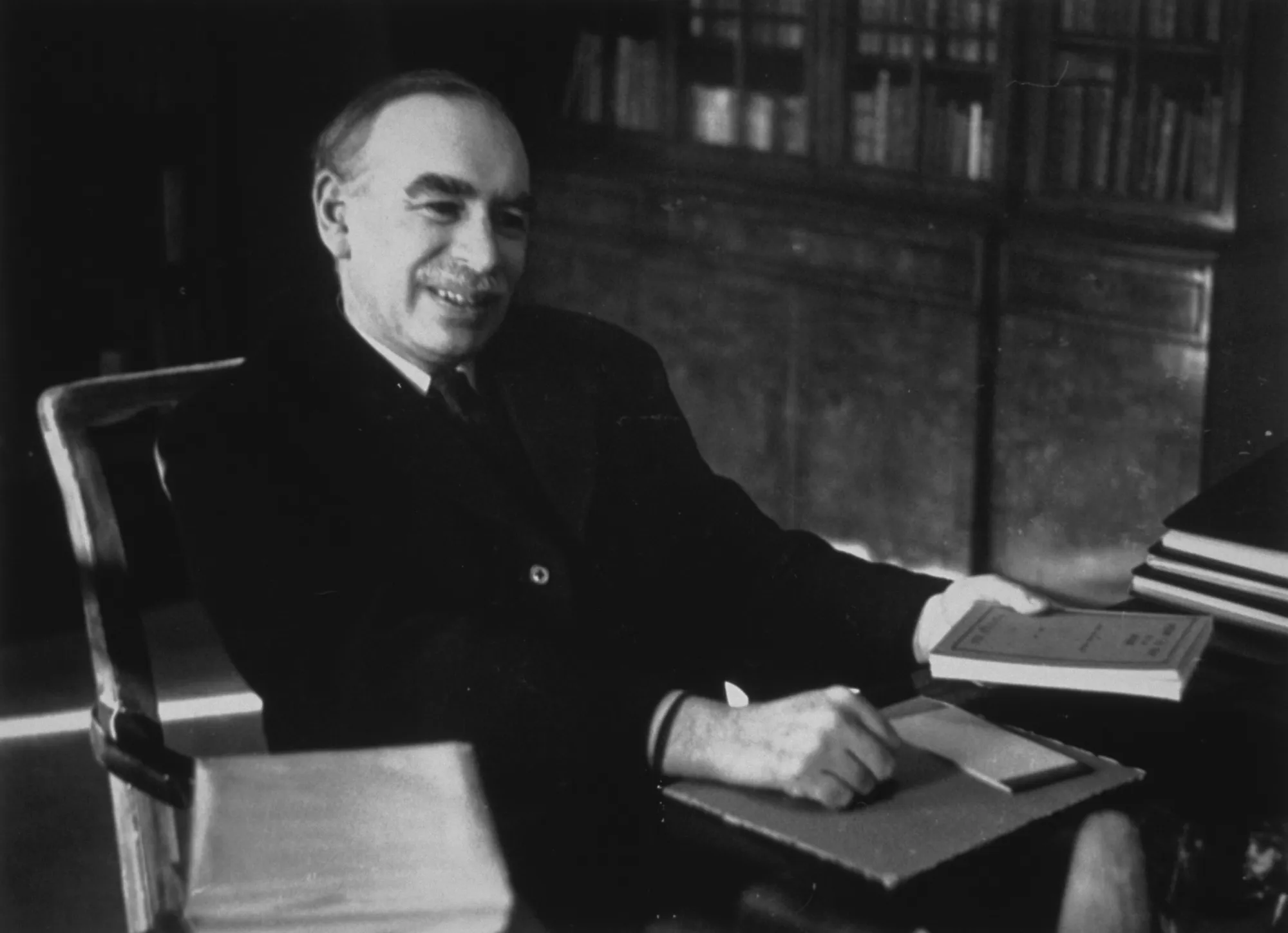
Classical vs. Keynesian Economics: Two Visions of How the World Actually Works
There is a particular moment—often invisible in textbooks—when economic theory stops being an abstraction and starts feeling like a wager on reality. I remember sitting in a policy seminar years ago, listening to two economists argue past each other. One insisted that markets, left alone, would equilibrate; the other countered that waiting for equilibrium during a recession is like waiting for a fever to break without medicine. Neither was naïve. Both were armed with models, data, and a certain quiet conviction. What separated them was not intelligence, but a fundamentally different view of how economies behave under stress.
That divide—between classical and Keynesian economics—is not merely academic. It is the fault line beneath debates about unemployment, inflation, and the role of government. And it persists because each framework captures something real, but incomplete, about how modern economies function.
The Classical Tradition: Order, Incentives, and Self-Correction
Classical economics begins with a deceptively simple premise: markets tend toward equilibrium. Prices adjust, wages respond, and resources flow to their most productive uses. In this view, economic disruptions are temporary deviations from an underlying order.
The Architecture of Self-Regulation
At the core of classical thought lies a belief in flexible prices and wages. If unemployment rises, wages fall; as wages fall, firms hire more workers; equilibrium is restored. The mechanism is impersonal but powerful—no central authority required.
This perspective is anchored in three key ideas:
-
Say’s Law: Supply creates its own demand. Production generates income, and that income is spent, ensuring that goods produced are ultimately purchased.
-
Rational agents: Individuals respond predictably to incentives, optimizing their decisions in markets.
-
Minimal government intervention: State interference distorts price signals and delays adjustment.
What is striking here is not just the internal coherence, but the implicit optimism. Markets, if left unencumbered, are not just efficient—they are stabilizing.
Where Classical Logic Holds
There is empirical traction to this view, particularly in the long run. Over decades, economies do tend to recover from shocks. Labor markets adjust. Capital reallocates. Innovation redefines constraints.
But this long-run focus is precisely where critics find fault. As one economist once quipped, “In the long run, we are all dead.” It is not a dismissal of equilibrium, but a challenge to its relevance during crises.
Keynesian Economics: Frictions, Failures, and the Short Run
Keynesian economics emerges not as a refinement, but as a rupture. It begins with an uncomfortable observation: markets can fail to self-correct—sometimes for prolonged periods.
Demand as the Missing Piece
The central insight is disarmingly simple: total spending in the economy—aggregate demand—can fall short of what is needed to employ all resources. When this happens, unemployment persists not because wages are too high, but because demand is too weak.
This reframing leads to a different set of assumptions:
-
Sticky prices and wages: Adjustments are slow, constrained by contracts, norms, and institutional rigidities.
-
Demand-driven output: Firms produce based on expected demand, not just capacity.
-
Active government role: Fiscal and monetary policies can—and should—stabilize the economy.
Here, the economy is not a self-correcting system but a coordination problem. When households and firms cut spending simultaneously, the result is a downward spiral that markets alone may not arrest.
The Logic of Intervention
Keynesian policy prescriptions follow naturally. During downturns, governments should increase spending or cut taxes to boost demand. Central banks should lower interest rates to encourage investment.
These interventions are not meant to replace markets, but to stabilize them when they falter.
A Data-Rich Comparison: Classical vs. Keynesian Economics
| Dimension | Classical Economics | Keynesian Economics |
|---|---|---|
| Core Assumption | Markets self-correct | Markets can fail to self-correct |
| Price & Wage Flexibility | Fully flexible | Sticky in the short run |
| Unemployment | Voluntary or temporary | Can be involuntary and persistent |
| Role of Demand | Secondary | Central driver of output and employment |
| Government Intervention | Minimal | Active, especially during downturns |
| Time Horizon | Long run | Short run |
| Policy Focus | Structural efficiency | Stabilization of aggregate demand |
| View of Crises | Self-correcting deviations | Systemic failures requiring intervention |
The Tension Between Time Horizons
One of the most revealing ways to understand this divide is through time. Classical economics is a theory of the long run; Keynesian economics is a theory of the short run.
But economies do not live neatly in one or the other. A recession is, by definition, a short-run phenomenon with long-run consequences. Skills erode. Firms exit. Inequality widens. The distinction between short and long run becomes less a matter of timing and more a matter of stakes.
This is where the debate sharpens. If you believe that markets will eventually correct themselves, intervention may seem unnecessary—or even harmful. But if you believe that the path to equilibrium is littered with irreversible losses, inaction becomes its own form of policy.
A Lesson Learned: Theory Meets Policy
During a research project on post-crisis labor markets, I encountered a dataset that forced me to reconsider my own priors. Regions that implemented aggressive fiscal stimulus recovered employment faster than those that pursued austerity. The effect was not uniform, and it was not permanent—but it was real.
What struck me was not just the magnitude of the difference, but its implication: under certain conditions, policy could alter the trajectory of recovery in ways that classical models would struggle to predict.
The lesson was not that Keynesian economics is universally correct. It was that the assumptions underlying each framework matter profoundly—and that those assumptions are, in turn, contingent on context.
Beyond the Binary: Hybrid Realities
In practice, modern macroeconomics has moved toward synthesis. Few economists today adhere strictly to either classical or Keynesian orthodoxy. Instead, they operate within models that incorporate elements of both:
-
New Classical models emphasize expectations and market clearing but acknowledge information frictions.
-
New Keynesian models retain microeconomic foundations while incorporating price stickiness and demand fluctuations.
This hybridization reflects an implicit concession: no single framework fully captures the complexity of real-world economies.
Why This Debate Still Matters
It is tempting to view the classical-Keynesian divide as a historical artifact—a debate settled by decades of research. But this would be a mistake.
Every major economic crisis reactivates these tensions. During downturns, the question resurfaces: should governments intervene aggressively, or should they allow markets to adjust?
The answer is never purely theoretical. It is shaped by institutional capacity, political constraints, and the nature of the shock itself. A financial crisis, a pandemic, or an energy shock each interacts differently with the underlying economy.
A Provocative Conclusion: The Cost of Being Wrong
If classical economics is wrong, the cost is prolonged unemployment and underutilized resources. If Keynesian economics is wrong, the cost is inflation, debt, and potential inefficiency.
The asymmetry here is subtle but important. One framework risks doing too little; the other risks doing too much.
The real challenge, then, is not choosing sides, but understanding when each framework applies. This requires more than technical proficiency. It demands a willingness to question assumptions, to engage with data, and to recognize that economic models are not neutral—they are lenses that shape how we interpret the world.
In the end, the debate between classical and Keynesian economics is not about which theory is correct in the abstract. It is about which theory is useful, and when. And that, perhaps, is the most uncomfortable insight of all: economics, at its core, is not just a science of markets, but a discipline of judgment.
- Arts
- Business
- Computers
- الألعاب
- Health
- الرئيسية
- Kids and Teens
- مال
- News
- Personal Development
- Recreation
- Regional
- Reference
- Science
- Shopping
- Society
- Sports
- Бизнес
- Деньги
- Дом
- Досуг
- Здоровье
- Игры
- Искусство
- Источники информации
- Компьютеры
- Личное развитие
- Наука
- Новости и СМИ
- Общество
- Покупки
- Спорт
- Страны и регионы
- World

 English
 Russian
 French
 Spanish
 Portuguese
 Deutsch
 Turkish
 Dutch
Dutch
 Italiano
 Romaian
 Portuguese (Brazil)
 Greek
Greek