
What is Marxist economic theory?
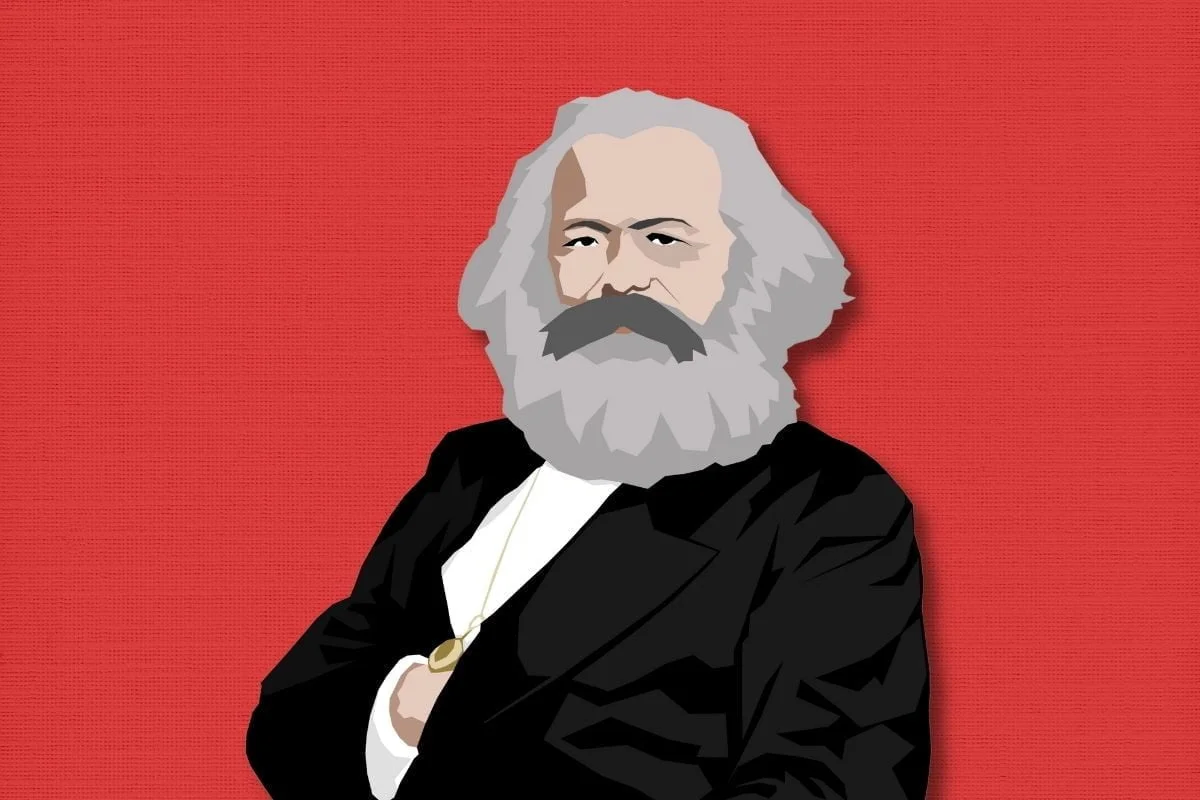
The Theory That Refuses to Sit Quietly
There is a peculiar persistence to Karl Marx. Empires have collapsed, markets have globalized, financial systems have digitized themselves into abstraction—and yet Marxist economic theory continues to provoke, irritate, and, at times, illuminate. I have found that even in rooms dominated by quantitative models and elegant regressions, the ghost of Marx appears uninvited, asking a question that remains stubbornly difficult to dismiss: who truly benefits from economic growth?
That question—simple in phrasing, destabilizing in implication—is where Marxist economics begins. Not with equations, but with power.
What Is Marxist Economic Theory?
At its core, Marxist economic theory is an analysis of how economic systems organize production, distribute resources, and—crucially—structure inequality. Developed primarily by Karl Marx and his collaborator Friedrich Engels, it argues that capitalism is not merely a system of markets and prices, but a historically contingent arrangement rooted in exploitation and class conflict.
Unlike classical economists such as Adam Smith or later thinkers like John Maynard Keynes, Marx did not see markets as self-correcting or stabilizing institutions. Instead, he viewed them as arenas where structural imbalances—between labor and capital—are continuously reproduced.
To understand Marxist economics is to shift perspective. Prices, wages, profits—these are no longer neutral signals. They are outcomes of power relations embedded in institutions.
The Architecture of Marx’s Thought
Historical Materialism: Economics as Destiny
Marx begins with a bold premise: material conditions—how societies produce and distribute goods—shape everything else. Politics, culture, even ideology are downstream.
This framework, known as historical materialism, suggests that economic systems evolve through stages: feudalism gives way to capitalism, which in turn contains the seeds of its own transformation. Not because of moral failure, but because of internal contradictions.
It is a theory of motion. And friction.
The Labor Theory of Value
One of Marx’s most contested ideas is his adaptation of the labor theory of value. Put simply, he argued that the value of a commodity is determined by the socially necessary labor time required to produce it.
But Marx pushes further than earlier economists. The critical insight is not just how value is created—but how it is extracted.
Workers sell their labor for wages. Yet the value they produce exceeds those wages. The difference—what Marx calls surplus value—is appropriated by capitalists as profit.
This is not an incidental feature of capitalism. It is its engine.
Class Struggle as Economic Logic
For Marx, class is not a cultural identity or a sociological category. It is an economic position.
-
The bourgeoisie owns the means of production—factories, capital, land.
-
The proletariat sells labor to survive.
Their interests are structurally opposed. Higher wages reduce profits. Greater profits often require suppressing wages or intensifying labor.
This tension is not episodic; it is systemic. Marxist theory predicts that such contradictions will intensify, leading to crises—economic, political, and social.
A System Prone to Crisis
One of Marx’s most prescient insights lies in his theory of capitalist instability. He argued that capitalism is inherently crisis-prone due to overproduction and underconsumption.
Firms, driven by competition, expand production. But workers—whose wages are constrained—cannot absorb the output. The result? Gluts, recessions, and periodic collapse.
It is difficult not to see echoes of this logic in modern downturns, including the 2008 financial crisis. While the causes were complex, the pattern—excess capacity, fragile demand, systemic risk—would not have surprised Marx.
Marx vs. Other Economic Frameworks
To appreciate Marxist theory, it helps to place it alongside its rivals. Not as a binary opposition, but as competing lenses.
Comparison Table: Competing Economic Theories
| Dimension | Marxist Economics | Classical Economics | Keynesian Economics |
|---|---|---|---|
| Key Figures | Karl Marx | Adam Smith | John Maynard Keynes |
| View of Markets | Sites of exploitation and power imbalance | Efficient allocators of resources | Often unstable, require intervention |
| Source of Value | Labor (socially necessary labor time) | Labor + capital + land | Demand-driven value |
| Role of Government | Ultimately transitional (toward classless society) | Minimal intervention | Active stabilization |
| Core Problem | Exploitation and inequality | Resource allocation | Demand shortfalls |
| Crisis Explanation | Structural contradictions in capitalism | External shocks | Insufficient aggregate demand |
| Long-Term Vision | End of capitalism, classless society | Self-regulating markets | Managed capitalism |
This table is not merely descriptive—it reveals something deeper. Each framework answers a different question. Marx asks: who owns and who works? Classical economists ask: how are resources allocated? Keynes asks: how do we stabilize fluctuations?
They are not substitutes. They are competing diagnoses of the same organism.
The Personal Lesson: When Theory Meets Reality
Years ago, I sat in a policy seminar where a labor economist presented data on wage stagnation despite rising productivity. The charts were clean, the methodology impeccable. And yet, something felt unresolved.
During the discussion, a colleague—trained outside mainstream economics—posed a simple question: Why assume this divergence is an anomaly rather than a feature?
It was a Marxist question.
That moment stayed with me. Not because it converted me, but because it exposed a blind spot. Much of modern economics is extraordinarily good at measurement. Less so at interrogation.
Marxist theory, for all its limitations, insists on asking uncomfortable structural questions. Who captures productivity gains? Why do inequalities persist despite growth? What institutional arrangements make these outcomes possible?
The lesson was not that Marx was “right” in a totalizing sense. It was that ignoring his framework leaves certain patterns unexplained—or worse, normalized.
Critiques and Limitations
No serious discussion of Marxist economics can avoid its criticisms.
First, the labor theory of value has been widely challenged. Modern economics tends to favor subjective value—what individuals are willing to pay—over labor-based metrics.
Second, Marx underestimated capitalism’s adaptability. Welfare states, regulatory frameworks, and technological innovation have mitigated some of the crises he predicted.
Third, historical attempts to implement Marxist principles—most notably in the Soviet Union—produced outcomes far removed from the emancipatory vision Marx imagined. Centralized control often replaced market exploitation with bureaucratic inefficiency and political repression.
Yet dismissing Marx entirely would be intellectually lazy. His framework continues to offer tools for analyzing inequality, corporate power, and global labor dynamics.
Marxism in a Globalized Economy
If Marx were writing today, he might not begin with factories in 19th-century England. He might look instead at supply chains stretching across continents, digital platforms mediating labor, and capital flows moving at near-instant speed.
The underlying logic, however, would feel familiar.
-
Workers in one country produce goods consumed in another.
-
Corporations arbitrage wages across borders.
-
Wealth concentrates at the top, often detached from productive activity.
The language has changed—“gig economy,” “platform capitalism”—but the questions remain recognizably Marxian.
Why Marx Still Matters
There is a temptation to treat Marxist economics as a relic—something to be studied, categorized, and ultimately set aside. That temptation is misguided.
Marx’s enduring relevance lies not in providing definitive answers, but in forcing a particular kind of inquiry. He compels us to examine the distributional consequences of economic systems, not just their efficiency.
And in a world where inequality continues to widen—even amid unprecedented wealth creation—that inquiry feels less like an academic exercise and more like a necessity.
A Provocative Conclusion
Marxist economic theory does not offer comfort. It does not reassure us that markets will self-correct or that growth will eventually lift all boats. Instead, it presents a more unsettling proposition: that the very structure of capitalism may generate the inequalities it claims to overcome.
You can reject that proposition. Many do, with good reason.
But you cannot ignore the question it raises.
Because once you start asking who benefits—and who does not—the conversation changes. Subtly at first. Then all at once.
And that, perhaps, is Marx’s most enduring contribution: not a closed system of thought, but a persistent disruption of economic complacency.
- Arts
- Business
- Computers
- Spiele
- Health
- Startseite
- Kids and Teens
- Geld
- News
- Personal Development
- Recreation
- Regional
- Reference
- Science
- Shopping
- Society
- Sports
- Бизнес
- Деньги
- Дом
- Досуг
- Здоровье
- Игры
- Искусство
- Источники информации
- Компьютеры
- Личное развитие
- Наука
- Новости и СМИ
- Общество
- Покупки
- Спорт
- Страны и регионы
- World

 English
 Russian
 French
 Spanish
 Portuguese
 Turkish
 Dutch
Dutch
 Italiano
 Arabic
 Romaian
 Portuguese (Brazil)
 Greek
Greek