
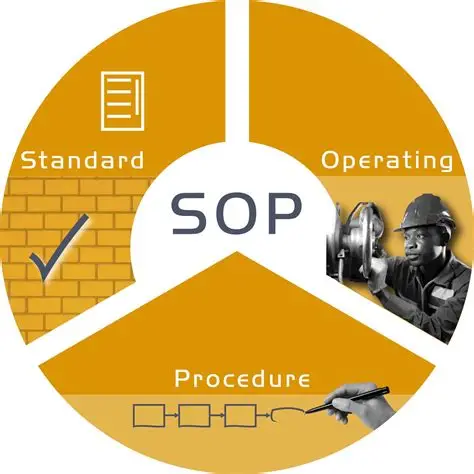
What are standard operating procedures (SOPs)?
It was a simple process.
Or at least, it was supposed to be.
Each person completed it slightly differently. Not wrong, exactly—just… varied. One added an extra step. Another skipped one. A third reinterpreted the sequence entirely. The outcome fluctuated. Not dramatically. But enough to create friction.
Over time, that inconsistency became expensive:
- Errors increased
- Time spent correcting work grew
- Trust in the process weakened
No one had documented how the task should be done.
That absence is where Standard Operating Procedures—SOPs—enter. Not as rigid constraints, but as a way to define consistency where variation creates cost.
SOPs: A Definition That Often Misses the Point
Standard Operating Procedures are typically described as:
- Step-by-step instructions
- Documented processes
- Guidelines for consistent execution
All of this is accurate.
But incomplete.
SOPs are not just instructions. They are agreements—about how work is performed, how outcomes are achieved, and how consistency is maintained across individuals and time.
They answer a deceptively simple question:
If someone else had to do this task tomorrow, how would they know what “done correctly” looks like?
Why SOPs Exist: The Cost of Variability
Consistency Is Not Automatic
Without defined processes:
- Individuals rely on personal judgment
- Methods diverge
- Results vary
This variability:
- Increases error rates
- Slows execution
- Complicates collaboration
SOPs reduce variability—not by eliminating judgment, but by defining boundaries within which it operates.
Efficiency Follows Clarity
When processes are unclear:
- Time is spent deciding how to proceed
- Questions interrupt workflow
- Rework becomes common
SOPs:
- Provide a starting point
- Reduce decision fatigue
- Enable faster execution
Clarity is not restrictive. It is enabling.
The Structure of an Effective SOP
Not All SOPs Are Equal
A poorly written SOP:
- Confuses rather than clarifies
- Is ignored rather than used
- Adds friction instead of reducing it
An effective SOP is:
- Clear
- Concise
- Practical
Core Components
Most SOPs include:
- Purpose: Why the process exists
- Scope: Where it applies
- Responsibilities: Who is involved
- Steps: The sequence of actions
- Expected Outcome: What success looks like
These elements provide context—not just instruction.
SOPs Are Living Documents
Static Documents Become Obsolete
Processes change:
- Tools evolve
- Teams grow
- Requirements shift
An SOP that is not updated:
- Becomes inaccurate
- Loses relevance
- Is eventually ignored
Continuous Revision Is Necessary
Maintaining SOPs requires:
- Regular review
- Feedback from users
- Adjustment based on experience
An SOP should reflect how work is actually done—not how it was once intended.
A Lesson Learned: Documentation Without Use Has No Value
There was a time when I believed the solution to inconsistency was simple—document everything.
We created SOPs for:
- Core processes
- Administrative tasks
- Operational workflows
They were thorough. Detailed. Comprehensive.
And largely unused.
Why?
Because they were written for completeness, not usability.
They were:
- Too long
- Too complex
- Too detached from daily work
When we revised them—shortened, clarified, aligned them with actual workflows—they became useful.
The lesson was immediate: an SOP is only valuable if it is used.
SOPs and Tools: Supporting Structure
Where SOPs Live
SOPs are often stored in systems such as:
- Google Workspace
- Microsoft 365
These platforms:
- Centralize documentation
- Enable collaboration
- Allow easy updates
But storage is not the challenge.
Accessibility is.
Integrate SOPs Into Workflow
SOPs should not exist separately from work.
They should be:
- Easy to find
- Referenced during tasks
- Embedded in systems where possible
For example, linking SOPs within tools like Asana ensures they are used in context.
Standardization vs. Flexibility
When SOPs Are Essential
SOPs are most valuable for:
- Repetitive tasks
- Processes with compliance requirements
- Activities where errors are costly
In these cases, consistency is critical.
When Flexibility Is Required
Not all work benefits from strict procedures.
Creative or strategic tasks:
- Require judgment
- Benefit from variation
- Resist rigid structure
Applying SOPs too broadly:
- Limits innovation
- Reduces adaptability
Balance is necessary.
A Comparative Breakdown: SOP-Driven vs. Undefined Processes
| Process Element | Undefined Approach | SOP-Driven Approach | Impact on Operations |
|---|---|---|---|
| Task Execution | Variable, dependent on individual | Consistent, standardized | Reduced errors |
| Training | Informal, inconsistent | Structured, repeatable | Faster onboarding |
| Decision-Making | Frequent, ad hoc | Reduced, guided by process | Increased efficiency |
| Quality Control | Reactive | Built into process | Improved reliability |
| Scalability | Limited | Expandable | Sustainable growth |
| Knowledge Retention | Individual-dependent | Documented, shared | Organizational memory |
The distinction is not theoretical. It is operational.
SOPs and Training: Accelerating Competence
Reduce Dependency on Individuals
Without SOPs:
- Knowledge resides in people
- Training depends on availability
- Consistency is difficult to maintain
SOPs:
- Capture knowledge
- Enable self-guided learning
- Reduce reliance on specific individuals
Improve Onboarding
New employees:
- Require clarity
- Need structured guidance
SOPs provide:
- Defined processes
- Clear expectations
- Faster integration
Training becomes more efficient—and less variable.
The Hidden Risk: Over-Documentation
More Is Not Better
There is a temptation to document everything.
This leads to:
- Excessive detail
- Reduced usability
- Lower adoption
An effective SOP:
- Includes necessary information
- Excludes unnecessary complexity
Focus on Critical Processes
Not every task requires formal documentation.
Prioritize:
- High-impact processes
- Frequently repeated tasks
- Areas prone to error
This ensures effort is directed where it matters.
Adoption: The Deciding Factor
SOPs Must Be Used to Matter
Creating SOPs is not enough.
They must be:
- Integrated into workflows
- Referenced regularly
- Updated consistently
Without usage, they become static documents.
Encourage Engagement
Adoption improves when:
- Teams contribute to creation
- Feedback is incorporated
- Processes reflect actual work
Ownership increases relevance.
The Subtle Skill: Writing for Action, Not Completeness
An SOP is not a manual to be admired.
It is a tool to be used.
This requires:
- Clear language
- Logical structure
- Practical focus
Every element should answer a question:
What does the person using this need to do next?
A Final Reflection: SOPs as Organizational Memory
There is something revealing about how an organization handles its processes.
When knowledge is:
- Undocumented
- Inconsistent
- Dependent on individuals
the organization becomes fragile.
SOPs change that.
They:
- Preserve knowledge
- Enable consistency
- Support growth
Which leads to a question worth asking:
If your processes rely heavily on individual memory, what happens when that memory is no longer available?
SOPs are not about control.
They are about continuity.
And continuity, more than efficiency, is what allows organizations to sustain progress over time.
- Arts
- Business
- Computers
- Spiele
- Health
- Startseite
- Kids and Teens
- Geld
- News
- Personal Development
- Recreation
- Regional
- Reference
- Science
- Shopping
- Society
- Sports
- Бизнес
- Деньги
- Дом
- Досуг
- Здоровье
- Игры
- Искусство
- Источники информации
- Компьютеры
- Личное развитие
- Наука
- Новости и СМИ
- Общество
- Покупки
- Спорт
- Страны и регионы
- World

 English
 Russian
 French
 Spanish
 Portuguese
 Turkish
 Dutch
Dutch
 Italiano
 Arabic
 Romaian
 Portuguese (Brazil)
 Greek
Greek