
What is consumer behavior theory?
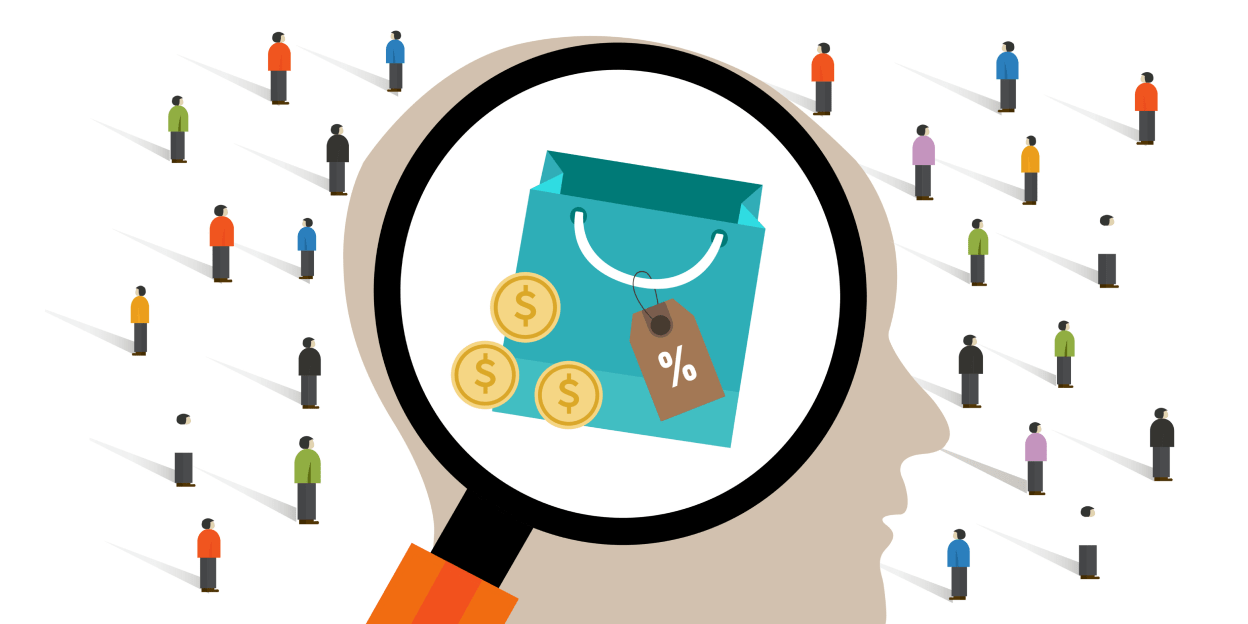
The Invisible Architecture of Choice
There is a quiet arrogance embedded in how we often narrate markets. We speak as if prices move first and people follow, as if preferences are stable artifacts tucked neatly inside individuals, waiting to be revealed through purchase. Yet the reality is less orderly, more recursive. Consumer behavior theory—at its core—is an attempt to impose structure on this apparent chaos, to understand how individuals navigate scarcity, desire, and constraint.
But the theory does more than explain shopping carts or demand curves. It encodes a worldview about human agency, about rationality, and—perhaps most importantly—about the institutions that shape what people come to want in the first place.
What Is Consumer Behavior Theory?
Consumer behavior theory examines how individuals make choices given limited resources. It seeks to model how consumers allocate income across goods and services to maximize satisfaction—what economists, with characteristic abstraction, call utility.
Yet even this seemingly clean definition hides a deeper tension.
Are consumers consistent optimizers, carefully weighing marginal benefits against marginal costs? Or are they creatures of habit, bias, and context—nudged as much by framing effects as by prices? The theory, as it has evolved, oscillates between these poles.
At its most classical, consumer behavior rests on three pillars:
-
Preferences: What consumers like or value
-
Budget constraints: What they can afford
-
Optimization: How they choose the best feasible option
But this triad, elegant as it is, quickly encounters friction when confronted with lived experience.
The Classical Framework: Rational Choice Under Constraints
Preferences and Utility
In standard models, preferences are assumed to be:
-
Complete: Consumers can rank all possible bundles
-
Transitive: If A is preferred to B, and B to C, then A is preferred to C
-
Stable: Preferences do not shift unpredictably
These assumptions allow economists to represent preferences with a utility function—a mathematical abstraction that ranks choices.
Yet the interesting question is not whether such a function exists, but whether it captures anything resembling reality.
Budget Constraints
Consumers face a simple constraint: income is finite. Prices determine what combinations of goods are affordable. The budget line becomes the stage upon which choices are made.
But even here, the simplicity is deceptive. Income is not just a number—it is shaped by labor markets, taxation, and institutions. Prices, too, are not exogenous; they emerge from market structures that consumer behavior theory often takes as given.
Optimization
Given preferences and constraints, consumers choose the bundle that maximizes utility. This yields the familiar condition:
-
The marginal utility per dollar spent is equalized across goods.
It is a neat result. Too neat, perhaps.
Where the Model Fractures
I remember, some years ago, trying to explain this framework to a group of small business owners. One of them—a shopkeeper with decades of experience—interrupted me mid-sentence. “People don’t compare marginal utilities,” he said flatly. “They buy what feels right.”
At first, I dismissed this as anecdotal noise. But over time, I came to see it differently. His observation was not a rejection of theory; it was a critique of its scope.
Because the classical model struggles with several persistent anomalies:
-
Inconsistent preferences: People reverse choices depending on framing
-
Present bias: Immediate rewards are overvalued relative to future ones
-
Social influence: Choices depend on what others do or expect
These are not marginal deviations. They are systematic.
Behavioral Consumer Theory: A Necessary Revision
Behavioral economics emerged not as a rebellion, but as a correction. It retains the ambition of modeling choice but relaxes the assumption of perfect rationality.
Bounded Rationality
Consumers do not optimize perfectly; they satisfice. They rely on heuristics—mental shortcuts—that simplify decision-making but introduce bias.
Prospect Theory
Losses loom larger than gains. A $10 loss feels more painful than a $10 gain feels rewarding. This asymmetry reshapes how consumers evaluate risk.
Mental Accounting
Consumers compartmentalize money. A tax refund is treated differently from regular income, even though, in principle, money is fungible.
These insights complicate the clean geometry of indifference curves and budget lines. But they also make the theory more empirically grounded.
A Comparative View: Classical vs. Behavioral Consumer Theory
| Dimension | Classical Theory | Behavioral Theory |
|---|---|---|
| Rationality | Full optimization | Bounded rationality |
| Preferences | Stable and consistent | Context-dependent |
| Decision Process | Calculative and deliberate | Heuristic-driven |
| Time Preferences | Consistent discounting | Present bias, hyperbolic discounting |
| Role of Emotions | Ignored | Central to decision-making |
| Policy Implications | Price-based interventions | Nudges and choice architecture |
This comparison is not merely academic. It has real consequences for how we design policies, markets, and institutions.
The Role of Institutions: Shaping Preferences Themselves
One of the more underappreciated aspects of consumer behavior theory is its implicit assumption that preferences are exogenous. That is, they exist prior to and independent of the economic environment.
But this assumption is difficult to sustain.
Advertising, social norms, and technological platforms do not just respond to preferences—they shape them. The rise of algorithmic recommendation systems, for instance, creates feedback loops where past choices influence future exposure, which in turn reinforces certain preferences.
In this sense, consumer behavior is not just about choice under constraint. It is about the formation of those constraints and the construction of desire.
Information, Power, and Asymmetry
Another dimension often sidelined in basic models is information.
Consumers rarely operate with perfect knowledge. They face:
-
Hidden attributes: Quality that is difficult to observe before purchase
-
Complex contracts: Terms that are hard to understand
-
Strategic obfuscation: Firms exploiting cognitive limitations
This introduces asymmetry—firms often know more than consumers. And with asymmetry comes power.
Consumer behavior theory, when extended to incorporate these realities, begins to intersect with industrial organization and contract theory. It becomes less about isolated individuals and more about structured interactions.
Cultural and Social Embeddedness
Preferences are not formed in a vacuum. They are embedded in cultural and social contexts.
Consider consumption patterns across societies. What is considered a necessity in one context may be a luxury in another. Status goods, in particular, reveal how consumption is often about signaling rather than intrinsic utility.
This complicates the notion of utility maximization. If utility depends on relative standing, then individual choices are interdependent. One person’s consumption affects another’s satisfaction.
The theory must then grapple with externalities—not of pollution or congestion, but of status and perception.
Digital Markets and the New Consumer
The digital economy introduces further complexity.
Consumers now operate in environments characterized by:
-
Information overload
-
Personalized pricing and recommendations
-
Zero-price goods (e.g., social media platforms)
These conditions challenge traditional assumptions.
When the price is zero, what constrains choice? Attention becomes the scarce resource. And firms compete not just for dollars, but for time and cognitive bandwidth.
Consumer behavior theory must adapt to this shift. It must account for the economics of attention, the role of data, and the strategic design of interfaces.
A Lesson Learned: Theory Meets Practice
In my own work, I once collaborated on a project aimed at improving financial decision-making among low-income households. The initial approach was straightforward: provide better information, assume rational updating, and expect improved outcomes.
It failed.
Participation was low, engagement even lower. The information, while accurate, was overwhelming. It did not align with how people actually processed decisions under stress.
We revised the approach. Simplified choices. Introduced defaults. Framed options differently.
The results improved—not dramatically, but meaningfully.
The lesson was not that theory is useless. It was that theory, when stripped of context, can mislead. Consumer behavior is not just about what people should do under idealized conditions. It is about what they actually do, given the constraints—cognitive, social, and institutional—they face.
Policy Implications: Beyond Prices
If consumer behavior were purely rational, policy could rely heavily on price mechanisms—taxes, subsidies, and transfers.
But behavioral insights suggest a broader toolkit:
-
Default options: Automatically enrolling individuals in beneficial programs
-
Framing effects: Presenting choices in ways that highlight long-term benefits
-
Simplification: Reducing complexity to improve decision quality
These interventions, often subtle, can have outsized effects.
Yet they also raise ethical questions. Who decides what constitutes a “better” choice? When does nudging become manipulation?
Consumer behavior theory, in this sense, is not just descriptive. It is inherently normative.
The Limits of Prediction
Despite its sophistication, consumer behavior theory remains an imperfect predictive tool.
Human behavior is context-dependent, historically contingent, and often nonlinear. Small changes in framing or environment can lead to disproportionately large changes in outcomes.
This does not render the theory obsolete. But it does suggest humility.
The goal is not perfect prediction. It is structured understanding.
A Provocative Conclusion: Are Preferences Even Ours?
If there is one uncomfortable implication that emerges from this discussion, it is this: the boundary between individual choice and external influence is far less clear than we might like to believe.
Consumer behavior theory began as an attempt to model autonomous individuals making rational choices. It has evolved into something more complex—a framework that recognizes bias, context, and constraint.
But perhaps the deeper question is not how consumers choose, but how they come to want what they want.
If preferences are shaped by institutions, culture, and technology, then the notion of sovereign consumer choice becomes less convincing. Markets do not simply aggregate preferences; they help produce them.
And in that production lies both power and responsibility.
The study of consumer behavior, then, is not just an academic exercise. It is an inquiry into the architecture of modern life—into how choices are structured, how desires are formed, and how individuals navigate a world that is, in subtle ways, designed around them.
Whether that design empowers or constrains is not something the theory can answer on its own. But it is a question the theory compels us to ask.
- Arts
- Business
- Computers
- Oyunlar
- Health
- Home
- Kids and Teens
- Money
- News
- Personal Development
- Recreation
- Regional
- Reference
- Science
- Shopping
- Society
- Sports
- Бизнес
- Деньги
- Дом
- Досуг
- Здоровье
- Игры
- Искусство
- Источники информации
- Компьютеры
- Личное развитие
- Наука
- Новости и СМИ
- Общество
- Покупки
- Спорт
- Страны и регионы
- World

 English
 Russian
 French
 Spanish
 Portuguese
 Deutsch
 Dutch
Dutch
 Italiano
 Arabic
 Romaian
 Portuguese (Brazil)
 Greek
Greek