
What are the essential office supplies?
It wasn’t dramatic.
No alarms. No urgent emails. Just a quiet pause in momentum.
Someone needed a document printed. The printer blinked. No paper. No backup ream nearby. A quick search turned into a longer one. Then a workaround. Then a delay that rippled outward—subtly, but unmistakably.
That’s the nature of essential office supplies.
They don’t announce their importance. They reveal it through absence.
And once you’ve seen how quickly small shortages compound into operational friction, the question changes from what do we need? to something more precise:
What can we not afford to run out of?
Essential Doesn’t Mean Obvious
Not Everything in an Office Is Critical
Walk through any workspace and you’ll find:
- Decorative items
- Redundant tools
- Supplies that exist more out of habit than necessity
Essential supplies are different.
They:
- Support core tasks
- Enable continuity
- Prevent interruptions
The Definition Is Functional
An essential office supply is not defined by frequency alone.
It is defined by consequence:
- What happens if it’s unavailable?
- Does work stop, slow, or continue unaffected?
If the answer is “stop” or “slow,” you’re looking at something essential.
The Core Categories of Essential Supplies
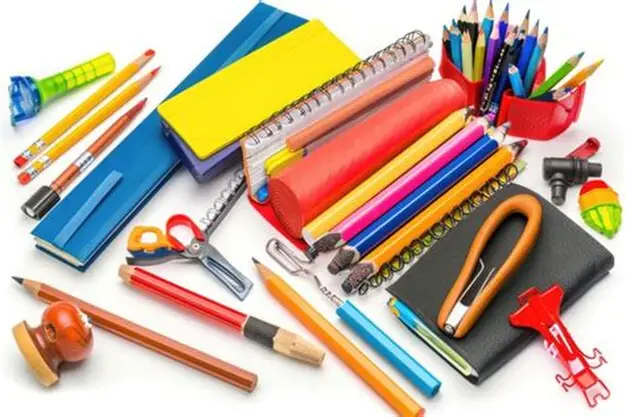
1. Writing Tools: The Smallest, Most Immediate Need
These are the first to disappear—and the first to be missed:
- Pens
- Pencils
- Highlighters
They support:
- Quick documentation
- Immediate communication
- On-the-spot decision-making
Their value lies in accessibility. When they’re not within reach, even simple tasks stall.
2. Paper Products: Still Quietly Necessary
Despite the prevalence of digital workflows, paper remains:
- Widely used
- Frequently needed
- Often underestimated
Essential items include:
- Printer paper
- Notepads
- Sticky notes
They bridge moments where:
- Speed matters more than format
- Tangibility improves clarity
3. Organizational Supplies: Structure in Physical Form
Without these, work becomes scattered:
- File folders
- Binders
- Labels
They:
- Create order
- Support retrieval
- Maintain clarity
Disorganization rarely begins with major failures. It begins when structure is absent.
4. Desk Essentials: The Tools That Prevent Interruptions
These are rarely noticed—until they’re missing:
- Staplers
- Tape
- Scissors
- Paper clips
They:
- Enable small tasks
- Eliminate micro-delays
- Maintain workflow continuity
5. Printing and Output Supplies: Where Digital Meets Physical
Even the most efficient systems eventually require output.
Essential items include:
- Printer ink or toner
- Backup cartridges
- Maintenance supplies
These support tools like Microsoft Word and Google Docs by ensuring digital work can become tangible when needed.
The Overlooked Category: Backup Supplies
Essentials Are Not Just Primary Items
Having one stapler is not enough.
If it breaks—or disappears—the absence is immediate.
Backup supplies:
- Prevent disruption
- Reduce urgency
- Maintain continuity
Redundancy Is Not Waste
It is preparation.
Especially for items that:
- Are frequently used
- Are difficult to substitute
- Cause delays when unavailable
A Lesson Learned: Essentials Are Defined by Interruption
There was a time when office supplies were managed loosely.
Everything seemed available—until it wasn’t.
The pattern became clear:
- Small shortages caused disproportionate delays
- Teams adapted with workarounds
- Efficiency declined quietly
What changed was not the quantity of supplies, but the understanding of what was essential.
We identified:
- Items that caused immediate disruption when missing
- Supplies tied directly to core workflows
Once those were consistently stocked, something subtle happened:
Work stopped slowing down.
The lesson was precise: essential supplies are not defined by cost or category—but by the impact of their absence.
Digital Tools Still Depend on Physical Supplies
The Hybrid Reality
Modern offices rely on platforms such as:
- Microsoft Excel
- Slack
Yet physical supplies remain necessary.
Why?
Because:
- Not all processes are digital
- Some tasks require physical interaction
- Output often needs to be shared tangibly
Integration, Not Replacement
The relationship is complementary:
- Digital tools manage information
- Physical supplies enable execution
Removing one does not eliminate the need for the other.
A Comparative Breakdown: Essential vs. Non-Essential Supplies
| Element | Essential Supplies | Non-Essential Supplies | Impact on Work |
|---|---|---|---|
| Availability | Must be consistent | Can vary | Direct vs. minimal impact |
| Function | Supports core tasks | Enhances convenience | Critical vs. optional |
| Replacement Urgency | Immediate | Flexible | High vs. low |
| Workflow Impact | Disruption when absent | Minor inconvenience | Significant vs. minimal |
| Inventory Priority | High | Moderate or low | Focused management |
The distinction is not about preference.
It is about necessity.
Inventory: Managing What Matters Most
Track Usage Patterns
Essential supplies:
- Have predictable consumption rates
- Require consistent replenishment
Tracking:
- Prevents shortages
- Supports planning
- Reduces reactive ordering
Set Minimum Levels
For each essential item:
- Define a minimum quantity
- Reorder before reaching zero
This:
- Eliminates urgency
- Maintains continuity
- Reduces stress
Accessibility: The Final Layer
Availability Is Not Enough
A supply can exist—and still be ineffective if:
- It’s difficult to find
- Poorly organized
- Stored inconsistently
Design for Ease of Use
Effective systems:
- Group similar items
- Use clear labeling
- Ensure logical placement
Accessibility turns supply into utility.
Cost: Small Items, Larger Influence
Individual Cost Is Misleading
Most essential supplies:
- Are inexpensive
- Purchased in bulk
- Seem insignificant financially
Operational Cost Tells a Different Story
When essential supplies are missing:
- Work slows
- Time is lost
- Frustration increases
The real cost is not the item.
It is the interruption.
The Subtle Skill: Knowing What Is Truly Essential
Not everything used frequently is essential.
Not everything essential is used constantly.
The distinction requires:
- Observation
- Pattern recognition
- Understanding of workflow
Ask:
- What stops work when it’s missing?
- What causes delays?
- What requires immediate replacement?
The answers define your essentials.
A Final Reflection: Essentials Are Defined in Their Absence
There is a tendency to overlook what works consistently.
When supplies are available:
- Work flows
- Tasks complete
- Processes continue
It feels normal.
Which leads to a question worth asking:
If the smooth operation of your office depends on uninterrupted access to basic tools, why are those tools often managed reactively instead of deliberately?
Because essentials rarely demand attention.
Until they do.
And when they do, the impact is immediate—not because the items are complex, but because their absence disrupts everything built around them.
- Arts
- Business
- Computers
- Juegos
- Health
- Home
- Kids and Teens
- Money
- News
- Personal Development
- Recreation
- Regional
- Reference
- Science
- Shopping
- Society
- Sports
- Бизнес
- Деньги
- Дом
- Досуг
- Здоровье
- Игры
- Искусство
- Источники информации
- Компьютеры
- Личное развитие
- Наука
- Новости и СМИ
- Общество
- Покупки
- Спорт
- Страны и регионы
- World

 English
 Russian
 French
 Portuguese
 Deutsch
 Turkish
 Dutch
Dutch
 Italiano
 Arabic
 Romaian
 Portuguese (Brazil)
 Greek
Greek