
What are examples of office supplies?
It wasn’t the spreadsheet that revealed the problem.
Not the budget report. Not the quarterly review.
It was the supply closet.
Half-used notebooks stacked beside unopened boxes. Three types of pens—none where they should be. Printer paper in surplus, toner missing entirely.
It looked ordinary. It wasn’t.
Because office supplies, when examined closely, tell a story about how work actually happens—not how it’s supposed to.
Which makes the question less trivial than it sounds:
What are examples of office supplies—and what do they reveal about the way an office functions?
The Definition Is Simple. The Implications Are Not.
Examples Are Easy to List
Ask anyone, and you’ll hear:
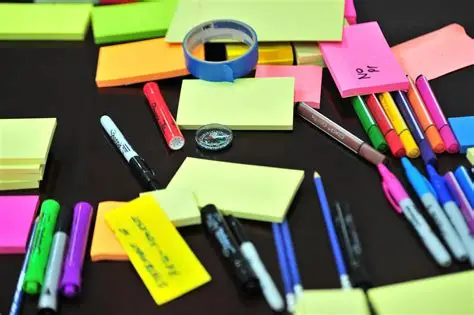
- Pens
- Paper
- Staplers
- Folders
They’re correct.
But examples alone don’t explain relevance.
Supplies Reflect Workflow
Office supplies:
- Mirror how tasks are completed
- Reveal dependencies
- Expose inefficiencies
They are not random objects.
They are indicators.
Category One: Writing and Marking Tools
The Most Immediate Examples
These are the items people reach for without thinking:
- Ballpoint pens
- Gel pens
- Mechanical pencils
- Highlighters
- Permanent markers
They support:
- Quick notes
- Edits
- Visual emphasis
Why They Matter
Their absence:
- Interrupts thought
- Delays action
- Forces substitution
Small tools. Immediate impact.
Category Two: Paper and Documentation Supplies
The Physical Layer of Work
Despite digital systems, paper persists:
- Printer paper
- Notepads
- Sticky notes
- Envelopes
These are among the most common examples of office supplies.
Their Function
They enable:
- Temporary capture of ideas
- Physical documentation
- Quick reference
Tools like Microsoft Word may generate content, but paper often completes the process.
Category Three: Organizational Tools
Structure in Tangible Form
Examples include:
- File folders
- Hanging folders
- Binders
- Dividers
- Labels
Their Role
They:
- Organize information
- Support retrieval
- Maintain order
Without them, information exists—but becomes difficult to access.
Category Four: Desk Accessories
The Quiet Enablers
These are often overlooked:
- Staplers
- Tape dispensers
- Scissors
- Paper clips
- Rubber bands
Their Contribution
They:
- Enable small, necessary actions
- Prevent interruptions
- Maintain flow
Their value is rarely noticed until they’re missing.
Category Five: Printing and Output Supplies
Where Work Becomes Tangible
Examples include:
- Printer ink
- Toner cartridges
- Maintenance kits
These support output from tools like Microsoft Excel and Google Docs.
Their Impact
Without them:
- Documents remain inaccessible in physical form
- Processes stall
- Workarounds emerge
Category Six: Storage and Filing Supplies
Managing Volume Over Time
Examples:
- Archive boxes
- File cabinets
- Storage bins
Why They Exist
They:
- Manage accumulation
- Preserve records
- Support long-term organization
Not used daily—but essential over time.
Category Seven: Technology-Adjacent Supplies
Supporting Digital Systems
Examples include:
- USB drives
- External hard drives
- Charging cables
- Batteries
Their Role
They:
- Extend functionality
- Provide backup
- Ensure continuity
Digital systems depend on physical support.
A Lesson Learned: Examples Reveal Patterns
There was a moment when we cataloged every supply in the office.
Not just what we thought we had—but what actually existed.
The results were uneven:
- Excess in low-use items
- Shortages in high-impact supplies
- Duplication across departments
The insight wasn’t about inventory.
It was about behavior.
What people used—and how often—revealed:
- Workflow priorities
- Hidden inefficiencies
- نقاط friction that hadn’t been formally acknowledged
The lesson was simple: examples of office supplies are not just items. They are data points.
Frequency vs. Impact: Not All Supplies Are Equal
High-Frequency Items
Used daily:
- Pens
- Paper
- Sticky notes
These:
- Require constant availability
- Have predictable consumption
High-Impact Items
Used less often—but critical:
- Toner cartridges
- Archive boxes
- Specialized labels
Their absence:
- Causes disproportionate disruption
A Comparative Breakdown: Common vs. Critical Examples
| Category | Common Examples | Critical Impact Examples | Operational Effect |
|---|---|---|---|
| Writing Tools | Pens, pencils | Permanent markers | Immediate usability |
| Paper Supplies | Notepads, printer paper | Pre-formatted documents | Workflow continuity |
| Organization | Folders, binders | Labeling systems | Information access |
| Desk Accessories | Paper clips, scissors | Staplers | Task completion |
| Printing Supplies | Standard ink | Backup toner | Output continuity |
| Storage | Basic boxes | Archive systems | Long-term management |
The distinction lies in consequence.
Accessibility: The Hidden Variable
Supplies Must Be Usable
An item:
- Stored incorrectly
- Difficult to locate
- Inconsistently placed
is effectively unavailable.
Organization Matters
Effective systems:
- Group similar items
- Use clear labeling
- Ensure logical placement
Examples only matter if they can be accessed.
Overlap and Redundancy
When Examples Multiply
Offices often accumulate:
- Multiple pen types
- Redundant tools
- Unused supplies
This creates:
- Clutter
- Confusion
- Inefficiency
Simplify Where Possible
Reducing variation:
- Improves clarity
- Simplifies ordering
- Enhances usability
Not every example needs to exist in multiple forms.
Cost Perspective: Small Items, Larger Patterns
Individually Minor
Most office supplies:
- Cost little
- Are purchased in bulk
- Seem financially insignificant
Collectively Significant
Over time:
- Waste accumulates
- Inefficiencies increase
- Budgets expand unnecessarily
Examples reveal spending patterns.
The Subtle Skill: Reading the Supply Environment
Understanding office supplies is not about memorizing lists.
It’s about interpreting:
- What is used
- What is missing
- What is overrepresented
This requires:
- Observation
- Pattern recognition
- Attention to detail
A Final Reflection: Examples Are Evidence
It’s easy to treat office supplies as background.
They sit quietly in drawers, cabinets, closets—rarely examined, rarely questioned.
But they are not neutral.
They reflect:
- How work is structured
- Where inefficiencies exist
- What the organization values
Which leads to a question worth asking:
If you walked into your office supply area right now, would it reflect intentional management—or accumulated habit?
Because the difference between those two states is not cosmetic.
It shapes how work moves.
And often, it determines whether that movement is smooth—or consistently interrupted by the smallest, most preventable gaps.
- Arts
- Business
- Computers
- Παιχνίδια
- Health
- Κεντρική Σελίδα
- Kids and Teens
- Money
- News
- Personal Development
- Recreation
- Regional
- Reference
- Science
- Shopping
- Society
- Sports
- Бизнес
- Деньги
- Дом
- Досуг
- Здоровье
- Игры
- Искусство
- Источники информации
- Компьютеры
- Личное развитие
- Наука
- Новости и СМИ
- Общество
- Покупки
- Спорт
- Страны и регионы
- World

 English
 Russian
 French
 Spanish
 Portuguese
 Deutsch
 Turkish
 Dutch
Dutch
 Italiano
 Arabic
 Romaian
 Portuguese (Brazil)