
How to improve habits?
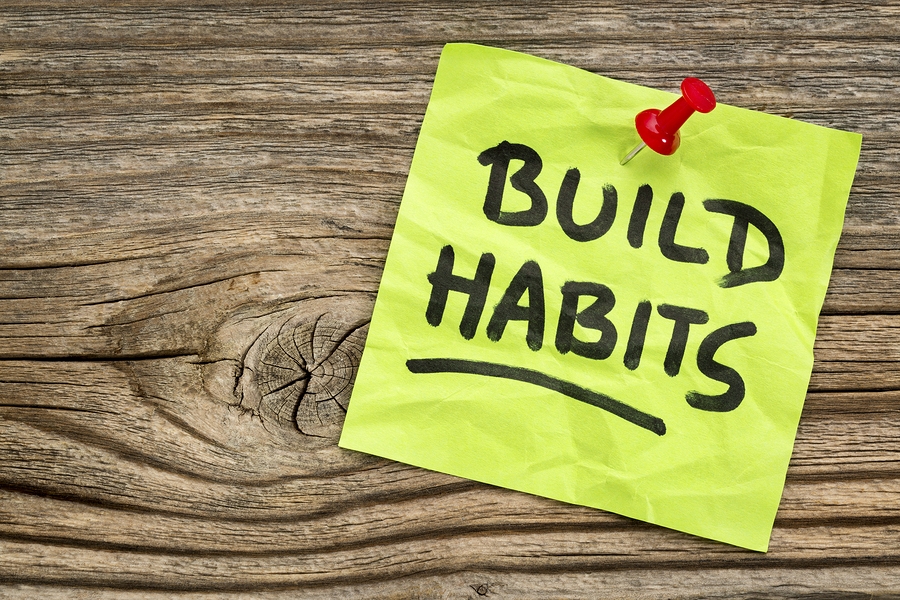
The Mechanics of Change
We often approach habit improvement as a battle of wills. We assume that if we could just find more discipline, more grit, or more "hustle," we could finally transform our lives. But willpower is a depletable resource, a battery that drains the moment we face stress, hunger, or fatigue.
To improve your habits is not to strengthen your character; it is to master your environment. It is the shift from being the architect of your desires to being the architect of your surroundings. Habits are the automated scripts of our lives. If you want a better life, you need better scripts.
The Anatomy of the Loop
Every habit—good or bad—follows a predictable neurological pattern. If you don't understand the anatomy of the loop, you are fighting a ghost.
-
The Cue: The trigger that tells your brain to go into auto-pilot.
-
The Craving: The motivational force behind the habit.
-
The Response: The actual habit you perform.
-
The Reward: The end goal of every habit; the reason your brain remembers the loop.
If you want to improve a habit, you must intervene at one of these four stages. You cannot simply "stop" a habit; you can only replace it or disrupt the trigger.
The Law of Friction
The secret to habit improvement is deceptively simple: Lower the friction for good habits and increase the friction for bad ones.
We are path-of-least-resistance creatures. If your guitar is tucked away in a case in the back of a closet, you will not practice. If your phone is on your nightstand, you will scroll.
The Lesson of the "Two-Minute Entry"
When I wanted to start a daily writing practice, I failed for months because I tried to write 1,000 words a day. It was too much friction. I changed the goal to: "Open the notebook and write one sentence."
-
A habit must be established before it can be improved.
-
Optimize for the start, not the finish.
By making the habit "stupidly small," you remove the threat of failure. Once you are standing at the desk with a pen in your hand, the hardest part—the initiation—is already over.
Strategic Design: The Frameworks of Success
To build a resilient habit system, you need more than just a "to-do" list. You need structural support.
1. Habit Stacking
The most effective way to create a new habit is to anchor it to an existing one. You identify a current habit you do every day (like brewing coffee) and use it as the "Cue" for your new habit.
-
Formula: "After [Current Habit], I will [New Habit]."
-
Example: "After I pour my coffee, I will meditate for one minute."
2. Implementation Intentions
Most habits fail because they are vague. "I want to exercise more" is a wish. "I will go to the gym on Mondays at 5:00 PM" is a plan. By defining the When and the Where, you take the decision-making out of the moment.
| Strategy | Function | Psychological Benefit |
| Environment Design | Visual Cues | Reduces the need for willpower by making the right choice obvious. |
| Habit Stacking | Neural Anchoring | Leverages established brain pathways to build new ones. |
| The 2-Minute Rule | Initiation Mastery | Overcomes the "Activation Energy" required to start. |
The Identity Shift
The most profound habit improvement happens when you stop focusing on what you want to achieve and start focusing on who you want to become.
There is a difference between "I’m trying to quit smoking" and "I’m not a smoker." One is an act of deprivation; the other is an act of identity. Every action you take is a vote for the type of person you wish to be.
If you want to be a writer, your goal isn't to finish a book; it’s to be the person who writes every morning. Each time you sit down, you are casting a vote for that identity. Over time, the evidence becomes undeniable. You don't have to "try" to do the habit anymore; it is simply what you do.
Conclusion: The Quiet Accumulation
We overvalue the "big" breakthrough and undervalue the small, daily improvements. But a 1% improvement every day for a year results in a version of yourself that is 37 times better.
Improving your habits is not about a radical overnight transformation. It is about the quiet, consistent accumulation of better choices. It is the patience to trust the process when the results aren't immediately visible.
The cue is coming. The loop is waiting. How will you respond?
- Arts
- Business
- Computers
- Spiele
- Health
- Startseite
- Kids and Teens
- Geld
- News
- Personal Development
- Recreation
- Regional
- Reference
- Science
- Shopping
- Society
- Sports
- Бизнес
- Деньги
- Дом
- Досуг
- Здоровье
- Игры
- Искусство
- Источники информации
- Компьютеры
- Личное развитие
- Наука
- Новости и СМИ
- Общество
- Покупки
- Спорт
- Страны и регионы
- World

 English
 Russian
 French
 Spanish
 Portuguese
 Turkish
 Dutch
Dutch
 Italiano
 Arabic
 Romaian
 Portuguese (Brazil)
 Greek
Greek