
How to read faster?
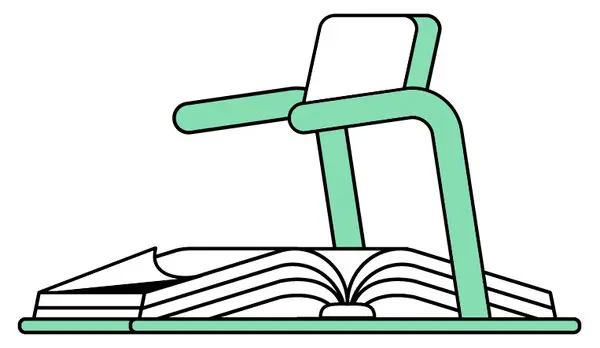
Acceleration Tactics
Increasing your reading speed is a balance of training your eye muscles, optimizing your cognitive processing, and applying strategic filters. It is a physical skill that improves with deliberate practice.
1. Physical Eye Training
The goal is to move your eyes more efficiently and reduce the "waste" in their movement.
-
The Pointer Method (Meta Guiding): Use your finger or a pen as a pacer. Move it steadily across the line and force your eyes to keep up. This eliminates regressions (unconsciously skipping back to re-read words).
-
The Indentation Method: Imagine a vertical line one inch from both the left and right margins. Focus your eyes only on the text between those lines. Your peripheral vision will pick up the words on the edges, saving you two "eye-jumps" per line.
-
Soft Focus: Instead of staring intensely at each word, try to "soften" your gaze so you see the white space above the letters. This helps you take in word clusters rather than individual characters.
2. Cognitive Optimization
Once the eyes move faster, the brain needs to keep up by changing how it "listens" to the text.
-
Suppressing Sub-vocalization: This is the most significant bottleneck. To stop "saying" words in your head, try chewing gum or humming a low tone while reading. This occupies the parts of the brain responsible for speech, forcing the visual center to take over.
-
The "1-2-3" Count: As you read, mentally count "1, 2, 3" over and over. This rhythmic distraction prevents your "inner voice" from pronouncing the words.
-
Word Chunking: Practice seeing 3–5 words as a single visual unit.
-
Instead of: [The] [quick] [brown] [fox]
-
Read: [The quick] [brown fox]
-
3. Strategic Filtering
Efficiency is often about knowing what not to read.
-
The 80/20 Preview: Spend 2 minutes scanning headings, bold text, and the first/last sentences of paragraphs. This builds a "mental coat rack" so that when you actually read, the information has a place to hang.
-
Noun/Verb Focus: In informational text, the meaning is carried by the nouns and verbs. Adjectives and adverbs are often "flavor" that can be skimmed if you are in a rush for data.
-
Skip the "Fluff": Most non-fiction books follow a pattern: Concept -> Example -> Anecdote. Once you understand the concept, you can often accelerate through the anecdote.
2026 Digital Tools for Speed
Technology can now "force-pace" your reading through a method called RSVP (Rapid Serial Visual Presentation), where words flash in the same spot so your eyes don't have to move at all.
| Tool Type | Top 2026 Recommendations | Best For |
| Browser Extensions | SwiftRead, Reedy | Speeding through long articles and research papers. |
| Mobile Apps | Outread, Spreeder | Training your eyes with drills and structured courses. |
| Visual Aids | Bionic Reading®, BeeLine Reader | Reducing eye strain and improving flow through highlighting. |
| Audio-Visual | Speechify | Syncing text with high-speed AI audio to prevent sub-vocalization. |
The "10-Minute" Daily Drill
To actually see results, you must treat this like a workout.
-
Baseline: Read at your normal speed for 2 minutes. Count the words.
-
The Push: Read the same passage again with a pacer, trying to finish in 1 minute (2x speed). Don't worry if you don't understand everything.
-
The Re-Calibrate: Read a new passage for 2 minutes at what feels like a "fast but comfortable" pace.
You will likely find that your "comfortable" pace has naturally drifted higher.
Pro Tip: Never practice speed reading on a book you actually want to enjoy. Use "disposable" content—news, blog posts, or old textbooks—to build the muscle.
- Arts
- Business
- Computers
- Jogos
- Health
- Início
- Kids and Teens
- Money
- News
- Personal Development
- Recreation
- Regional
- Reference
- Science
- Shopping
- Society
- Sports
- Бизнес
- Деньги
- Дом
- Досуг
- Здоровье
- Игры
- Искусство
- Источники информации
- Компьютеры
- Личное развитие
- Наука
- Новости и СМИ
- Общество
- Покупки
- Спорт
- Страны и регионы
- World

 English
 Russian
 French
 Spanish
 Portuguese
 Deutsch
 Turkish
 Dutch
Dutch
 Italiano
 Arabic
 Romaian
 Greek
Greek