
Why Is a Business Model Important?
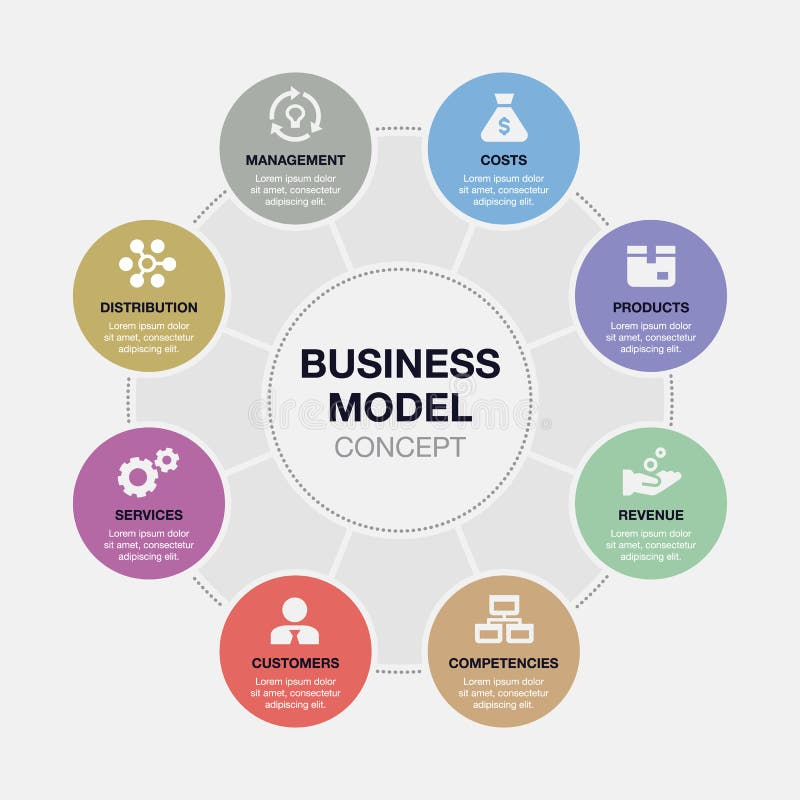
There is a dangerous phase every growing company eventually enters.
Sales are climbing. Meetings multiply. The founder begins speaking faster than everyone else in the room. Investors nod approvingly at charts projecting “future expansion.” Employees work late enough to mistake exhaustion for momentum.
From the outside, the company appears alive with possibility.
Then a strange thing happens.
Cash begins disappearing faster than revenue arrives.
Customers buy once but never return.
Operational costs swell invisibly beneath the excitement like water leaking beneath floorboards.
Suddenly executives who spent months discussing branding and visibility are forced into a far uglier conversation:
How does this business actually sustain itself?
That question sits at the center of every enduring company.
Not the logo.
Not the social traction.
Not the carefully choreographed launch event with dramatic lighting and artisanal coffee stations.
The business model.
A business model is not paperwork. It is not corporate theater. It is the structural explanation for why a company deserves to survive economically.
And when that structure is weak, even brilliant products eventually collapse under their own ambition.
I learned this lesson years ago while consulting for a retail company whose growth figures looked almost theatrical in their intensity. Orders doubled quarterly. Expansion moved aggressively across three states. Journalists praised the founders as “visionary operators.”
Yet during one late-night financial review, the CFO quietly admitted something startling.
“We lose money every time a customer uses the discount code.”
The room went silent.
Not because discounts are unusual. They are everywhere. The silence came from realizing the company had engineered growth mechanisms that actively damaged profitability.
The business model itself was working against the business.
That distinction matters more than most entrepreneurs understand.
A Business Model Is the Company’s Operating Logic
At its simplest, a business model explains four things:
- What value the company creates
- Who pays for that value
- How the value is delivered
- Why the economics remain sustainable
Simple questions. Brutally difficult answers.
Because once executives begin answering honestly, uncomfortable realities emerge quickly.
A company may attract millions of users yet fail to monetize effectively.
Another may generate revenue but possess operating costs so high that scale becomes dangerous rather than beneficial.
Some businesses accidentally train customers to expect discounts permanently. Others rely excessively on one distribution channel they do not control.
The business model reveals these vulnerabilities long before public collapse occurs.
That is why sophisticated investors rarely ask only about product quality. They examine structural durability.
Products can evolve.
A flawed business model poisons everything beneath it.
Why Business Models Matter More Than Most Founders Think
There is a persistent myth in entrepreneurial culture that extraordinary products naturally create successful companies.
History disagrees rather aggressively.
Excellent products fail constantly.
Meanwhile, businesses with merely adequate products often survive because their economics are disciplined, scalable, and strategically coherent.
This frustrates people because it violates the romantic idea that markets reward brilliance alone.
Markets reward sustainability.
A business model determines whether the company can continue operating once enthusiasm cools and operational reality arrives carrying invoices.
The Difference Between Activity and Viability
Some businesses generate impressive activity without genuine viability.
Traffic surges.
Downloads increase.
Followers multiply.
Press coverage expands.
None of these metrics automatically indicate structural health.
A business model matters because it separates vanity from viability.
Consider two hypothetical companies:
Company A
- Generates $5 million in annual sales
- Spends heavily acquiring customers
- Retains very few buyers
- Operates on razor-thin margins
Company B
- Generates $2 million in annual sales
- Retains customers consistently
- Maintains strong margins
- Grows gradually but predictably
Most headlines would initially celebrate Company A.
Experienced operators would quietly prefer Company B.
Because sustainable economics create optionality. Fragile economics create dependency.
That distinction becomes painfully clear during downturns.
Business Models Create Strategic Direction
Without a coherent business model, companies drift.
One month they pursue premium customers. The next month they chase volume discounts. Soon they attempt subscriptions, partnerships, influencer campaigns, and licensing deals simultaneously.
The result resembles strategic improvisation rather than leadership.
A business model provides boundaries.
It clarifies:
- Which customers matter most
- Which revenue streams deserve focus
- Which costs must remain controlled
- Which opportunities should be ignored
That last point is especially important.
Poorly disciplined companies often collapse from excessive opportunity rather than insufficient opportunity.
Every new initiative consumes operational attention. Every expansion introduces complexity. Every pricing experiment changes customer expectations.
The business model acts as a filtering mechanism separating strategic growth from expensive distraction.
Why Investors Obsess Over Business Models
Investors understand something many founders resist emotionally:
Growth can hide structural weakness temporarily.
Eventually arithmetic wins.
That is why venture capital firms analyze customer acquisition costs, retention rates, operating margins, and scalability so aggressively.
They are not merely evaluating popularity.
They are evaluating survivability.
A company with strong economics can endure mistakes, market shifts, supply disruptions, and competitive pressure. A weak model leaves no room for error.
This explains why two companies with similar products can receive wildly different valuations.
Investors are betting on the machine underneath the product—not simply the product itself.
The Core Benefits of a Strong Business Model
Predictable Revenue
Predictability changes everything inside an organization.
Subscription-based businesses, for example, often possess greater forecasting stability because recurring revenue reduces uncertainty.
That stability affects:
- Hiring decisions
- Expansion planning
- Inventory management
- Investor confidence
- Long-term innovation
Unpredictable revenue forces companies into reactive behavior.
Predictable revenue allows strategic planning.
Better Customer Understanding
A strong business model forces clarity around customer behavior.
Who actually pays?
Why do they stay?
What triggers churn?
What creates loyalty?
Many companies discover uncomfortable truths during this process. The customers generating the most visibility are not always the customers generating the healthiest profits.
A business model exposes these imbalances with mathematical indifference.
Operational Efficiency
Good business models create operational alignment.
Everyone inside the organization understands:
- What matters
- What drives profitability
- What weakens margins
- What deserves investment
Poor models create internal contradiction.
Marketing chases growth while finance panics over spending. Sales pursue volume while operations struggle to fulfill demand profitably.
Without structural alignment, organizations become internally adversarial.
And internal friction is expensive.
Comparison Table: Weak vs. Strong Business Models
| Factor | Weak Business Model | Strong Business Model |
|---|---|---|
| Revenue Stability | Inconsistent and reactive | Predictable and scalable |
| Customer Retention | Low loyalty | High repeat engagement |
| Profit Margins | Fragile or shrinking | Sustainable and resilient |
| Growth Strategy | Aggressive but chaotic | Controlled and intentional |
| Cost Structure | Bloated and unclear | Efficient and disciplined |
| Competitive Defense | Easily copied | Difficult to replicate |
| Investor Confidence | Speculative | Stable and attractive |
| Operational Alignment | Conflicted priorities | Unified strategic direction |
The Psychological Importance of a Business Model
This aspect receives remarkably little attention.
Strong business models reduce organizational anxiety.
Employees operate differently when leadership understands the economics clearly. Decision-making becomes calmer. Priorities stabilize. Long-term thinking becomes possible.
Weak business models produce permanent volatility.
Every quarter feels existential.
Every market fluctuation triggers panic.
Every competitor announcement sparks overreaction.
I once worked with a founder who changed pricing strategies four times in eight months because the company lacked confidence in its underlying structure. Employees stopped trusting leadership entirely. Customers became confused. Revenue suffered further.
The instability was not operational alone.
It was psychological.
A coherent business model creates confidence because it explains why the business should work beyond temporary momentum.
Why Some Companies Ignore Their Business Model Until It Is Too Late
Because growth is intoxicating.
Rapid expansion can temporarily disguise structural flaws. Investors celebrate user acquisition. Media coverage amplifies visibility. Internal optimism expands aggressively.
During these periods, asking difficult economic questions can feel almost impolite.
Then market conditions shift.
Capital becomes tighter.
Consumer behavior changes.
Operational costs rise.
Suddenly the weaknesses hidden beneath growth become impossible to ignore.
This pattern repeats constantly across industries.
Companies often fail not because demand disappears, but because the economics underneath the demand were never sustainable.
That distinction is devastating.
A Business Model Shapes Company Behavior
Every business model creates incentives.
Advertising-based companies prioritize attention.
Subscription businesses prioritize retention.
Luxury brands prioritize exclusivity.
Discount retailers prioritize volume efficiency.
These incentives influence culture, operations, marketing, and even ethics.
That reality deserves more scrutiny than it receives.
Because companies rarely behave independently from the models financing them.
If a platform earns revenue from engagement, emotionally provocative content may outperform thoughtful content. If delivery companies compete aggressively on speed, labor pressures intensify downstream.
The business model quietly shapes corporate behavior long before executives publicly explain it.
The Most Important Lesson Entrepreneurs Eventually Learn
A business is not the product alone.
It is the system surrounding the product.
The pricing strategy.
The distribution structure.
The cost architecture.
The customer retention mechanism.
The operational scalability.
The revenue logic.
Ignore these elements long enough and even extraordinary ideas become financially unstable.
I have watched founders spend months perfecting packaging while barely understanding unit economics. I have seen companies obsess over branding while losing money on every sale. I have watched leadership teams celebrate explosive growth that quietly accelerated insolvency.
The market eventually corrects those contradictions.
Relentlessly.
Conclusion: The Business Model Is the Truth Beneath the Story
Every company tells a story.
Some tell stories about innovation.
Others emphasize community, disruption, convenience, prestige, or accessibility.
Stories matter. They attract customers, employees, and investors.
But eventually every business encounters a harder question:
Does the underlying structure actually work?
That question is the business model.
And unlike branding language, the business model cannot rely on charm indefinitely. It must withstand pressure, volatility, competition, rising costs, changing consumer behavior, and time itself.
A strong business model creates resilience.
A weak one creates dependency on perpetual optimism.
That is why business models matter so profoundly. They determine whether growth strengthens the company or merely accelerates instability.
When executives ignore the model, the market notices eventually.
When they understand it deeply, the company gains something far more valuable than hype:
Endurance.
- Arts
- Business
- Computers
- الألعاب
- Health
- الرئيسية
- Kids and Teens
- مال
- News
- Personal Development
- Recreation
- Regional
- Reference
- Science
- Shopping
- Society
- Sports
- Бизнес
- Деньги
- Дом
- Досуг
- Здоровье
- Игры
- Искусство
- Источники информации
- Компьютеры
- Личное развитие
- Наука
- Новости и СМИ
- Общество
- Покупки
- Спорт
- Страны и регионы
- World

 English
 Russian
 French
 Spanish
 Portuguese
 Deutsch
 Turkish
 Dutch
Dutch
 Italiano
 Romaian
 Portuguese (Brazil)
 Greek
Greek