
What Is the Difference Between a Business Model and a Business Plan?
There is a particular kind of panic that settles into a conference room when someone asks a founder a deceptively simple question:
“So how exactly does this business work?”
Not the branding.
Not the mission statement framed in minimalist typography.
Not the five-year vision deck glowing optimistically on a projector screen.
The actual mechanics.
Who pays? Why do they pay? How does the company sustain itself? What prevents the entire operation from becoming an expensive public performance disguised as a business?
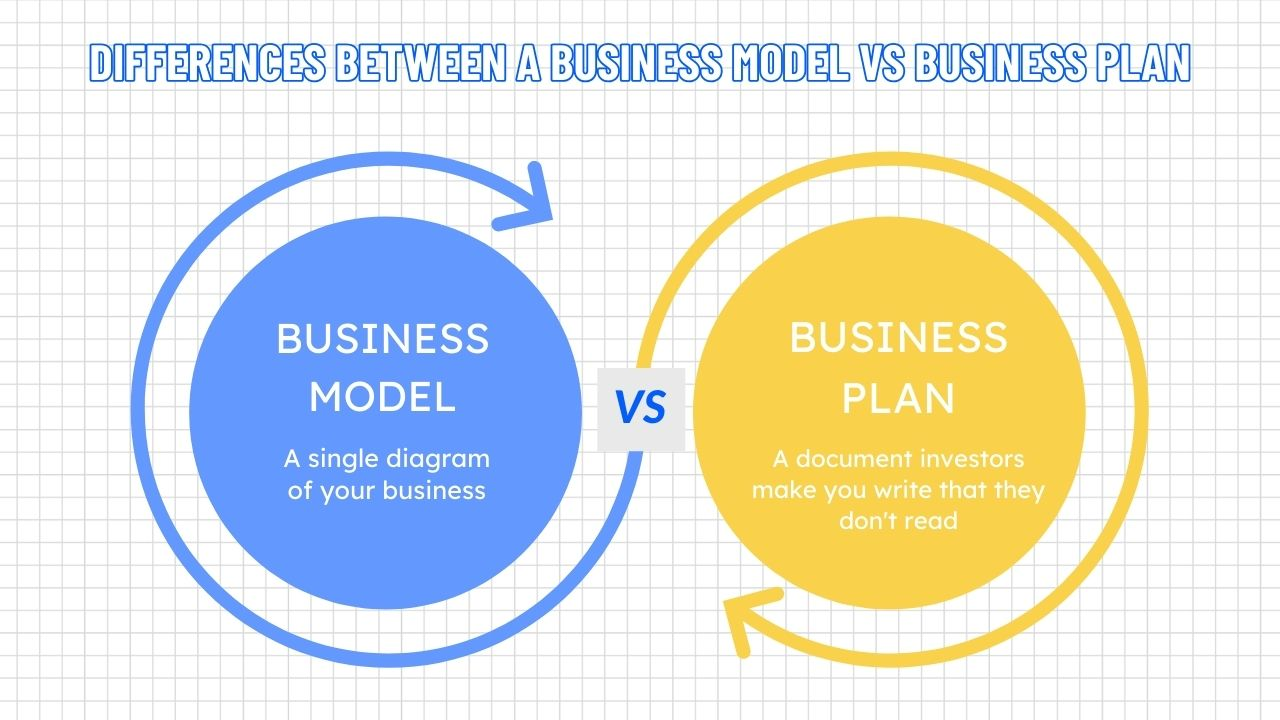
This is usually the moment when people begin confusing a business model with a business plan.
The terms are often used interchangeably. They should not be.
A business model explains how a company creates, delivers, and captures value.
A business plan explains how the company intends to execute that idea operationally.
One defines the economic logic.
The other defines the strategic roadmap.
Mix them together carelessly and organizations drift into dangerous territory—beautiful presentations attached to fragile economics or, conversely, profitable concepts trapped inside operational confusion.
I learned this distinction years ago while consulting for a founder who proudly handed me a 94-page business plan bound in embossed leather. It included market forecasts, staffing projections, advertising strategies, floor-plan renderings, and color-coded revenue charts.
It was visually magnificent.
There was only one problem.
The company still had not figured out why customers would consistently pay enough money to sustain margins.
The founder had built an execution document before validating the underlying business model.
That mistake is astonishingly common.
And expensive.
Understanding the Business Model First
Before discussing differences, the business model deserves precision.
A business model answers fundamental structural questions:
- What value does the company provide?
- Who is the customer?
- How does revenue enter the business?
- What costs support delivery?
- Why are the economics sustainable?
The business model is the engine beneath the company.
Without it, operational planning becomes speculative theater.
This is why investors often ask probing questions about margins, customer acquisition costs, retention, and scalability long before they ask about office expansion or hiring timelines.
They are examining structural integrity.
Because products attract attention.
Business models determine survivability.
A Business Model Is About Logic
At its core, the business model explains why the business should work economically.
For example:
A subscription software company relies on recurring revenue and customer retention.
A marketplace platform earns commissions by connecting buyers and sellers.
A luxury brand monetizes exclusivity and pricing power.
An advertising-supported media company monetizes audience attention rather than direct customer payments.
Each model creates different incentives, risks, and operational realities.
Importantly, the model exists whether the founder formally documents it or not.
Every company has one.
Some simply have weak ones.
What Is a Business Plan?
If the business model is the engine, the business plan is the navigation system.
A business plan explains:
- Operational goals
- Financial projections
- Marketing strategy
- Organizational structure
- Hiring plans
- Expansion timelines
- Funding requirements
- Competitive positioning
It transforms abstract business logic into an actionable framework.
Banks often request business plans before lending capital. Investors review them to evaluate preparedness. Leadership teams use them to coordinate execution.
But here is the critical distinction:
A business plan describes how the company intends to operate.
A business model explains why the operation makes economic sense in the first place.
Confuse these concepts and organizations begin optimizing execution around structurally weak foundations.
Why People Confuse the Two
Because they overlap constantly.
Both involve revenue.
Both involve strategy.
Both discuss customers, operations, and financial outcomes.
Yet their purposes differ dramatically.
The confusion often comes from entrepreneurial culture itself, where founders are encouraged to “build the plan” before validating the economic assumptions underneath the company.
That sequence is backwards.
A weak business model wrapped inside a sophisticated business plan remains weak.
No spreadsheet formatting can rescue flawed economics.
The Business Model Comes First
Always.
This point deserves emphasis because many companies reverse the order.
A business model determines:
- Whether customers will pay
- Whether margins remain healthy
- Whether growth strengthens or weakens profitability
- Whether scalability is realistic
- Whether customer behavior aligns with the pricing structure
Only after those mechanics become clear should detailed planning begin.
Otherwise the company risks operationalizing instability.
I once worked with a retail startup that developed an elaborate expansion plan covering three regional markets. Warehousing contracts were signed. Marketing campaigns prepared. Staffing projections finalized.
Then leadership realized shipping costs erased profitability entirely outside their local region.
The business plan was operationally sophisticated.
The business model was geographically fragile.
That distinction cost them millions.
A Business Model Is Flexible. A Business Plan Is Structured.
Business models evolve constantly.
Companies pivot pricing structures, monetization methods, customer segments, and distribution channels as markets shift.
Business plans, by contrast, are usually more structured and time-bound.
They often include:
- Quarterly targets
- Annual projections
- Tactical objectives
- Budget allocations
- Execution milestones
Think of it this way:
The business model explains the architecture.
The business plan explains the construction schedule.
Both matter. But they solve different problems.
Comparison Table: Business Model vs. Business Plan
| Factor | Business Model | Business Plan |
|---|---|---|
| Primary Purpose | Explains how the company makes money | Explains how the company will operate |
| Core Focus | Economic logic | Strategic execution |
| Key Questions | Why does this business work? | How will this business grow? |
| Time Horizon | Flexible and evolving | Often fixed within timelines |
| Audience | Founders, investors, strategists | Banks, investors, management teams |
| Main Components | Revenue streams, pricing, customer value | Marketing, staffing, operations, projections |
| Strategic Role | Defines sustainability | Defines implementation |
| Adaptability | Highly adaptable | More structured and formal |
| Risk Exposure | Structural risk | Operational risk |
| Importance | Determines viability | Determines coordination |
The Most Dangerous Scenario: A Great Plan Attached to a Weak Model
This happens constantly.
Companies produce polished documents filled with:
- Market analysis
- Advertising campaigns
- Financial forecasts
- Organizational charts
- Growth projections
Yet beneath the polish, the economics remain unstable.
For example:
- Customer acquisition costs exceed customer lifetime value
- Margins remain too thin for scalability
- Pricing conflicts with customer expectations
- Distribution costs overwhelm profitability
The business plan may appear sophisticated while the business model quietly deteriorates underneath it.
That imbalance eventually surfaces.
Usually during periods of pressure.
Why Investors Care More About the Business Model
Early-stage investors often tolerate incomplete planning.
They rarely tolerate incoherent economics.
Because execution problems can be corrected.
Structural flaws are harder to repair.
An investor reviewing a startup typically asks:
- Is the revenue mechanism sustainable?
- Can margins improve with scale?
- Is customer retention strong?
- Are acquisition costs manageable?
- Does the company possess defensibility?
These are business model questions—not merely planning questions.
The distinction becomes particularly obvious during market downturns.
Companies with strong business models often survive operational mistakes because the underlying economics remain sound.
Companies with weak models collapse regardless of planning sophistication.
Business Plans Expire Faster Than Business Models
This is another overlooked reality.
Operational plans become outdated remarkably quickly.
Consumer behavior shifts.
Competitors emerge.
Costs fluctuate.
Technology changes.
What seemed strategically brilliant in January may appear naïve by October.
Business models evolve too, certainly—but their foundational logic tends to endure longer.
A strong subscription model remains structurally valuable even if marketing tactics change. A marketplace model retains network-effect advantages even as operational details evolve.
The plan adapts around the model.
Not the other way around.
The Psychological Difference Between the Two
Business models create confidence through clarity.
Business plans create confidence through coordination.
That distinction matters inside organizations.
A team operating without a coherent business model often feels anxious even when growth appears strong. Employees sense instability instinctively when revenue logic remains unclear.
Meanwhile, a strong business plan without strategic flexibility can create bureaucratic rigidity.
Organizations become overly attached to forecasts instead of adapting to reality.
Healthy companies balance both:
- Flexible economic thinking
- Disciplined operational planning
Too much rigidity suffocates adaptation.
Too little structure creates chaos.
Entrepreneurs Often Romanticize the Wrong One
Founders frequently obsess over planning documents because plans feel tangible.
Slide decks look impressive.
Forecast spreadsheets create the illusion of certainty.
Operational roadmaps appear strategic.
The business model, by contrast, forces uncomfortable questions:
- Why would customers continue paying?
- Are margins sustainable?
- What happens during downturns?
- Can competitors replicate this easily?
- Does growth actually improve profitability?
These questions lack glamour.
They are also the questions that determine survival.
I have seen founders spend weeks refining pitch presentations while barely understanding unit economics. I have watched companies obsess over expansion strategies before validating customer retention.
The market eventually exposes those contradictions.
Relentlessly.
Conclusion: One Explains the Dream. The Other Explains the Mechanics.
A business model and a business plan are not rivals.
They are complementary structures serving different purposes.
The business model explains the economic truth of the company.
The business plan explains the operational intention.
One asks:
“Why should this business survive financially?”
The other asks:
“How do we execute the strategy effectively?”
Without a strong business model, a business plan becomes elaborate choreography surrounding fragile economics.
Without a business plan, even strong business models can drift operationally into confusion.
The strongest companies understand both deeply.
They validate the model first.
Then they build the plan around realities rather than assumptions.
Because eventually every business faces the same unforgiving test:
Not whether the presentation impressed people.
Not whether the forecasts looked ambitious.
But whether the underlying structure could withstand reality long enough to endure.
- Arts
- Business
- Computers
- Oyunlar
- Health
- Home
- Kids and Teens
- Money
- News
- Personal Development
- Recreation
- Regional
- Reference
- Science
- Shopping
- Society
- Sports
- Бизнес
- Деньги
- Дом
- Досуг
- Здоровье
- Игры
- Искусство
- Источники информации
- Компьютеры
- Личное развитие
- Наука
- Новости и СМИ
- Общество
- Покупки
- Спорт
- Страны и регионы
- World

 English
 Russian
 French
 Spanish
 Portuguese
 Deutsch
 Dutch
Dutch
 Italiano
 Arabic
 Romaian
 Portuguese (Brazil)
 Greek
Greek
