
How does inflation affect people?
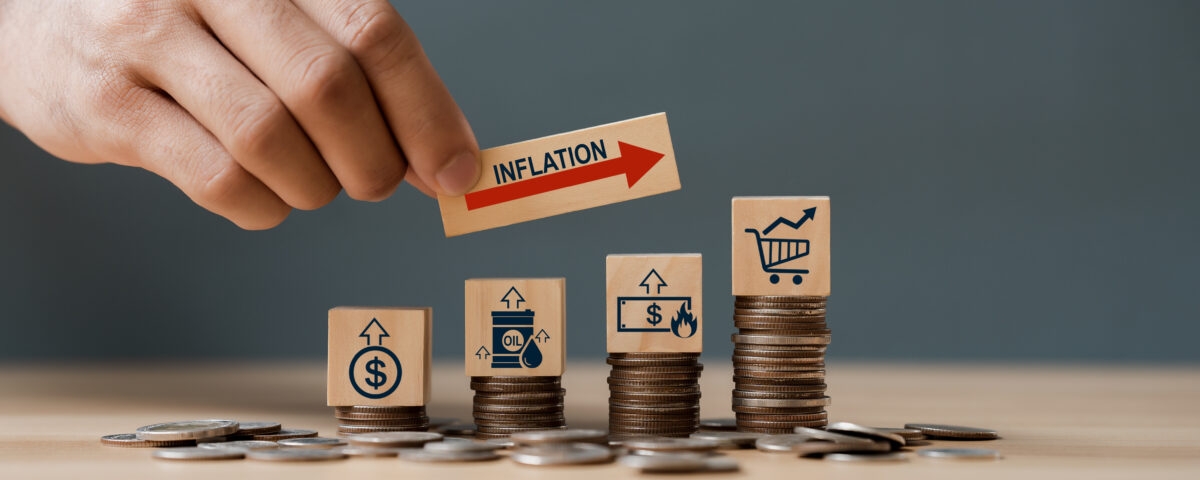
How Does Inflation Affect People?
There is a peculiar form of theft that modern societies have normalized so thoroughly that most victims never identify the culprit. A worker labors for forty years, saves diligently, avoids excess, and believes prudence itself is a form of security. Yet by retirement, the purchasing power of those savings has quietly deteriorated. The money remains numerically intact. The theft is invisible. And because it is invisible, it is politically useful.
This is inflation.
Not merely the rise of prices, as it is commonly described in textbooks and television interviews, but the systematic debasement of money itself. Prices rising is the symptom. Monetary dilution is the disease.
For centuries, people understood this instinctively. When rulers clipped coins or mixed precious metals with cheaper substitutes, merchants responded by demanding more coins for the same goods. Today, central banks perform the same operation with spreadsheets and bond purchases rather than melting silver into copper. The mechanism changed. Human incentives did not.
Inflation is not an abstraction discussed in economics departments. It is a transfer of wealth. It changes how families eat, save, marry, invest, borrow, and think about the future. Above all, it alters time preference — the degree to which people value the present over the future. And once a society’s time preference rises, nearly every institution inside it begins to decay.
Inflation Is a Tax Few People Understand
Governments prefer inflation because it allows spending without immediate taxation. Raising taxes openly invites resistance. Printing money first and allowing prices to rise later creates confusion instead of outrage.
The process unfolds gradually.
New money enters the economy through banks, government contracts, financial markets, and politically connected institutions. Those closest to the monetary spigot spend the money before prices fully adjust. By the time wage earners and pensioners receive their share, the cost of housing, food, healthcare, and energy has already climbed.
This phenomenon is not theoretical. Economists once referred to it as the Cantillon Effect, after the eighteenth-century thinker Richard Cantillon, who observed that money creation benefits early recipients at the expense of late recipients.
The modern salaried worker experiences this viscerally. His paycheck rises by 4%. Groceries rise by 9%. Rent climbs by 12%. Insurance premiums become absurd. The official inflation statistic insists conditions are manageable. Yet his lived experience tells a different story.
And lived experience usually wins.
The Destruction of Savings
Inflation punishes savers with ruthless efficiency.
A dollar stored today becomes a smaller claim on future goods tomorrow. The effect compounds quietly across decades.
Consider the following comparison:
| Year | Savings Account Balance | Inflation Rate | Real Purchasing Power |
|---|---|---|---|
| 2000 | $100,000 | 3% annually | Baseline |
| 2010 | $100,000 | Continued inflation | Equivalent to roughly $74,000 |
| 2020 | $100,000 | Accelerated monetary expansion | Equivalent to roughly $55,000 |
| 2026 | $100,000 | Persistent price increases | Equivalent to under $50,000 |
The nominal figure remains unchanged. The real value collapses.
This transforms society in profound ways. Under hard money systems, saving was rewarded. Deferred gratification improved one’s future position. Families accumulated capital patiently. Businesses relied on retained earnings rather than perpetual leverage.
Inflation reverses these incentives.
Saving becomes irrational. Speculation becomes necessary.
People who once would have built factories or invested in productive enterprise instead rush into real estate, equities, collectibles, or any asset capable of outrunning monetary dilution. Housing ceases to be shelter and becomes a financial weapon. Stocks stop representing ownership in productive businesses and become lifeboats escaping currency depreciation.
The consequence is not merely economic instability. It is moral instability.
Inflation Rewards Debt and Punishes Prudence
One of the most corrosive effects of inflation is the inversion of traditional virtues.
The prudent saver loses purchasing power annually. The reckless borrower often benefits.
Suppose two individuals exist in an inflationary environment:
-
One saves cash patiently for twenty years.
-
Another borrows aggressively to purchase appreciating assets.
If inflation remains persistent, the debtor frequently emerges wealthier. His debts are diluted while his assets inflate alongside the money supply.
This is not capitalism functioning naturally. It is monetary distortion engineering behavioral change.
The lesson society absorbs is simple: consume now, borrow heavily, speculate constantly.
Long-term thinking becomes economically disadvantageous.
I learned this lesson painfully during my early years studying monetary economics. Like many people raised to believe saving cash was responsible behavior, I assumed discipline alone guaranteed financial stability. Yet after observing repeated cycles of monetary expansion, I recognized an uncomfortable truth: under inflationary systems, abstinence from speculation is often punished more severely than speculation itself.
That realization altered how I viewed nearly every financial decision thereafter.
The Working Class Suffers First
Inflation is often described as harming “everyone equally.” This is nonsense.
Affluent households possess assets that tend to rise with inflation. Stocks appreciate. Real estate values climb. Businesses pass higher costs onto consumers.
Working-class families possess wages.
And wages lag.
A software executive with equity exposure may complain about inflation over dinner while watching his portfolio rise. A truck driver buying eggs, gasoline, and rent with weekly income experiences inflation as a direct assault on survival.
This disparity explains why inflation frequently widens inequality even while policymakers claim it stimulates economic growth.
The wealthy own scarce assets.
The poor own depreciating currency.
The middle class, historically the backbone of stable civilizations, becomes squeezed between stagnant wages and exploding asset prices. Homeownership drifts out of reach. Retirement requires increasingly absurd levels of investment exposure. Debt becomes permanent rather than temporary.
A society that cannot allow ordinary workers to accumulate meaningful savings is not economically healthy, regardless of GDP statistics.
Inflation Changes Human Behavior
Economists often discuss inflation mathematically while ignoring its psychological effects.
But money is not merely economic infrastructure. It is social coordination across time.
When money reliably preserves value, people plan further into the future. They save. Build. Marry earlier. Invest patiently. Businesses focus on quality and durability because consumers reward long-term value.
Inflation shortens time horizons.
Why save aggressively if savings evaporate?
Why build durable products if consumers prioritize immediate affordability?
Why delay gratification if currency itself is deteriorating?
High time preference cultures emerge naturally from inflationary systems.
One can observe this phenomenon everywhere. Disposable products replace durable craftsmanship. Corporate earnings prioritize quarterly performance over generational stability. Governments borrow against unborn taxpayers because future obligations appear politically distant.
Inflation does not merely raise prices.
It rewires civilization’s relationship with time.
Governments Benefit From Inflation More Than Citizens
Governments are among the largest debtors in modern economies. Inflation reduces the real burden of that debt.
If a state owes trillions denominated in currency it can create endlessly, inflation becomes politically irresistible. Debts accumulated recklessly become easier to service with depreciated money.
Citizens, meanwhile, encounter the consequences indirectly:
-
Currency debasement
-
Asset bubbles
-
Reduced purchasing power
-
Rising living costs
-
Financial instability
Politicians rarely campaign on monetary dilution explicitly. Instead, inflation emerges disguised as “stimulus,” “liquidity support,” or “economic stabilization.”
The language evolves because the underlying reality is unpopular.
Historically, civilizations that repeatedly debased their currencies experienced declining institutional trust. Citizens eventually recognized that productivity alone no longer guaranteed prosperity. Political proximity mattered more than economic contribution.
That realization corrodes social cohesion.
Inflation and Housing: The Illusion of Wealth
Nothing illustrates inflation’s distortions more vividly than housing.
In many countries, home prices have risen far faster than wages for decades. Politicians celebrate this as evidence of prosperity. Homeowners feel wealthier as property values climb.
But consider the underlying mechanism carefully.
Did houses become proportionally more productive?
Did bricks improve exponentially?
Did land suddenly become infinitely scarcer?
Or did money itself become less valuable?
Inflation channels newly created money into credit markets, particularly mortgages. Cheap borrowing inflates property prices. Existing homeowners benefit temporarily. New buyers become trapped under enormous debt burdens.
The result is generational fragmentation.
Older generations purchased homes with modest income multiples. Younger generations require dual incomes, massive leverage, and decades of repayment merely to obtain equivalent shelter.
This is frequently framed as a housing crisis.
In reality, it is often a monetary crisis expressing itself through housing.
The Cultural Consequences of Inflation
The deepest damage inflation inflicts cannot be measured statistically.
It is cultural.
Stable money encourages civilization-scale thinking. Cathedrals were not built by societies obsessed with quarterly consumption. Multigenerational businesses do not emerge naturally from environments where financial survival depends on perpetual speculation.
Inflation cultivates fragility.
People become financially anxious even during periods of apparent prosperity because they intuitively understand that standing still economically means falling behind. Constant investment exposure becomes mandatory. Risk ceases to be optional.
This creates chronic instability disguised as economic dynamism.
A healthy monetary system should reward productivity, patience, and savings. An inflationary system often rewards leverage, proximity to financial markets, and speculative behavior.
That distinction matters enormously.
Can Inflation Ever Be Beneficial?
Defenders of inflation argue that mild inflation stimulates spending and prevents economic stagnation. There is partial truth here. Inflation can temporarily encourage consumption and borrowing.
But one must ask: beneficial for whom, and over what timeframe?
Short-term stimulation often produces long-term distortions. Artificially cheap credit encourages malinvestment — projects that appear viable only under distorted monetary conditions. Eventually, reality reasserts itself through recessions, defaults, or financial crises.
Inflation resembles caffeine more than nutrition.
It can create temporary energy while weakening structural health underneath.
The tragedy is that many societies now consider perpetual inflation normal because multiple generations have never experienced sound money. They interpret continuously rising prices as an unavoidable feature of existence rather than a monetary policy choice.
Yet history suggests otherwise.
Conclusion: Inflation Is the Slow Erosion of Civilization
Inflation is not merely an economic inconvenience. It is the gradual corrosion of trust between past, present, and future.
A worker exchanges labor today for money because he believes that money will preserve value tomorrow. Break that trust consistently enough, and society changes fundamentally.
People speculate instead of saving.
They borrow instead of building.
They consume instead of planning.
They chase asset bubbles instead of productive enterprise.
And eventually, they lose faith not only in currency, but in institutions themselves.
The most dangerous aspect of inflation is not that prices rise. Human beings can adapt to rising prices. The deeper danger is that inflation normalizes short-term thinking across an entire civilization.
Once that happens, decline becomes difficult to reverse.
Hard money disciplines governments because it limits their ability to spend beyond productive capacity. Soft money disciplines citizens instead, forcing them into perpetual financial defense against currency debasement.
One system rewards patience.
The other rewards escape velocity.
- Arts
- Business
- Computers
- Jogos
- Health
- Início
- Kids and Teens
- Money
- News
- Personal Development
- Recreation
- Regional
- Reference
- Science
- Shopping
- Society
- Sports
- Бизнес
- Деньги
- Дом
- Досуг
- Здоровье
- Игры
- Искусство
- Источники информации
- Компьютеры
- Личное развитие
- Наука
- Новости и СМИ
- Общество
- Покупки
- Спорт
- Страны и регионы
- World

 English
 Russian
 French
 Spanish
 Portuguese
 Deutsch
 Turkish
 Dutch
Dutch
 Italiano
 Arabic
 Romaian
 Greek
Greek