
What is a recession?
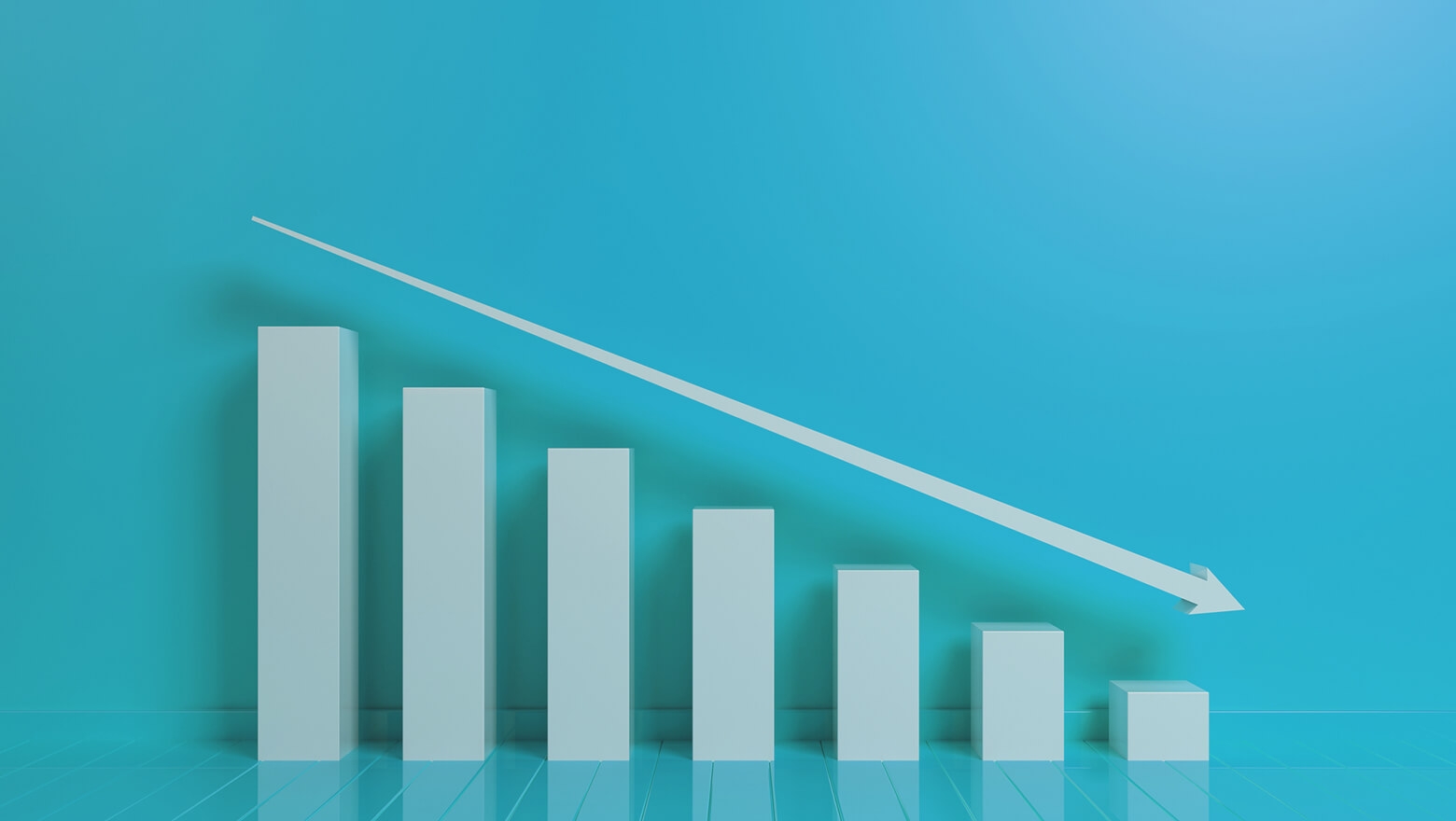
What Is a Recession?
There is a peculiar ritual that modern societies perform whenever the economy begins to weaken. Politicians deny it. Economists redefine it. Central bankers explain it away. Journalists soften the language with euphemisms. And ordinary people, sensing the deterioration long before official confirmation, quietly begin to change their behavior.
They postpone purchases. They stop going out as often. They check prices twice. Husbands and wives sit at kitchen tables late at night discussing whether they should delay moving, delay having children, delay opening the business they had dreamed about for years.
The recession begins long before the government announces it.
And by the time economists formally recognize it, the damage has usually already spread through the productive structure of society like dry rot beneath polished flooring.
A recession is commonly defined as two consecutive quarters of negative GDP growth. That definition is simple, measurable, and almost entirely inadequate. It reduces a vast economic phenomenon into a sterile accounting exercise, as though human civilization were a spreadsheet.
A recession is not merely falling GDP. It is the revelation of economic errors accumulated during the artificial prosperity that preceded it.
The boom is the lie.
The recession is the confession.
The Difference Between Wealth and Money
To understand recessions, one must first understand a distinction modern economics persistently obscures: the difference between money and wealth.
Wealth is not currency units. Wealth is goods and services produced by human beings cooperating through markets over time. Factories. Food. Energy. Transportation networks. Software. Machinery. Skills. Capital accumulation. Productive knowledge passed between generations.
Money merely facilitates exchange between producers.
This distinction sounds elementary, yet entire governments behave as though printing money creates wealth. It does not. If it did, Zimbabwe would have become Switzerland.
When credit expands artificially—usually through central banking systems manipulating interest rates downward—it creates the illusion that society has accumulated more real savings than it actually possesses. Businesses borrow aggressively. Consumers spend recklessly. Investors speculate confidently.
Projects that would never survive under honest market pricing suddenly appear profitable.
Office towers rise in cities already saturated with empty office space. Technology companies hire thousands of employees without a viable business model. Venture capital floods into absurdities masquerading as innovation. Restaurants expand too quickly. Homebuyers leverage themselves into mortgages they cannot realistically afford.
The economy begins consuming capital rather than accumulating it.
For a while, everybody feels richer.
Then reality arrives.
Recession as Economic Correction
A recession is the process through which the market liquidates unsustainable investments and reallocates scarce resources toward productive uses.
That sentence sounds clinical. In practice, it is brutal.
Businesses fail. Workers lose jobs. Asset prices collapse. Debt becomes unbearable. Entire industries discover that demand was not genuine demand at all, but temporary demand fueled by cheap credit and monetary distortion.
The recession is not the disease.
The recession is the cure.
This is the uncomfortable truth most policymakers refuse to acknowledge because genuine correction is politically intolerable. Voters demand immediate relief. Politicians provide stimulus. Central banks suppress interest rates further. Governments increase spending.
And thus the underlying distortions deepen.
One cannot consume without producing indefinitely. One cannot borrow without repayment indefinitely. One cannot expand credit forever without consequences. Economics is governed by arithmetic before ideology.
Eventually, the bill arrives.
How Recessions Usually Begin
The pattern repeats with astonishing consistency across centuries.
Phase 1: Cheap Credit
Central banks reduce interest rates or expand the money supply. Borrowing becomes inexpensive. Financial markets surge.
Phase 2: Speculation
Investors chase yield recklessly. Risk appears to disappear. Asset prices detach from underlying productivity.
Phase 3: Malinvestment
Capital flows into projects that only appear viable under distorted financial conditions.
Phase 4: Tightening
Inflation emerges or financial instability intensifies. Interest rates rise. Credit conditions tighten.
Phase 5: Collapse
Weak businesses fail first. Then leveraged institutions unravel. Consumer confidence evaporates. Spending contracts.
Phase 6: Recession
Unemployment rises. Investment falls. Economic activity slows while the market painfully reallocates resources.
This cycle is not mysterious. It is the predictable consequence of manipulating the price of money itself.
Recession vs. Depression vs. Stagflation
The public often uses these terms interchangeably, but they describe different economic conditions.
| Economic Condition | Core Characteristics | Typical Causes | Social Consequences |
|---|---|---|---|
| Recession | Falling output, rising unemployment, declining spending | Credit contraction, asset bubbles bursting | Layoffs, reduced consumption, business failures |
| Depression | Severe and prolonged economic collapse | Banking crises, policy failures, debt destruction | Mass unemployment, social unrest, political extremism |
| Stagflation | Inflation combined with weak growth | Monetary expansion alongside supply shocks | Declining real wages, collapsing purchasing power |
| Financial Crisis | Banking or credit system instability | Excess leverage, liquidity shortages | Credit freezes, bank failures, panic selling |
The distinction matters because governments often prescribe the wrong medicine.
Inflationary policies cannot solve structural productivity problems. Debt expansion cannot cure over-indebtedness. More manipulation cannot repair distortions caused by prior manipulation.
Yet this remains the dominant policy response across the developed world.
The Human Side of Recessions
Economists frequently discuss recessions in aggregate terminology. GDP contracts by 1.8%. Unemployment rises by 2%. Industrial production declines.
Such language conceals the profoundly personal nature of economic collapse.
I remember speaking with a small business owner during the aftermath of the 2008 financial crisis. He owned a furniture manufacturing company employing roughly forty workers. For years, cheap housing credit had driven enormous demand for home furnishings. Orders flooded in continuously. Banks eagerly extended financing. Expansion seemed rational.
Then the housing bubble burst.
Within months, demand vanished. Warehouses filled with unsold inventory. Credit lines tightened abruptly. Suppliers demanded faster payment while customers delayed theirs. He described walking through the factory at night listening to machines sitting silent in darkness.
What struck me most was not his anger.
It was his bewilderment.
He had believed the boom represented genuine prosperity. Only later did he realize much of the demand had been artificial, dependent entirely upon unsustainable debt expansion.
That lesson remains essential.
Many apparent economic miracles are merely borrowed consumption from the future.
Why Governments Fear Recessions
Recessions expose political illusions with unforgiving clarity.
During expansionary periods, governments can claim credit for prosperity regardless of whether the growth is productive or speculative. Rising asset prices create optimism. Tax revenues increase. Debt burdens temporarily appear manageable.
Recession destroys the illusion.
Suddenly, unprofitable enterprises cannot survive without subsidies. Pension obligations become impossible to sustain. Government deficits explode. Overleveraged households default. Financial institutions reveal fragility previously concealed beneath rising markets.
Most importantly, recessions reveal whether prior growth was rooted in productivity or debt.
This is why modern governments increasingly attempt to prevent recessions entirely.
But preventing recessions is like preventing forest fires by suppressing every small burn indefinitely. Deadwood accumulates. Imbalances worsen. Eventually the inevitable correction becomes catastrophic.
Minor recessions, painful as they are, often prevent larger collapses later.
The Psychology of Economic Decline
Markets are not machines. They are networks of human expectations.
This matters enormously during recessions because confidence itself becomes economically significant.
During boom periods, optimism expands credit availability. Businesses invest aggressively because they expect future demand. Consumers spend because they expect stable income. Banks lend because they expect repayment.
Once confidence deteriorates, the process reverses violently.
Consumers save instead of spend. Investors hoard cash instead of funding projects. Banks restrict lending. Businesses delay hiring.
The contraction feeds upon itself.
John Maynard Keynes famously referred to these emotional forces as “animal spirits,” though modern economists often reduce them to mathematical abstractions. But fear cannot be modeled neatly because human beings are not equations.
A recession is partly economic reality and partly collective psychological recognition that prior assumptions were false.
Why Some Recessions Become Catastrophic
Not all recessions are equally destructive.
Some remain relatively brief corrections. Others metastasize into prolonged crises.
The determining factor is often debt.
Debt amplifies fragility because it converts economic slowdown into systemic instability. A business operating without leverage can survive reduced revenue for extended periods. A heavily indebted business cannot.
The same applies to governments.
The same applies to households.
The same applies to entire nations.
This is why modern economies, saturated with debt at every level, have become extraordinarily vulnerable to even modest increases in interest rates.
When societies normalize perpetual leverage, they sacrifice resilience for temporary growth.
And temporary growth has an expiration date.
Can Recessions Be Prevented?
No.
They can be postponed. Masked. Rebranded. Temporarily softened through monetary intervention.
But they cannot be abolished because scarcity itself cannot be abolished.
Economic coordination across millions of individuals inevitably produces errors. Some investments fail. Some industries overexpand. Some entrepreneurs miscalculate consumer demand.
Recessions are the mechanism through which markets identify and correct those errors.
Attempts to eliminate recessions entirely usually produce larger imbalances requiring even more severe corrections later.
The irony is almost tragic.
Modern policymakers treat recessions as unnatural failures of capitalism when, in many cases, they are consequences of prolonged intervention into the price system itself.
What Individuals Should Learn From Recessions
Every recession teaches the same lesson in slightly different language: fragility hides during prosperity.
People discover whether their income depends upon genuine value creation or speculative excess. Businesses discover whether customers truly want their products absent cheap credit. Investors discover whether rising asset prices reflected productivity or monetary inflation.
The prudent individual learns several things quickly:
-
Debt reduces freedom.
-
Cash reserves matter.
-
Productive skills outperform financial speculation.
-
Artificial booms eventually reverse.
-
Economic stability is never permanent.
Most importantly, recessions remind us that wealth cannot be engineered through monetary manipulation alone.
A society becomes prosperous through production, savings, capital accumulation, innovation, and long-term thinking. Not through printing currency units or suppressing interest rates.
This truth remains stubbornly unfashionable because it demands discipline rather than stimulation.
The Recession Is the Reckoning
A recession is not an inexplicable accident descending upon an otherwise healthy economy. It is the moment reality reasserts itself after prolonged distortion.
That is why recessions feel psychologically shocking. During the boom, people mistake rising prices for rising wealth. They mistake leverage for prosperity. They mistake speculation for productivity.
Then the illusion collapses.
And suddenly society rediscovers an ancient economic truth: consumption deferred is savings, savings finance investment, and investment—not monetary expansion—is what generates sustainable prosperity.
The recession merely reveals where we violated that sequence.
Civilizations that understand this recover quickly because they allow correction to occur. Civilizations that refuse the lesson attempt to inflate away every consequence, borrowing more to solve debts created by borrowing.
Eventually, arithmetic wins.
It always does.
- Arts
- Business
- Computers
- Spiele
- Health
- Startseite
- Kids and Teens
- Geld
- News
- Personal Development
- Recreation
- Regional
- Reference
- Science
- Shopping
- Society
- Sports
- Бизнес
- Деньги
- Дом
- Досуг
- Здоровье
- Игры
- Искусство
- Источники информации
- Компьютеры
- Личное развитие
- Наука
- Новости и СМИ
- Общество
- Покупки
- Спорт
- Страны и регионы
- World

 English
 Russian
 French
 Spanish
 Portuguese
 Turkish
 Dutch
Dutch
 Italiano
 Arabic
 Romaian
 Portuguese (Brazil)
 Greek
Greek