
How does the economy affect jobs?
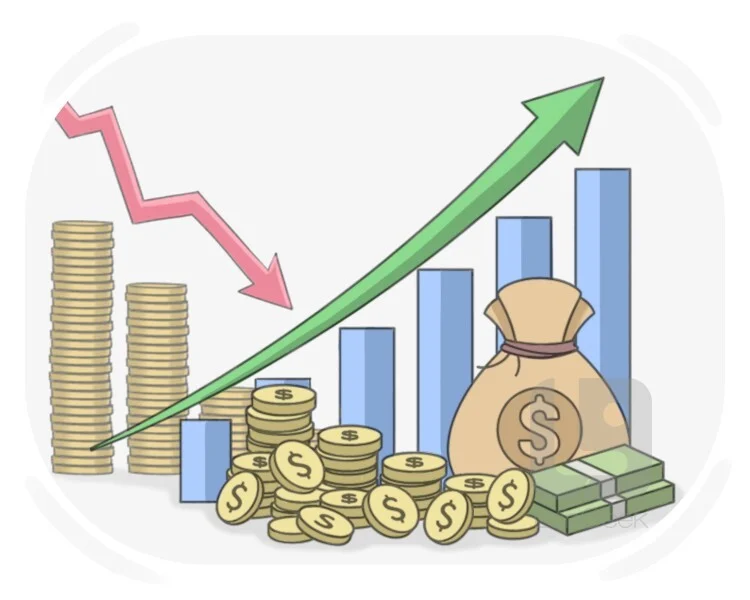
How Does the Economy Affect Jobs?
There is a peculiar superstition repeated endlessly in modern political discourse: jobs emerge because governments “create” them. Politicians campaign on job creation figures with the solemnity of medieval priests announcing rainfall totals after a sacrificial ritual. Central bankers speak of “maximum employment” as though employment were a dial on a laboratory machine. Journalists repeat quarterly payroll numbers with the anxious cadence of war correspondents counting casualties.
Yet jobs are not created by speeches, subsidies, or committees.
Jobs are created when one human being produces enough value that another human being willingly parts with scarce resources to compensate him. Everything else is accounting decoration.
The economy affects jobs because the economy is nothing more than the cumulative structure of production, exchange, savings, and consumption. When that structure becomes healthier, jobs multiply organically. When it becomes distorted, jobs disappear—or worse, survive artificially while producing little of value.
A healthy economy does not merely employ people. It directs labor toward productive ends. There is a profound difference between the two.
The Job Market Is a Mirror of Production
Employment is not the foundation of prosperity. Production is.
A society cannot consume what it has not first produced. This elementary truth, obvious to every farmer who has ever survived a winter, becomes strangely controversial once economists begin speaking in televised panels.
When productivity rises, businesses expand because they can produce more with less waste. Expansion increases wages, investment, specialization, and eventually employment opportunities. When productivity collapses—or when capital is misallocated—jobs vanish because businesses can no longer justify paying workers more than the value they create.
This is why economies built on durable production tend to produce stable employment, while economies built on debt-fueled speculation experience violent employment cycles.
The labor market is downstream from capital formation.
And capital formation depends heavily on whether a society rewards saving or punishes it.
Cheap Money Produces Expensive Mistakes
Perhaps nowhere is the relationship between the economy and jobs more misunderstood than in monetary policy.
When central banks suppress interest rates artificially, borrowing becomes cheap. Businesses expand recklessly because financing appears abundant. Investors fund ventures that would never survive under honest capital costs. Hiring surges. Recruiters become euphoric. Office buildings rise from the ground like mushrooms after rain.
Then reality arrives.
The projects were unsustainable. The demand was artificial. The profits were illusory. Suddenly layoffs begin. Entire industries shrink simultaneously because they were built not on genuine consumer demand, but on monetary distortion.
The workers are blamed for “losing competitiveness.” Executives blame market conditions. Politicians blame foreign countries.
Rarely does anyone acknowledge the obvious: the boom itself contained the seeds of the bust.
The economy affects jobs because economic signals guide human action. When those signals are corrupted, labor flows into the wrong sectors.
Consider the Difference
| Economic Condition | Business Behavior | Job Market Outcome | Long-Term Result |
|---|---|---|---|
| Stable currency and strong savings | Careful investment | Sustainable hiring | Durable wage growth |
| Artificially low interest rates | Excessive borrowing | Rapid hiring booms | Mass layoffs later |
| High inflation | Cost-cutting and uncertainty | Wage stagnation | Declining purchasing power |
| Productive innovation | Efficiency gains | Higher-skilled jobs emerge | Rising living standards |
| Debt-driven consumption | Temporary expansion | Fragile employment | Recession vulnerability |
The table above reveals a truth many prefer to avoid: not all job growth is healthy.
An economy can add millions of jobs while becoming structurally weaker.
Inflation Destroys Jobs Quietly
Recessions destroy jobs dramatically. Inflation destroys them silently.
When prices rise faster than wages, workers experience an invisible pay cut. Employers face rising input costs. Consumers reduce discretionary spending. Businesses postpone hiring. Investment becomes defensive rather than productive.
The result is subtle deterioration.
Not necessarily mass unemployment at first. Something more insidious.
You begin seeing college graduates competing for mediocre administrative roles. Families take second jobs merely to preserve their prior standard of living. Skilled workers abandon entrepreneurial ambitions for corporate stability. Young men postpone marriage because financial confidence evaporates. Small businesses close quietly after decades of operation.
An inflationary economy produces psychological caution long before it produces unemployment statistics.
I witnessed this personally during a period when several acquaintances working in technology appeared, on paper, to be thriving. Salaries rose annually. Offices expanded. Hiring was relentless. Yet nearly every conversation revolved around shrinking purchasing power. Housing costs accelerated faster than incomes. Grocery bills doubled. Savings accounts yielded nothing meaningful. The outward appearance of prosperity concealed a deep financial fragility.
One friend received a 12% salary increase and celebrated it over dinner. Two hours later he admitted he could no longer afford to purchase the home he had intended to buy the previous year.
That is inflation’s genius: it convinces people they are advancing while quietly moving the finish line farther away.
Recessions Reveal Economic Truths
A recession does not create weakness. It exposes it.
During expansions, weak businesses survive because capital is abundant and consumers spend freely. During contractions, economic reality becomes unavoidable. Firms that depended on endless borrowing collapse first. Marginal industries contract. Workers employed in economically fragile sectors suddenly discover that their positions existed largely because money was cheap.
This process is painful but necessary.
A forest periodically requires fire to clear dead underbrush. Economies require recessions to liquidate unsound investments and redirect labor toward more productive uses.
Politicians despise this process because voters experience the pain immediately while the long-term benefits arrive slowly. Thus governments intervene constantly—stimulus packages, bailouts, emergency lending facilities, artificial liquidity injections.
These measures may preserve jobs temporarily, but they often preserve unproductive structures as well.
An economy cannot become healthier by indefinitely subsidizing inefficiency.
Technology Changes Jobs More Than It Eliminates Them
Another persistent myth is that technology “takes jobs.”
Technology eliminates specific tasks. It rarely eliminates human demand.
The tractor destroyed agricultural labor requirements, yet humanity did not descend into permanent unemployment. Instead, labor shifted toward manufacturing, services, medicine, engineering, logistics, software, entertainment, and countless industries unimaginable to medieval farmers.
What matters is whether the economy allows labor mobility.
Rigid economies suffocate adaptation. Dynamic economies encourage it.
When productivity-enhancing technology emerges, businesses can produce goods more cheaply. Consumers save money. That saved money gets spent elsewhere. New industries emerge. Employment shifts rather than disappears.
The historical pattern is remarkably consistent:
-
Technology improves efficiency.
-
Certain jobs decline.
-
Costs fall.
-
Consumer purchasing power rises.
-
New industries absorb labor.
The panic surrounding automation usually ignores the fifth step entirely.
Human wants are effectively infinite. As long as people desire better health, entertainment, convenience, transportation, education, or status, labor will continue reorganizing itself around those desires.
The greater danger is not technological unemployment.
The greater danger is economic stagnation preventing adaptation.
Consumer Confidence Is Often Misunderstood
Economists frequently discuss “consumer confidence” as though it were a mystical force. In reality, confidence is largely a reflection of perceived economic stability.
People spend when they trust the future.
A worker who believes his currency will retain value is more likely to invest, start a business, buy a home, or pursue education. A worker who expects instability behaves defensively. Consumption narrows. Risk-taking declines. Entrepreneurship weakens.
This directly affects jobs.
Anxious societies become economically timid societies.
One sees this clearly in countries experiencing chronic monetary instability. Citizens stop planning decades ahead and begin optimizing for immediate survival. Talented workers emigrate. Businesses underinvest. Informal economies expand. Productive ambition shrinks.
No labor market statistic fully captures the damage caused when a population loses confidence in long-term stability.
Government Employment Versus Productive Employment
There is also an uncomfortable distinction rarely discussed openly: employment itself is not inherently valuable.
If ten men dig holes and another ten fill them back in, unemployment may fall statistically. Prosperity does not rise.
The value of employment depends on whether labor contributes meaningfully to production.
A productive economy channels labor toward creating goods and services people voluntarily demand. An unproductive economy increasingly relies on administrative expansion, debt-funded consumption, and artificial economic stimulation.
This distinction matters enormously.
Some economies maintain superficially low unemployment while productivity stagnates for decades. Others experience temporary unemployment spikes during industrial transformation yet emerge vastly more prosperous afterward.
The question is not merely how many jobs exist.
The question is whether those jobs are economically sustainable without perpetual intervention.
Why Young Workers Feel Economically Trapped
Modern labor anxiety is not irrational.
Many younger workers entered adulthood during years of asset inflation, housing unaffordability, educational debt expansion, and wage stagnation relative to living costs. Official employment figures often obscure the deterioration in economic mobility.
A generation can technically remain employed while simultaneously becoming poorer in real terms.
This produces a strange contradiction: workers appear busier than ever while feeling increasingly insecure.
The economy affects jobs not simply through hiring numbers, but through the quality, durability, and purchasing power attached to those jobs.
A six-figure salary means little if housing costs absorb most disposable income. Employment statistics mean little if workers cannot accumulate savings. Job growth means little if productivity stagnates and debt finances consumption.
Employment without capital accumulation eventually becomes economic treadmill labor.
The Most Important Economic Variable Is Trust
Underneath all labor markets lies trust.
Trust in money.
Trust in contracts.
Trust in future demand.
Trust that effort today will retain value tomorrow.
Destroy those foundations and job markets become volatile, political, and fragile.
Preserve them and employment tends to stabilize organically because businesses and workers can plan rationally over long time horizons.
The economy affects jobs because jobs are not isolated phenomena. They are downstream consequences of a civilization’s monetary integrity, productive capacity, savings culture, and institutional stability.
Ignore those foundations long enough and no amount of stimulus will permanently restore prosperity.
Because jobs do not emerge from slogans.
They emerge from reality.
- Arts
- Business
- Computers
- Games
- Health
- Home
- Kids and Teens
- Money
- News
- Personal Development
- Recreation
- Regional
- Reference
- Science
- Shopping
- Society
- Sports
- Бизнес
- Деньги
- Дом
- Досуг
- Здоровье
- Игры
- Искусство
- Источники информации
- Компьютеры
- Личное развитие
- Наука
- Новости и СМИ
- Общество
- Покупки
- Спорт
- Страны и регионы
- World

 Russian
 French
 Spanish
 Portuguese
 Deutsch
 Turkish
 Dutch
Dutch
 Italiano
 Arabic
 Romaian
 Portuguese (Brazil)
 Greek
Greek