
What Is SaaS (Software as a Service)?
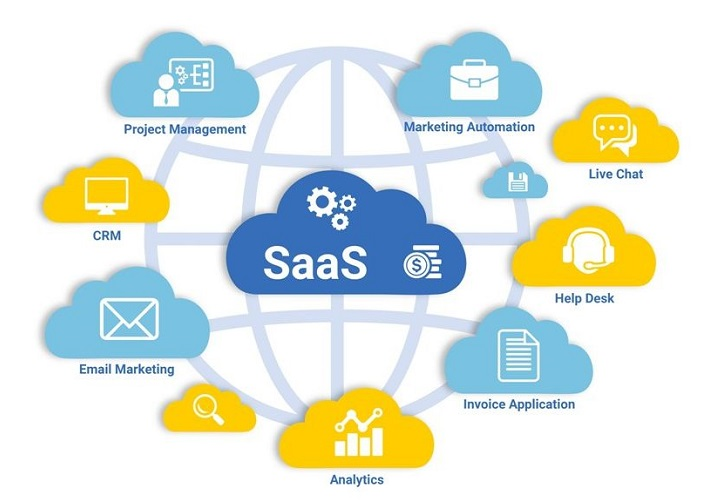
Most people use SaaS every day without realizing they are participating in one of the most consequential shifts in modern business infrastructure.
They open a browser tab. Log into a dashboard. Upload files. Send invoices. Schedule meetings. Manage payroll. Store photographs. Track projects. Stream analytics. Edit documents collaboratively with coworkers scattered across continents.
The software feels weightless now.
Almost invisible.
That invisibility is precisely what made SaaS so transformative.
There was a time — not especially long ago — when software arrived physically. Companies purchased boxed programs on discs, installed them manually onto office computers, paid large upfront licensing fees, and relied on internal IT departments to manage updates, compatibility issues, and security patches. Software ownership resembled machinery procurement more than fluid digital access.
SaaS dismantled that model quietly at first.
Then completely.
I understood the magnitude of this transition years ago while consulting for a midsize manufacturing company struggling through a painful software migration. Their legacy systems required on-site servers, endless maintenance contracts, and an IT team that spent more time troubleshooting than innovating. Executives resisted cloud-based alternatives initially because subscription software felt less “real” than owned infrastructure.
Then the pandemic forced remote operations almost overnight.
Suddenly, employees needed secure access from homes, mobile devices, and distributed environments. The old systems became operational anchors. The SaaS platforms they once distrusted became survival infrastructure.
One executive admitted to me months later, with equal parts embarrassment and relief:
“We thought we owned our software. Turns out our software owned our flexibility.”
That sentence captures the deeper significance of SaaS better than most technical definitions ever could.
Because SaaS is not merely a software delivery model.
It is a restructuring of how businesses consume technology itself.
What Is SaaS?
SaaS stands for Software as a Service.
Instead of purchasing software outright and installing it locally onto individual machines or internal servers, users access software through the internet — typically via subscription.
The software is hosted centrally by the provider.
Customers log in through browsers or apps. Updates happen automatically. Infrastructure management occurs behind the scenes. Access becomes continuous rather than ownership-based.
This changed software from a product into a service relationship.
That distinction altered business economics permanently.
How SaaS Actually Works
At a structural level, SaaS relies on cloud computing infrastructure.
The provider hosts applications on remote servers while customers access the platform through internet-connected devices. Rather than maintaining local installations, users interact with software environments managed externally.
The Basic SaaS Workflow
Step 1: The Provider Builds and Hosts the Software
The SaaS company develops the platform and manages the infrastructure, servers, updates, security layers, and operational maintenance.
Customers do not install the system traditionally.
Step 2: Customers Subscribe
Most SaaS businesses operate through recurring subscriptions — monthly, annual, or usage-based pricing models.
This recurring structure became enormously attractive to investors because predictable revenue stabilizes forecasting.
Step 3: Users Access the Software Online
Customers log into dashboards through browsers, desktop applications, or mobile apps.
The software operates remotely while data syncs continuously across environments.
Step 4: Updates Occur Automatically
Unlike older software systems requiring manual installation updates, SaaS providers deploy improvements centrally.
Users receive new features without operational disruption.
That convenience changed customer expectations across the software industry entirely.
Why SaaS Became So Dominant
The appeal was not merely technological.
It was economic and operational.
Lower Upfront Costs
Traditional enterprise software often required enormous capital investment before implementation even began. SaaS replaced those large purchases with subscription structures spread over time.
That lowered entry barriers dramatically.
Small businesses suddenly gained access to tools previously reserved for large corporations.
Accessibility
Employees could access SaaS platforms from virtually anywhere with internet connectivity.
This flexibility became especially critical as remote and hybrid work environments expanded.
Scalability
SaaS businesses scale unusually efficiently because distributing software to additional users costs relatively little compared to physical products or labor-intensive services.
Once infrastructure exists, customer growth can accelerate rapidly without equivalent operational expansion.
This scalability explains why SaaS became so attractive to venture capital firms.
A Comparison of SaaS vs. Traditional Software
| Factor | SaaS | Traditional Software |
|---|---|---|
| Delivery Method | Internet-based | Local installation |
| Payment Structure | Subscription | One-time license |
| Updates | Automatic | Manual |
| Accessibility | Remote access | Device-dependent |
| Infrastructure Maintenance | Provider-managed | Customer-managed |
| Scalability | High | Moderate |
| Upfront Costs | Lower | Higher |
| Deployment Speed | Fast | Slower |
| IT Dependency | Reduced | Higher |
The shift here goes beyond convenience.
SaaS redistributed technological responsibility from customer organizations toward centralized providers.
That reallocation transformed corporate operations globally.
The Economics Behind SaaS
SaaS businesses operate differently from many traditional companies because recurring revenue changes financial behavior fundamentally.
Recurring Revenue Creates Stability
Instead of relying on one-time purchases, SaaS companies generate ongoing subscription income.
This creates several advantages:
- Predictable cash flow
- Stronger valuation multiples
- Improved forecasting
- Long-term customer relationships
- Higher lifetime customer value
Investors love recurring revenue because stability reduces uncertainty.
Customers, however, become ongoing obligations rather than completed transactions.
That changes operational priorities dramatically.
Retention Becomes Everything
Traditional software companies could survive weak customer satisfaction temporarily if sales remained strong.
SaaS companies cannot.
If customers leave, recurring revenue collapses gradually but relentlessly. This is why SaaS businesses obsess over retention metrics, churn rates, onboarding flows, and user engagement.
The economics reward longevity.
Not merely acquisition.
The Most Common Types of SaaS
SaaS expanded into nearly every operational category imaginable.
Business Productivity Software
These platforms manage collaboration, scheduling, communication, and workflow coordination.
Examples include:
- Project management systems
- Team communication platforms
- Document collaboration tools
- Calendar management software
Financial SaaS
Cloud-based accounting, payroll, invoicing, and budgeting platforms transformed how businesses manage finances.
Many small companies now operate finance departments almost entirely through SaaS ecosystems.
Customer Relationship Management (CRM)
CRM platforms help businesses organize customer interactions, sales pipelines, marketing automation, and support systems.
Customer data became operational infrastructure.
Industry-Specific SaaS
Entire vertical industries now rely on specialized SaaS solutions tailored for:
- Healthcare
- Legal services
- Manufacturing
- Real estate
- Education
- Logistics
- Hospitality
This specialization accelerated SaaS expansion enormously.
SaaS and the Psychology of Convenience
One overlooked aspect of SaaS is how thoroughly it reshaped user psychology.
Consumers and businesses now expect software to:
- Sync instantly
- Update automatically
- Work across devices
- Require minimal setup
- Scale fluidly
- Integrate seamlessly
Patience for technical friction has declined sharply.
This expectation shift spread beyond software into broader digital behavior.
Convenience became infrastructure.
The Hidden Complexity of SaaS Businesses
From the outside, SaaS often appears deceptively elegant.
Build software once. Sell subscriptions forever.
Reality is less romantic.
Infrastructure Costs
SaaS companies maintain massive backend systems involving:
- Cloud hosting
- Data storage
- Security architecture
- Engineering teams
- Customer support
- Compliance systems
- Uptime monitoring
Software may feel intangible to users, but operational costs remain substantial underneath.
Customer Support Matters More Than Founders Expect
I once advised an early-stage SaaS startup whose founders were brilliant engineers but deeply underestimated support infrastructure. They viewed customer service as secondary compared to product innovation.
Then enterprise clients began onboarding.
Training requests multiplied. Integration issues surfaced. Feature misunderstandings triggered frustration. Churn increased despite technically impressive software.
The founders eventually realized something critical:
Software quality includes the surrounding experience.
Not just the code itself.
That lesson separates technically functional SaaS businesses from commercially durable ones.
Why SaaS Became the Favorite Child of Venture Capital
Scalability.
That single word explains enormous portions of modern startup financing behavior.
A successful SaaS platform can expand globally without proportional increases in manufacturing, shipping, or physical infrastructure. Gross margins become attractive. Revenue compounds through subscriptions. Expansion costs often decline over time relative to revenue growth.
Investors saw asymmetric upside.
That enthusiasm produced an explosion of SaaS startups across nearly every imaginable category.
Some deserved the attention.
Others simply attached “AI-powered SaaS platform” to ordinary software and hoped funding would follow.
The SaaS Saturation Problem
This part receives less celebration publicly.
Many SaaS markets are becoming crowded.
Consumers and businesses now juggle enormous numbers of subscriptions simultaneously. Subscription fatigue is real. Companies increasingly audit software stacks for redundancy and unnecessary spending.
As a result, new SaaS businesses face harsher scrutiny than earlier generations did.
Modern SaaS Companies Must Differentiate Clearly
Strong differentiation may come through:
- Better user experience
- Industry specialization
- Lower friction onboarding
- Superior integrations
- Pricing innovation
- Automation capabilities
- Strong customer support
Mediocre software with vague positioning struggles increasingly.
Security and Trust in SaaS
Because SaaS platforms frequently store sensitive operational data, security becomes existential.
Customers entrust providers with:
- Financial information
- Internal communications
- Customer records
- Intellectual property
- Operational workflows
A major breach can destroy credibility rapidly.
Trust is not supplementary in SaaS.
It is foundational infrastructure.
The Future of SaaS
Artificial intelligence is already reshaping SaaS aggressively.
Software is becoming more predictive, automated, conversational, and adaptive. AI copilots, workflow automation, predictive analytics, and autonomous operational systems will likely redefine how SaaS platforms function over the next decade.
But another shift may matter just as much:
Software may become less visible.
The strongest SaaS experiences increasingly disappear into workflows rather than demanding constant user attention. Automation reduces manual interaction. Systems communicate independently. Interfaces simplify.
The future of SaaS may involve software becoming quieter.
Conclusion: SaaS Changed Ownership Into Access
At its deepest level, SaaS transformed the relationship between businesses and technology.
Ownership became less important than accessibility.
Companies stopped asking, “Do we possess the software?” and started asking, “Can we use it efficiently wherever we operate?” That shift sounds subtle until you recognize how completely it restructured modern business operations.
SaaS reduced friction. Expanded flexibility. Accelerated scalability. Lowered infrastructure burdens. But it also introduced new dependencies — recurring costs, vendor reliance, cybersecurity exposure, and subscription saturation.
Like most transformative business models, SaaS solved old problems while creating entirely new ecosystems of vulnerability underneath.
Still, its influence remains undeniable.
Because once businesses experienced technology as a continuously accessible service rather than a static purchased product, expectations changed permanently.
And markets rarely move backward after convenience becomes operationally normalized.
- Arts
- Business
- Computers
- Jeux
- Health
- Domicile
- Kids and Teens
- Argent
- News
- Personal Development
- Recreation
- Regional
- Reference
- Science
- Shopping
- Society
- Sports
- Бизнес
- Деньги
- Дом
- Досуг
- Здоровье
- Игры
- Искусство
- Источники информации
- Компьютеры
- Личное развитие
- Наука
- Новости и СМИ
- Общество
- Покупки
- Спорт
- Страны и регионы
- World

 English
 Russian
 Spanish
 Portuguese
 Deutsch
 Turkish
 Dutch
Dutch
 Italiano
 Arabic
 Romaian
 Portuguese (Brazil)
 Greek
Greek