
What Is Dropshipping?
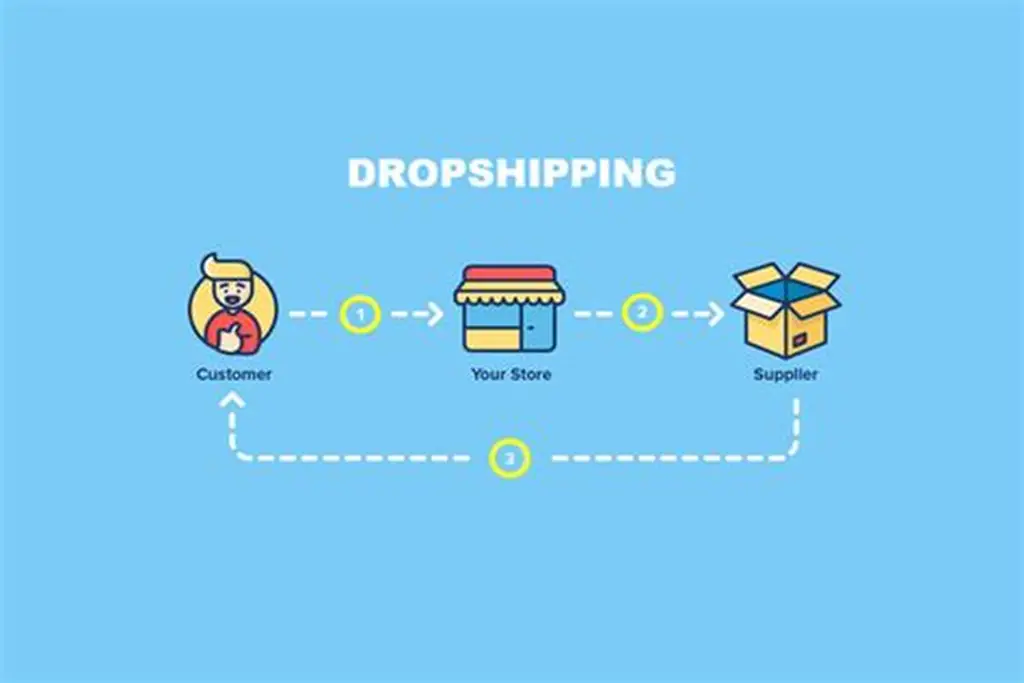
A customer clicks “buy.”
No warehouse ships anything you own. No inventory leaves your hands. No boxes sit in your storage space. Instead, a third-party supplier receives the order, packages the product, and ships it directly to the customer under your brand name.
On the surface, dropshipping looks almost unreal.
A business without inventory. A storefront without storage. A retailer without physical logistics.
But beneath that simplicity sits a fragile coordination system that depends on timing, supplier reliability, customer expectations, and razor-thin control over execution.
I first understood dropshipping’s real nature while speaking with a small e-commerce entrepreneur who had scaled quickly using the model. He described it with a mix of admiration and exhaustion:
“It feels like I’m running a store I don’t fully control, but I’m still responsible for everything that goes wrong.”
That tension defines dropshipping more accurately than any marketing headline ever could.
Because dropshipping is not just a business model.
It is a delegation system stretched across distance, trust, and logistics chains that exist outside the seller’s direct control.
What Is Dropshipping?
Dropshipping is an e-commerce model where the seller does not hold inventory. Instead, when a customer places an order, the seller forwards it to a supplier who ships the product directly to the customer.
The seller acts as an intermediary:
- They manage the storefront
- They market the products
- They handle customer acquisition
- They process orders
But they do not physically stock or ship goods.
This separation creates a unique structure where revenue generation and product fulfillment are decoupled.
And that decoupling is both the model’s greatest strength and its most persistent vulnerability.
Why Dropshipping Became So Popular
Dropshipping gained rapid attention for one central reason:
It lowers the barrier to entry for e-commerce dramatically.
Traditional retail requires:
- Inventory investment
- Warehousing
- Logistics infrastructure
- Upfront capital
Dropshipping removes those constraints almost entirely.
The Appeal Is Structural Simplicity
At least in theory:
- No inventory risk
- Low startup costs
- Flexible product testing
- Easy scalability
- Location independence
A single entrepreneur can launch an online store within days, sometimes hours, without ever touching physical inventory.
That accessibility created a surge of new online businesses.
It also created unrealistic expectations.
Because simplicity on the front end does not eliminate complexity behind the scenes.
It relocates it.
How the Dropshipping Process Actually Works
The operational flow typically looks like this:
- Customer visits an online store
- Customer places an order
- Store forwards order to supplier
- Supplier packages product
- Supplier ships directly to customer
- Customer receives product
- Store handles support, refunds, and communication
The seller becomes a coordination layer between demand and supply.
That sounds efficient.
Until something breaks.
The Hidden Dependency Structure
Dropshipping businesses rely heavily on external partners:
- Manufacturers
- Wholesale suppliers
- Shipping carriers
- International logistics systems
This creates a layered dependency structure where the seller owns the customer relationship but not the fulfillment process.
That imbalance creates operational risk.
The Seller Controls Demand, Not Delivery
This is the core contradiction of dropshipping:
You are responsible for customer experience without directly controlling product quality or shipping speed.
That tension defines nearly every operational challenge in the model.
A Comparison of Dropshipping vs Other E-Commerce Models
| Model | Inventory Ownership | Startup Cost | Profit Margins | Operational Control | Risk Level |
|---|---|---|---|---|---|
| Dropshipping | None | Very Low | Low-Moderate | Low | Moderate |
| Traditional E-Commerce | Full ownership | High | Moderate-High | High | High |
| Private Label Brand | Full ownership | High | High | High | High |
| Marketplace Selling | Shared inventory | Moderate | Moderate | Moderate | Moderate |
| Print-on-Demand | Supplier-produced | Low | Moderate | Moderate | Low-Moderate |
The table reveals an important truth:
Dropshipping reduces financial risk but increases operational uncertainty.
Why Margins Are Often Thin
Dropshipping businesses typically operate on compressed margins.
Several structural reasons explain this:
- Suppliers take a significant portion of revenue
- Shipping costs reduce profitability
- Advertising expenses are high
- Refunds and returns erode margins
- Competition drives prices downward
Many dropshipping stores rely heavily on paid advertising to acquire customers, which further compresses profitability if campaigns are not carefully optimized.
Revenue Growth Does Not Guarantee Profit
A store can generate significant sales while earning minimal net income.
That disconnect surprises many new entrants.
The Role of Marketing in Dropshipping
Marketing becomes the primary driver of success.
Because product differentiation is often limited, visibility determines revenue.
Common acquisition channels include:
- Social media ads
- Influencer marketing
- Search engine advertising
- Viral content campaigns
- Short-form video platforms
Attention Is the Real Inventory
In dropshipping, you are not managing physical stock.
You are managing attention flow.
And attention is volatile, expensive, and competitive.
Supplier Reliability Determines Business Stability
Suppliers are the backbone of the dropshipping model.
Their performance directly impacts:
- Shipping speed
- Product quality
- Customer satisfaction
- Refund rates
- Brand reputation
Yet sellers often have limited visibility into supplier operations.
That creates asymmetry.
When Suppliers Fail, Sellers Absorb the Consequences
Customers do not contact suppliers.
They contact the store.
This means the dropshipping business carries full reputational responsibility while outsourcing fulfillment control.
That imbalance is the model’s most persistent operational tension.
A Real Lesson From Experience
Years ago, I spoke with a founder running a rapidly growing dropshipping store focused on consumer gadgets. He had scaled aggressively through social media advertising and was generating impressive monthly sales figures.
From the outside, the business looked successful.
Inside, he described something very different.
Orders were arriving faster than suppliers could reliably fulfill them. Shipping times varied unpredictably depending on warehouse location. Customer complaints increased. Refund requests surged. Advertising costs rose as conversion rates declined.
He paused during the conversation and said something revealing:
“We scaled demand before we stabilized delivery.”
That single mismatch undermined everything.
Because in dropshipping, speed of growth without operational stability creates fragility rather than strength.
The Advantages of Dropshipping
Despite its challenges, dropshipping remains attractive for several legitimate reasons:
Low Barrier to Entry
Entrepreneurs can launch without major upfront investment.
Product Testing Flexibility
Stores can test multiple products without holding inventory.
Location Independence
Operations can be managed remotely.
Scalability Potential
Theoretically, order volume can grow without warehouse constraints.
Broad Product Selection
Sellers can offer diverse catalogs without storage limitations.
These advantages explain why the model continues attracting new entrepreneurs globally.
The Risks Behind the Model
Dropshipping’s risks are often underestimated.
Lack of Quality Control
Sellers rarely inspect products directly.
Shipping Delays
International fulfillment often introduces unpredictability.
Supplier Dependency
Business continuity depends on third-party reliability.
Customer Service Pressure
Sellers must resolve issues they did not directly cause.
Brand Fragility
One poor supplier experience can damage reputation quickly.
The model amplifies external dependencies.
Why Competition Became Intense
Dropshipping became popular quickly because of its accessibility.
But that accessibility created saturation.
Many sellers:
- Use identical suppliers
- Sell similar products
- Target similar audiences
- Compete through advertising alone
This drives up marketing costs and reduces differentiation.
Price Becomes the Default Battleground
When products are similar, pricing competition intensifies.
That dynamic compresses margins further.
Print-on-Demand: A Close Relative
Print-on-demand is often confused with dropshipping but differs slightly.
Instead of reselling pre-made products, items are produced after orders are placed.
This model:
- Reduces inventory risk
- Allows customization
- Improves brand differentiation
But still relies on third-party fulfillment.
It solves some problems while introducing others.
The Evolution of Dropshipping Businesses
Many successful dropshipping businesses eventually evolve into:
- Private label brands
- Hybrid fulfillment models
- In-house inventory systems
- Direct-to-consumer companies
Why?
Because control becomes more valuable at scale.
Control Improves Margins and Experience
Owning inventory and logistics allows businesses to:
- Improve quality control
- Speed up delivery
- Increase profit margins
- Strengthen branding
Dropshipping often serves as an entry point rather than a final destination.
The Psychological Misconception About Dropshipping
A common misunderstanding is that dropshipping is “easy money.”
In reality, it is operational arbitrage under uncertainty.
Success requires:
- Marketing skill
- Supplier management
- Customer support discipline
- Data-driven decision-making
- Financial control
The absence of inventory does not mean the absence of complexity.
It simply shifts complexity elsewhere.
The Future of Dropshipping
Automation, AI, and global logistics improvements are reshaping the model.
We are already seeing:
- Faster supplier integration systems
- Real-time inventory syncing tools
- Automated order routing
- Improved fulfillment tracking
- Smarter advertising optimization
But at the same time, competition is increasing and customer expectations are rising.
Speed, transparency, and reliability matter more than ever.
Conclusion: Dropshipping Is Not a Shortcut — It Is a Coordination Challenge
Dropshipping is often misunderstood as a simplified version of e-commerce.
It is not.
It is a business model defined by delegation without physical ownership, where control over fulfillment is outsourced while responsibility for customer experience remains centralized.
That imbalance creates opportunity.
It also creates fragility.
Because success in dropshipping does not come from avoiding complexity.
It comes from managing complexity you do not fully control.
And perhaps that is the most important insight of all.
The model rewards those who understand that absence of inventory is not absence of responsibility.
It is redistribution of it.
- Arts
- Business
- Computers
- Oyunlar
- Health
- Home
- Kids and Teens
- Money
- News
- Personal Development
- Recreation
- Regional
- Reference
- Science
- Shopping
- Society
- Sports
- Бизнес
- Деньги
- Дом
- Досуг
- Здоровье
- Игры
- Искусство
- Источники информации
- Компьютеры
- Личное развитие
- Наука
- Новости и СМИ
- Общество
- Покупки
- Спорт
- Страны и регионы
- World

 English
 Russian
 French
 Spanish
 Portuguese
 Deutsch
 Dutch
Dutch
 Italiano
 Arabic
 Romaian
 Portuguese (Brazil)
 Greek
Greek
