
Marketplace vs. Direct Sales
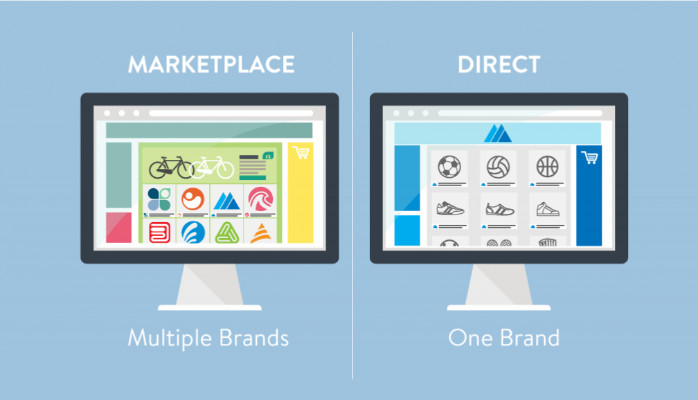
A company finally builds a product customers genuinely want.
Then the real argument begins.
Should it sell through marketplaces with massive built-in traffic? Or should it control everything through direct sales channels? Founders debate this question with surprising emotional intensity because the decision shapes far more than revenue. It influences margins, customer ownership, brand identity, scalability, operational complexity, and long-term survival.
And unlike many strategic debates, this one has no universally correct answer.
I learned how consequential this decision becomes while speaking with the founder of a rapidly growing consumer goods company several years ago. Early growth came almost entirely through large online marketplaces. Sales surged quickly. Customer acquisition felt effortless compared to building traffic independently.
But then something uncomfortable happened.
The founder realized the business was generating impressive revenue while knowing almost nothing about its actual customers. The marketplace controlled:
- Search visibility
- Customer data
- Platform rules
- Discovery algorithms
- Promotional placement
At one point, the founder leaned back and said:
“We built a successful business inside someone else’s ecosystem.”
That sentence captures the marketplace dilemma perfectly.
Because marketplaces accelerate growth while simultaneously limiting control.
And direct sales preserve control while making growth significantly harder.
Understanding the Two Models
Before comparing them properly, the distinction needs clarity.
Marketplace Sales
A business sells products through third-party platforms that aggregate buyers and sellers.
Examples include:
- Large e-commerce marketplaces
- App stores
- Freelance platforms
- Booking platforms
- Digital product marketplaces
The marketplace owns the ecosystem.
The seller participates inside it.
Direct Sales
A business sells directly to customers through owned channels:
- Brand websites
- Physical stores
- Direct outreach
- Proprietary apps
- Sales teams
The company controls the customer relationship entirely.
That control changes economics dramatically.
Why Marketplaces Became So Dominant
Marketplaces solve one brutal problem exceptionally well:
Distribution.
Building audience attention independently is expensive, slow, and uncertain. Marketplaces already possess concentrated buyer traffic.
For many businesses, that accessibility becomes irresistible.
Marketplaces Reduce Customer Acquisition Friction
Sellers gain:
- Immediate visibility
- Existing customer trust
- Simplified infrastructure
- Built-in payment systems
- Search traffic access
This lowers barriers dramatically.
A small business can begin selling quickly without building massive marketing systems from scratch.
But Marketplace Convenience Comes at a Cost
That cost is usually control.
The marketplace controls:
- Fees
- Visibility algorithms
- Ranking systems
- Customer communication
- Competitive positioning
The seller participates conditionally.
The Platform Owns the Relationship
This becomes increasingly important as businesses mature.
Marketplace customers often remember the platform more than the seller itself.
That weakens:
- Brand loyalty
- Customer retention
- Long-term differentiation
The seller becomes partially interchangeable.
Direct Sales Prioritize Ownership
Direct sales models operate differently psychologically and financially.
The business owns:
- Customer data
- Branding experience
- Communication channels
- Pricing control
- Retention systems
This creates stronger long-term strategic positioning.
Customer Relationships Become Assets
Direct relationships enable:
- Email marketing
- Loyalty programs
- Upselling
- Community development
- Higher lifetime value
That customer ownership compounds over time.
A Comparison of Marketplace vs. Direct Sales
| Factor | Marketplace Sales | Direct Sales |
|---|---|---|
| Customer Acquisition | Easier | Harder |
| Brand Control | Limited | High |
| Customer Data Access | Restricted | Full |
| Margins | Lower | Higher |
| Scalability | Fast initially | Slower initially |
| Traffic Dependency | Platform-controlled | Self-generated |
| Operational Complexity | Lower | Higher |
| Customer Loyalty | Platform-oriented | Brand-oriented |
| Long-Term Stability | Vulnerable to platform changes | More independent |
| Marketing Costs | Lower upfront | Higher upfront |
The table reveals the core trade-off clearly.
Marketplaces optimize distribution.
Direct sales optimize ownership.
Why Early-Stage Businesses Often Choose Marketplaces
For startups, marketplaces solve the hardest early challenge:
Attention scarcity.
Without existing audiences, direct sales become expensive quickly. Marketplaces provide immediate exposure to buyers already searching actively.
That early momentum matters psychologically and financially.
Revenue Validation Happens Faster
Businesses can:
- Test demand quickly
- Validate products
- Generate cash flow
- Learn customer behavior
This lowers early-stage risk substantially.
I have watched founders spend years building independent stores with minimal traction while marketplace sellers generated meaningful revenue within months.
Distribution speed matters.
The Hidden Fragility of Marketplace Dependence
Yet marketplace success creates structural vulnerability over time.
Algorithms change.
Fees increase.
Competition intensifies.
Visibility fluctuates unexpectedly.
Platform Dependency Becomes Dangerous
A business heavily dependent on marketplace traffic may face:
- Margin compression
- Ranking instability
- Sudden policy shifts
- Copycat competitors
- Reduced visibility
The platform can reshape economics unilaterally.
And sellers usually possess limited negotiating power.
Direct Sales Build Stronger Economic Foundations
Direct sales require more effort upfront but often produce stronger long-term economics.
Why?
Because customer acquisition costs become investments rather than temporary platform participation fees.
Owned Audiences Compound
Direct businesses can repeatedly monetize:
- Email lists
- Communities
- Customer relationships
- Brand trust
The business gradually builds independent distribution infrastructure.
That independence matters enormously later.
Branding Works Differently Across the Models
Marketplace environments compress brand differentiation.
Products compete side-by-side:
- Similar pricing
- Similar imagery
- Similar reviews
- Similar functionality
The platform interface dominates customer attention.
Direct Sales Expand Brand Narrative
Owned channels allow businesses to shape:
- Visual identity
- Storytelling
- Positioning
- Customer experience
- Emotional connection
Luxury brands understand this deeply.
Many avoid marketplaces intentionally because exclusivity weakens inside crowded ecosystems.
Operational Complexity Increases With Direct Sales
This part often gets underestimated.
Direct sales require businesses to manage:
- Traffic acquisition
- Payment systems
- Customer support
- Fulfillment coordination
- Website optimization
- Retention systems
Marketplaces simplify much of this infrastructure.
Simplicity Has Economic Value
Operational simplicity reduces:
- Technical burden
- Marketing complexity
- Customer acquisition pressure
For smaller teams, this can be extremely valuable.
My Most Important Lesson About This Debate
Years ago, I assumed direct sales were always strategically superior because ownership sounded inherently stronger.
Experience complicated that assumption significantly.
I watched a founder abandon marketplaces entirely in pursuit of “brand independence.” The business gained more control, yes.
It also lost enormous traffic volume.
Customer acquisition costs surged. Advertising efficiency deteriorated. Revenue growth slowed dramatically.
At one point, the founder admitted something uncomfortable:
“We replaced dependency on the marketplace with dependency on paid advertising.”
That distinction changed how I viewed the debate completely.
Because no business escapes dependency entirely.
It simply chooses which dependency structure feels most survivable.
Hybrid Models Became Increasingly Common
Many sophisticated companies now combine both systems strategically.
They use marketplaces for:
- Discovery
- Customer acquisition
- Volume scaling
And direct sales for:
- Retention
- Brand development
- Margin improvement
- Community building
The Marketplace Becomes the Funnel
This hybrid approach allows businesses to leverage marketplace visibility while gradually transitioning customers into owned ecosystems.
That balance can become extremely powerful.
Why Direct-to-Consumer Brands Changed the Conversation
Direct-to-consumer (DTC) brands popularized the idea that businesses should own customer relationships completely.
This model created:
- Higher margins
- Stronger branding
- Better data access
- Greater pricing flexibility
But DTC economics became harder as advertising costs increased across digital channels.
Customer acquisition is no longer cheap.
That changed the calculus.
The Psychology of Customer Trust
Marketplaces provide institutional trust automatically.
Customers trust the platform’s infrastructure:
- Payments
- Returns
- Shipping
- Security
Direct businesses must build trust independently.
Trust Acquisition Is Expensive
Direct brands invest heavily in:
- Design
- Reviews
- Social proof
- Customer service
- Brand reputation
Marketplace sellers partially outsource trust to the platform itself.
Which Model Is More Profitable?
The answer depends heavily on scale and operational capability.
Marketplaces Often Win Early
Because:
- Acquisition costs are lower
- Infrastructure is simplified
- Revenue begins faster
Direct Sales Often Win Later
Because:
- Margins improve
- Retention compounds
- Customer ownership increases lifetime value
The timeline matters enormously.
Conclusion: Marketplace vs. Direct Sales Is Really a Debate About Control vs. Convenience
Marketplaces and direct sales optimize for different strategic outcomes.
Marketplaces prioritize speed, distribution, and simplicity. Direct sales prioritize ownership, margins, and long-term independence.
Neither model is inherently superior.
Each distributes risk differently.
Marketplace sellers surrender control for visibility. Direct sellers surrender simplicity for autonomy. One model depends heavily on external ecosystems. The other depends heavily on internal execution.
And perhaps that is the most important insight.
The real question is not which model is objectively better.
It is which form of dependency your business is structurally prepared to manage over time.
Because every business operates inside systems it does not fully control.
The strongest companies simply understand exactly where that control ends.
- Arts
- Business
- Computers
- Giochi
- Health
- Home
- Kids and Teens
- Money
- News
- Personal Development
- Recreation
- Regional
- Reference
- Science
- Shopping
- Society
- Sports
- Бизнес
- Деньги
- Дом
- Досуг
- Здоровье
- Игры
- Искусство
- Источники информации
- Компьютеры
- Личное развитие
- Наука
- Новости и СМИ
- Общество
- Покупки
- Спорт
- Страны и регионы
- World

 English
 Russian
 French
 Spanish
 Portuguese
 Deutsch
 Turkish
 Dutch
Dutch
 Arabic
 Romaian
 Portuguese (Brazil)
 Greek
Greek
