
Service vs. Product-Based Business?
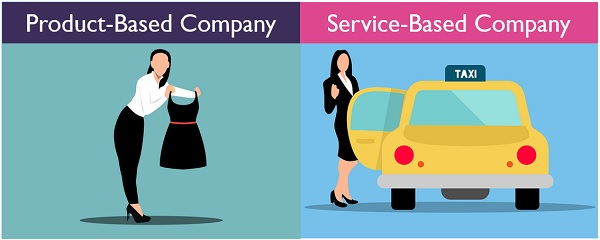
At some point, nearly every entrepreneur confronts the same uncomfortable question:
Should you sell your time, or should you sell something that exists independently of you?
The debate sounds simple initially. Services generate cash flow quickly. Products scale more efficiently. Services feel personal. Products feel leverageable. One model prioritizes relationships. The other prioritizes systems.
But after years of watching founders move between both worlds — sometimes successfully, sometimes disastrously — I have learned that the distinction runs deeper than economics.
It changes how people work.
How they think.
How they experience pressure.
And perhaps most importantly, how they define growth itself.
I remember speaking with a founder who transitioned from running a highly profitable consulting agency into building a SaaS platform. From the outside, it looked like an obvious upgrade. Recurring revenue. Scalability. Product leverage. Investor appeal.
Yet several months into the transition, he admitted something unexpected:
“With services, I felt exhausted. With products, I feel uncertain.”
That sentence stayed with me because it captured the emotional architecture of both models perfectly.
Service businesses often produce immediate certainty and long-term exhaustion.
Product businesses often produce long-term leverage and immediate uncertainty.
Everything else is detail.
Understanding the Difference
At the highest level, the distinction appears straightforward.
Service-Based Businesses
Service businesses sell expertise, labor, or outcomes directly tied to human effort.
Examples include:
- Consulting
- Agencies
- Legal services
- Coaching
- Design firms
- Marketing services
- Accounting practices
Revenue is generated through time, skill, execution, or advisory relationships.
Product-Based Businesses
Product businesses sell repeatable goods or systems independent of direct labor delivery.
Examples include:
- Software
- Consumer goods
- Online courses
- Physical products
- Subscription tools
- Digital products
Products can often be sold repeatedly without recreating the work each time.
That scalability difference shapes everything afterward.
Why Service Businesses Feel Easier Initially
Service businesses solve one of the hardest startup problems immediately:
Monetization.
A person with expertise can begin generating revenue quickly with:
- Minimal infrastructure
- Low startup costs
- Existing skills
- Direct relationships
This makes service businesses operationally accessible.
Cash Flow Arrives Faster
A consultant can sign clients within weeks.
A freelancer can monetize expertise immediately.
An agency can begin billing before building extensive systems.
Product businesses rarely move that quickly.
But Services Create Human Bottlenecks
The same characteristic that makes services accessible also limits scalability.
Revenue remains tied closely to:
- Time
- Labor
- Availability
- Team capacity
Growth Often Requires More People
As demand increases:
- Hiring becomes necessary
- Coordination complexity rises
- Quality consistency becomes harder
- Margins may compress
Service businesses frequently scale through headcount expansion rather than operational leverage.
That distinction matters enormously.
Product Businesses Scale Differently
Products decouple revenue from direct labor more effectively.
A software platform can serve thousands of users simultaneously.
A digital course can be sold repeatedly.
A physical product can be manufactured in volume.
Marginal Costs Change the Equation
Once the product exists, selling additional units often becomes significantly cheaper than creating the first one.
This creates leverage:
- Revenue scales faster than labor
- Margins can improve with growth
- Distribution expands globally
That operational leverage explains why product businesses attract so much attention.
A Comparison of Service vs. Product Businesses
| Factor | Service Business | Product Business |
|---|---|---|
| Startup Cost | Low | Moderate-High |
| Time to Revenue | Fast | Slower |
| Scalability | Moderate | High |
| Operational Complexity | Moderate | High |
| Cash Flow Predictability | High initially | Variable initially |
| Margins | Strong early | Strong at scale |
| Dependency on Founder | High | Lower over time |
| Customer Relationships | Deep and direct | Broader but less personal |
| Hiring Pressure | High | Moderate |
| Investor Appeal | Lower | Higher |
The table reveals something important:
Services optimize for immediate monetization.
Products optimize for long-term leverage.
Why Many Entrepreneurs Start With Services
Because services are forgiving.
A service business can adapt quickly:
- Change pricing
- Adjust offerings
- Customize solutions
- Pivot positioning
Products lack that flexibility initially.
Services Provide Market Education
Founders learn:
- Customer pain points
- Industry language
- Buying behavior
- Operational friction
Many successful product companies actually begin as service businesses because services expose recurring customer problems worth systemizing later.
The Hidden Exhaustion of Service Businesses
This section deserves more honesty.
Service businesses can become psychologically draining because operational success depends heavily on continuous responsiveness.
Clients expect:
- Communication
- Availability
- Adaptation
- Problem-solving
- Relationship management
Revenue Often Feels Temporary
Every contract eventually ends.
Every project eventually completes.
Every client relationship requires maintenance.
That creates a constant acquisition cycle.
I once worked with the founder of a fast-growing creative agency generating impressive annual revenue. Publicly, the company looked thriving.
Privately, the founder described feeling trapped inside operational dependency:
- Endless meetings
- Constant revisions
- Hiring stress
- Client management fatigue
At one point, he admitted:
“We built a profitable company that consumes all available energy.”
That sentence explains why many service founders eventually pursue products.
Product Businesses Create Different Psychological Pressure
Products scale more efficiently.
But they introduce uncertainty services often avoid.
Products Require Delayed Gratification
Product businesses frequently demand:
- Longer development timelines
- Upfront investment
- Market testing
- Distribution building
- Customer education
Revenue may arrive slowly initially.
This creates financial and emotional pressure.
Product Failure Can Be Expensive
A failed service proposal costs time.
A failed product launch can cost:
- Manufacturing investment
- Development resources
- Inventory exposure
- Infrastructure spending
The stakes often feel larger.
Customer Relationships Work Differently
Service businesses create intimacy.
Product businesses create systems.
Services Build Deep Trust
Clients often develop strong loyalty toward:
- Advisors
- Consultants
- Coaches
- Specialized experts
Relationships become economically valuable.
Products Prioritize Consistency
Product businesses focus more heavily on:
- User experience
- Scalability
- Automation
- Distribution efficiency
The relationship becomes less personal but more repeatable.
Why Investors Prefer Product Businesses
Because products scale without proportional labor expansion.
Investors seek:
- Operational leverage
- Repeatable revenue
- Global scalability
- High-margin potential
Product businesses often fit these criteria more effectively than service firms.
Services Are Harder to Scale Exponentially
Even successful agencies and consultancies eventually encounter operational limits:
- Hiring bottlenecks
- Quality control issues
- Communication complexity
Products scale through systems.
Services scale through people.
Hybrid Models Became Increasingly Common
Many modern businesses combine both structures strategically.
Examples include:
- Agencies building SaaS tools
- Consultants selling courses
- Coaches launching memberships
- Service firms productizing frameworks
Productized Services Bridge the Gap
This approach creates:
- Faster monetization
- Operational leverage
- Repeatable delivery systems
- Reduced customization burden
The line between services and products is becoming increasingly blurred.
The Economics of Time
Service businesses monetize time directly or indirectly.
Product businesses attempt to separate income from time entirely.
This difference shapes lifestyle dramatically.
Services Reward Presence
More involvement often means:
- Better results
- Higher pricing
- Stronger relationships
Products Reward Infrastructure
Better systems produce:
- Scale
- Automation
- Efficiency
- Broader reach
One model compounds labor.
The other compounds systems.
My Most Important Lesson About This Debate
Years ago, I assumed product businesses were inherently superior because scalability appeared objectively stronger.
Experience dismantled that assumption.
I watched founders chase products prematurely while abandoning highly profitable service operations that already worked. Some succeeded eventually.
Many did not.
At the same time, I watched service businesses quietly generate extraordinary cash flow with less risk and faster profitability than many venture-backed product startups ever achieved.
One founder summarized it best:
“Products buy freedom eventually. Services buy certainty immediately.”
Neither advantage is trivial.
Which Model Is Better for Beginners?
For many entrepreneurs, services provide:
- Faster validation
- Lower financial risk
- Immediate revenue
- Market exposure
Products often require:
- Patience
- Capital
- Technical development
- Distribution strategy
That makes services more accessible early.
But accessibility and scalability are not identical objectives.
Conclusion: Service vs. Product Businesses Is Really a Debate About Leverage vs. Control
Service and product businesses distribute pressure differently.
Services create immediate revenue but depend heavily on human effort. Products create operational leverage but demand greater upfront uncertainty. One monetizes expertise directly. The other attempts to transform expertise into scalable systems independent of continuous labor.
Neither path is inherently superior.
They simply optimize for different forms of sustainability.
Services reward responsiveness, relationships, and adaptability. Products reward infrastructure, repeatability, and scale. One creates closeness with customers. The other creates distance through systems.
And perhaps that is the most important insight.
The best business model is rarely the one that looks most glamorous externally.
It is the one whose operational pressures align best with the kind of work you are actually willing to sustain for years.
- Arts
- Business
- Computers
- Juegos
- Health
- Home
- Kids and Teens
- Money
- News
- Personal Development
- Recreation
- Regional
- Reference
- Science
- Shopping
- Society
- Sports
- Бизнес
- Деньги
- Дом
- Досуг
- Здоровье
- Игры
- Искусство
- Источники информации
- Компьютеры
- Личное развитие
- Наука
- Новости и СМИ
- Общество
- Покупки
- Спорт
- Страны и регионы
- World

 English
 Russian
 French
 Portuguese
 Deutsch
 Turkish
 Dutch
Dutch
 Italiano
 Arabic
 Romaian
 Portuguese (Brazil)
 Greek
Greek
