
How to stay financially stable in a bad economy?
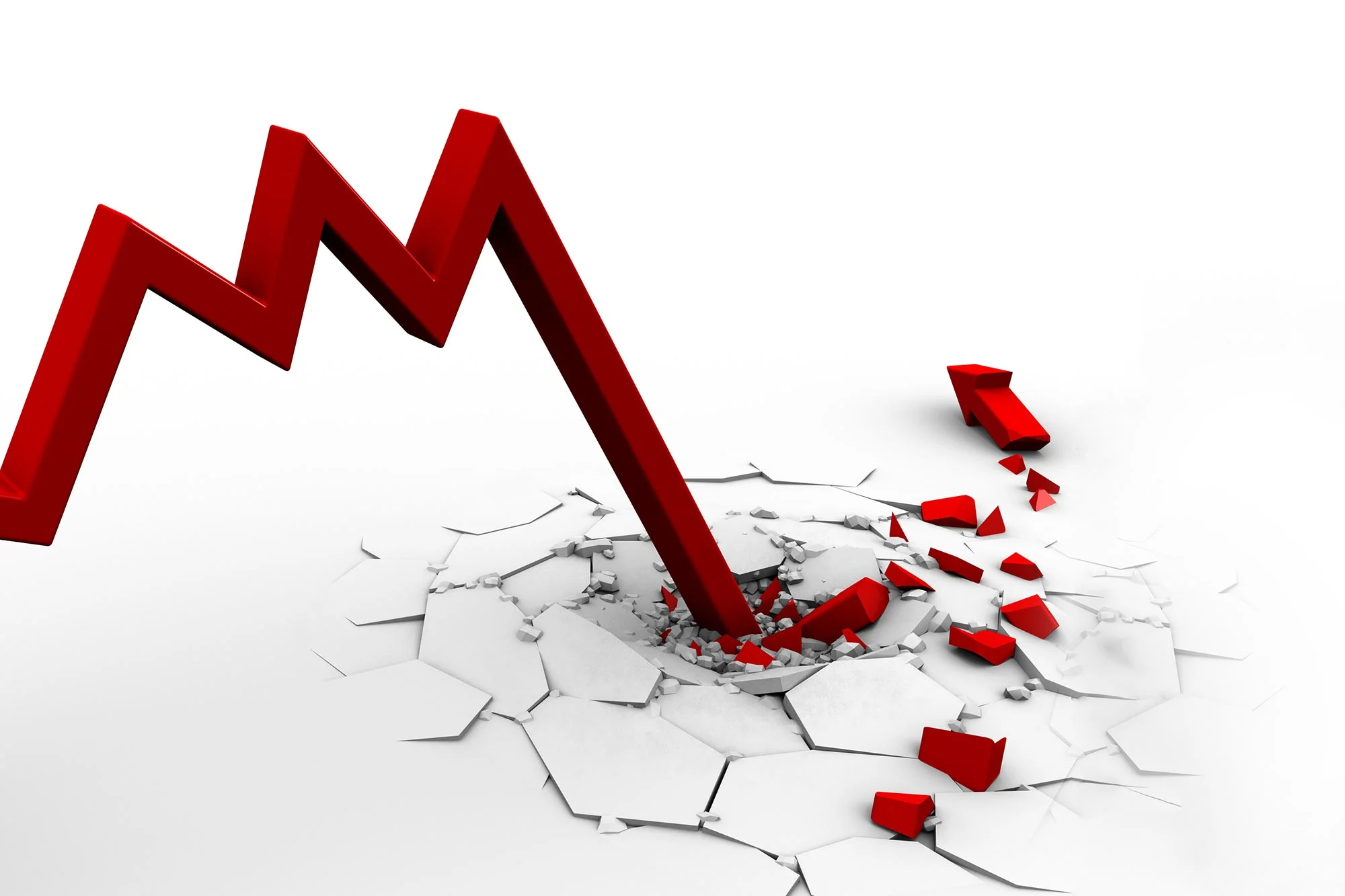
How to Stay Financially Stable in a Bad Economy
There is a particular smell to monetary decay. It is not visible in the headline inflation statistics printed by government bureaus staffed with economists who have never balanced a family budget. It is not captured in the sterile language of “soft landings” or “temporary dislocations.” You notice it instead in the grocery aisle, where a bag of coffee quietly shrinks while its price rises. In the apologetic smile of a restaurant owner reducing portions. In the young engineer earning twice what his father earned nominally, yet unable to afford the kind of house his father purchased on a mechanic’s salary.
A bad economy does not arrive all at once. It seeps into civilization gradually, through incentives. The currency weakens, debt expands, speculation replaces savings, and prudence becomes unfashionable. Then, when the inevitable reckoning comes, politicians speak as though hurricanes caused it.
They never ask the more uncomfortable question: what happens to a society that punishes savers and rewards debtors for decades?
Financial stability in a bad economy is not achieved through clever tricks. It is not a matter of downloading a budgeting application decorated with pastel colors and dopamine notifications. Stability is built the old-fashioned way: by lowering dependency on fragile systems and increasing ownership over scarce, productive assets.
That is the distinction most people fail to grasp. Wealth is not income. Wealth is resilience.
The Central Error of the Modern Worker
The average salaried employee today believes his paycheck is his security. In reality, his paycheck is merely evidence of temporary usefulness within a highly leveraged economic machine.
When credit contracts, companies cut labor before they cut executive compensation. Governments debase currency before they reduce spending. Central banks rescue asset markets before they rescue wage earners.
The employee discovers, often too late, that his income depended on institutions whose incentives were never aligned with his survival.
I learned this lesson during a period when nearly everyone around me appeared prosperous. Asset prices rose violently. Luxury consumption became social currency. People financed lifestyles with debt under the assumption that future income growth would rescue them from arithmetic.
One acquaintance leased a luxury SUV while carrying revolving credit card balances at interest rates that would embarrass medieval moneylenders. Another refinanced his home repeatedly to sustain consumption. They mistook liquidity for wealth.
Then the cycle turned.
Within eighteen months, one lost his business, the other lost the vehicle, and both discovered the brutal asymmetry of debt: lenders demand repayment even when markets no longer cooperate.
The experience clarified something important for me. Financial stability is less about maximizing upside than minimizing fragility.
That realization changes everything.
The First Principle: Own Scarce Assets, Avoid Expanding Liabilities
In deteriorating economies, currency units multiply while genuinely scarce assets become more valuable.
This is why financially stable people behave differently from financially stressed people during crises. The unstable seek appearances. The stable seek ownership.
A liability consumes future labor. An asset preserves it.
The distinction sounds obvious until one examines how most households actually operate.
Common Household Financial Behaviors
| Financial Behavior | Short-Term Feeling | Long-Term Result |
|---|---|---|
| Financing luxury consumption | Status and stimulation | Increased fragility |
| Holding large cash balances in weak currency | False sense of safety | Purchasing power erosion |
| Owning productive assets | Slower gratification | Long-term resilience |
| Maintaining low fixed expenses | Reduced social signaling | Greater adaptability |
| Developing high-value skills | Delayed reward | Stronger bargaining power |
| Speculating with leverage | Excitement | Catastrophic downside risk |
The table appears simple because the truth usually is. Complexity often exists to disguise incentives.
The modern economy encourages citizens to consume rapidly because heavily indebted monetary systems depend on perpetual spending. Saving becomes economically inconvenient to policymakers because savings reduce short-term consumption velocity.
Thus the financially stable individual must often behave contrary to prevailing culture.
He must become comfortable looking less wealthy than he is.
That alone eliminates half the danger.
Why Low Fixed Costs Matter More Than High Income
A man earning $250,000 annually with $240,000 in yearly obligations is poorer than a man earning $80,000 with $30,000 in expenses.
This should be self-evident, yet modern status culture obscures it.
High fixed costs are chains disguised as achievements.
The larger the mortgage, the more dependent the borrower becomes on uninterrupted income streams. The more subscriptions, leases, financing arrangements, and lifestyle obligations accumulated, the narrower the margin for error becomes.
Bad economies punish narrow margins.
One of the most financially secure families I know lived far below their means for twenty years. Old vehicles. Reasonable home. No compulsive consumption masquerading as self-expression. Friends quietly mocked them for being “too conservative.”
Then came layoffs across their industry.
While others panicked, they remained calm because their survival did not depend on maintaining appearances. Their savings purchased something modern economies rarely provide: optionality.
Optionality is freedom under uncertainty.
And uncertainty is the defining characteristic of bad economies.
Cash Flow Is Civilization at the Personal Level
Most people think net worth determines financial stability. In reality, cash flow determines endurance.
An illiquid millionaire can become desperate quickly. A modest-income household with durable positive cash flow can survive astonishingly long periods of economic stress.
The goal is not merely accumulation. The goal is durability.
Prioritize These Forms of Cash Flow
1. Income Tied to Real Economic Utility
Jobs connected to tangible needs survive recessions better than fashionable abstractions.
Electricians, logistics operators, engineers, medical professionals, agricultural producers, and skilled trades endure because civilization cannot function without them.
Meanwhile, entire industries built on cheap credit and speculative excess evaporate rapidly when liquidity contracts.
Economic hardship clarifies value.
2. Multiple Income Streams
A single income source creates concentration risk.
This does not require entrepreneurial theatrics. A second stream can begin modestly:
-
Consulting
-
Writing
-
Teaching specialized skills
-
Small equity ownership
-
Rental income
-
Freelance technical work
The objective is redundancy.
Airplanes have backup systems for a reason.
3. Income Independent of Geography
Remote-capable skills create leverage against local economic deterioration.
If your earning power depends entirely on one employer in one city within one fragile industry, your risk exposure is extraordinary, even if your salary appears impressive.
Debt Is an Economic Shock Amplifier
Debt transforms ordinary downturns into personal catastrophes.
This is particularly true with variable-rate consumer debt, which combines two dangerous forces:
-
Currency debasement
-
Rising financing costs
The borrower suffers from both simultaneously.
A society addicted to debt begins to normalize permanent financial anxiety. People interpret stress as adulthood rather than as evidence of structural imbalance.
Not all debt is equally destructive, of course. Productive business debt attached to cash-generating assets differs materially from financing vacations and electronics.
But consumer debt is especially corrosive because it mortgages future labor for rapidly depreciating pleasures.
The stable household therefore treats debt reduction not merely as accounting optimization, but as psychological liberation.
A person without large debt obligations negotiates differently, works differently, and thinks differently.
He becomes harder to coerce.
That matters more during economic contractions than most realize.
Learn to Distinguish Signal From Noise
Bad economies generate information hysteria.
Financial media profits from emotional volatility. Politicians profit from fear. Social media profits from outrage.
None profit from your clarity.
The financially stable person therefore develops informational discipline.
This means ignoring most economic commentary designed purely to stimulate emotional reactions. Daily market movements are largely irrelevant to long-term survival. Endless prediction culture turns otherwise intelligent adults into nervous gamblers refreshing asset prices every eleven minutes.
Meanwhile, the truly important variables remain boring:
-
Savings rate
-
Debt levels
-
Skill development
-
Ownership of productive assets
-
Household flexibility
-
Health
-
Community trust
These are not exciting topics, which is precisely why they matter.
The civilization-wide obsession with excitement is itself a symptom of monetary disorder.
Skills Become More Valuable Than Credentials
Weak economies expose inflated credential systems.
During expansionary periods, institutions can afford inefficiency. During contractions, reality reasserts itself.
Can you solve problems?
Can you produce value?
Can you operate independently?
These questions matter far more than institutional prestige when economic conditions worsen.
One lesson repeatedly emerges during downturns: adaptable people survive better than specialized bureaucratic functionaries whose roles exist mainly within artificially inflated systems.
The financially stable individual therefore invests relentlessly in competence.
Not motivational competence. Real competence.
-
Writing clearly
-
Selling effectively
-
Negotiating calmly
-
Building systems
-
Understanding finance
-
Managing technology
-
Repairing physical things
-
Communicating persuasively
Civilization rewards usefulness eventually, even if speculative bubbles temporarily distort incentives.
The Psychological Component Nobody Discusses
Financial instability is rarely purely mathematical.
It is emotional.
People panic at market bottoms because they never prepared psychologically for volatility. They overspend because consumption temporarily anesthetizes insecurity. They speculate recklessly because boredom and envy overpower patience.
A bad economy magnifies existing character weaknesses.
This is why stable people often appear almost unfashionably calm during crises. Their behavior was built before the crisis arrived.
They already understood that economies are cyclical. That governments overextend. That markets become irrational. That leverage eventually liquidates itself.
Preparation creates emotional stability.
And emotional stability prevents catastrophic decisions.
A Civilization of Savers vs. A Civilization of Speculators
There is also a broader moral dimension here.
Healthy societies are built by savers. Fragile societies are dominated by speculators.
The saver sacrifices present consumption for future stability. The speculator sacrifices future stability for present stimulation.
One builds civilization slowly. The other extracts from it temporarily.
When monetary systems punish saving through persistent debasement, societies naturally drift toward speculation because prudence ceases to feel rational.
People begin trading memecoins, leveraging real estate, or chasing financial absurdities not because they are inherently foolish, but because the system increasingly penalizes restraint.
Understanding this dynamic is important because it clarifies why staying financially stable today often feels culturally unnatural.
You are swimming against the incentives of the age.
That discomfort is evidence you are probably moving in the correct direction.
Conclusion: Stability Is a Form of Quiet Rebellion
The financially stable person in a bad economy is not necessarily the richest person.
Often he is simply the least dependent.
He owes little. Owns meaningful assets. Maintains flexibility. Produces real value. Keeps expenses controlled. Avoids panic. Understands history. Thinks in decades rather than quarters.
This sounds almost disappointingly traditional.
That is because enduring financial wisdom rarely changes. Human nature changes very little, regardless of how sophisticated financial engineering becomes.
Empires debase currency. Debt cycles expand and collapse. Political systems overpromise. Asset bubbles inflate and burst. Through all of it, the same principles quietly persist:
Produce more than you consume.
Save in scarce assets.
Avoid unnecessary debt.
Develop useful skills.
Maintain optionality.
Ignore fashionable stupidity.
A bad economy does not destroy everyone equally. It mainly destroys fragility.
And fragility, more often than not, is self-inflicted.
- Arts
- Business
- Computers
- Oyunlar
- Health
- Home
- Kids and Teens
- Money
- News
- Personal Development
- Recreation
- Regional
- Reference
- Science
- Shopping
- Society
- Sports
- Бизнес
- Деньги
- Дом
- Досуг
- Здоровье
- Игры
- Искусство
- Источники информации
- Компьютеры
- Личное развитие
- Наука
- Новости и СМИ
- Общество
- Покупки
- Спорт
- Страны и регионы
- World

 English
 Russian
 French
 Spanish
 Portuguese
 Deutsch
 Dutch
Dutch
 Italiano
 Arabic
 Romaian
 Portuguese (Brazil)
 Greek
Greek
