
What happens when interest rates rise?
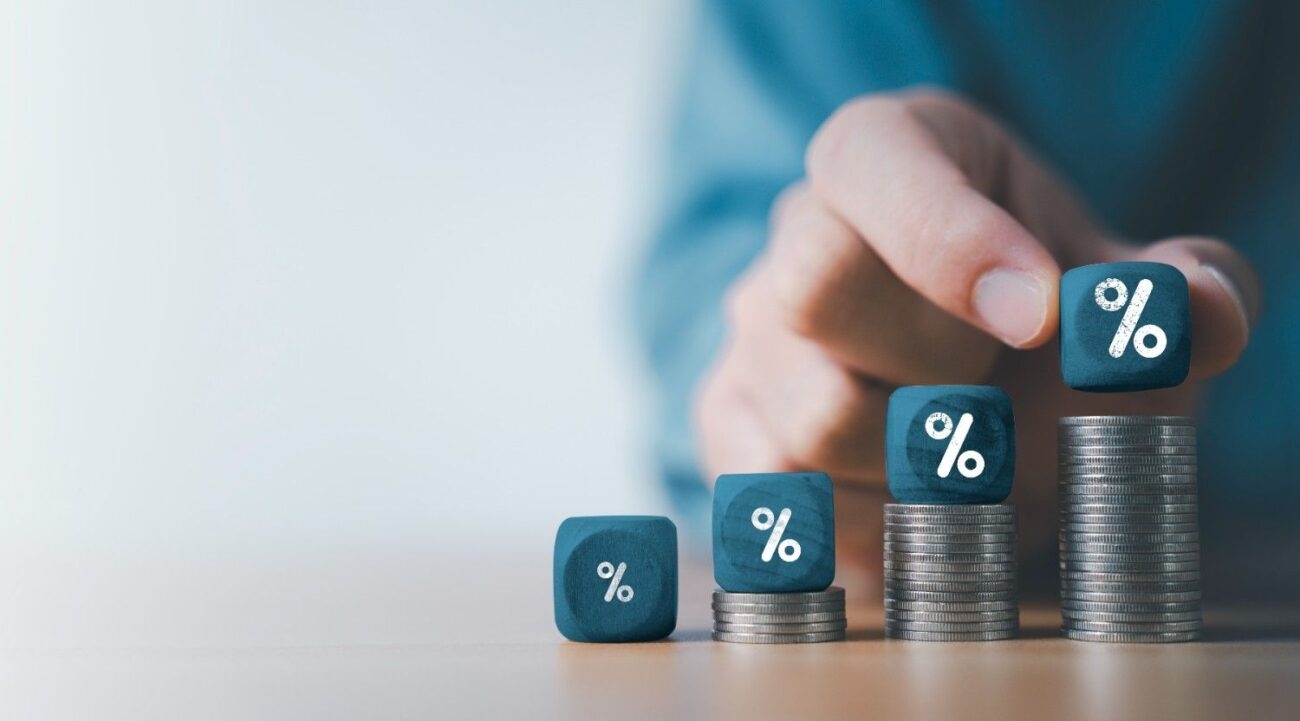
The Price of Time: What Happens When Interest Rates Rise?
There is no more consequential price in modern economies than the interest rate. Wheat has a price. Oil has a price. Labor has a price. But interest rates determine the price of time itself — the premium placed on present goods over future goods, on consumption over saving, on immediacy over patience.
When central banks raise interest rates, journalists speak as if they are adjusting a thermostat. A quarter point here. Fifty basis points there. The financial press treats it with the antiseptic calm of meteorologists discussing humidity.
But rising interest rates are not weather. They are demolition charges placed beneath the economic structure built during years of cheap credit.
And when they rise, everything changes.
Not immediately. Never immediately. Modern economies are addicted to leverage in the same way an alcoholic depends on liquor: the damage accumulates invisibly before suddenly becoming impossible to ignore.
The first thing that disappears when interest rates rise is not money.
It is illusion.
The Era of Cheap Money
For more than a decade after the 2008 financial crisis, the developed world lived through the greatest experiment in artificially suppressed interest rates in modern history. Central banks pushed rates toward zero while flooding financial markets with liquidity.
Debt became cheap enough to appear harmless.
Governments borrowed recklessly because servicing the debt cost almost nothing. Corporations issued bonds not to build productive infrastructure but to repurchase their own shares. Consumers financed lifestyles they could not afford. Venture capitalists funded businesses whose only credible strategy was losing money rapidly enough to monopolize markets before the financing window closed.
When money is nearly free, prudence becomes indistinguishable from stupidity.
The saver is punished. The speculator is rewarded.
This inversion lies at the heart of every modern credit bubble.
And then rates rise.
Why Central Banks Raise Rates
The official justification is almost always inflation.
When prices begin rising too quickly, central banks attempt to slow economic activity by increasing borrowing costs. The theory is straightforward enough: higher rates reduce spending, reduce lending, and therefore reduce upward pressure on prices.
But this explanation conceals a deeper reality.
Inflation is not merely “prices going up.” Inflation is the consequence of money creation outrunning production. It is a monetary phenomenon first and a pricing phenomenon second.
Once inflation becomes politically visible — when groceries, rents, and fuel become impossible to ignore — central banks face a credibility crisis. Raising rates becomes less an economic choice and more a public ritual designed to restore confidence in the currency itself.
The irony, however, is brutal.
The longer rates remain artificially low, the more catastrophic the eventual tightening becomes.
What Actually Happens When Rates Rise
The effects unfold in layers.
Some are immediate. Others take years to metastasize through the economy.
1. Debt Becomes Heavier
This sounds obvious, but its implications are profound.
A family with a variable mortgage suddenly sees monthly payments jump hundreds of dollars. A corporation refinancing billions in debt discovers that profits evaporate under higher interest expenses. Governments rolling over sovereign debt face exploding servicing costs.
Debt does not merely become more expensive.
It becomes visible.
Cheap credit masks fragility. Higher rates expose it.
Consider the mathematics:
genui{"math_block_widget_always_prefetch_v2":{"content":"A=P\left(1+\frac{r}{n}\right)^{nt}"}}
A modest rise in rates dramatically increases the long-term cost of borrowing. The compounding effect becomes vicious over time.
This is why highly leveraged economies fear rising rates more than inflation itself.
2. Asset Prices Begin Falling
Every asset price is, in some sense, a function of interest rates.
Stocks, real estate, bonds, venture capital valuations — all depend on discounting future cash flows into present value. When rates rise, future earnings become worth less today.
The result is mathematical, not emotional.
Growth stocks collapse first because their valuations depend heavily on profits expected years into the future. Real estate weakens because mortgages become unaffordable. Bonds suffer because newly issued bonds now offer higher yields.
The “wealth effect” reverses.
People who believed themselves rich suddenly discover they were merely leveraged beneficiaries of low discount rates.
I remember speaking with a real estate developer in 2021 who insisted that housing prices could “only go up.” His confidence rested not on demographics, productivity, or wages, but on permanently low financing costs. Two years later, projects stalled, refinancing vanished, and optimism turned into litigation.
The lesson was not new. Cheap money creates prophets everywhere.
Rising rates turn them back into accountants.
Comparison Table: The Economy Before and After Rate Hikes
| Economic Variable | Low Interest Rate Environment | Rising Interest Rate Environment |
|---|---|---|
| Mortgage Demand | Surges as borrowing is cheap | Falls sharply as payments rise |
| Asset Prices | Inflated valuations | Valuations compress |
| Savings Behavior | Discouraged | Encouraged |
| Government Borrowing | Expands rapidly | Becomes politically painful |
| Corporate Strategy | Debt-fueled expansion | Cost-cutting and deleveraging |
| Consumer Spending | Accelerates | Contracts |
| Zombie Companies | Survive easily | Collapse under refinancing pressure |
| Currency Strength | Often weakens | Often strengthens temporarily |
| Speculation | Explodes | Retreats |
| Bankruptcy Rates | Artificially suppressed | Increase materially |
The Death of Zombie Companies
One of the least discussed consequences of low rates is the survival of unproductive firms.
Economists politely call them “zombie companies” — businesses that generate just enough cash flow to service debt but not enough to meaningfully grow or innovate.
Under normal market conditions, such firms should fail. Bankruptcy reallocates capital toward productive enterprises.
But ultra-low rates suspend this cleansing mechanism.
When rates rise, zombies die.
This is painful in the short term because layoffs increase and defaults spread through credit markets. Yet economically, it represents a restoration of reality.
Capitalism without failure is like religion without sin.
It does not function.
Consumers Retreat Into Survival Mode
The average consumer experiences rising rates less through economics textbooks and more through monthly statements.
Credit card balances become unbearable. Auto loans become punitive. Home ownership slips out of reach.
Consumption slows.
Restaurants empty gradually. Retail inventories pile up. Travel weakens. Luxury purchases disappear first because they depend most heavily on excess liquidity and optimism.
A society financed by debt is extraordinarily sensitive to the cost of debt.
Americans, in particular, have built entire lifestyles around the assumption that monthly payments matter more than total cost. Rising rates shatter this illusion because even modest purchases suddenly carry grotesque financing expenses.
The psychology changes before the statistics do.
People stop feeling prosperous.
And modern economies depend heavily on feelings.
Governments Face Their Own Reckoning
Perhaps the most dangerous consequence of rising rates appears at the sovereign level.
Governments today carry debt loads unimaginable a generation ago. Much of this debt was accumulated under the assumption that rates would remain permanently suppressed.
That assumption was catastrophic.
When rates rise, governments must devote larger portions of tax revenue merely to servicing existing debt. This crowds out productive spending and creates political instability.
The trap becomes obvious:
-
Lower rates fuel inflation and currency debasement.
-
Higher rates threaten insolvency.
Modern states oscillate between these two disasters while pretending both are temporary.
History offers little comfort here. Excessively indebted governments rarely solve their problems through discipline. More often, they choose inflation because it is politically easier than austerity.
Debasement is simply default by another name.
Why Savers Finally Benefit
For years, savers were treated as economic obstacles.
Bank deposits yielded nothing. Bonds paid less than inflation. Prudence became financially irrational.
Rising rates partially reverse this distortion.
Cash once again acquires value.
A saver earning 5% on low-risk instruments no longer needs to speculate recklessly in meme stocks, overvalued real estate, or absurd venture schemes simply to preserve purchasing power.
This is one reason healthy economies historically depended on positive real interest rates. Saving finances productive investment. Artificially low rates destroy this relationship by encouraging immediate consumption and speculation instead.
Civilizations built on saving accumulate capital.
Civilizations built on debt consume it.
The Psychological Collapse Comes Last
The final consequence of rising rates is psychological.
Booms are stories societies tell themselves.
That housing prices always rise. That valuations can remain detached from profits indefinitely. That deficits do not matter. That central banks can print prosperity without consequence.
Rate hikes attack these narratives simultaneously.
Confidence deteriorates slowly and then all at once.
The investor becomes cautious. The banker becomes skeptical. The consumer delays purchases. Employers stop hiring. Venture funding disappears.
Suddenly everyone remembers risk exists.
This is why tightening cycles often end in recession. Not because recessions are accidental, but because the preceding boom was unsustainable in the first place.
The recession merely reveals the malinvestments accumulated during the era of cheap credit.
The Great Misunderstanding About Interest Rates
Many people believe low rates are inherently good because they stimulate activity.
This is true in the same sense that narcotics stimulate mood.
The question is not whether artificial stimulation creates movement. The question is whether that movement is productive.
An economy cannot become prosperous by making debt permanently cheaper. It becomes prosperous through production, savings, innovation, and capital accumulation.
Interest rates are supposed to coordinate these activities naturally.
When central banks suppress rates below market levels, they falsify economic signals. Entrepreneurs embark on projects that appear viable only because capital is artificially cheap. Consumers spend as though future income were guaranteed. Governments borrow as though arithmetic no longer applies.
Eventually reality returns.
Rising rates are reality returning.
Conclusion: The Return of Gravity
The modern financial system behaves as though gravity were optional.
For years, cheap money allowed governments, corporations, and consumers to postpone discipline. Debt expanded faster than productivity. Speculation replaced investment. Financial engineering displaced real economic growth.
Then interest rates rise.
And suddenly the future arrives demanding payment.
This is the essential function of higher rates: they restore the cost of time. They force economies to distinguish between productive investment and reckless leverage. They punish excess. They reward patience.
Painfully.
No central banker admits this openly because modern politics cannot tolerate short-term suffering, even when it prevents long-term collapse. Yet every tightening cycle represents an attempt — however imperfect — to reverse years of accumulated distortions.
The tragedy is that the distortions grow larger each cycle because the medicine is always delayed.
Debt accumulates.
Bubbles inflate.
And societies convince themselves that prosperity can be printed into existence.
It cannot.
Eventually the bill arrives with interest attached.
- Arts
- Business
- Computers
- Giochi
- Health
- Home
- Kids and Teens
- Money
- News
- Personal Development
- Recreation
- Regional
- Reference
- Science
- Shopping
- Society
- Sports
- Бизнес
- Деньги
- Дом
- Досуг
- Здоровье
- Игры
- Искусство
- Источники информации
- Компьютеры
- Личное развитие
- Наука
- Новости и СМИ
- Общество
- Покупки
- Спорт
- Страны и регионы
- World

 English
 Russian
 French
 Spanish
 Portuguese
 Deutsch
 Turkish
 Dutch
Dutch
 Arabic
 Romaian
 Portuguese (Brazil)
 Greek
Greek