
What Is Economic Growth?
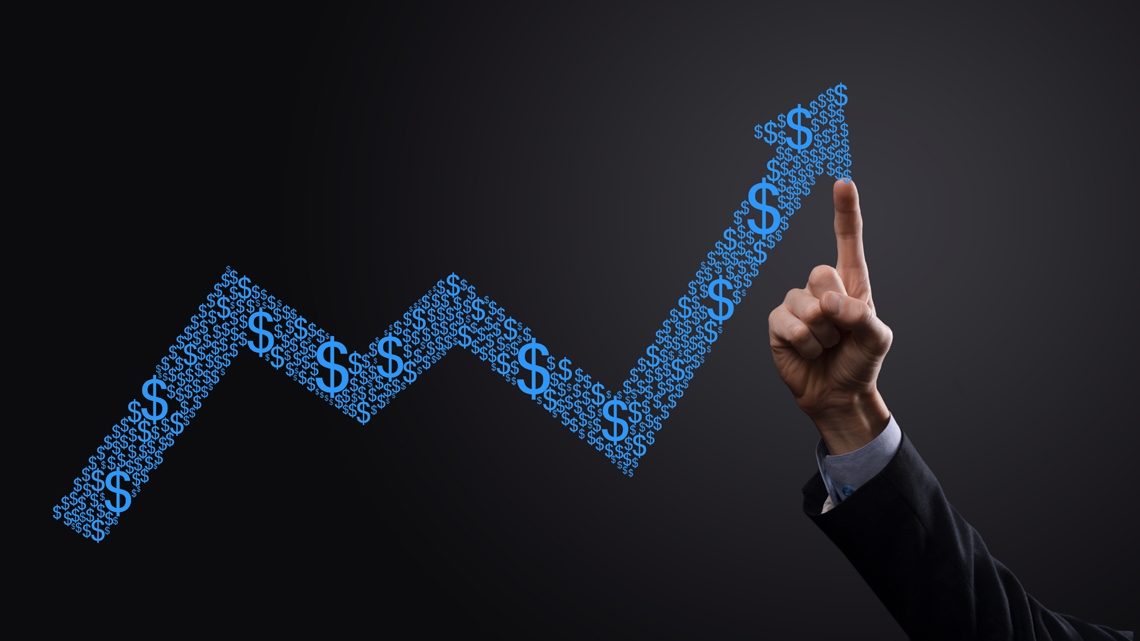
What Is Economic Growth?
A farmer in medieval Europe could spend an entire year cultivating wheat and still produce barely enough calories to survive winter. A modern American farmer, sitting inside an air-conditioned combine harvester guided by satellites, feeds hundreds of people while listening to a podcast. The difference between these two men is not morality, nor geography, nor luck. It is economic growth.
That phrase, however, has been abused beyond recognition.
Politicians invoke it the way medieval priests invoked rain. Central bankers promise it through interest rate manipulation. Television economists recite quarterly GDP figures with the solemnity of astrologers reading planetary charts. And yet almost nobody pauses to ask the elementary question: what precisely is economic growth?
The confusion matters because societies organize themselves around whatever they measure. A civilization obsessed with the wrong metric eventually begins producing the wrong things.
Economic growth is not merely “more money.” Zimbabwe printed money by the trillions and became poorer. It is not rising stock prices. Tulip bulbs once soared in price too. Nor is it government spending, despite what modern macroeconomic textbooks insist. A nation can pay people to dig holes and refill them. GDP rises. Civilization does not.
Real economic growth is the increase in a society’s capacity to produce goods and services that human beings voluntarily value. It is the expansion of productive capability across time. Put differently: economic growth means that the average person can command more real resources with less labor than his ancestors could.
Everything else is accounting.
The Miracle Most People No Longer Notice
The modern person wakes up surrounded by miracles so commonplace they have become invisible.
Hot water arrives instantly through pipes extending across continents. Electricity flows continuously from massive interconnected grids. Food from five climates sits in one supermarket aisle. Air travel compresses oceans into afternoon inconveniences. Antibiotics prevent deaths that once annihilated entire families.
For almost all of human history, none of this existed.
The average Roman laborer, despite living in one of the greatest empires of antiquity, probably consumed less energy in his lifetime than a modern dishwasher uses in a few months. Even wealthy kings lacked refrigeration, anesthesia, antibiotics, sanitation systems, or reliable lighting. Louis XIV of France, perhaps the most powerful monarch in Europe, relieved himself in conditions modern truck stops would reject.
Economic growth transformed that world.
Yet because it occurred gradually, over generations, people mistake it for nature rather than achievement.
The truth is harsher: stagnation is the default condition of humanity. Growth is the anomaly requiring explanation.
Economic Growth Begins With Capital Accumulation
At the center of growth lies a deceptively simple mechanism: deferred consumption.
A fisherman who eats every fish he catches remains trapped in subsistence forever. But if he saves enough food to survive several days without fishing, he can spend that time building a net. The net increases productivity dramatically. Future catches multiply.
Civilization emerges from this principle.
Capital goods—machines, factories, tools, infrastructure, software, even knowledge itself—exist because someone, somewhere, abstained from immediate consumption long enough to invest in future productivity.
This is why stable money matters profoundly.
When money reliably stores value, people save. Savings finance investment. Investment creates capital accumulation. Capital accumulation raises productivity. Productivity raises living standards.
The relationship is not mysterious. It is arithmetic.
When monetary systems collapse, societies begin consuming capital instead of building it. Argentina offers a painful illustration. Decades of inflation transformed long-term planning into speculation. Businesses shifted focus from productive investment toward currency hedging and political lobbying. Human energy migrated away from engineering and toward survival tactics.
The economy did not stop moving. It merely moved sideways.
The Great Confusion Between Consumption and Production
Modern economics often treats consumption as the engine of growth. This inversion would have bewildered every successful civilization in history.
Consumption is the reward of production, not its cause.
Imagine two islands.
On the first island, inhabitants spend every resource immediately. No savings exist. No machinery is built. Productivity stagnates.
On the second island, inhabitants delay some consumption. They build irrigation systems, storage facilities, and better tools. Productivity compounds over decades.
Which island becomes wealthy?
The answer is obvious until governments intervene. Then economists begin arguing that spending itself creates prosperity.
This confusion intensified after the abandonment of hard monetary standards in the twentieth century. Once governments discovered they could manufacture currency units at negligible cost, political incentives changed permanently. Debt-funded consumption became politically irresistible because the bill could be delayed.
The consequences are visible everywhere: soaring asset prices, declining purchasing power, and economies increasingly dependent on financial engineering rather than productive output.
A society cannot consume itself into wealth any more than a farmer can eat his seed corn and expect a larger harvest next season.
The Three Sources of Economic Growth
Economic growth generally emerges from three forces:
1. More Labor
A larger working population can produce more output.
This was the dominant growth mechanism for ancient empires. Conquest expanded labor pools. Population growth increased production capacity. But this method encounters obvious limits. More workers without better tools merely dilute resources.
2. More Capital
Machines amplify human productivity.
One construction worker with a bulldozer accomplishes more than fifty men with shovels. Capital transforms labor from brute force into leveraged force.
Industrialization was fundamentally a capital accumulation story. Steam engines, railroads, electrical grids, container shipping—these innovations multiplied productive capability beyond anything previous civilizations imagined.
3. Better Knowledge
Technological innovation allows societies to produce more with fewer inputs.
This is the most powerful form of growth because it compounds indefinitely. Once discovered, knowledge spreads at near-zero marginal cost. The formula for steel production or semiconductor design can benefit billions simultaneously.
But innovation rarely emerges from bureaucracies insulated from failure. It usually arises where incentives reward experimentation and punish waste.
The Soviet Union produced brilliant scientists yet consistently failed at consumer prosperity because centralized systems allocate resources politically rather than economically. Prices stopped reflecting reality. Without genuine market signals, rational calculation became impossible.
GDP: Useful Statistic, Dangerous Religion
Governments measure growth primarily through Gross Domestic Product.
genui{"math_block_widget_always_prefetch_v2":{"content":"GDP = C + I + G + (X - M)"}}
GDP tracks total spending within an economy. It can provide useful information. But elevating GDP into the definitive measure of prosperity creates distortions bordering on absurdity.
Consider several examples:
-
A hurricane destroys homes. Reconstruction spending boosts GDP.
-
A government hires thousands of unnecessary bureaucrats. GDP rises.
-
Inflation pushes nominal prices upward. GDP appears larger even if real purchasing power declines.
Meanwhile:
-
Parents raising children at home contribute enormously to civilization but barely appear in GDP calculations.
-
Durable products reducing future consumption can paradoxically reduce GDP growth.
-
Savings, the foundation of capital formation, often look economically “inactive.”
GDP measures activity, not necessarily wealth creation.
A country addicted to debt can generate impressive GDP figures while quietly liquidating its productive future.
This distinction matters enormously today.
The Difference Between Real and Fake Growth
Not all growth is equal.
Real growth increases productive efficiency sustainably. Fake growth relies on debt expansion, monetary inflation, or asset bubbles.
The distinction resembles the difference between muscle gained through disciplined training and temporary swelling caused by inflammation.
For decades, many Western economies substituted financialization for productivity growth. Instead of building factories, infrastructure, and manufacturing capacity, they expanded credit markets. Asset prices soared. Consumption remained elevated. Politicians celebrated prosperity.
But underneath the surface, productive foundations weakened.
Manufacturing migrated abroad. Infrastructure aged. Household debt exploded. Young people found themselves unable to afford homes despite record GDP levels.
The economy looked healthy because the measuring tools mistook leverage for wealth.
One lesson I learned personally while visiting post-Soviet countries years ago still stays with me. I met engineers capable of designing advanced industrial systems who spent much of their mental energy navigating currency instability and bureaucratic chaos. Their productivity was not limited by intelligence. It was suffocated by institutional uncertainty.
Economic growth depends as much on the rules surrounding production as production itself.
People build long-term only when they trust the future.
A Comparison of Growth Models
| Economic Model | Primary Driver | Short-Term Effect | Long-Term Result |
|---|---|---|---|
| Savings & Investment | Capital accumulation | Slower consumption initially | Sustainable prosperity |
| Debt-Fueled Consumption | Credit expansion | Rapid apparent growth | Fragility and inflation |
| Resource Extraction | Commodity exports | Revenue windfalls | Vulnerable to price shocks |
| Technological Innovation | Productivity gains | Uneven disruption | Exponential wealth creation |
| Central Planning | State allocation | Artificial stability | Chronic inefficiency |
| Free Market Competition | Entrepreneurial discovery | Volatility and adaptation | Efficient resource allocation |
The pattern across history is unmistakable. Durable prosperity emerges where societies reward productivity, preserve savings, protect property rights, and allow prices to communicate real information.
Civilizations decline when political incentives overpower economic reality.
Why Economic Growth Is Morally Complicated
Economic growth is not a sterile spreadsheet phenomenon. It reshapes human life psychologically, culturally, even spiritually.
Growth reduces infant mortality, extends lifespan, and lowers material suffering. These achievements deserve recognition. Romanticizing poverty has always been the luxury hobby of the affluent.
Yet growth also destabilizes traditions. It compresses time preferences. It accelerates urbanization and social atomization. Technologies solving one problem frequently create another.
The Industrial Revolution enriched humanity massively while also producing brutal factory conditions during its early phases. The internet democratized information while simultaneously eroding attention spans.
Economic growth is therefore neither salvation nor corruption. It is amplification.
A productive society gives human beings more choices. Whether those choices improve civilization depends on culture, incentives, and values outside economics itself.
The Coming Growth Crisis
Most developed economies now confront a paradox.
They possess extraordinary technological sophistication yet increasingly sluggish productivity growth. Debt burdens rise faster than real output. Young generations face declining affordability despite unprecedented computational power.
Why?
Because genuine growth cannot emerge indefinitely from monetary expansion disconnected from production.
You cannot print semiconductor factories. You cannot fabricate energy abundance through accounting tricks. You cannot regulate your way into innovation. And you cannot consume capital forever without eventually noticing the decay.
The societies most likely to prosper in the coming decades will not necessarily be those with the largest governments or loudest financial markets. They will be those capable of rebuilding productive capacity, preserving incentives for long-term investment, and maintaining institutions stable enough for civilization-scale planning.
Economic growth ultimately rests on civilization’s ability to align present sacrifice with future reward.
That alignment is fragile.
Conclusion: Growth Is Civilization’s Memory of the Future
Economic growth is often discussed as though it were merely an economics topic. It is not. It is a civilizational phenomenon.
A society grows when it values the future enough to invest in it.
Every bridge, factory, research laboratory, electrical grid, and software protocol represents stored human time and deferred gratification. Wealth is accumulated foresight made tangible.
The modern world frequently forgets this. We speak as though prosperity materializes automatically from central bank policies, consumer confidence surveys, or quarterly stimulus packages. But civilizations do not become wealthy because they spend. They become wealthy because generations of people build productive systems that outlast them.
That is the uncomfortable truth hidden beneath every serious discussion of economic growth.
The future is not created by consumption.
It is built by those willing to postpone it.
- Arts
- Business
- Computers
- Juegos
- Health
- Home
- Kids and Teens
- Money
- News
- Personal Development
- Recreation
- Regional
- Reference
- Science
- Shopping
- Society
- Sports
- Бизнес
- Деньги
- Дом
- Досуг
- Здоровье
- Игры
- Искусство
- Источники информации
- Компьютеры
- Личное развитие
- Наука
- Новости и СМИ
- Общество
- Покупки
- Спорт
- Страны и регионы
- World

 English
 Russian
 French
 Portuguese
 Deutsch
 Turkish
 Dutch
Dutch
 Italiano
 Arabic
 Romaian
 Portuguese (Brazil)
 Greek
Greek