
What Is a Sales Funnel?
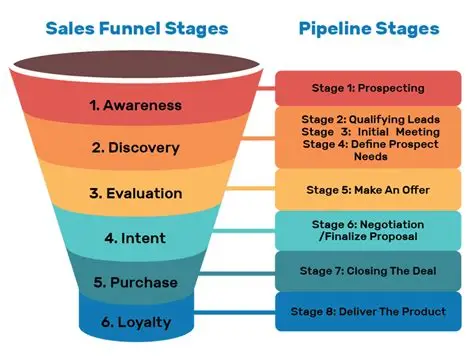
Most people imagine a sales funnel as a tidy marketing diagram.
A few arrows.
Some boxes.
Maybe a color gradient moving politely from “Awareness” to “Conversion.”
It looks clean on presentation slides.
Real customer behavior is not clean.
Real people hesitate halfway through checkout because they suddenly remember rent is due next week. They open seven browser tabs comparing alternatives. They become emotionally interested in a product at midnight, then skeptical by morning. They ignore follow-up emails for three weeks before purchasing impulsively during lunch break on a Tuesday.
And yet marketers continue talking about sales funnels as if human decision-making behaves like plumbing.
That misunderstanding causes enormous problems.
Because a sales funnel is not really a sequence of pages.
It is a sequence of psychological transitions.
Once you understand that, marketing starts making a lot more sense.
The Simplified Definition Everyone Gives You
Technically, a sales funnel describes the path potential customers take before making a purchase.
People discover a product.
They become interested.
They evaluate options.
Then they either buy or disappear.
Simple enough.
But this explanation leaves out the part that actually matters: emotional movement.
People do not move through funnels mechanically. They move through uncertainty. Through skepticism. Through desire competing against hesitation.
Funnels work when they reduce psychological friction at the exact moment friction naturally appears.
That distinction changes everything about how effective funnels are built.
Most Funnels Fail Because They Rush Trust
Years ago, I worked with a business owner obsessed with optimizing conversions. Every conversation revolved around:
- click-through rates,
- landing page tweaks,
- countdown timers,
- button colors,
- and increasingly aggressive urgency tactics.
The funnel was technically sophisticated.
Revenue was inconsistent.
After reviewing the customer journey, the problem became obvious almost immediately: the business was trying to sell before establishing emotional credibility.
Visitors barely understood the problem before encountering purchase pressure.
So we changed almost nothing structurally.
Instead, we slowed the funnel down.
We added:
- clearer educational content,
- honest objections,
- contextual proof,
- and messaging that sounded less like persuasion theater.
Conversions increased substantially within weeks.
Not because the funnel became more aggressive.
Because it became more believable.
That lesson permanently changed how I think about funnel strategy.
A Sales Funnel Is Really About Reducing Uncertainty
Every purchase contains emotional risk.
Will this work?
Will I regret this?
Am I wasting money?
Am I being manipulated?
Is there a better option somewhere else?
Funnels exist to reduce those questions gradually.
The best funnels do not pressure people into buying.
They help people feel increasingly safe making decisions.
This is why trust-building content often outperforms direct promotion over time. Buyers rarely resist products alone. They resist uncertainty attached to products.
Good funnels remove uncertainty layer by layer.
The Four Core Stages of a Sales Funnel
Most funnels operate across four foundational psychological stages:
| Funnel Stage | Customer Mindset | Primary Goal | Common Mistake |
|---|---|---|---|
| Awareness | “I may have a problem.” | Capture attention | Talking about the product too early |
| Interest | “This seems relevant.” | Build curiosity and trust | Overloading information |
| Decision | “Should I buy?” | Reduce hesitation | Excessive pressure tactics |
| Action | “I’m ready.” | Simplify purchase process | Creating unnecessary friction |
What matters here is emotional timing.
Each stage requires different messaging because the customer’s psychological state changes continuously.
Treating all visitors the same is one of the fastest ways to weaken conversions.
Awareness Funnels Are Not About Selling
This confuses many businesses because they mistake visibility for readiness.
At the awareness stage, audiences are often problem-aware but not solution-aware. They may not even fully understand what’s frustrating them yet.
Aggressive sales messaging here usually backfires.
Imagine someone casually researching why they feel exhausted at work and immediately encountering:
“BUY OUR PRODUCTIVITY COURSE TODAY.”
The emotional sequencing feels unnatural.
Awareness-stage content works best when it creates recognition:
- articulating hidden frustrations,
- naming overlooked problems,
- challenging assumptions,
- or reframing familiar experiences.
The audience should feel understood before they feel targeted.
Interest Is Built Through Specificity
Once attention exists, the next challenge becomes credibility.
This is where weak funnels begin sounding generic:
- “best solution,”
- “proven system,”
- “transform your business.”
Readers have developed extraordinary resistance to vague marketing language because they encounter it constantly.
Specificity breaks through skepticism.
Compare:
“Our software improves team communication.”
Versus:
“Teams reduced internal email volume by 38% within sixty days.”
Specific details feel grounded. Grounded language creates trust.
This is also where storytelling becomes strategically powerful—not performative storytelling, but experience-based narrative that demonstrates real-world understanding.
People trust observed detail more than polished abstraction.
Decision-Stage Buyers Need Reassurance, Not Hype
This is where many funnels collapse unnecessarily.
Businesses often intensify persuasion precisely when buyers become most psychologically fragile. More urgency. More pressure. More exaggerated promises.
Ironically, this frequently increases hesitation instead of reducing it.
At the decision stage, people already recognize the potential value. What they need now is reassurance:
- proof,
- clarity,
- simplicity,
- realistic expectations,
- and emotional safety.
One lesson I learned painfully: transparent limitations can increase conversions.
Years ago, I added a section to a product page explaining:
- who the offer was not ideal for,
- what results required effort,
- and where common frustrations emerged.
I expected conversions to decline.
They improved.
Because honesty reduced suspicion.
Customers trusted the offer more once it stopped pretending perfection existed.
Action Should Feel Effortless
Once somebody decides to buy, complexity becomes dangerous.
Complicated checkout flows destroy momentum astonishingly fast.
Extra forms.
Confusing navigation.
Unexpected fees.
Forced account creation.
Each friction point creates psychological opportunities for reconsideration.
The strongest funnels remove unnecessary decisions during the action phase.
Because every additional step competes against emotional certainty.
Most Businesses Build Funnels Backward
This is probably the most common strategic mistake.
Companies begin by building sales pages, automation systems, and conversion mechanisms before understanding audience psychology deeply enough.
Funnels become structurally impressive but emotionally disconnected.
Technology cannot compensate for weak positioning.
You can automate emails endlessly.
Optimize landing pages obsessively.
Split-test headlines for months.
But if the audience does not feel emotionally understood, funnel performance remains fragile.
The strongest funnels emerge from audience insight first—not software selection.
Why Email Funnels Still Matter
Despite endless predictions about newer platforms replacing email, email funnels remain remarkably effective for one reason:
Continuity.
Most purchases do not happen immediately after discovery. Buyers need repeated exposure before trust solidifies.
Email allows businesses to maintain contextual relevance without depending entirely on algorithms.
But weak email funnels feel mechanical almost instantly:
- robotic sequencing,
- manipulative scarcity,
- emotionally empty promotions.
Strong email funnels feel conversational. Gradual. Useful.
The reader should feel guided, not processed.
That distinction determines whether subscribers stay engaged or mentally unsubscribe long before clicking the actual unsubscribe button.
Funnels Are Becoming More Human, Not Less
This shift matters enormously.
For years, internet marketing rewarded hyper-aggressive funnel tactics:
- fake urgency,
- countdown timers,
- exaggerated promises,
- manipulative emotional triggers.
Audiences are increasingly resistant to these patterns now because collective digital literacy has evolved.
People recognize funnel manipulation faster than marketers realize.
As a result, the highest-performing modern funnels often feel surprisingly restrained:
- calmer language,
- clearer positioning,
- more educational framing,
- more transparent expectations.
Trust scales better than pressure long term.
The Hidden Role of Narrative in Funnel Performance
Every effective funnel tells a story implicitly.
Not always through literal storytelling, but through emotional progression.
The customer begins in one identity state:
- confused,
- frustrated,
- uncertain,
- overwhelmed.
The funnel gradually guides them toward another:
- informed,
- confident,
- capable,
- relieved.
That emotional transformation is the actual engine underneath conversion.
Without narrative movement, funnels become collections of disconnected pages rather than coherent decision journeys.
Metrics Matter Less Than People Pretend
Funnels create metric obsession because numbers feel measurable and controllable.
Open rates.
Conversion percentages.
Click-through data.
Some of this matters deeply.
But overanalyzing metrics can quietly distort messaging quality. Businesses begin optimizing for short-term behavioral triggers rather than long-term trust.
One high-converting headline may dramatically increase clicks while simultaneously weakening brand credibility over time.
Not every optimization is strategically healthy.
The best funnel operators understand the difference between:
- extracting transactions,
- and building durable customer relationships.
Those are not identical goals.
Funnels Are Emotional Infrastructure
This is ultimately what most definitions miss.
A funnel is not merely a marketing mechanism designed to move people toward payment.
It is infrastructure for emotional progression.
Good funnels anticipate hesitation before hesitation appears. They answer questions before the audience consciously articulates them. They reduce confusion without creating pressure.
That’s why some funnels feel natural while others feel exhausting.
One respects human psychology.
The other attempts to overpower it.
Conclusion: The Best Funnels Feel Less Like Funnels
The irony of modern sales funnels is that the most effective ones rarely feel overtly “salesy.”
They feel coherent.
The messaging aligns with audience emotions. The timing feels psychologically appropriate. The transitions reduce friction instead of increasing cognitive load.
And perhaps most importantly, the funnel respects uncertainty rather than pretending it doesn’t exist.
Because buying decisions are rarely logical straight lines.
People hesitate. Compare. Delay. Reconsider. Rationalize. Emotionalize. Then occasionally purchase for reasons they themselves barely understand.
Strong funnels accommodate that complexity instead of fighting against it.
That’s the real purpose of a sales funnel.
Not manipulation.
Not aggressive persuasion.
Not engineering artificial urgency through pop-ups and countdown clocks.
Just structured trust-building designed to help uncertain people make clearer decisions with less friction.
Once you understand that, funnels stop looking like marketing diagrams.
They start looking like behavioral architecture.
- Arts
- Business
- Computers
- Jogos
- Health
- Início
- Kids and Teens
- Money
- News
- Personal Development
- Recreation
- Regional
- Reference
- Science
- Shopping
- Society
- Sports
- Бизнес
- Деньги
- Дом
- Досуг
- Здоровье
- Игры
- Искусство
- Источники информации
- Компьютеры
- Личное развитие
- Наука
- Новости и СМИ
- Общество
- Покупки
- Спорт
- Страны и регионы
- World

 English
 Russian
 French
 Spanish
 Deutsch
 Turkish
 Dutch
Dutch
 Italiano
 Arabic
 Romaian
 Portuguese (Brazil)
 Greek
Greek
