
How to start a new habit?
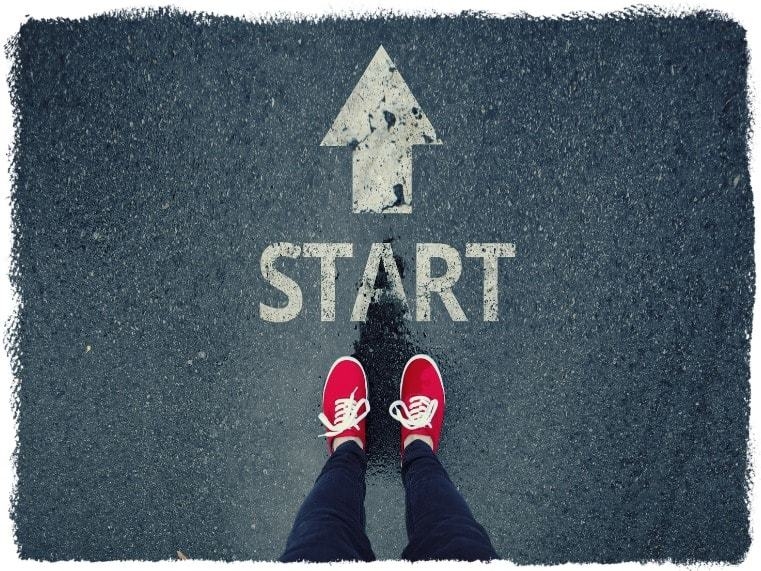
How to Start a New Habit?
Starting a new habit is usually treated as a motivation problem.
People wait for the “right moment,” the “right mindset,” or a surge of discipline that makes everything feel aligned. Then they try to force a behavior change through intensity.
That approach fails more often than it succeeds—not because people lack capability, but because starting a habit is not about intensity at all. It is about initiating repetition under conditions where resistance is minimal enough that the behavior can occur before negotiation begins.
In other words, starting a habit is less about commitment and more about reducing the distance between intention and action.
The Real Starting Point: One Repeatable Action
A habit does not begin with transformation. It begins with a single repeatable behavior that can survive real-world variability.
Not:
-
“I will become fit”
Not even:
-
“I will work out daily for an hour”
But something like:
-
“I will do 2 push-ups”
-
“I will read one page”
-
“I will write one sentence”
-
“I will open my notes for 2 minutes”
The reason this matters is structural.
Habits are built through repetition, not ambition.
\text{Single Action} \rightarrow \text{Repeated Action} \rightarrow \text{Automatic Behavior}
If the behavior cannot be repeated consistently, it cannot become a habit—regardless of how meaningful it is.
Step 1: Choose a Behavior That Is Too Small to Fail
The most effective way to start a habit is to reduce the initial version of the behavior until resistance is nearly irrelevant.
This is counterintuitive, because people assume starting strong is better.
But in habit formation, starting strong often means starting unsustainably.
A better approach:
-
define the smallest possible version of the behavior
-
make it so easy it feels almost trivial
-
ensure it can be done even on low-energy days
Examples:
-
instead of “study 2 hours” → open textbook
-
instead of “run 5 km” → put on running shoes
-
instead of “meditate 20 minutes” → sit and breathe for 30 seconds
The goal is not effectiveness at the start.
The goal is repeatability under imperfect conditions.
Step 2: Attach It to an Existing Trigger
New habits rarely survive without a cue.
The brain responds strongly to sequence-based behavior:
“After X, I do Y.”
This is known as habit stacking.
Examples:
-
after brushing teeth → read one page
-
after coffee → review tasks
-
after sitting at desk → write one sentence
\text{Existing Habit} \rightarrow \text{New Habit}
This works because you are not creating a new trigger—you are borrowing one that already exists.
Without a cue, behavior depends on memory and motivation.
With a cue, behavior becomes situationally automatic.
Step 3: Remove Friction Before You Need Willpower
Most habit failures happen before the behavior even starts.
Not during execution.
Before initiation.
Friction can take many forms:
-
searching for tools
-
unclear first step
-
switching contexts
-
decision overload
-
setup complexity
Each additional step increases the chance of delay.
So when starting a habit, the environment must be pre-configured:
-
tools visible
-
steps obvious
-
access immediate
-
decisions minimized
If starting requires thinking, the habit is too fragile.
The goal is to make initiation almost reflexive.
Step 4: Accept That Consistency Matters More Than Intensity
A new habit does not need to be impressive.
It needs to be repeatable.
Many people fail because they evaluate early progress through the wrong metric:
-
“Did I do enough?” instead of “Did I do it at all?”
But in the early phase, the brain is not evaluating performance. It is evaluating patterns.
What matters is:
-
frequency of initiation
-
stability of repetition
-
reliability of cue-response connection
Missing once is not failure.
Missing repeatedly without recovery is what prevents habit formation.
Step 5: Expect Resistance and Treat It as Normal
When starting a new habit, resistance is not a sign that something is wrong.
It is a predictable phase of neural adjustment.
The brain is evaluating:
-
Is this behavior relevant?
-
Should it be automated?
-
Is it worth allocating energy to this pattern?
During this phase, you may experience:
-
forgetfulness
-
hesitation
-
low motivation
-
mild avoidance
This is not a stop signal.
It is a stabilization process.
Most habits fail here because people interpret normal resistance as evidence that the habit “doesn’t fit.”
In reality, the habit simply hasn’t been repeated enough yet to stabilize.
Step 6: Make the Reward Immediate (Even Artificially)
The brain prioritizes immediate feedback far more than delayed outcomes.
This creates a challenge:
-
good habits often pay off later
-
the brain learns faster from immediate reinforcement
So early habit formation benefits from adding immediate reward signals:
-
checking off a tracker
-
saying “done” out loud
-
small visual progress markers
-
short positive reflection
These signals reinforce the behavior loop early on.
Without them, the brain struggles to connect action and outcome strongly enough for automation.
Step 7: Don’t Focus on Identity Too Early—Let It Emerge
People often try to start habits by declaring identity:
-
“I am a disciplined person”
-
“I am a runner”
-
“I am consistent”
But identity does not precede behavior. It follows it.
Early on, focus should remain on:
-
repetition
-
simplicity
-
environmental support
Identity formation happens later, when repeated behavior begins creating self-consistency signals.
At that point:
-
“I do this regularly” becomes
-
“This is who I am”
Trying to force identity too early often creates pressure without supporting structure.
Step 8: Track Only One Thing—Did It Happen?
Tracking is useful, but only when it stays simple.
For new habits, the only meaningful metric is:
-
execution occurred or did not occur
Not:
-
quality
-
duration
-
intensity
-
optimization
The brain learns from repetition clarity, not complexity of tracking.
Overcomplicated systems often become friction themselves, which undermines consistency.
A Personal Lesson About Starting Habits
For a long time, I misunderstood starting habits as a planning problem.
I would design systems that looked robust on paper:
-
detailed schedules
-
ambitious targets
-
tightly structured routines
They failed repeatedly.
The pattern only became clear later: the problem was not planning quality—it was initiation complexity.
Every habit required too many decisions before it could begin.
Once I shifted toward minimizing the first action—reducing it to something almost too small to ignore—the dynamic changed.
The habit stopped depending on motivation and started depending on proximity.
If the first step was easy enough, repetition became natural. If it wasn’t, nothing else mattered.
That realization reframed habit starting as a question of friction, not discipline.
The Core Principle of Starting a Habit
At a structural level, starting a habit is about creating conditions where:
-
the cue is clear
-
the action is extremely small
-
friction is minimal
-
repetition is likely
-
reward is immediate or visible
\text{Cue + Minimal Action + Low Friction + Repetition} \rightarrow \text{Habit Initialization}
When these elements align, the brain begins the process of automation naturally.
No forcing required.
No intensity spikes required.
Just repeated exposure under favorable conditions.
Conclusion: Starting a Habit Is About Making the First Step Inevitable
Starting a new habit is not about dramatic change.
It is about reducing the starting cost until behavior occurs without internal negotiation.
Once initiation becomes easy enough, repetition takes over.
And once repetition stabilizes, the brain begins doing what it is designed to do:
automate what it recognizes as stable, useful, and repeated.
At that point, the habit is no longer something you are trying to start.
It is simply something that starts happening.
- Arts
- Business
- Computers
- Jocuri
- Health
- Home
- Kids and Teens
- Money
- News
- Personal Development
- Recreation
- Regional
- Reference
- Science
- Shopping
- Society
- Sports
- Бизнес
- Деньги
- Дом
- Досуг
- Здоровье
- Игры
- Искусство
- Источники информации
- Компьютеры
- Личное развитие
- Наука
- Новости и СМИ
- Общество
- Покупки
- Спорт
- Страны и регионы
- World

 English
 Russian
 French
 Spanish
 Portuguese
 Deutsch
 Turkish
 Dutch
Dutch
 Italiano
 Arabic
 Portuguese (Brazil)
 Greek
Greek
