
How long does it take to build a habit?
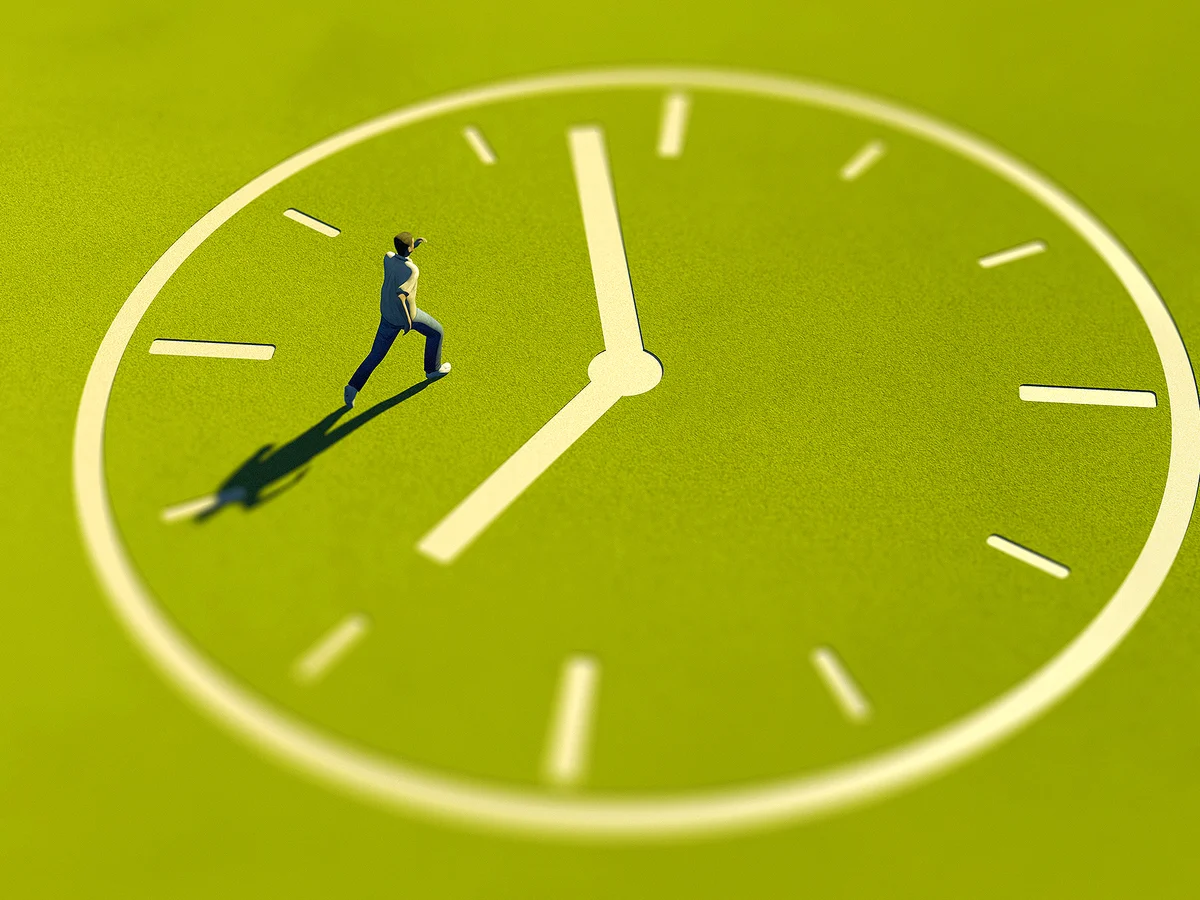
How Long Does It Take to Build a Habit?
This is one of the most repeated questions in behavior change.
And also one of the most misunderstood.
People want a number because a number feels like control:
-
21 days
-
66 days
-
90 days
-
“a few weeks if you’re consistent”
But habits do not follow clean timelines. They follow exposure, repetition, and context stability. Any fixed number is a statistical simplification—not a rule of biology.
So the real answer is less satisfying, but more useful:
A habit takes as long as it takes for the behavior to become easier to repeat than to avoid.
That threshold varies.
The Myth of a Fixed Timeline
The idea of a universal “habit formation period” comes from oversimplifying studies that measured averages across very different behaviors and contexts.
But averages hide variance.
Some habits form quickly:
-
daily coffee routines
-
phone checking
-
simple morning sequences
Others take far longer:
-
exercise consistency
-
deep work routines
-
diet changes
-
creative output habits
The difference is not time alone.
It is friction, complexity, and emotional resistance.
So asking “how long does it take?” is like asking how long it takes to build a building without knowing the materials.
Habits Are Not Time-Based—They Are Repetition-Based
The brain does not track calendar days.
It tracks patterns.
\text{Repetition} \rightarrow \text{Pattern Recognition} \rightarrow \text{Automation}
Each repetition strengthens the neural association between:
-
cue
-
behavior
-
outcome
But repetition is not just frequency. It is also consistency in context.
A behavior repeated in stable conditions forms faster than a behavior repeated in chaotic ones.
What Actually Determines Habit Formation Speed
Instead of time, five variables matter more:
1. Frequency
How often the behavior is repeated.
2. Consistency of context
Same cue, same environment, same timing.
3. Starting friction
How easy it is to initiate the behavior.
4. Reward clarity
How quickly the brain registers payoff.
5. Emotional resistance
How much internal friction exists before starting.
When these align, habits form quickly. When they don’t, they can take months—or never stabilize at all.
Why Some Habits Feel Fast to Form
Some behaviors seem to “stick” almost immediately.
This usually happens when:
-
the cue is obvious
-
the action is simple
-
the reward is immediate
-
friction is low
-
repetition is naturally frequent
Examples:
-
checking notifications
-
snacking
-
scrolling feeds
-
drinking morning coffee
These are not strong-willed habits. They are structurally easy behaviors.
\text{Low Friction + High Frequency + Clear Reward} \rightarrow \text{Fast Habit Formation}
Speed of habit formation is less about discipline and more about design.
Why Some Habits Take Months
More complex habits fail the opposite conditions:
-
high initiation friction
-
delayed rewards
-
inconsistent timing
-
competing behaviors
-
emotional resistance
Examples:
-
exercising regularly
-
writing daily
-
studying deeply
-
changing diet patterns
These require not just repetition, but system redesign.
They take longer because each repetition is expensive.
And expensive behaviors are less likely to repeat consistently.
The Real Range: From Days to Months
Instead of a single number, habits typically fall into a spectrum:
-
Fast-forming habits: days to a few weeks
-
Moderate habits: several weeks to a few months
-
Complex habits: multiple months or longer
But these ranges are not fixed laws.
They shift based on:
-
environment
-
behavior complexity
-
emotional resistance
-
reinforcement structure
Two people can attempt the same habit and experience completely different timelines because their systems differ.
Why “Missing Days” Doesn’t Reset Everything
A common misconception is that skipping resets the habit clock.
It doesn’t.
Habits are not binary states. They are probabilistic patterns.
One missed day:
-
slightly weakens reinforcement
-
does not erase prior repetition
Repeated missed days:
-
reduce pattern stability
-
increase decay risk
\text{Repetition Over Time} \rightarrow \text{Habit Strength}
What matters is overall pattern density—not perfection.
The “Plateau Phase” Most People Misinterpret
Habit formation often feels like this:
-
initial enthusiasm
-
early effort
-
slow progress or stagnation
-
doubt
-
quitting or stabilizing
The plateau is where most habits are abandoned.
Not because nothing is happening—but because progress is not yet visible.
Internally, the brain is still learning:
-
cue reliability
-
reward timing
-
behavioral sequencing
Externally, it just feels like nothing is changing.
This mismatch is where patience matters more than intensity.
Why Time Alone Is the Wrong Metric
Time is misleading because it assumes passive formation.
But habits are not passive.
They are constructed through:
-
repetition
-
environmental stability
-
feedback loops
-
reduced friction
Two weeks of structured repetition can outperform two months of inconsistent effort.
Time without repetition is irrelevant.
Repetition without structure is unstable.
A Personal Observation on Habit Timelines
At one point, I assumed habits failed because I didn’t give them enough time.
So I extended timelines:
-
“just give it 30 days”
-
“just push through 60 days”
But nothing changed reliably.
What eventually became clear was that time wasn’t the missing variable. Structure was.
When I reduced friction and made initiation easier, habits didn’t just “take less time”—they stopped depending on time as a constraint at all.
They formed whenever repetition became easy enough to sustain.
That shift reframed the entire question.
The Real Answer: It Depends on Stability, Not Duration
Habit formation is not a countdown.
It is a stabilization process.
A habit is formed when:
-
cue-response links are strong
-
repetition is consistent
-
friction is low
-
reward is clear
-
behavior becomes expected
\text{Stable Cue + Repetition + Low Friction + Reward} \rightarrow \text{Habit Formation}
Once stability is reached, the habit no longer depends on conscious effort.
It becomes automatic.
And that transition can happen quickly or slowly depending on system design.
Conclusion: Stop Asking “How Long”—Start Asking “How Stable?”
The question “how long does it take to build a habit?” assumes time is the controlling factor.
It isn’t.
Stability is.
Habits form when repetition becomes:
-
easy to start
-
easy to repeat
-
easy to recover after interruption
-
reinforced by environment and feedback
When those conditions are present, habits can form quickly.
When they are absent, no amount of time guarantees formation.
So the better question is not:
“How long will this take?”
But:
“What needs to be true for this behavior to become stable enough to repeat without effort?”
Because once that is true, time stops being the constraint.
Repetition takes over.
And the habit forms itself through continuity, not countdown.
- Arts
- Business
- Computers
- الألعاب
- Health
- الرئيسية
- Kids and Teens
- مال
- News
- Personal Development
- Recreation
- Regional
- Reference
- Science
- Shopping
- Society
- Sports
- Бизнес
- Деньги
- Дом
- Досуг
- Здоровье
- Игры
- Искусство
- Источники информации
- Компьютеры
- Личное развитие
- Наука
- Новости и СМИ
- Общество
- Покупки
- Спорт
- Страны и регионы
- World

 English
 Russian
 French
 Spanish
 Portuguese
 Deutsch
 Turkish
 Dutch
Dutch
 Italiano
 Romaian
 Portuguese (Brazil)
 Greek
Greek