
What Is B2B SaaS? The Business Model Quietly Rewiring Modern Work
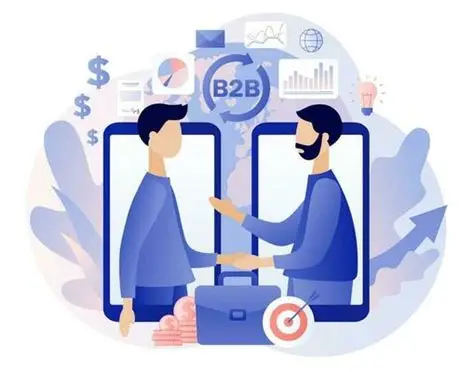
A founder once described his software company to me as “basically Netflix, but for procurement workflows.”
I understood what he was trying to do. Simplify complexity. Make enterprise software sound approachable.
Instead, it exposed something oddly revealing about the way people talk about B2B SaaS.
Everyone uses the term.
Far fewer explain it clearly.
Partly because the category evolved faster than language did. And partly because B2B SaaS now sits underneath so much modern business infrastructure that it has become strangely invisible — like electricity or Wi-Fi. Companies depend on it constantly while barely noticing its architecture until something breaks.
Open a laptop inside almost any mid-sized business and you’ll find dozens of SaaS products running simultaneously:
- Communication platforms
- CRM systems
- Payroll software
- Analytics dashboards
- Customer support tools
- Project management systems
- Security monitoring platforms
Most employees never think of them collectively.
Investors do. Founders certainly do. Marketing departments obsess over them. Entire economies now orbit them.
Which raises the obvious question:
What exactly is B2B SaaS?
Because despite the acronym-heavy jargon surrounding the industry, the answer is less technical than people assume.
At its core, B2B SaaS is software rented by businesses to solve operational problems continuously rather than purchased once outright.
That sounds simple.
The implications are not.
Breaking Down the Acronym Everyone Pretends to Understand
Let’s remove the linguistic clutter first.
B2B = Business-to-Business
The software is sold to organizations rather than individual consumers.
A payroll platform serving HR departments? B2B.
An inventory management system for retailers? B2B.
A CRM tool used by sales teams? Also B2B.
The customer is a company.
Not a teenager downloading a photo-editing app at 1:00 a.m.
SaaS = Software as a Service
Instead of buying software permanently and installing it locally onto company servers, businesses subscribe to cloud-based software delivered online.
Usually through monthly or annual pricing models.
No bulky installations. No physical discs. No elaborate IT deployment rituals that resemble government infrastructure projects.
The software updates continuously while customers access it through browsers or apps.
Simple in theory.
Revolutionary in practice.
Why B2B SaaS Changed Business Behavior Entirely
Before SaaS became dominant, enterprise software often behaved like real estate transactions.
Massive upfront costs.
Long implementation cycles.
Complex licensing agreements.
Dedicated server infrastructure.
Painfully slow updates.
Companies spent fortunes purchasing software that became partially outdated before deployment even finished.
SaaS changed the financial psychology of software adoption.
Instead of:
“We are buying this system forever.”
Businesses started thinking:
“We are subscribing to ongoing functionality.”
That shift sounds administrative. It wasn’t.
It fundamentally altered:
- Budget planning
- Product development
- Customer expectations
- Revenue models
- Competitive dynamics
Most importantly, SaaS forced software companies into continuous accountability.
Under old licensing models, vendors often received enormous payments upfront regardless of long-term product quality.
SaaS subscriptions changed the incentives.
If customers dislike the product now, they leave now.
Recurring revenue created recurring pressure.
Which explains why modern SaaS companies obsess over retention metrics with near-religious intensity.
The Real Product Isn’t Software — It’s Operational Relief
One of the biggest misconceptions about B2B SaaS is that companies are purchasing “technology.”
Usually they are purchasing relief.
Relief from:
- Manual work
- Disorganization
- Reporting chaos
- Communication bottlenecks
- Compliance headaches
- Revenue leakage
- Operational inefficiency
The software itself is merely the delivery mechanism.
That distinction matters enormously.
I realized this years ago while consulting with a logistics software company. Internally, the team discussed features constantly:
API flexibility.
Dashboard architecture.
Workflow customization.
Customers discussed something else entirely.
Stress.
Late shipments.
Tracking confusion.
Client complaints.
Spreadsheet overload.
The emotional gap between how SaaS companies describe products and how customers experience problems is often astonishingly wide.
The best B2B SaaS companies close that gap effectively.
They translate technical capability into operational calm.
Why Recurring Revenue Became So Addictive
Investors adore SaaS for a reason.
Predictability.
Traditional businesses often rely heavily on one-time purchases. Revenue fluctuates dramatically. Forecasting becomes unstable.
SaaS businesses operate differently.
Monthly recurring revenue — usually abbreviated MRR — creates visibility into future cash flow. Annual contracts deepen that predictability further.
Which means:
- Revenue becomes easier to model
- Growth becomes easier to measure
- Company valuations often rise substantially
This created an entire startup economy optimized around subscription logic.
And once venture capital entered aggressively, the SaaS industry accelerated at absurd speed.
Every operational inconvenience suddenly looked like potential software infrastructure:
- Scheduling
- Hiring
- Marketing attribution
- Customer support
- Team collaboration
- Contract management
- Cybersecurity
- Expense tracking
Some categories became overcrowded almost overnight.
Others quietly became indispensable.
A Comparison: Traditional Software vs. B2B SaaS
| Factor | Traditional Software | B2B SaaS |
|---|---|---|
| Payment structure | One-time license fee | Recurring subscription |
| Deployment | Local installation | Cloud-based access |
| Updates | Manual upgrades | Continuous updates |
| Accessibility | Device-specific | Accessible from anywhere |
| Maintenance | Customer-managed | Vendor-managed |
| Scalability | Often rigid | Flexible and expandable |
| Upfront cost | High | Lower initial investment |
| Customer relationship | Transactional | Ongoing engagement |
| Revenue model | Irregular | Predictable recurring revenue |
| Product evolution | Slower release cycles | Rapid iteration |
That final row matters more than it appears.
SaaS companies are not shipping static products.
They are operating living systems under continuous development pressure.
Which introduces both extraordinary advantages and extraordinary instability.
Why B2B SaaS Companies Are Obsessed With Churn
Ask almost any SaaS founder what keeps them awake and eventually the conversation reaches churn.
Churn measures how many customers leave over time.
Because recurring revenue cuts both ways.
A company can acquire customers rapidly while still collapsing if retention weakens quietly underneath growth metrics.
This creates a peculiar cultural dynamic inside SaaS businesses.
Acquisition matters.
Retention matters more.
The strongest SaaS companies understand something many industries ignore:
Winning the customer once is not the finish line.
It’s the beginning of a recurring performance evaluation.
Every month the customer effectively asks:
“Is this still worth paying for?”
That ongoing scrutiny shapes product design aggressively.
Good SaaS companies reduce friction continuously:
- Faster onboarding
- Better integrations
- Cleaner UX
- More intuitive workflows
- Improved customer support
Because frustration compounds quickly inside subscription businesses.
And modern buyers switch vendors faster than loyalty decks would suggest.
The Hidden Complexity of Selling B2B SaaS
From the outside, SaaS can appear deceptively scalable.
Build software once. Sell it infinitely.
Reality is messier.
Especially in B2B environments where purchasing decisions involve multiple stakeholders simultaneously:
- Finance teams
- IT departments
- Procurement
- Operations leaders
- Security reviewers
- Executives
A single SaaS purchase may require:
- Compliance reviews
- Budget approval
- Security assessments
- Internal alignment meetings
- Technical implementation planning
This is why B2B SaaS sales cycles often stretch across weeks or months.
You are not merely selling software.
You are asking organizations to change behavior.
Behavioral change inside companies moves slowly because institutional risk moves slowly.
And risk perception drives nearly every enterprise buying decision.
Why User Experience Became a Competitive Weapon
Older enterprise software often felt designed by people who actively disliked human beings.
Cluttered interfaces.
Confusing navigation.
Training manuals thicker than textbooks.
Employees tolerated terrible software because alternatives barely existed.
Modern SaaS changed expectations dramatically.
Consumer technology influenced workplace standards. Employees now expect business software to feel intuitive rather than punishing.
That shift created a major competitive advantage for SaaS companies prioritizing usability.
Today, poor UX creates measurable revenue consequences:
- Lower adoption rates
- Higher churn
- Increased support costs
- Internal resistance from teams
Ease of use stopped being cosmetic.
It became operational strategy.
The Dangerous Illusion of “Easy Scale”
SaaS companies love discussing scale.
And yes, software businesses can grow extraordinarily fast compared to traditional service models.
But scaling SaaS introduces hidden tensions:
- Infrastructure costs rise
- Customer expectations increase
- Technical debt accumulates
- Support complexity expands
- Product priorities become politically messy
I once worked with a fast-growing SaaS company that added features so aggressively they accidentally overwhelmed their own customers.
Usage declined despite product expansion.
Why?
Because more functionality does not automatically create more value.
Complexity exhausts users surprisingly quickly.
The lesson was uncomfortable but useful:
customers rarely want the most powerful software.
They want the clearest path toward solving their problem.
Those are not identical things.
Why AI Is Reshaping B2B SaaS So Aggressively
Artificial intelligence has entered SaaS with the subtlety of a freight train.
Nearly every B2B SaaS category now markets some form of AI enhancement:
- Predictive analytics
- Automated reporting
- AI copilots
- Workflow recommendations
- Intelligent customer support
Some implementations are genuinely transformative.
Others resemble rebranded automation wearing expensive terminology.
Still, AI changes the competitive landscape because it compresses operational labor dramatically.
Tasks previously requiring:
- Analysts
- Coordinators
- Support teams
- Manual reporting
Can increasingly be automated partially or fully.
Which means future SaaS competition may revolve less around feature quantity and more around decision-making quality.
Software is evolving from passive tool to active operational participant.
That transition carries enormous implications for work itself.
The Most Successful SaaS Companies Feel Invisible
This sounds counterintuitive, but the best B2B SaaS products often disappear into workflow.
Users stop noticing them because the software reduces friction so effectively that it becomes operational infrastructure rather than conscious activity.
Nobody celebrates payroll software emotionally.
But businesses panic instantly when payroll software fails.
That’s the paradox.
Great SaaS rarely feels glamorous after adoption.
It feels dependable.
Dependability creates retention.
Retention creates recurring revenue.
Recurring revenue creates valuation growth.
Which explains why investors care less about flashy launches than durable usage behavior.
Conclusion: B2B SaaS Is Really About Institutional Trust
People often describe B2B SaaS as a software category.
That’s technically true.
But emotionally, economically, and operationally, it functions more like an ongoing trust agreement between businesses.
A company pays continuously because it believes:
- The software will remain useful
- The vendor will continue improving it
- Operational disruptions will decrease rather than increase
- The relationship still justifies recurring cost
That trust must be earned repeatedly.
Which is why successful SaaS companies behave less like traditional software vendors and more like long-term operational partners.
And perhaps that’s the most important thing to understand about B2B SaaS:
The software matters.
But the real product is confidence.
Confidence that workflows won’t collapse.
Confidence that teams can move faster.
Confidence that systems will scale alongside growth instead of resisting it.
Confidence that operational complexity can remain manageable even as businesses become larger, faster, and more interconnected.
Modern companies are drowning in tools.
The SaaS businesses surviving long-term will not necessarily be the loudest or the most aggressively funded.
They will be the ones reducing confusion most effectively.
Because in a business environment increasingly defined by overwhelming complexity, clarity has become extraordinarily valuable.
And software capable of delivering clarity consistently is no longer optional infrastructure.
It’s competitive survival.
- Arts
- Business
- Computers
- الألعاب
- Health
- الرئيسية
- Kids and Teens
- مال
- News
- Personal Development
- Recreation
- Regional
- Reference
- Science
- Shopping
- Society
- Sports
- Бизнес
- Деньги
- Дом
- Досуг
- Здоровье
- Игры
- Искусство
- Источники информации
- Компьютеры
- Личное развитие
- Наука
- Новости и СМИ
- Общество
- Покупки
- Спорт
- Страны и регионы
- World

 English
 Russian
 French
 Spanish
 Portuguese
 Deutsch
 Turkish
 Dutch
Dutch
 Italiano
 Romaian
 Portuguese (Brazil)
 Greek
Greek
