
How does economics affect the environment?
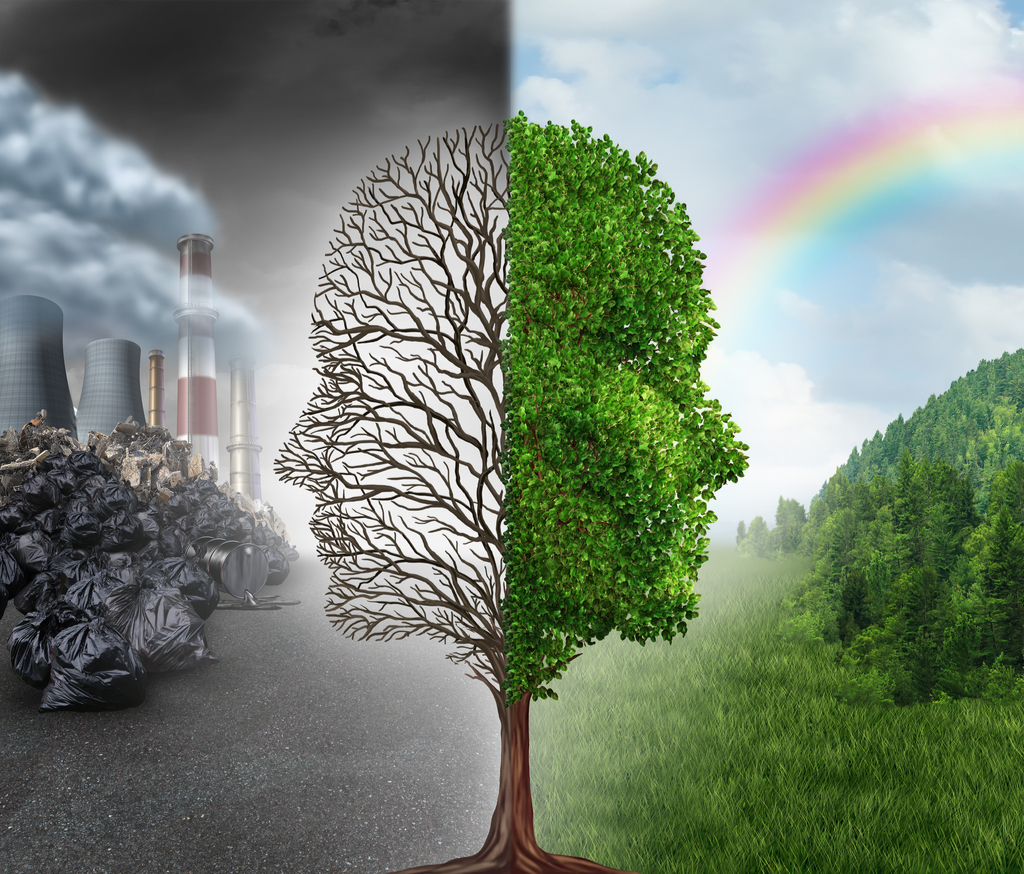
How Does Economics Affect the Environment?
There is a moment, standing in an old-growth forest, when economics appears absurd.
Not wrong. Not malicious. Simply too small.
The trees do not invoice the atmosphere for oxygen. Rivers do not submit expense reports after flooding a delta with nutrients. A mycorrhizal network beneath the soil—those astonishing fungal webs trading carbon and minerals among roots—does not issue quarterly earnings guidance. Yet together they create abundance so vast that human civilization exists entirely inside their generosity.
And still, on balance sheets around the world, much of this living wealth registers as zero.
This is where economics meets the environment: not merely in smokestacks or recycling bins or carbon taxes, but in the stories societies tell themselves about value. Economics determines what is counted, what is ignored, what is extracted, and what is protected. It is less a science than a language. The environment responds accordingly.
The atmosphere, unlike investors, does not negotiate.
The Original Economy Was Ecological
The word economy comes from the Greek oikonomia—management of the household. For most of human history, that household included forests, water, soil, pollinators, fisheries, and seasons. There was no meaningful separation between “the economy” and “the environment” because survival depended on understanding limits.
Modern industrial economics severed that relationship.
The shift happened gradually, then all at once. Coal allowed production to outrun biological cycles. Oil compressed millions of years of sunlight into combustible liquidity. Machines amplified labor, and finance amplified machines. Wealth expanded at extraordinary speed, but so did a peculiar illusion: that human systems operated independently from natural systems.
They never did.
A city is not separate from a watershed. A stock exchange is not independent from a stable climate. A supply chain is not exempt from drought. The economy is wholly owned by ecology, though our textbooks often reverse the relationship.
I learned this years ago while visiting an industrial farming region in California during a severe drought. One grower walked me through acres of almond orchards that looked healthy from a distance but were slowly collapsing beneath the soil. Groundwater depletion had become so severe that the land itself was subsiding. Roads cracked. Wells failed. Trees survived temporarily because fossil aquifers were treated like infinite reserves.
“We’re mining water,” he said quietly.
Not using. Mining.
That sentence stayed with me because it exposed a central truth: economic systems often reward the liquidation of natural capital while calling it productivity.
GDP Can Rise While Life Declines
One of the strangest features of modern economics is that destruction frequently counts as growth.
An oil spill increases cleanup spending. GDP rises.
A forest is cut down, sold as timber, converted into real estate, and GDP rises again.
Asthma treatments, disaster reconstruction, flood insurance claims, wildfire suppression—all economic activity.
The market records transactions beautifully. It records loss poorly.
This is not because economists are foolish. Many understand the dilemma intimately. The problem is structural. Traditional economic models evolved in a world where nature appeared abundant and resilient beyond comprehension. Externalities—costs imposed on ecosystems or communities—were treated as peripheral because the biosphere seemed too large to fail.
Now the biosphere is issuing invoices.
Climate instability, collapsing biodiversity, soil erosion, ocean acidification, freshwater depletion—these are not environmental side notes. They are economic consequences. The atmosphere has become an unpaid ledger.
The Extraction Equation
At its most reductionist, economics affects the environment through incentives.
What do we subsidize?
What do we penalize?
What do we measure?
What do we permit corporations to ignore?
The answers shape landscapes.
Consider the following comparison:
| Economic Activity | Short-Term Economic Signal | Environmental Consequence | Long-Term Economic Reality |
|---|---|---|---|
| Fossil fuel extraction | Cheap energy, job creation, industrial growth | Carbon emissions, air pollution, ecosystem degradation | Climate costs, health burdens, infrastructure damage |
| Industrial agriculture | High crop yields, export revenue | Soil depletion, water contamination, biodiversity loss | Reduced fertility, water scarcity, declining resilience |
| Deforestation for development | Immediate land value increase | Habitat destruction, carbon release, altered rainfall | Flooding, erosion, ecological instability |
| Regenerative farming | Higher upfront transition costs | Soil restoration, carbon sequestration, water retention | Greater resilience, lower input costs, ecosystem recovery |
| Renewable energy investment | Infrastructure expense | Reduced emissions, lower pollution | Energy stability, lower climate risk |
| Circular manufacturing | Increased design complexity | Waste reduction, lower extraction pressure | Material efficiency, long-term savings |
The table reveals something crucial: markets excel at rewarding immediacy.
Nature operates on delayed consequences.
An investor seeking quarterly returns and a forest seeking century-scale stability inhabit different temporal realities. Economics compresses time; ecology expands it.
That tension defines much of environmental degradation.
Cheap Products Are Often Expensive
A plastic chair sold for twelve dollars may appear efficient. Yet the oil extraction, refining, manufacturing emissions, shipping fuel, landfill burden, and microplastic residue are distributed across oceans, lungs, and future decades. The price tag omits most of the story.
Economics influences the environment precisely through these omissions.
When environmental costs remain externalized, pollution becomes profitable. A river downstream from a factory effectively subsidizes production. Future generations subsidize present consumption. Species without purchasing power disappear quietly from the accounting system.
The economist Herman Daly once remarked that the economy is a wholly owned subsidiary of the environment, not the reverse. It remains one of the clearest corrections ever spoken.
Because without pollinators, there is no agriculture.
Without stable coastlines, ports fail.
Without predictable rainfall, insurance markets destabilize.
Without topsoil, civilization itself becomes temporary.
Nature is not a sector of the economy. It is the precondition.
Consumerism and the Manufactured Appetite
Economics also affects the environment psychologically.
Modern economies depend heavily on perpetual consumption. Growth requires velocity. Products must move. Attention must fragment. Desire must renew itself endlessly, often detached from genuine human need.
Advertising rarely says: “You are enough.”
Instead, economies frequently monetize dissatisfaction.
This has environmental implications that are rarely discussed honestly. A culture organized around disposability generates not only waste but alienation. Planned obsolescence is not simply an industrial strategy; it is a philosophical statement about our relationship to matter.
Everything becomes temporary:
phones,
furniture,
clothing,
appliances,
even landscapes.
Meanwhile, ecosystems function through reciprocity, efficiency, and cyclical renewal. In forests, there is no landfill. The waste of one organism nourishes another. Industrial economies, by contrast, often operate linearly: extract, manufacture, consume, discard.
The environmental consequences accumulate invisibly until suddenly they do not.
A fishery collapses.
A reservoir empties.
A coral reef bleaches white.
A city floods twice in a decade instead of once a century.
Then economists call it a “market shock,” as though the Earth behaved irrationally.
The False Divide Between Jobs and the Environment
Perhaps the most damaging misconception in public discourse is the idea that economic prosperity and environmental protection are opposing forces.
The framing itself is flawed.
A stable climate is economic infrastructure.
Healthy soil is infrastructure.
Wetlands are infrastructure.
Pollinators are infrastructure.
Forests are infrastructure.
Destroying them to create temporary growth resembles selling the foundation of a house to pay the electric bill.
There are, of course, transitions that create hardship. Coal communities matter. Workers in extractive industries matter deeply. Any environmental policy divorced from human dignity will fail ethically and politically.
But the larger truth remains: economies that undermine ecological stability eventually undermine themselves.
The cost of climate disasters alone illustrates this vividly. Insurance markets in vulnerable regions are already straining under repeated catastrophes. Agricultural volatility increases food prices. Heat waves reduce labor productivity. Supply chains fracture under environmental stress.
Nature is no longer a distant backdrop to economics.
It has entered the boardroom.
Regenerative Economics
There are emerging models that attempt to reconcile economic activity with ecological intelligence.
Regenerative agriculture restores soil rather than exhausting it.
Circular manufacturing designs products for reuse and repair.
Renewable energy systems harvest current sunlight instead of ancient sunlight.
Ecological restoration creates jobs while reviving watersheds and biodiversity.
These approaches are often described as environmental solutions, but that understates their significance. They represent a different theory of wealth.
Conventional economics frequently defines wealth as accumulation.
Ecological thinking defines wealth as continuity.
Can a system endure?
Can it renew itself?
Does it increase the capacity for life?
Those questions may sound philosophical, yet they are intensely practical.
A depleted fishery is not wealth.
A poisoned aquifer is not wealth.
A destabilized atmosphere is not wealth, regardless of quarterly earnings.
The environmental crisis, at its core, is partly a measurement crisis. We are using economic instruments calibrated for a world that no longer exists.
What I Learned From a Landfill
Years ago, I visited a landfill at dawn. Gulls circled overhead in dense white spirals while bulldozers pushed mountains of discarded material across the earth. Coffee makers. Mattresses. Broken toys. Perfectly edible food sealed in plastic. Entire histories of consumption compacted into geological layers.
What struck me most was not the scale but the energy.
Every object represented extracted minerals, transported fuel, labor hours, industrial heat, chemical processing, marketing campaigns, retail lighting, packaging, trucking, and disposal infrastructure. Enormous planetary effort had gone into producing things designed, consciously or not, to become garbage.
The landfill looked less like waste management and more like a portrait of economic intention.
Economics affects the environment because economics shapes what society honors. If extraction is rewarded more than restoration, landscapes will reflect extraction. If durability is less profitable than disposability, waste becomes inevitable. If ecosystems remain economically invisible, they will continue disappearing in plain sight.
The Provocative Truth
The environmental crisis is not occurring because humans are uniquely evil. Nor because technology itself is inherently destructive.
It is occurring because economic systems are extraordinarily powerful storytelling machines.
They tell us what matters.
What has value.
What deserves protection.
What can be sacrificed.
For centuries, those stories generated immense material prosperity while borrowing stability from the future. Now the bill is arriving in the language of fire, flood, heat, extinction, migration, and uncertainty.
Yet this moment also contains possibility.
Economics is not physics. It is not fixed. It is a human construct, revised constantly through law, culture, incentives, and imagination. Markets change when values change. Entire industries can transform in a generation. History is full of economic assumptions that later appeared absurd.
Perhaps future generations will look back in disbelief that corporations could pollute rivers freely, that forests were valued more dead than alive, that GDP could rise while ecosystems collapsed.
Or perhaps they will inherit a civilization mature enough to understand that the purpose of an economy is not merely to increase consumption, but to increase the conditions under which life can flourish.
That is the real question hiding underneath all the statistics and policy debates:
Not whether the environment can survive our economy.
Whether our economy can survive without the environment.
- Arts
- Business
- Computers
- Spellen
- Health
- Home
- Kids and Teens
- Money
- News
- Personal Development
- Recreation
- Regional
- Reference
- Science
- Shopping
- Society
- Sports
- Бизнес
- Деньги
- Дом
- Досуг
- Здоровье
- Игры
- Искусство
- Источники информации
- Компьютеры
- Личное развитие
- Наука
- Новости и СМИ
- Общество
- Покупки
- Спорт
- Страны и регионы
- World

 English
 Russian
 French
 Spanish
 Portuguese
 Deutsch
 Turkish
 Italiano
 Arabic
 Romaian
 Portuguese (Brazil)
 Greek
Greek
