
Is it a good time to save or spend?
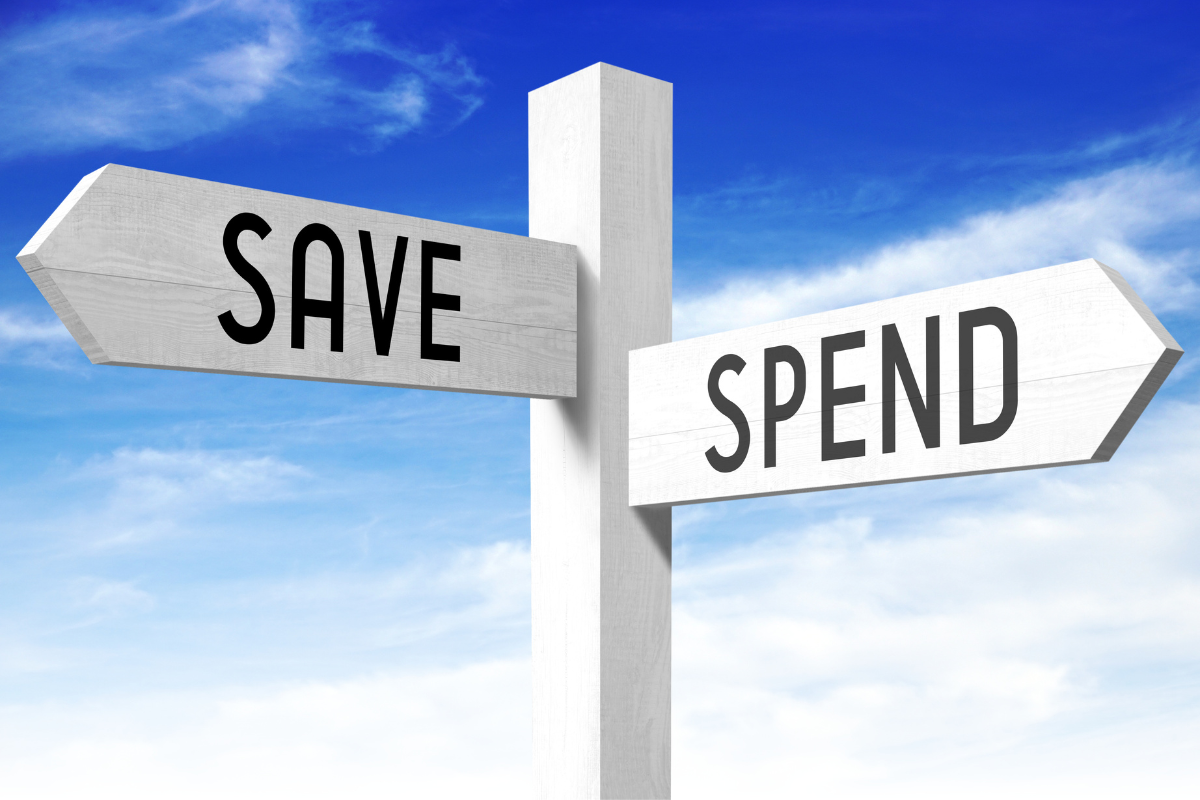
Is It a Good Time to Save or Spend?
There is a peculiar insanity to modern economic life: the harder people work to become financially secure, the more financially fragile they become.
A generation ago, saving money was considered an act of prudence. Today, it is treated almost as a pathology. Central bankers openly fear savers. Governments quietly punish them. Financial media ridicules them. The citizen who delays gratification is no longer celebrated as disciplined but mocked as “missing out.”
And yet the same society drowning in consumption complains incessantly about debt, inflation, and economic anxiety.
This contradiction is not accidental. It is the logical consequence of a monetary system built on perpetual expansion of credit. Once you understand this, the question “Should I save or spend?” ceases to be a matter of lifestyle preference and becomes a question about the structure of civilization itself.
The answer, however, is not as simple as the internet’s binary slogans. “Spend while inflation eats your cash” is juvenile advice. So is “save every penny.” Reality is more uncomfortable. The correct strategy depends on what kind of money you are saving, what kind of spending you are doing, and whether you understand the difference between consumption and capital formation.
Most people do not.
The Great Confusion Between Wealth and Consumption
Modern economies have conditioned citizens to equate spending with prosperity. GDP rises when consumption rises. Retail sales are celebrated like military victories. Politicians panic when consumers become cautious.
But consumption is not wealth.
Consumption is the liquidation of wealth.
A man who burns through his savings to finance vacations and restaurant meals may appear prosperous on Instagram, but economically he is moving backward. Meanwhile, the quiet immigrant shopkeeper who reinvests earnings into productive assets appears “boring” while steadily accumulating genuine capital.
This distinction matters enormously today because inflation has blurred people’s understanding of economic reality.
When prices rise rapidly, citizens feel pressured to buy immediately. Delayed purchases seem irrational because currency loses purchasing power over time. This creates a psychological atmosphere of urgency. Furniture, electronics, cars, even groceries begin to feel like speculative assets.
People start buying not because they need things, but because they fear money itself.
That is the hallmark of deteriorating money.
Why Inflation Changes Human Time Preference
The Austrian economists understood something Keynesians still refuse to acknowledge: money is not neutral.
Bad money changes behavior.
When money reliably stores value across time, individuals naturally develop lower time preference. They plan longer. They save more. They think generationally. Civilization itself becomes more durable because people trust the future enough to defer gratification.
When money rapidly depreciates, the opposite occurs.
Society becomes shorter-term, more impulsive, more indebted, and more fragile.
This is not theory. I learned this lesson personally during a period when inflation in my home country accelerated sharply. I remember delaying the purchase of basic household equipment for several months while trying to “save responsibly.” By the time I finally bought the items, the prices had risen so dramatically that my caution had effectively punished me.
The experience was revealing.
I realized that inflation does not merely erode purchasing power mathematically. It corrodes rational calculation psychologically. It transforms ordinary citizens into reluctant speculators.
The saver becomes anxious.
The spender becomes rewarded.
The debtor becomes subsidized.
And governments wonder why societies become unstable.
The False Choice Between Saving and Spending
The real question is not whether to save or spend.
The real question is: What form should savings take, and what spending actually improves your productive capacity?
This distinction changes everything.
Buying disposable consumer garbage because inflation is high is not intelligent. Neither is hoarding rapidly depreciating currency while prices compound upward.
The financially rational individual separates expenditures into three categories:
1. Consumptive Spending
This is spending that delivers temporary pleasure but no enduring productive value.
Examples include:
-
Luxury fashion
-
Excessive dining
-
Frequent gadget upgrades
-
Lifestyle inflation
-
Social-status purchases
Inflation often accelerates this behavior because people feel currency “burning a hole” in their pocket.
This is precisely the trap.
The monetary system incentivizes impulsiveness because impulsive populations are easier to tax invisibly through inflation.
2. Productive Spending
This category is radically different.
These expenditures improve future earning power, resilience, or efficiency.
Examples include:
-
Education with real market utility
-
Business equipment
-
Tools
-
Energy-efficient infrastructure
-
Skills acquisition
-
Health investments
-
Productive software
-
Transportation reliability
This form of spending is often mistaken for “consumption,” but economically it is capital allocation.
A carpenter purchasing superior tools is not consuming wealth. He is increasing future productivity.
The distinction matters more during inflationary periods because productive assets tend to preserve utility while cash deteriorates.
3. Genuine Saving
True saving is not merely abstaining from spending.
True saving is storing the fruits of labor in assets that maintain purchasing power across time.
Historically, societies used hard money for this purpose because hard money imposes discipline on governments and financial institutions alike.
Fiat systems reverse the equation. They reward leverage and punish patience.
That leaves savers searching desperately for alternatives.
A Comparison of Saving vs Spending During Inflation
| Financial Behavior | Short-Term Feeling | Long-Term Outcome | Inflation Impact |
|---|---|---|---|
| Holding large cash balances | Safety | Purchasing power erosion | Negative |
| Buying luxury consumer goods | Emotional satisfaction | Asset depreciation | Strongly negative |
| Investing in productive tools/skills | Financial discomfort initially | Higher future earnings | Positive |
| Taking reckless debt for consumption | Temporary lifestyle boost | Long-term fragility | Catastrophic |
| Saving in scarce assets | Psychological volatility | Potential purchasing power preservation | Potentially positive |
| Building emergency reserves | Stability | Optionality during downturns | Moderately positive |
The key insight here is that inflation does not eliminate the value of saving.
It changes the required sophistication of savers.
In a sound-money society, ordinary citizens could save passively. Under fiat inflation, citizens must become part-time portfolio managers merely to avoid impoverishment.
That is not progress.
It is monetary decay disguised as modern finance.
Why Debt Looks Attractive—And Why That’s Dangerous
One of the more destructive side effects of inflationary economies is the normalization of debt.
When currencies lose value steadily, borrowing appears rational because future repayments occur in depreciated dollars. Governments exploit this relentlessly. Corporations exploit it. Consumers imitate the behavior.
This creates the illusion that debt itself is wealth.
It is not.
Debt amplifies fragility.
Yes, inflation can reduce the real burden of fixed-rate liabilities. But the internet has transformed this observation into reckless dogma. Millions of people now finance lifestyles under the assumption that inflation will rescue them indefinitely.
History suggests otherwise.
Inflationary eras eventually collide with higher interest rates, economic contraction, or credit destruction. When that occurs, overleveraged consumers discover that servicing debt during unstable employment conditions is considerably less glamorous than financial influencers imply.
A society addicted to debt becomes structurally weak because debt converts future labor into present consumption.
At scale, this hollows out civilization.
The Forgotten Virtue of Optionality
One of the least appreciated benefits of saving is optionality.
Cash reserves, liquid investments, and low liabilities provide something modern economies increasingly lack: freedom of movement.
The heavily indebted employee cannot easily leave a toxic employer.
The overextended entrepreneur cannot survive temporary downturns.
The consumer trapped in lifestyle inflation cannot adapt to recession.
Savings create strategic flexibility.
This matters enormously during uncertain economic periods.
People often obsess over maximizing returns while ignoring survivability. Yet economic history repeatedly demonstrates that resilience is more important than optimization.
The individual who survives volatility intact eventually encounters extraordinary opportunities.
The person fully leveraged during instability usually does not.
So… Should You Save or Spend?
The answer is both, but selectively and intelligently.
You should reduce frivolous consumption aggressively.
You should spend decisively on productive capacity.
You should save in forms less vulnerable to monetary debasement.
You should avoid lifestyle debt whenever possible.
And you should preserve enough liquidity to remain adaptable.
This is not glamorous advice.
It will not attract millions of clicks from audiences addicted to financial dopamine.
But it reflects economic reality.
The modern economy pressures citizens into behaving like short-term consumers because short-term consumers sustain debt-based systems. Yet the individuals who achieve durable wealth almost always behave differently. They delay gratification strategically. They allocate capital carefully. They avoid confusing visibility with prosperity.
Most importantly, they understand that money is not merely a medium of exchange.
It is stored human time.
To waste money carelessly is to waste fragments of your life. To save intelligently is to preserve future sovereignty. And to invest productively is to extend your capacity to create value beyond the present moment.
That is the real framework.
Not “save versus spend.”
But whether your financial behavior increases or diminishes your independence from systems designed to keep you permanently consuming.
Because once inflation becomes normalized, the most radical economic act is no longer spending lavishly.
It is retaining the ability to say no.
- Arts
- Business
- Computers
- Jeux
- Health
- Domicile
- Kids and Teens
- Argent
- News
- Personal Development
- Recreation
- Regional
- Reference
- Science
- Shopping
- Society
- Sports
- Бизнес
- Деньги
- Дом
- Досуг
- Здоровье
- Игры
- Искусство
- Источники информации
- Компьютеры
- Личное развитие
- Наука
- Новости и СМИ
- Общество
- Покупки
- Спорт
- Страны и регионы
- World

 English
 Russian
 Spanish
 Portuguese
 Deutsch
 Turkish
 Dutch
Dutch
 Italiano
 Arabic
 Romaian
 Portuguese (Brazil)
 Greek
Greek
