
Why is food so expensive?
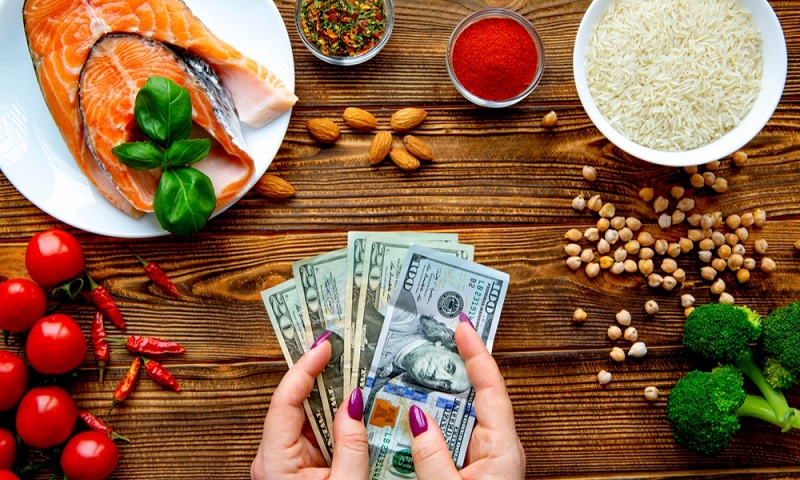
Why Is Food So Expensive?
There is something profoundly revealing about a man standing in a grocery aisle, staring at a carton of eggs as though he were evaluating a speculative technology startup.
Not because eggs are rare. Chickens have not disappeared. Corn still grows. Trucks still move. Refrigerators still hum. And yet the price of food has become one of the defining anxieties of modern life.
A few years ago, inflation was an abstraction discussed by central bankers in tailored suits and economists with elegant equations. Today, inflation is a father putting back steak and buying pasta. It is a mother quietly switching brands of milk while pretending not to notice. It is restaurant portions shrinking while prices rise like helium balloons.
Food inflation is not merely an economic phenomenon. It is civilization exposing its monetary foundations.
And once you understand money, the mystery evaporates.
Food is expensive because money is broken.
Everything else is commentary.
The Great Confusion About Food Prices
When people discuss rising food prices, they usually point to the visible culprits.
Greedy corporations.
Supply chains.
Climate change.
Wars.
Fuel costs.
Labor shortages.
Bird flu.
Droughts.
Tariffs.
Speculators.
Middlemen.
Some of these matter temporarily. None explain the long-term pattern.
If food prices were merely the consequence of a temporary disruption, they would spike and then normalize. Yet across decades, the purchasing power of ordinary people steadily erodes while the nominal price of necessities climbs upward like a ratchet.
The issue is not that food is becoming intrinsically more valuable.
The issue is that currency is becoming intrinsically less valuable.
This distinction changes everything.
A century ago, a single-income household in America could comfortably afford fresh meat, dairy, eggs, seasonal produce, and homemade meals while saving substantial portions of income. Today, dual-income households often struggle to buy groceries without anxiety, despite unprecedented technological productivity.
Did farmers suddenly become less efficient?
Hardly.
Modern agriculture is a miracle of industrial coordination. One farmer today feeds vastly more people than a farmer a century ago. Machinery is more advanced. Logistics are faster. Fertilizers are more sophisticated. Refrigeration is ubiquitous. Supply chains span continents.
Food should be getting cheaper.
In real terms, productive technology relentlessly pushes prices downward.
Yet consumers experience the opposite.
Why?
Because central banking and fiat currency continuously dilute the unit through which prices are measured.
Inflation Is Not Rising Prices
One of the most successful intellectual frauds of the twentieth century was redefining inflation to mean rising consumer prices.
Inflation is not rising prices.
Inflation is the expansion of the money supply.
Rising prices are merely the consequence.
This distinction matters because it identifies causality correctly.
Imagine an island with 100 coconuts and 100 shells used as money. Each coconut costs one shell. Now imagine the island chief suddenly creates another 100 shells without increasing coconut production.
What happens?
The coconuts did not become more valuable.
The shells became less scarce.
Prices rise not because reality changed, but because the measuring stick changed.
This is precisely what modern monetary systems institutionalize.
Since the abandonment of the gold standard, governments and central banks have acquired extraordinary power to create currency units at virtually no marginal cost. The result is predictable: more currency chases relatively constrained goods.
Food, unlike software, cannot be printed.
Wheat requires land.
Cattle require feed.
Tomatoes require water, labor, transport, refrigeration, and time.
Reality imposes discipline on food production that monetary systems no longer impose on governments.
And reality always wins eventually.
The Monetary Debasement of Everyday Life
I remember speaking with a grocer several years ago who had operated the same family store for decades. He laughed when customers accused him of greed.
“You think I enjoy changing labels every week?” he asked.
His margins were thinner than ever.
Electricity rose.
Packaging rose.
Transportation rose.
Insurance rose.
Labor rose.
Fuel rose.
Interest payments rose.
Everything upstream of the grocery shelf became more expensive because every participant in the production chain operated within an inflationary monetary system.
Consumers see the final price tag. They rarely see the monetary disease infecting every layer beneath it.
This is why official inflation statistics often feel detached from lived experience. Governments construct baskets, substitutions, hedonic adjustments, and methodological revisions that obscure deterioration.
People notice reality anyway.
They notice cereal boxes shrinking.
They notice lower-quality ingredients.
They notice restaurants replacing butter with seed oils and fresh ingredients with frozen substitutes.
They notice that “family size” now resembles what used to be called “regular.”
Inflation does not merely raise prices.
It corrodes quality.
Why Cheap Money Makes Food Expensive
The modern economy runs on debt.
Cheap debt, specifically.
When central banks suppress interest rates below market levels, they encourage borrowing across the entire economic structure. Farmers borrow. Food distributors borrow. Supermarkets borrow. Fertilizer manufacturers borrow. Trucking companies borrow.
This appears beneficial initially because artificially cheap capital creates temporary expansion.
But there is a hidden cost.
Low interest rates distort production decisions and encourage fragile systems optimized for financial engineering rather than resilience.
Consider modern agriculture.
Industrial farming became deeply dependent on leverage, subsidies, monoculture production, and long global supply chains. These systems appear efficient under conditions of abundant cheap money and stable energy prices. But they become extraordinarily vulnerable when costs rise.
A farmer financing equipment at near-zero rates behaves differently from a farmer borrowing at honest market rates.
An entire civilization built on artificially cheap credit becomes hypersensitive to tightening conditions.
Thus, when central banks eventually attempt to contain inflation by raising rates, the costs cascade everywhere simultaneously.
Food prices surge not merely because money was printed, but because the entire productive structure became addicted to monetary distortion.
Food Prices vs. Wages
The following comparison illustrates the uncomfortable arithmetic many households experience today.
| Item | Approximate Price (2000) | Approximate Price (2026) | Wage Growth vs. Food Growth |
|---|---|---|---|
| Dozen Eggs | $1.00 | $4.50–$7.00 | Food outpaced wages |
| Ground Beef (1 lb) | $1.90 | $6.00–$9.00 | Significant erosion |
| Whole Milk (1 gallon) | $2.50 | $5.00–$7.00 | Purchasing power weakened |
| Bread (1 loaf) | $1.20 | $4.00–$6.00 | Staple inflation accelerated |
| Average Restaurant Meal | $8–$10 | $22–$35 | Dining shifted toward luxury |
| Median Hourly Wage | ~$14 | ~$31 | Nominal growth, weaker real value |
Nominal wages rose.
Real purchasing power did not rise proportionally.
This is the essential trick of fiat systems: people receive larger numerical salaries while gradually becoming poorer in material terms.
The population confuses nominal gains for real wealth.
Meanwhile, assets inflate faster than wages, necessities inflate steadily, and savings deteriorate silently.
Energy: The Hidden Ingredient in Every Meal
Food is fundamentally transformed energy.
This fact is routinely ignored by economists who think in spreadsheets instead of physical systems.
Modern agriculture depends heavily on hydrocarbons.
Natural gas produces fertilizer.
Diesel powers tractors.
Fuel transports goods.
Electricity refrigerates products.
Packaging requires industrial energy inputs.
Even “organic” farming relies on infrastructure sustained by energy abundance.
Therefore, when monetary inflation collides with constrained energy production, food prices become explosively sensitive.
Governments often worsen the situation by subsidizing consumption while restricting production. They simultaneously debase currency and suppress energy investment, then appear confused when grocery bills rise.
An economy cannot consume what it does not produce.
No amount of monetary expansion can repeal thermodynamics.
The Psychological Damage of Expensive Food
One of the most corrosive consequences of food inflation is psychological.
When food becomes expensive, time horizons shrink.
Families stop planning long-term.
Nutrition deteriorates.
Cheap calories replace quality nutrition because processed foods scale more efficiently within industrial systems.
The population becomes simultaneously overfed and undernourished.
A civilization eating corn syrup, soybean oil, and chemically stabilized convenience foods is not merely experiencing dietary change. It is experiencing monetary decay manifesting biologically.
Good food increasingly becomes a class marker.
This is historically abnormal.
For most of modern industrial history, productivity gains democratized abundance. Today, inflation reverses that process.
The wealthy buy grass-fed beef, fresh produce, raw dairy, and artisanal products.
The middle class buys processed substitutes.
The poor buy shelf-stable calories.
Monetary debasement quietly stratifies nutrition.
The Productivity Paradox
Here lies the deepest absurdity.
Humanity has never been more productive.
Agricultural technology is astonishing. Supply chains are extraordinary. Data systems optimize yields with precision unimaginable fifty years ago.
And yet ordinary people feel poorer.
This contradiction confuses many observers because they assume technological progress automatically creates prosperity.
It does not.
Productivity matters only if the monetary unit storing that productivity remains sound.
Imagine pouring water into a bucket with a hole in the bottom. Producing more water helps, but the leak still matters.
Fiat currency is the leak.
People work harder, produce more, innovate more, and save more efficiently, yet the monetary system continuously siphons purchasing power away through expansion.
This is why entire generations feel as though they are running uphill.
Because they are.
The Real Lesson
The lesson is not merely that food is expensive.
The lesson is that civilization cannot indefinitely separate money from scarcity without consequences.
Food obeys physical laws.
Currencies increasingly obey political incentives.
These realities eventually collide.
And when they do, grocery aisles become economic classrooms.
Every inflated steak price is a referendum on monetary policy.
Every shrinking cereal box is a lesson in fiat dilution.
Every anxious family budget reveals the same truth: prosperity cannot be printed into existence.
It must be produced.
A society that rewards financial manipulation more than productive output will eventually discover that no amount of monetary engineering can substitute for real wealth.
Not in housing.
Not in energy.
And certainly not in food.
Because in the end, you cannot eat interest rates.
You cannot consume liquidity injections.
You cannot nourish children with central bank balance sheets.
You need eggs.
You need bread.
You need meat.
You need reality.
And reality, unlike modern currency, remains stubbornly scarce.
- Arts
- Business
- Computers
- Игры
- Health
- Главная
- Kids and Teens
- Деньги
- News
- Personal Development
- Recreation
- Regional
- Reference
- Science
- Shopping
- Society
- Sports
- Бизнес
- Деньги
- Дом
- Досуг
- Здоровье
- Игры
- Искусство
- Источники информации
- Компьютеры
- Личное развитие
- Наука
- Новости и СМИ
- Общество
- Покупки
- Спорт
- Страны и регионы
- World

 English
 French
 Spanish
 Portuguese
 Deutsch
 Turkish
 Dutch
Dutch
 Italiano
 Arabic
 Romaian
 Portuguese (Brazil)
 Greek
Greek
