
Why do companies pollute?
Why Do Companies Pollute?
There is a photograph taken from orbit at night of the Gulf Coast between Houston and New Orleans. The image glows like a motherboard. Refineries, cracker plants, tank farms, pipelines, shipping terminals—a nervous system of combustion visible from space. It is difficult to look at the picture without feeling awe. It is equally difficult to look at it without sensing grief.
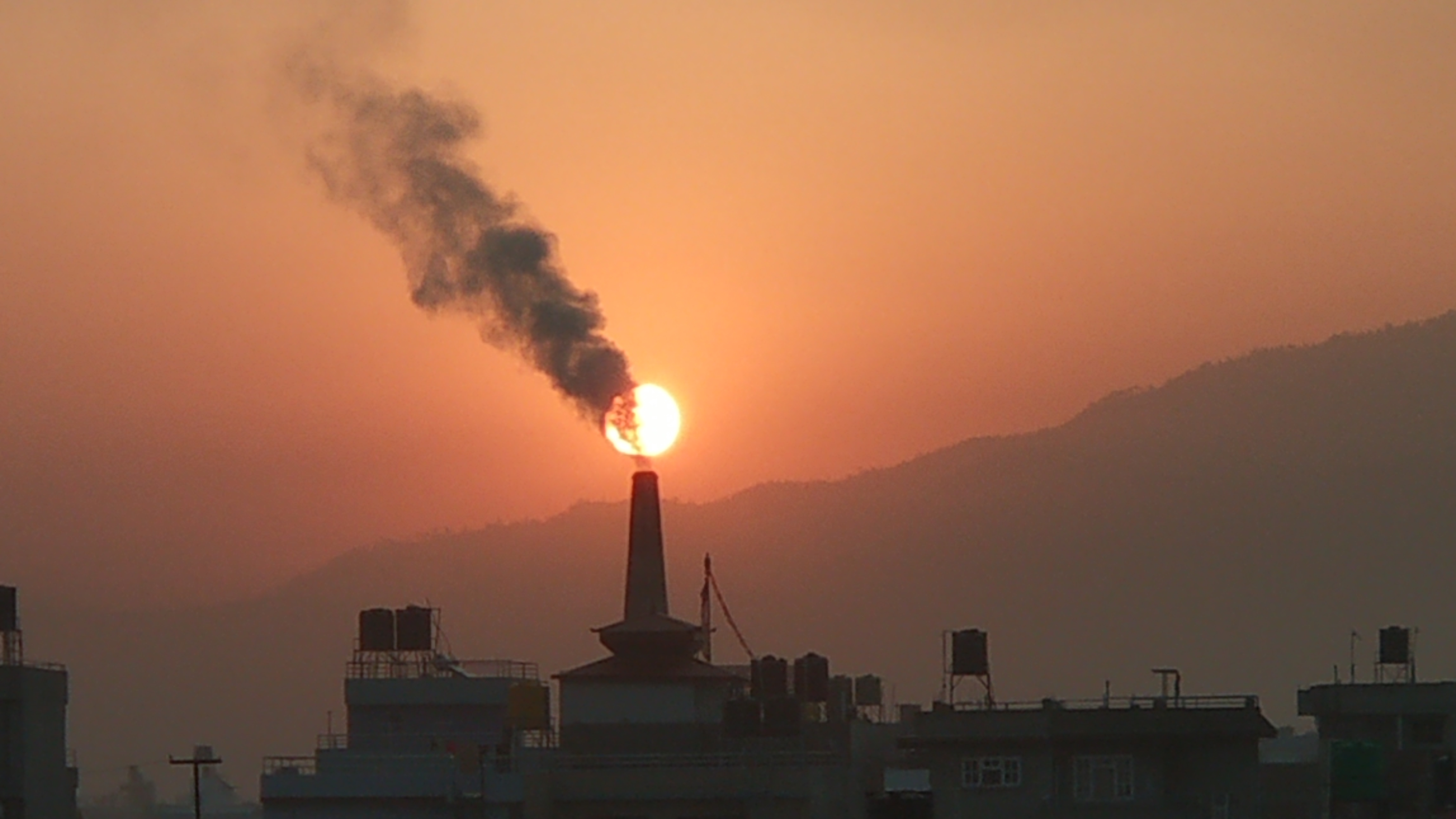
Pollution is not an accident in modern commerce. It is not a smudge left behind by progress, like sawdust on the floor of a carpentry shop. It is often designed into the architecture of production itself. The smokestack, the flare tower, the tailings pond, the synthetic plume drifting from an industrial river—these are not anomalies. They are invoices sent to the future.
When people ask why companies pollute, the question usually arrives coated with moral outrage, as if executives wake each morning eager to poison estuaries or blacken lungs. That caricature comforts us because villains are easier to diagnose than systems. Yet the deeper answer is more unsettling. Most corporations pollute for the same reason rivers flood downhill: the surrounding terrain rewards it.
The atmosphere has long functioned as a free dumping ground. So have oceans, soils, aquifers, and bodies. Economists call these “externalities,” a bloodless term suggesting minor administrative leakage. But externalities are not peripheral. They are central. They are the hidden subsidy underwriting much of industrial civilization.
And once you see that, the story changes.
Pollution Is Usually Profitable
A company releases waste because disposing of it properly costs money. The arithmetic is embarrassingly simple. If a manufacturer can vent chemicals into the air rather than install scrubbers, quarterly earnings improve. If a mining operation can leave behind contaminated runoff rather than fully restore a watershed, shareholders receive higher returns. Pollution often persists because somebody, somewhere, is rewarded for not accounting for the damage.
This is not merely greed. Greed is too shallow an explanation. The deeper issue is structural obedience.
Publicly traded firms are organisms built to maximize returns within legal boundaries. A CEO who voluntarily absorbs environmental costs while competitors do not may be applauded at conferences and quietly removed by investors eighteen months later. Markets praise efficiency, but they rarely distinguish between true efficiency and deferred destruction.
The distinction matters.
A plastic bottle floating in the Pacific is not efficient. It is unpaid labor transferred to coral reefs, fisheries, municipalities, taxpayers, and unborn generations. The corporation booked the revenue. The biosphere inherited the bill.
The Great Separation Between Price and Cost
Years ago, I visited an industrial farming region in California during a drought severe enough to crack irrigation canals into geometric fractures. Almond orchards stretched toward the horizon in immaculate symmetry. Pumps roared beneath the soil, pulling ancient groundwater upward like a slow-motion liquidation sale.
A grower told me, without irony, “Water is too cheap not to use.”
I wrote the sentence down because it explained more about ecological collapse than a thousand white papers.
Companies pollute when prices lie.
Cheap coal ignores asthma rates. Cheap gasoline excludes military expenditures protecting oil routes. Cheap beef omits deforestation, methane, antibiotic resistance, and depleted aquifers. Corporate accounting often records labor, shipping, and machinery with extraordinary precision while treating forests, wetlands, and climate stability as if they materialized from divine generosity.
Nature enters the ledger at liquidation value.
The Historical Roots of Corporate Pollution
Pollution did not emerge because industrialists were uniquely immoral. It expanded because industrial economies inherited philosophical assumptions from the mechanistic worldview of the 17th century. Nature became object rather than relation. Forests transformed into timber inventory. Rivers became hydraulic assets. Animals became protein conversion systems.
The language changed first. The consequences followed.
During the Industrial Revolution, coal smoke was widely interpreted as evidence of prosperity. In cities like Pittsburgh and Manchester, soot-covered buildings signaled economic vitality. Factory emissions were not hidden; they were celebrated. Dark skies meant furnaces were active and payrolls flowing.
A strange inversion occurred: contamination became patriotic.
That cultural residue persists. Governments still fear regulating pollution too aggressively because economic growth and ecological harm remain psychologically intertwined in political discourse. Jobs versus environment. Industry versus conservation. As though breathable air were an exotic luxury item.
The Invisible Geography of Waste
Corporations also pollute because pollution can be exported geographically.
Affluent nations frequently outsource the dirtiest manufacturing processes to poorer regions where labor is cheaper, regulations weaker, and political resistance more fragile. The smartphone assembled with toxic solvents in one country is marketed as sleek minimalism in another. The supply chain acts like a magician’s sleeve, concealing ecological violence behind distance.
Consider the asymmetry:
| Industry | Primary Pollution | Who Receives the Profit | Who Bears the Damage |
|---|---|---|---|
| Fast Fashion | Textile dye runoff, microplastics | Global apparel brands, retailers | Rivers and factory communities in Asia and Africa |
| Oil & Gas | Carbon emissions, spills, methane leaks | Energy firms, shareholders | Coastal communities, future generations |
| Industrial Agriculture | Soil depletion, fertilizer runoff | Agribusiness corporations | Rural ecosystems, fisheries, public health systems |
| Electronics Manufacturing | Heavy metal contamination | Technology companies, consumers | Factory workers, groundwater systems |
| Mining | Tailings waste, habitat destruction | Commodity traders, investors | Indigenous communities, watersheds |
The map of pollution often mirrors the map of power.
Communities with the least political influence receive disproportionate exposure to toxins. This is why environmental degradation and social inequality are inseparable conversations. Waste follows vulnerability the way water follows gravity.
Efficiency Can Become Ecological Blindness
One of the paradoxes of industrial capitalism is that companies frequently become more efficient while total pollution rises.
An airline improves fuel efficiency per passenger mile. Ticket prices fall. More people fly. Total emissions increase.
An automaker designs engines requiring less gasoline. Consumers purchase larger vehicles. Aggregate fuel consumption climbs.
Economists call this the rebound effect. Ecology calls it overshoot.
Efficiency without limits can accelerate extraction because reduced costs stimulate greater consumption. The machine becomes leaner while the system grows hungrier.
I once toured a highly sophisticated recycling facility outside Phoenix. Conveyors sorted plastics with optical scanners operating at astonishing speed. The engineering was brilliant. Yet the manager admitted something quietly devastating over lunch: the volume of disposable packaging entering the waste stream was rising faster than recycling capacity.
“We’re becoming more efficient at processing excess,” he said.
That sentence has stayed with me for years.
Advertising Manufactures Appetite
Companies pollute not only because they produce goods, but because they produce desire.
Modern advertising rarely asks whether human needs are being met. Instead, it cultivates perpetual dissatisfaction. Entire industries depend on shortening emotional attention spans. Fashion seasons accelerate. Devices become obsolete by design. Packaging grows more elaborate while products grow more ephemeral.
Consumption, in many sectors, is no longer about utility. It is about identity performance.
A culture trained to equate self-worth with acquisition becomes an extraction economy disguised as self-expression.
The average American encounters thousands of advertisements daily. Most carry the same theological message: you are incomplete, and completion can be purchased. Pollution becomes inevitable in systems where material throughput must continually expand regardless of ecological boundaries.
Landfills are filled not merely with objects, but with failed promises.
Regulation Works—When Governments Allow It To
One persistent myth claims pollution is the unavoidable price of prosperity. History says otherwise.
The banning of leaded gasoline dramatically reduced neurological harm worldwide. The Clean Air Act significantly lowered airborne pollutants in the United States while the economy continued to grow. Acid rain declined after sulfur dioxide regulations tightened. Rivers once considered biologically dead now support fish populations again.
Companies often predict economic catastrophe before environmental regulation and adapt rapidly afterward.
This does not mean regulation is easy. Corporate lobbying exerts immense pressure on governments. Industries routinely seek delays, exemptions, weakened standards, or public subsidies. But the evidence remains clear: pollution falls when rules change and enforcement matters.
Markets alone rarely solve problems they are financially rewarded for perpetuating.
The Psychology Inside the Corporation
Another reason companies pollute is psychological diffusion.
Within large organizations, responsibility becomes fragmented across departments, metrics, and reporting structures. Engineers optimize systems. Financial officers reduce costs. Marketing teams increase demand. Legal departments minimize liability. No individual feels fully accountable for the cumulative outcome.
The institution acquires momentum beyond personal ethics.
A chemist designing industrial solvents may never see the downstream river contamination. A logistics manager optimizing shipping routes may never witness refinery emissions. Distance anesthetizes conscience.
Hannah Arendt wrote about the “banality of evil” in bureaucratic systems. Environmental harm often operates similarly—not through theatrical malice, but through administrative normalization.
Spreadsheets can obscure suffering with terrifying efficiency.
Some Companies Are Changing—But Not Fast Enough
To say companies pollute is not to say transformation is impossible.
There are businesses redesigning products for circular reuse. Others are eliminating toxic materials, investing in regenerative agriculture, restoring ecosystems, or transitioning toward renewable energy. Some executives genuinely understand that long-term prosperity depends upon ecological stability.
Yet sincerity collides with scale.
A corporation may reduce packaging waste while expanding global sales volumes that overwhelm those gains. Another may announce climate targets while financing new fossil fuel infrastructure. Sustainability reports can become sophisticated public relations instruments, heavy with adjectives and light on measurable reductions.
The issue is not whether improvement exists. It does. The issue is pace.
Climate systems, unlike quarterly reports, do not negotiate extensions.
The Deeper Question Beneath Pollution
Perhaps the most important question is not why companies pollute, but why societies permit it.
Corporations are reflections of collective priorities codified into law, finance, culture, and consumption habits. We pension our retirements through extractive industries. We reward endless growth politically. We purchase convenience with ecological debt. Pollution is not created by companies alone; it is authorized by civilization-wide assumptions about value.
This realization can feel discouraging until one recognizes its inverse implication: systems designed by humans can be redesigned by humans.
The economy is not a force of nature. It is a set of agreements.
Conclusion: The Air Keeps the Books
There is an old tendency in industrial society to imagine that waste disappears once it leaves sight. Flush the drain. Bury the barrel. Pipe the smoke beyond town limits. Out of sight, out of mind.
But the atmosphere remembers everything.
Carbon dioxide released from a refinery today may warm oceans for centuries. Mercury dumped into waterways accumulates in fish tissue and then in human nervous systems. Plastic discarded for minutes of convenience persists for generations. Nature does not operate landfill sites for civilization. It operates cycles. What is discarded returns elsewhere in altered form.
This is the fundamental misunderstanding beneath corporate pollution: the belief that the Earth is a backdrop rather than a living system.
It is not.
The air keeps the books. The rivers audit us continuously. Forests record transactions in rings and ash. Coral reefs tabulate heat in silence until suddenly they bleach bone white under warming seas.
Companies pollute because economic systems often reward the liquidation of living systems while disguising the consequences. But history also shows something else: when societies redefine value, markets follow with astonishing speed.
The future may depend less on teaching corporations morality than on constructing economies where poisoning the world is no longer profitable.
- Arts
- Business
- Computers
- Παιχνίδια
- Health
- Κεντρική Σελίδα
- Kids and Teens
- Money
- News
- Personal Development
- Recreation
- Regional
- Reference
- Science
- Shopping
- Society
- Sports
- Бизнес
- Деньги
- Дом
- Досуг
- Здоровье
- Игры
- Искусство
- Источники информации
- Компьютеры
- Личное развитие
- Наука
- Новости и СМИ
- Общество
- Покупки
- Спорт
- Страны и регионы
- World

 English
 Russian
 French
 Spanish
 Portuguese
 Deutsch
 Turkish
 Dutch
Dutch
 Italiano
 Arabic
 Romaian
 Portuguese (Brazil)
