
How do governments reduce pollution?
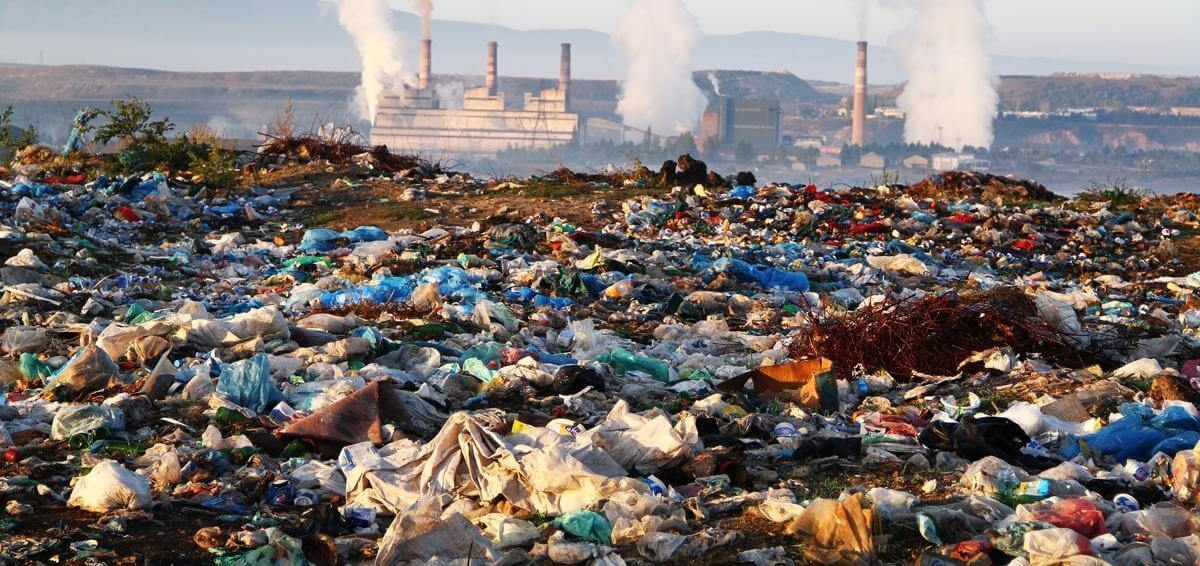
How Do Governments Reduce Pollution?
A river does not argue. It carries the memory of a civilization in silence.
Stand beside the lower stretch of the Cuyahoga River in the late 1960s and you would have smelled varnish, gasoline, sulfur, rot. The water itself could ignite. It did ignite. Flames climbed from the river’s surface like a deranged industrial miracle, and the photographs slipped into the American conscience with the force of prophecy. The country was wealthy enough to manufacture refrigerators, interstate highways, synthetic fibers, and disposable abundance, yet one of its rivers had become combustible.
Governments noticed something fundamental in that moment: pollution is not merely waste. It is a ledger entry disguised as smoke. Someone profits; someone else breathes the invoice.
The modern state, despite all its contradictions and bureaucratic lumbering, became humanity’s most ambitious attempt to answer a difficult question: how do you restrain profitable destruction without extinguishing prosperity itself?
The answers have arrived unevenly. Some elegant. Some coercive. Some accidentally brilliant. Some catastrophic. Yet over the past half-century, governments have reduced pollution in ways that are measurable, astonishing, and frequently overlooked because clean air rarely announces itself with drama. Children who do not develop asthma do not hold parades.
Still, the evidence is everywhere. Rivers once biologically dead now host fish migrations. Urban skies once stained brown now reveal mountain ranges. Lead vanished from gasoline and, with it, millions of cases of neurological harm.
Civilization cleaned portions of itself not through moral awakening alone, but through policy architecture.
Pollution Is an Economic Design Failure
The first misunderstanding governments had to overcome was philosophical.
Pollution is often framed as the unfortunate side effect of progress. Yet pollution is not accidental. It is structured. It emerges when the cost of damage is detached from the price of production.
A coal plant sells electricity cheaply because respiratory illness is not included on the utility bill. A factory releases wastewater because the river is treated as an unpaid employee. Plastic packaging appears inexpensive because oceans do not issue invoices.
Economists call these “externalities,” a bloodless term for lungs, forests, cancers, coral reefs, and lost harvests.
Governments reduce pollution primarily by reversing this distortion. They force the real cost of contamination back into the system that created it.
Sometimes this happens through regulation. Sometimes taxation. Sometimes subsidies. Sometimes criminal penalties. Increasingly, through public investment and technological transition.
None of these tools are perfect. Together, they have altered the trajectory of industrial civilization.
The Four Primary Tools Governments Use
1. Regulation: The Blunt Instrument That Works
Regulation is unfashionable in certain circles because it lacks romance. It does not arrive wearing the sleek vocabulary of innovation. It simply says: you may not dump mercury into the water anymore.
And yet regulations have produced some of the greatest public-health victories in modern history.
The Clean Air Act fundamentally changed American air quality. Sulfur dioxide, lead, carbon monoxide, and particulate pollution declined dramatically over subsequent decades. Catalytic converters became mandatory. Smokestacks required scrubbers. Fuel standards tightened.
Industry predicted economic ruin.
Instead, the economy expanded.
This pattern repeats with eerie consistency. Corporations forecast collapse; engineers quietly adapt; innovation accelerates under pressure.
When governments banned leaded gasoline, the benefits multiplied far beyond cleaner exhaust. Crime rates dropped years later as childhood neurological damage declined. IQ scores improved. Public health expenditures fell. One policy rippled across generations.
Regulation succeeds because it establishes non-negotiable boundaries. Rivers become unsuitable as sewers. The atmosphere becomes less available as a dumping ground.
Markets excel at optimization. They are less reliable at restraint.
2. Pollution Taxes: Making Waste Expensive
There is another approach, subtler and in some ways more elegant.
Instead of banning pollution outright, governments can price it.
Carbon taxes, congestion pricing, landfill fees, and plastic bag levies all operate on the same principle: when contamination becomes financially painful, behavior changes quickly.
Consider the quiet revolution of plastic bag taxes. A five-cent charge altered consumer habits in cities across the world more effectively than years of moral pleading. Human beings are remarkably responsive to tiny economic signals.
Carbon pricing operates similarly, though at vastly larger scale. Governments place a price on greenhouse gas emissions, encouraging industries to shift toward cleaner energy sources because pollution ceases to be free.
The brilliance of pollution taxes lies in their invisibility. Once incentives align correctly, millions of decentralized decisions begin steering toward cleaner outcomes without constant enforcement.
A delivery company redesigns routes. A manufacturer upgrades machinery. A homeowner installs insulation.
The state nudges the architecture; society reorganizes itself.
Comparison Table: How Governments Reduce Pollution
| Policy Tool | How It Works | Strengths | Weaknesses | Example |
|---|---|---|---|---|
| Regulations | Sets legal pollution limits | Fast, enforceable, measurable | Can face industry resistance | Clean Air Act |
| Pollution Taxes | Charges polluters financially | Encourages innovation | Politically unpopular | Carbon taxes in Sweden |
| Subsidies | Funds cleaner alternatives | Accelerates transition | Can waste public money if poorly designed | Solar incentives in Germany |
| Public Investment | Builds infrastructure directly | Long-term transformation | Expensive upfront | High-speed rail in Japan |
| Cap-and-Trade | Limits emissions through permits | Flexible and market-driven | Complex administration | EU Emissions Trading System |
| Enforcement & Litigation | Penalizes violators | Creates accountability | Requires political will | Water pollution lawsuits globally |
3. Subsidizing the Future
Governments do not merely punish pollution. They cultivate alternatives.
Every energy system in history has been subsidized. Oil received tax advantages, public infrastructure, military protection, and geological research support for more than a century. Coal was not born competitive; it was politically engineered into dominance.
Renewable energy followed a similar path.
Governments funded solar research when photovoltaic panels were wildly impractical and prohibitively expensive. Wind power matured under public incentives. Electric vehicle adoption accelerated through tax credits and procurement programs.
Critics often portray subsidies as market distortion. The accusation is peculiar because markets themselves are political constructions—shaped continuously through tax law, infrastructure, property rights, and public investment.
The more interesting question is not whether governments interfere, but toward what end.
China subsidized solar manufacturing aggressively and transformed global panel economics. Europe funded offshore wind development. The United States invested in battery technologies through federal research programs that private investors initially considered too speculative.
Today, renewable energy frequently outcompetes fossil fuels on price alone.
Policy made that possible.
The Lesson I Learned Visiting an Industrial Port
Years ago, I visited an industrial shipping corridor on the Gulf Coast. Refineries towered over neighborhoods where children played beneath flare stacks that burned through the night like artificial suns. Residents spoke casually about nosebleeds, headaches, respiratory illness. The abnormal had become ordinary.
What unsettled me most was not the pollution itself. It was the administrative normalization surrounding it. Permits. Waivers. Compliance reports. Legal thresholds for toxins.
A grandmother pointed toward the refineries and said something I have never forgotten: “They calculate what level of sickness is acceptable.”
That sentence altered the way I understood environmental policy.
Governments are not simply reducing pollution. They are deciding, constantly and often invisibly, how much harm is politically tolerable.
The struggle over pollution is therefore moral before it is technical.
4. Infrastructure: The Hidden Giant
Some of the most effective pollution policies do not look environmental at all.
Subways reduce emissions. Sewage treatment plants restore waterways. Dense urban planning lowers car dependence. Electrical grids determine energy efficiency. Public transit shapes atmospheric chemistry.
Infrastructure is environmental policy poured into concrete.
When governments build reliable trains, cycling networks, and walkable cities, pollution declines not because citizens become saints, but because cleaner behavior becomes easier.
This distinction matters enormously.
Individuals operate within systems. A city designed entirely around automobiles cannot lecture residents into sustainability. Structure determines behavior more reliably than persuasion.
Copenhagen did not become bicycle-friendly through inspirational posters. It redesigned streets. Protected lanes. Altered traffic priorities. Built coherent mobility networks.
Pollution reduction often succeeds when governments stop demanding heroic sacrifice and start redesigning the default settings of daily life.
The Politics of Delay
If the solutions are known, why does pollution persist?
Because pollution is profitable in the short term.
A government attempting to regulate emissions confronts industries with lobbying power, legal teams, advertising budgets, and political influence. Fossil fuel companies alone have spent decades funding doubt, delaying regulation, and reframing scientific consensus as ideological debate.
Delay itself became an industry.
Meanwhile, the benefits of pollution reduction are diffuse and delayed. Cleaner air improves lives incrementally. Fewer premature deaths occur quietly. Prevented disasters lack cinematic visibility.
The politics are asymmetrical.
A refinery closure creates immediate headlines. Reduced asthma rates arrive as statistical footnotes.
And yet, over time, the cumulative gains become staggering.
The removal of lead from gasoline prevented immense neurological damage worldwide. Acid rain controls restored forests and lakes. Ozone-depleting chemicals were phased out under the Montreal Protocol, one of the most successful environmental agreements in history.
Civilization possesses evidence that coordinated governmental action works.
The tragedy is not ignorance. It is hesitation.
The Emerging Frontier: Designing Waste Out of the Economy
The next generation of pollution policy is moving beyond control toward redesign.
Circular economy legislation now pushes manufacturers to create products that can be repaired, reused, and recycled. Governments are beginning to require companies to manage the full lifecycle of packaging waste. Building codes increasingly favor low-carbon materials. Some cities ban internal combustion engines from future urban cores.
The ambition is changing.
Instead of endlessly managing pollution after creation, policymakers are exploring how to prevent waste structurally.
Nature offers the obvious template. In forests, nothing is discarded. One organism’s waste becomes another’s nourishment. Industrial economies, by contrast, extract, manufacture, consume, discard.
Linear systems on a finite planet inevitably collide with physical limits.
Governments are slowly, awkwardly attempting to bend the economy toward ecological logic.
The Real Question Beneath Pollution
Pollution policy is frequently presented as a technical argument about emissions thresholds, tax rates, filtration systems, and industrial standards.
But beneath all of it rests a deeper civilizational question:
What is an economy for?
If its purpose is merely maximizing quarterly output, pollution becomes negotiable collateral damage. If the purpose is sustaining human and ecological flourishing across generations, then poisoned rivers and destabilized climates represent economic failure, not success.
This distinction changes everything.
The atmosphere is not an externality. Neither is a child’s bloodstream. Neither is topsoil, fisheries, or rainfall.
Governments reduce pollution most effectively when they stop treating nature as a subsidiary of the economy and begin recognizing the opposite truth: the economy is a wholly owned subsidiary of the living world.
That realization arrives slowly. Often after fires. Floods. Droughts. Dead rivers. Public outrage.
Civilizations learn reluctantly.
Still, they learn.
And sometimes, astonishingly, they repair what once appeared irreparable.
- Arts
- Business
- Computers
- Spiele
- Health
- Startseite
- Kids and Teens
- Geld
- News
- Personal Development
- Recreation
- Regional
- Reference
- Science
- Shopping
- Society
- Sports
- Бизнес
- Деньги
- Дом
- Досуг
- Здоровье
- Игры
- Искусство
- Источники информации
- Компьютеры
- Личное развитие
- Наука
- Новости и СМИ
- Общество
- Покупки
- Спорт
- Страны и регионы
- World

 English
 Russian
 French
 Spanish
 Portuguese
 Turkish
 Dutch
Dutch
 Italiano
 Arabic
 Romaian
 Portuguese (Brazil)
 Greek
Greek
