
What is a carbon tax?
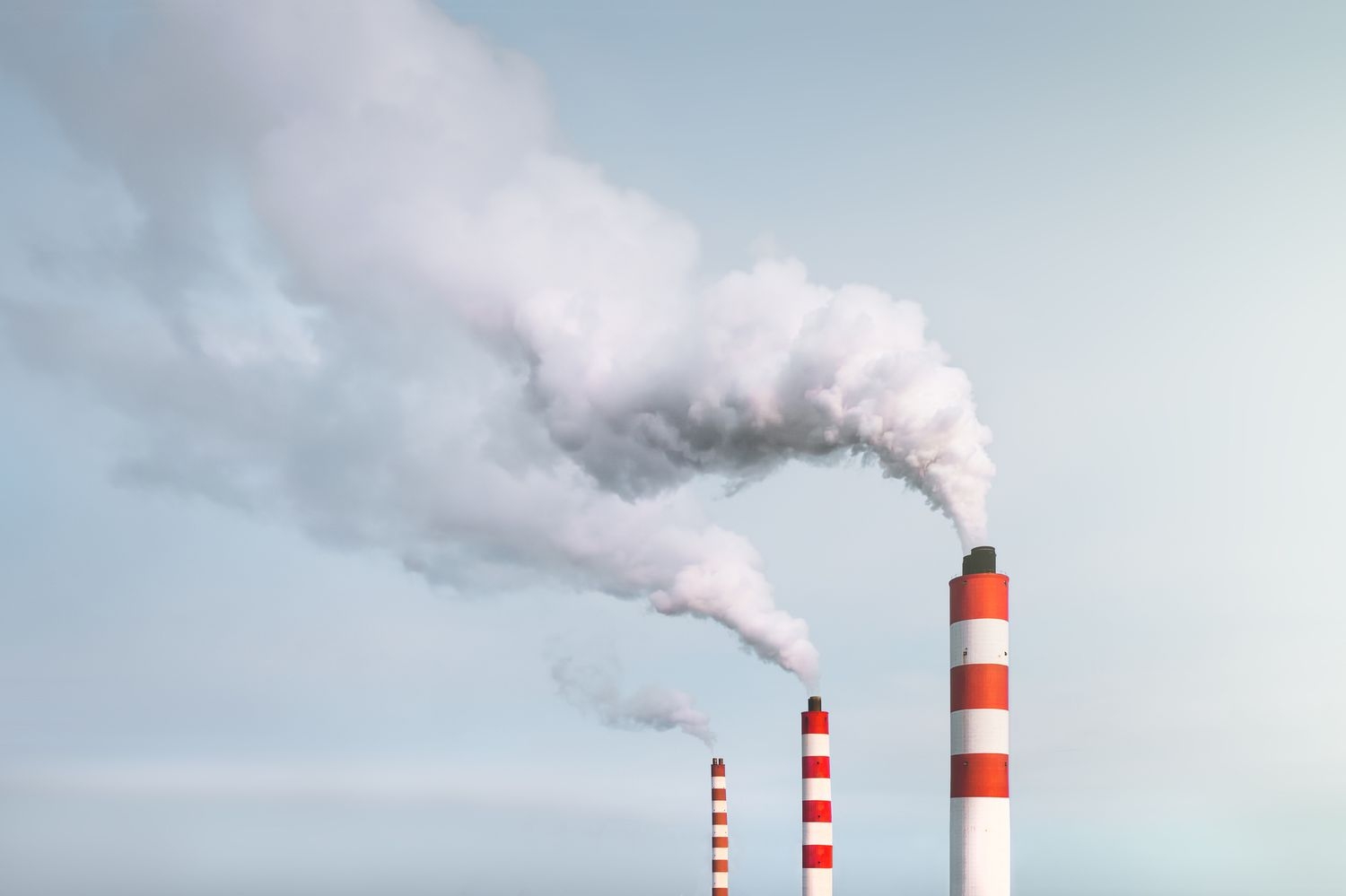
What Is a Carbon Tax?
A refinery in Texas exhales more carbon dioxide before dawn than a forest can absorb in months. A container ship crossing the Pacific burns bunker fuel so dense and sulfurous that, if poured into a stream, it would resemble an industrial crime scene. Yet the invoice for this damage rarely arrives. The atmosphere receives the bill. Future generations inherit the debt. Coastal towns pay the interest in floodwater and insurance cancellations.
A carbon tax begins with an unfashionable proposition: pollution should not be free.
That is the entire idea. Astonishingly simple. Politically radioactive.
And yet beneath the rhetoric, beneath the partisan varnish and the lobbying architecture built to suffocate it, a carbon tax is less a punishment than a correction. Economists call it “pricing an externality,” which sounds sterile enough to belong in a spreadsheet. But the principle is ancient. If a factory dumps waste into a river, society absorbs the cost. If coal smoke destabilizes climate systems, agriculture, fisheries, health infrastructure, migration patterns, and public budgets absorb the cost. The market, left alone, behaves like a compass near a magnet. It points, but not truthfully.
A carbon tax attempts to restore direction.
The Invisible Subsidy Beneath Fossil Fuels
Oil, gas, and coal are often described as inexpensive energy sources. They are not inexpensive. They are partially unpaid for.
This distinction matters.
The visible price of gasoline reflects drilling, transport, refining, marketing, and profit. What it usually does not include are asthma treatments near highways, wildfire suppression, crop losses from drought, military expenditures protecting fuel corridors, or the slow violence of sea-level rise. Those costs drift outward into society like soot.
A carbon tax places a fee on greenhouse gas emissions, typically measured per metric ton of carbon dioxide emitted. The tax is usually applied upstream—where fossil fuels enter the economy through mines, wells, pipelines, or import terminals—because it is administratively cleaner than chasing millions of downstream emitters.
Burn more carbon, pay more tax.
Burn less, pay less.
That mechanism sounds dry until you watch how quickly markets react to price signals. Utilities begin shifting toward renewables. Manufacturers redesign processes. Investors recalculate risk. Engineers suddenly become prophets because efficiency becomes profitable.
Not through moral awakening. Through arithmetic.
How a Carbon Tax Actually Works
At its core, the system is elegantly blunt.
Suppose a government sets a carbon tax at $50 per metric ton of CO₂. A coal-fired power plant emitting one million tons annually would owe $50 million in carbon taxes. That expense raises the cost of coal-generated electricity relative to solar, wind, hydroelectricity, nuclear, or storage technologies.
The tax ripples outward.
Airlines reassess fuel efficiency. Cement producers experiment with low-carbon chemistry. Logistics companies shorten supply chains. Consumers see higher prices attached to carbon-intensive goods and gradually alter behavior—not because they attended an environmental seminar, but because incentives changed.
Markets are fluent in one language: cost.
Carbon Tax vs. Cap-and-Trade
The public often confuses carbon taxes with cap-and-trade systems. Both aim to reduce emissions. Their philosophies differ.
| Feature | Carbon Tax | Cap-and-Trade |
|---|---|---|
| Primary Mechanism | Fixed price on emissions | Fixed emissions limit |
| Predictability | Predictable cost | Predictable emissions quantity |
| Market Complexity | Relatively simple | More complex trading system |
| Price Volatility | Stable | Can fluctuate sharply |
| Administrative Burden | Lower | Higher |
| Revenue Generation | Direct government revenue | Depends on permit auctions |
| Business Planning | Easier long-term forecasting | Less certainty on future permit prices |
| Political Vulnerability | Seen as “tax increase” | Seen as “market mechanism” |
Both systems can work. Both have weaknesses. Neither is magic.
But carbon taxes possess one virtue often underestimated: transparency. A society can see the signal directly. Pollution costs money.
No labyrinthine derivatives market required.
Why Economists Across Ideologies Support It
One of the stranger features of carbon taxation is the coalition it intermittently attracts. Environmental advocates support it because emissions decline. Conservative economists support it because it uses market mechanisms rather than command-and-control regulation. Libertarians sometimes support it if paired with reductions in other taxes.
When people who disagree about nearly everything nod at the same policy, it is worth paying attention.
The late economist Gary Becker favored carbon pricing. So did many former Republican cabinet officials. So do climate scientists who spend their lives translating atmospheric chemistry into warnings humanity barely hears.
The attraction lies in efficiency.
Rather than prescribing exactly how industries must decarbonize, a carbon tax lets innovation emerge competitively. The government sets the price signal; the market improvises solutions.
Some companies electrify fleets. Others redesign materials. Others fail.
That last part is rarely mentioned in press conferences.
The Psychological Resistance to Carbon Taxes
People do not experience taxes mathematically. They experience them emotionally.
A rise in gasoline prices feels immediate and personal. The avoided climate catastrophe feels abstract and deferred. Humans evolved to react to nearby threats—a predator in grass, smoke on the horizon—not statistical probabilities unfolding over decades.
This asymmetry shapes politics.
I learned this years ago during a community energy forum in Northern California. We were discussing municipal climate policy, and an older contractor stood up in the back row. He was not hostile, merely exhausted. Fuel costs had risen. Material prices were unstable. He looked at the room and said, “Every solution seems to arrive as another bill.”
The sentence stayed with me because he was partly right.
Climate policy designed without social equity becomes brittle. People revolt when they feel cornered economically, even if the science is impeccable. France’s Yellow Vest protests revealed this with painful clarity. A fuel tax perceived as unfair can detonate politically.
The lesson is straightforward: a carbon tax succeeds only when citizens believe the burden is shared fairly.
Revenue: The Most Important Part Nobody Talks About
A carbon tax generates substantial government revenue. What happens to that money determines whether the policy becomes durable or despised.
There are several common approaches:
1. Carbon Dividends
Revenue is returned directly to citizens as equal payments.
Under this model, households receive checks or tax rebates funded by carbon tax revenue. Lower-income families often come out ahead because they consume less carbon-intensive goods on average than wealthier households.
This transforms the policy psychologically. The public no longer sees only punishment; they see participation.
2. Infrastructure Investment
Governments may invest revenue into public transit, grid modernization, renewable energy, or climate adaptation.
Done well, this accelerates structural transition.
Done poorly, it becomes a patronage machine.
3. Tax Swaps
Some economists advocate reducing payroll or income taxes while implementing a carbon tax. The idea is elegant: tax pollution instead of labor.
Theoretically attractive. Politically difficult.
Do Carbon Taxes Actually Reduce Emissions?
Evidence suggests yes—modestly to significantly, depending on design.
Countries and regions with meaningful carbon pricing generally experience emissions reductions without catastrophic economic collapse, despite predictions that civilization would apparently end if coal became slightly less profitable.
Selected Carbon Pricing Outcomes
| Region | Policy Outcome |
|---|---|
| British Columbia | Fuel consumption declined while economic growth remained competitive |
| Sweden | High carbon taxes coincided with substantial emissions reductions over decades |
| European Union | Carbon pricing accelerated coal phaseouts in several member states |
| Canada | National pricing framework expanded low-carbon investment signals |
The effectiveness depends on the tax level. Symbolic taxes produce symbolic outcomes. A fee too small to influence investment behavior becomes political theater disguised as climate policy.
And yet there is another truth here, less quantifiable but more profound: carbon taxes alter expectations.
When industries believe carbon pollution will become progressively more expensive over time, capital flows change immediately. Investors stop imagining fossil fuels as eternal infrastructure and start viewing them as transitional assets.
Markets anticipate before they obey.
The Criticisms Are Not Trivial
A serious discussion requires honesty about drawbacks.
Carbon taxes can disproportionately affect rural communities dependent on driving long distances. They can increase heating costs. Energy-intensive industries may relocate to countries with weaker regulations, a phenomenon called “carbon leakage.”
There is also a moral critique.
Some activists argue carbon taxes commodify the atmosphere itself, turning ecological destruction into a transactional privilege. If corporations can afford the tax, they can continue polluting.
This criticism contains moral force.
A carbon tax alone cannot solve climate change because climate change is not merely a pricing error. It is also a cultural condition—a civilization organized around extraction, speed, disposability, and perpetual growth. Pricing carbon addresses incentives. It does not automatically address appetite.
Still, dismissing carbon taxation because it is incomplete resembles refusing antibiotics because they do not also improve nutrition and housing.
Complex crises require layered responses.
Why Fossil Fuel Companies Fear Predictable Carbon Pricing
Publicly, many oil companies claim openness to carbon taxes. Quietly, lobbying behavior often tells a different story.
Why?
Because long-term price certainty reshapes investment horizons. Once carbon carries a durable cost, renewable energy becomes more competitive without subsidies. Electrification accelerates. Efficiency improvements compound. Fossil fuel reserves previously considered profitable begin looking stranded.
And stranded assets terrify markets.
There is a reason financial analysts increasingly discuss “transition risk.” The concern is not merely environmental regulation. It is that energy systems can pivot faster than incumbents expect once economics align with physics.
History offers precedent. Whale oil vanished quickly after kerosene emerged. Film photography collapsed with digital imaging. Dominant systems often appear permanent until replacement suddenly feels obvious.
Energy transitions do not move linearly. They move geologically for decades, then all at once.
The Atmosphere Does Not Negotiate
A carbon tax is frequently debated as though climate systems care about ideology.
They do not.
The atmosphere responds to concentration levels, radiative forcing, ocean heat absorption, methane release, albedo shifts, and feedback loops. Physics remains magnificently indifferent to campaign slogans.
That indifference is unsettling because it removes the possibility of rhetorical escape. We cannot filibuster a glacier. We cannot persuade coral reefs to ignore thermal stress. We cannot negotiate separately with drought.
The carbon cycle keeps books with exquisite precision.
Which leads to the deeper question beneath carbon taxation: What is an economy for?
If markets efficiently generate wealth while destabilizing the ecological systems that make wealth possible, the accounting framework itself becomes suspect. A carbon tax is ultimately an attempt—partial, imperfect, overdue—to reconcile economics with biology.
To admit that the atmosphere is not an infinite sewer attached to industrial civilization.
And perhaps that is why the debate around carbon taxes becomes so emotionally charged. It is not merely about fuel prices or regulation. It is about whether modern economies can mature beyond extraction without collapsing into denial.
Because every civilization eventually encounters a moment when its invoices arrive.
Carbon taxes are one way of opening the envelope before the collectors come.
- Arts
- Business
- Computers
- Jocuri
- Health
- Home
- Kids and Teens
- Money
- News
- Personal Development
- Recreation
- Regional
- Reference
- Science
- Shopping
- Society
- Sports
- Бизнес
- Деньги
- Дом
- Досуг
- Здоровье
- Игры
- Искусство
- Источники информации
- Компьютеры
- Личное развитие
- Наука
- Новости и СМИ
- Общество
- Покупки
- Спорт
- Страны и регионы
- World

 English
 Russian
 French
 Spanish
 Portuguese
 Deutsch
 Turkish
 Dutch
Dutch
 Italiano
 Arabic
 Portuguese (Brazil)
 Greek
Greek