
What is skill building?
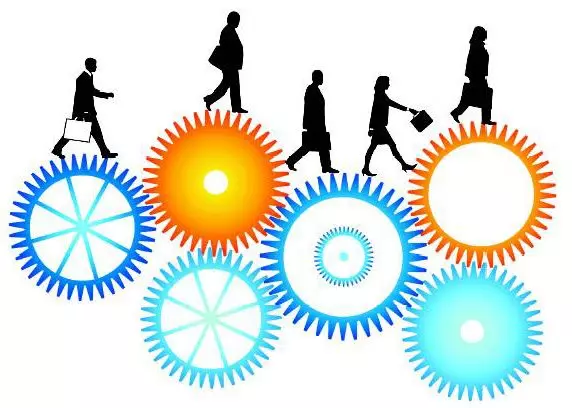
What Is Skill Building?
Skill building is the process of turning repeated effort into reliable ability.
At first glance, that sounds obvious. Practice something long enough, and you improve.
But real skill development is more specific than repetition alone.
Many people repeat behaviors for years without becoming significantly better because skill building is not just about doing something repeatedly. It is about gradually increasing precision, adaptability, and automaticity through structured feedback and focused repetition.
A skill is not knowledge stored in the mind.
It is capability expressed through action.
And capability changes only when behavior changes repeatedly under the right conditions.
The Difference Between Knowledge and Skill
People often confuse learning with skill acquisition.
Knowing something intellectually is not the same as being able to execute it consistently.
For example:
-
reading about fitness is not physical conditioning
-
understanding grammar is not fluency
-
studying productivity is not execution
-
watching tutorials is not competence
Knowledge explains.
Skill performs.
\text{Knowledge} \neq \text{Execution Ability}
This distinction matters because many people consume information while assuming they are building skill.
But skill emerges through application, correction, and repetition—not passive exposure.
Skill Building Is Neurological Adaptation
Every repeated action slightly changes how the brain and body coordinate behavior.
With repetition:
-
reactions become faster
-
effort decreases
-
accuracy improves
-
decision-making becomes more efficient
Eventually, tasks that once required conscious concentration begin operating automatically.
\text{Repeated Practice} = \text{Increased Neural Efficiency}
This is why beginners often feel mentally exhausted during learning while experienced individuals perform similar tasks with minimal cognitive strain.
The system has adapted.
Skills Are Built Through Feedback Loops
Practice alone is not enough.
If repetition contains no correction, errors become reinforced.
Skill development requires feedback:
-
what worked
-
what failed
-
what needs adjustment
-
what improved
\text{Practice} + \text{Feedback} = \text{Skill Improvement}
Without feedback, repetition can stabilize mediocrity instead of producing growth.
This is why deliberate practice outperforms mindless repetition.
Skill Building Requires Discomfort
Real skill development feels uncomfortable because it operates near the edge of current ability.
If something feels completely effortless, improvement slows.
Growth usually happens during:
-
mistakes
-
corrections
-
slower execution
-
repeated failure attempts
\text{Moderate Difficulty} = \text{Optimal Skill Adaptation}
Too easy produces stagnation.
Too difficult produces overwhelm.
Skill building works best in the range where challenge is difficult but still manageable.
Repetition Creates Automaticity
One major purpose of skill building is reducing cognitive load.
At first:
-
every step requires conscious attention
-
execution feels slow
-
errors happen frequently
With repetition:
-
sequences compress
-
reactions accelerate
-
execution becomes smoother
Eventually, the behavior shifts from active thinking to partial automaticity.
This matters because automaticity frees mental resources for higher-level performance.
Consistency Matters More Than Intensity
People often assume skills improve through occasional extreme effort.
But stable progress usually comes from repeated exposure over time.
\text{Consistent Practice} > \text{Occasional Intense Effort}
Daily repetition:
-
strengthens retention
-
improves coordination
-
stabilizes learning pathways
Long gaps weaken reinforcement.
This is why small consistent sessions often outperform rare marathon efforts.
Skill Building Is Context-Specific
Skills are not always universally transferable.
A person may:
-
understand theory but struggle in real situations
-
perform well in practice but fail under pressure
-
execute in one environment but not another
This happens because skills adapt to the conditions they are trained under.
\text{Skill Quality Depends on Training Context}
Real mastery requires varied application:
-
different conditions
-
different constraints
-
different levels of difficulty
Adaptability is part of competence.
Motivation Starts the Process — Systems Sustain It
Early skill building often depends on enthusiasm.
But long-term development depends on systems:
-
scheduled practice
-
feedback mechanisms
-
repetition structure
-
manageable progression
Relying entirely on motivation creates inconsistency.
And inconsistent practice slows adaptation dramatically.
Plateaus Are Part of Skill Development
One reason people quit developing skills is misunderstanding plateaus.
Improvement rarely feels linear.
Progress often looks like:
-
rapid early gains
-
long stagnant periods
-
sudden jumps forward
\text{Repeated Practice During Plateau} = \text{Delayed Performance Gains}
Plateaus do not necessarily mean failure.
They often mean the system is consolidating adaptation before visible improvement appears.
Skill Building Changes Identity
Over time, repeated practice affects self-perception.
At first:
-
“I’m trying to learn this”
Eventually:
-
“I can do this competently”
Identity evolves through repeated evidence.
Each successful repetition reinforces capability.
And that identity shift often increases confidence, consistency, and willingness to continue improving.
A Personal Observation on Building Skills
At one point, I believed skill came mostly from talent.
Some people simply seemed naturally good at things:
-
writing
-
communication
-
problem solving
-
focus
But over time, a different pattern became obvious.
The people improving consistently were usually not relying on bursts of talent.
They were repeating specific behaviors under structured conditions:
-
frequent practice
-
constant correction
-
manageable challenge
-
long-term consistency
What looked like “natural ability” was often accumulated adaptation hidden beneath years of repetition.
That realization changed how I approached learning entirely.
The Structural Formula of Skill Building
At a systems level, skill development depends on:
-
repeated practice
-
feedback loops
-
manageable difficulty
-
consistency over time
-
environmental support
-
gradual adaptation
-
cognitive reinforcement
\text{Practice} + \text{Feedback} + \text{Consistency} = \text{Skill Development}
When these conditions remain stable, performance improves predictably over time.
Conclusion: Skill Building Is Structured Repetition With Feedback
Skill building is not random improvement.
It is a process of neurological and behavioral adaptation created through repeated execution under corrective conditions.
The most important thing to understand is this:
Skills are not built by:
-
consuming endless information
-
waiting for talent
-
relying on motivation alone
They are built through:
-
repetition
-
feedback
-
manageable challenge
-
consistency over time
Because every repeated action teaches the brain and body what to automate, strengthen, and refine.
And eventually, what once felt difficult, slow, and effortful becomes smoother, faster, and more natural—not because the task changed, but because you did.
- Arts
- Business
- Computers
- الألعاب
- Health
- الرئيسية
- Kids and Teens
- مال
- News
- Personal Development
- Recreation
- Regional
- Reference
- Science
- Shopping
- Society
- Sports
- Бизнес
- Деньги
- Дом
- Досуг
- Здоровье
- Игры
- Искусство
- Источники информации
- Компьютеры
- Личное развитие
- Наука
- Новости и СМИ
- Общество
- Покупки
- Спорт
- Страны и регионы
- World

 English
 Russian
 French
 Spanish
 Portuguese
 Deutsch
 Turkish
 Dutch
Dutch
 Italiano
 Romaian
 Portuguese (Brazil)
 Greek
Greek
