
What Is B2C? It’s Not Just Selling to Consumers. It’s Selling to Human Impulse, Identity, and Emotion at Scale
A woman once spent fifteen minutes comparing two candles in a boutique store while holding her phone in one hand and an iced coffee in the other.
The candles were nearly identical:
same price range,
similar scent profiles,
same minimalist packaging trend that now seems permanently attached to modern retail aesthetics.
And yet she treated the decision like it mattered deeply.
Not because the product itself was life-changing.
Because consumer purchases are rarely about products alone.
They’re about mood.
Identity.
Convenience.
Reward.
Self-perception.
Social signaling.
Tiny emotional negotiations people conduct quietly throughout the day.
That’s the part many businesses misunderstand when they discuss B2C — business-to-consumer commerce — as though it simply means “selling products to individuals.”
Technically accurate.
Psychologically incomplete.
Because B2C operates inside emotional immediacy in ways fundamentally different from most business purchasing environments.
Consumers buy for practical reasons sometimes.
But they also buy because:
- they are stressed
- bored
- aspirational
- impulsive
- lonely
- excited
- insecure
- curious
- seeking comfort
- seeking status
And companies succeeding in B2C markets usually understand something essential:
consumer behavior is rarely fully rational, even when consumers believe it is.
What Does B2C Actually Mean?
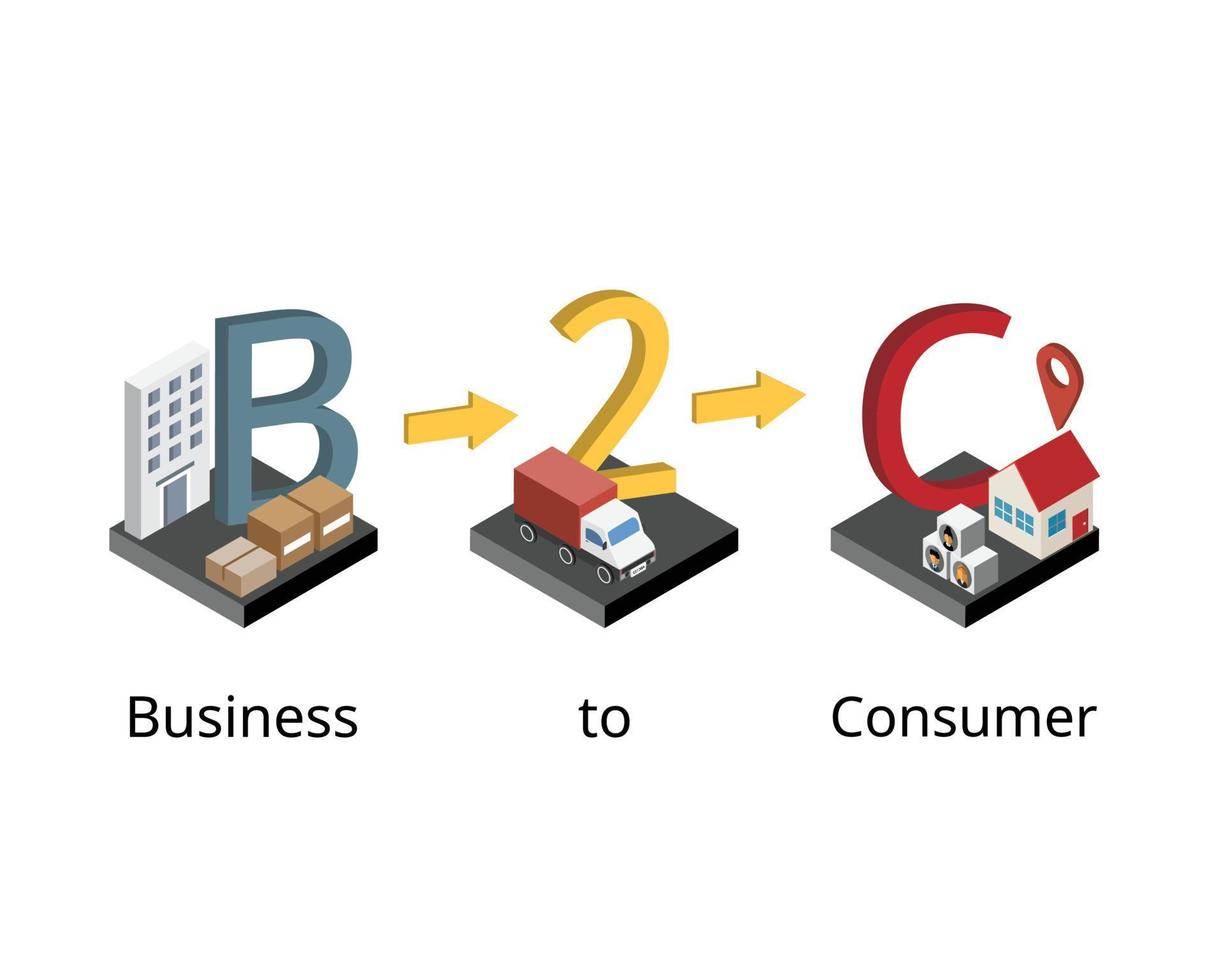
B2C stands for business-to-consumer.
It describes companies selling products or services directly to individual consumers rather than to organizations or businesses.
Examples include:
- clothing retailers
- streaming services
- food delivery apps
- cosmetics brands
- fitness subscriptions
- consumer electronics companies
The transaction typically occurs between a company and an individual buyer making decisions primarily for personal use.
Unlike B2B environments where purchasing often involves:
- procurement reviews
- multiple stakeholders
- long approval cycles
B2C transactions usually move faster and more emotionally.
Sometimes dramatically faster.
A customer can:
- discover a product
- feel emotionally interested
- purchase immediately
within minutes.
That speed changes everything about marketing, branding, customer psychology, and retention.
B2C Companies Sell Emotion Before Logic
This makes some executives uncomfortable because businesses prefer imagining consumers behave rationally.
Reality looks messier.
A skincare product rarely succeeds solely because of chemical formulation.
A sneaker brand rarely wins purely on material engineering.
A coffee shop rarely survives only because caffeine exists.
Consumers buy stories around products:
- identity stories
- lifestyle stories
- aspiration stories
- emotional comfort stories
I realized this years ago while consulting for a retail brand obsessed with technical product superiority.
Leadership focused relentlessly on:
- specifications
- manufacturing quality
- performance comparisons
Customers barely discussed those things in interviews.
What customers loved was how the brand made them feel:
organized,
confident,
stylish without trying too hard.
That lesson permanently changed how I viewed consumer behavior.
People often justify purchases logically afterward.
But emotionally, many decisions happen much earlier.
Why B2C Feels Faster Than B2B
Consumer purchasing generally involves lower stakes.
If someone buys:
- the wrong headphones
- disappointing shoes
- mediocre takeout
the consequences remain manageable.
Enterprise buyers face:
- financial accountability
- organizational disruption
- reputational exposure
Consumers usually face personal inconvenience at worst.
Which means B2C companies optimize heavily around:
- speed
- emotional appeal
- convenience
- accessibility
The purchasing journey compresses dramatically compared to enterprise sales environments.
That compression creates opportunity.
Also volatility.
Because consumers move quickly toward brands emotionally — and away from them just as fast.
A Comparison: B2C vs. B2B
| B2C | B2B |
|---|---|
| Individual buyers | Organizational buyers |
| Faster purchasing decisions | Longer sales cycles |
| Emotion-driven behavior | Risk-driven evaluation |
| Lower transaction complexity | Multi-stakeholder approval |
| High-volume transactions | Higher-value contracts |
| Brand perception critical | Operational reliability critical |
| Immediate gratification influences sales | ROI justification influences sales |
| Simpler onboarding | Complex implementation |
| Shorter relationship cycles | Longer-term partnerships |
| Convenience heavily prioritized | Integration heavily prioritized |
Both models require trust.
But the psychology behind that trust differs substantially.
Convenience Is One of the Most Powerful Forces in B2C
Consumers constantly balance:
- attention
- energy
- time
- emotional bandwidth
Which means convenience becomes commercially powerful.
The brands dominating many consumer categories are not always objectively superior.
They are often:
- easier to access
- easier to understand
- easier to purchase from
- easier to repeat-buy from
This matters more than many businesses admit.
Consumers rarely wake up hoping to spend cognitive energy navigating complicated experiences.
Friction kills consumer momentum quickly.
Branding Matters More in B2C Because Identity Matters More
B2B buyers evaluate operational risk heavily.
B2C buyers often evaluate identity compatibility subconsciously.
Consumers ask:
- “Does this feel like me?”
- “Would people like me buy this?”
- “How does this brand fit into my lifestyle?”
This explains why branding influences consumer behavior so strongly.
Brands become emotional shortcuts.
A logo,
a color palette,
a tone of voice —
these elements signal belonging psychologically.
That’s why two nearly identical products can perform completely differently commercially depending on perceived identity alignment.
My Most Useful Lesson About B2C Came From Watching People Ignore Logic Entirely
Years ago, I worked with a consumer subscription company convinced lower pricing would accelerate growth dramatically.
The assumption seemed rational.
Reduce friction.
Increase adoption.
Instead, conversions weakened unexpectedly after pricing adjustments.
Customer interviews later revealed something surprising:
lower pricing reduced perceived quality emotionally.
Consumers associated the original pricing with trustworthiness and premium value.
The company accidentally damaged brand perception while trying to improve affordability.
That experience taught me an uncomfortable truth:
consumer behavior often follows emotional interpretation more than economic logic alone.
People buy what feels credible within their personal identity framework.
Not merely what appears mathematically optimal.
Attention Is the Most Competitive Currency in B2C
Consumer markets operate inside relentless competition for attention.
Every day consumers encounter:
- advertisements
- influencer content
- streaming platforms
- product recommendations
- social media campaigns
- email promotions
The volume becomes psychologically exhausting.
Which means modern B2C companies increasingly compete not only against direct competitors, but against distraction itself.
Brands capable of:
- creating emotional resonance
- simplifying decisions
- reducing cognitive effort
often outperform technically stronger competitors struggling to hold attention consistently.
Why Retention Is Harder Than Many Consumer Brands Expect
Acquiring consumer customers can happen quickly.
Keeping them is harder.
Because switching costs remain relatively low in many B2C markets.
Consumers can abandon:
- apps
- clothing brands
- subscriptions
- food services
with minimal friction.
This creates constant pressure around:
- customer experience
- emotional relevance
- convenience
- pricing perception
Strong consumer brands continuously reinforce familiarity and habit.
Not just awareness.
That distinction matters enormously.
Social Proof Shapes Consumer Decisions Constantly
Consumers rely heavily on external validation:
- reviews
- ratings
- influencer recommendations
- friend referrals
- viral trends
Why?
Because modern consumers face overwhelming choice abundance.
Social proof simplifies decision-making psychologically.
A stranger’s review can influence purchasing behavior more than expensive advertising campaigns because consumers trust peer experiences more than corporate messaging instinctively.
This becomes especially powerful in categories involving:
- beauty
- fitness
- fashion
- technology
- hospitality
Where emotional risk and identity signaling overlap heavily.
Why Emotional Timing Matters in B2C
B2C purchases often depend on emotional timing as much as product quality.
A customer may buy:
- fitness equipment after feeling motivated
- luxury products after receiving good news
- comfort purchases during stressful periods
This makes consumer demand highly contextual.
Strong B2C companies understand:
people do not buy products in emotional isolation.
External circumstances shape purchasing readiness constantly.
Which explains why:
- seasonality matters
- trends matter
- cultural moments matter
- economic mood matters
Consumer psychology fluctuates rapidly.
AI Will Change B2C — But Human Emotion Still Drives Purchases
Artificial intelligence now influences:
- recommendation engines
- personalized advertising
- customer support
- predictive shopping behavior
This will accelerate consumer targeting dramatically.
But despite technological sophistication, emotional decision-making still shapes purchases fundamentally.
Consumers still seek:
- reassurance
- excitement
- belonging
- convenience
- status
- emotional reward
Technology may optimize targeting precision.
It does not eliminate human psychology underneath the transaction itself.
And businesses forgetting that often create highly efficient marketing systems with surprisingly weak emotional resonance.
Conclusion: B2C Is Really About Understanding Human Behavior Under Everyday Conditions
Many people define B2C too narrowly.
They describe it simply as companies selling products to consumers.
But successful B2C businesses understand something deeper:
consumer purchasing reflects emotional life constantly.
People buy products while:
- distracted
- stressed
- optimistic
- insecure
- aspirational
- overwhelmed
Which means consumer brands compete not only on functionality, but on:
- perception
- identity
- convenience
- familiarity
- emotional relevance
The strongest B2C companies reduce friction while increasing emotional alignment simultaneously.
That balance matters enormously.
Because consumers rarely purchase based purely on objective evaluation.
They purchase based on what feels:
- trustworthy
- intuitive
- emotionally rewarding
- socially compatible
- personally meaningful
Even when the purchase itself appears small externally.
That’s why B2C remains psychologically fascinating.
A simple consumer transaction can contain:
- identity signaling
- emotional regulation
- social aspiration
- convenience optimization
- personal storytelling
all happening beneath the surface at once.
And businesses understanding those layers tend to build stronger consumer loyalty than companies focused only on products themselves.
Because ultimately, B2C is not merely commerce.
It is the continuous negotiation between human emotion and consumer choice happening millions of times every day.
- Arts
- Business
- Computers
- Spellen
- Health
- Home
- Kids and Teens
- Money
- News
- Personal Development
- Recreation
- Regional
- Reference
- Science
- Shopping
- Society
- Sports
- Бизнес
- Деньги
- Дом
- Досуг
- Здоровье
- Игры
- Искусство
- Источники информации
- Компьютеры
- Личное развитие
- Наука
- Новости и СМИ
- Общество
- Покупки
- Спорт
- Страны и регионы
- World

 English
 Russian
 French
 Spanish
 Portuguese
 Deutsch
 Turkish
 Italiano
 Arabic
 Romaian
 Portuguese (Brazil)
 Greek
Greek