
Is environmental protection expensive?
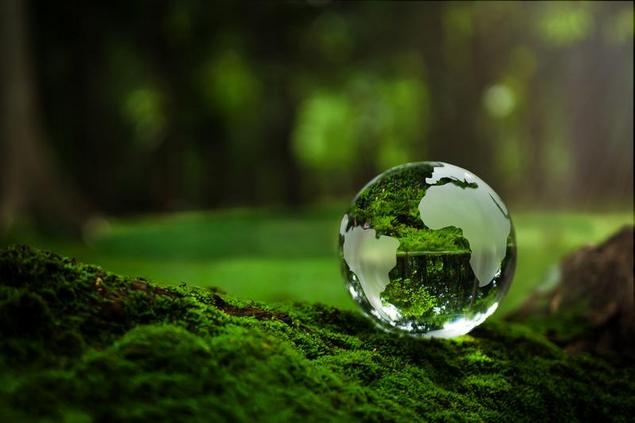
Is Environmental Protection Expensive?
The question arrives dressed as economics, but it is almost always a question about imagination.
A river catches fire once and people call it tragedy. A river catches fire twice and investors call it uncertainty. A river catches fire three times and economists quietly rename it “externalized cost.” Language has a way of laundering smoke.
For decades, environmental protection has been framed as a burden carried reluctantly by modern society, like a tax on ambition. Politicians speak of regulations as though they were ankle weights strapped onto the legs of industry. Commentators warn that clean air standards will “hurt competitiveness,” that wetland protections will “slow growth,” that decarbonization will “cost trillions.” The implication hangs in the air: nature is expensive. Extraction is affordable.
Yet the atmosphere keeps receipts.
The deeper question is not whether environmental protection costs money. Of course it does. So does plumbing. So does public health. So does civilization itself. The more revealing inquiry is this: compared to what? Compared to poisoned aquifers? Compared to respiratory illness in children? Compared to crop failures, disappearing coastlines, fisheries collapsing under warming seas, and cities spending billions to survive floods that did not exist fifty years ago?
A society that measures the price of solar panels but not the value of a stable monsoon has developed a peculiar form of blindness.
The Strange Accounting of Destruction
Industrial economies have mastered a curious arithmetic. We count the sale of chainsaws as economic growth but rarely subtract the disappearance of forests. We measure oil extraction in quarterly earnings while the asthma inhaler, the flooded subway tunnel, and the vanished coral reef become somebody else’s ledger.
The economist Herman Daly once remarked that the economy is a wholly owned subsidiary of the environment. Modern finance often behaves as though the reverse were true.
Environmental protection appears expensive largely because destruction has been subsidized for generations.
Coal plants did not pay for emphysema. Chemical manufacturers rarely paid for endocrine disruption discovered decades later. Plastic producers did not include ocean cleanup in the sticker price of disposable packaging. The public absorbed the damages through taxes, insurance premiums, illness, migration, and grief.
When governments finally require industries to stop dumping waste into rivers or carbon into the sky, those hidden costs become visible. The bill was always there. Environmental regulation merely addresses the envelope correctly.
The Cost Myth That Refuses to Die
In the early 1970s, opponents of the Clean Air Act warned of economic catastrophe. Manufacturers predicted shuttered factories, mass unemployment, and industrial decline. Similar arguments surfaced against catalytic converters, leaded gasoline bans, sulfur dioxide limits, and ozone protections.
Most never materialized.
American GDP expanded dramatically after major environmental regulations were enacted. Air quality improved. Lead poisoning declined. Acid rain diminished. Innovation accelerated because industry, when forced to solve problems, frequently discovers it can.
The same script repeats today with renewable energy.
A decade ago, solar and wind power were often dismissed as expensive moral accessories for affluent nations. Then engineers, manufacturers, and scale intervened. Solar module prices collapsed by more than 80 percent over roughly fifteen years. Wind turbines became taller, smarter, and astonishingly efficient. Battery costs fell with a velocity few analysts predicted.
The expensive alternative became the cheaper one.
Not because markets magically corrected themselves, but because policy nudged technology toward maturity.
What Actually Costs More?
The debate changes entirely when costs are compared honestly.
| Activity | Immediate Financial Cost | Long-Term Social & Ecological Cost | Who Usually Pays? |
|---|---|---|---|
| Burning fossil fuels | Historically cheap due to subsidies and unpriced pollution | Climate instability, health impacts, crop losses, infrastructure damage | Taxpayers, future generations, vulnerable communities |
| Protecting wetlands | Land-use restrictions and restoration funding | Reduced flood damage, cleaner water, biodiversity resilience | Public benefits shared broadly |
| Transitioning to renewable energy | High upfront infrastructure investment | Lower operating costs, reduced emissions, energy independence | Initially governments and utilities; later consumers benefit |
| Industrial pollution controls | Compliance and equipment expenses | Lower healthcare costs, improved worker productivity | Businesses initially; society benefits long-term |
| Deforestation for rapid development | Immediate profit from timber and land conversion | Soil erosion, water disruption, carbon release | Rural communities and future economies |
Tables like this flatten the emotional terrain, but they reveal something essential: environmental protection often shifts costs from the future into the present. Politicians dislike this because election cycles are short and ecological cycles are long.
The atmosphere, however, does not negotiate quarterly.
A Lesson I Learned Beside a Salmon Stream
Years ago, I visited a watershed restoration project in the Pacific Northwest. The creek had once supported dense salmon runs before logging operations stripped the surrounding hillsides bare. Sediment choked the spawning grounds. Water temperatures rose. Fish disappeared.
Local officials initially resisted restoration proposals because they seemed expensive. Replanting stream buffers, redesigning culverts, stabilizing banks, monitoring biodiversity—it all looked financially impractical compared to doing nothing.
But “doing nothing” turned out to be extraordinarily active.
Flood damage increased downstream. Fisheries collapsed. Tourism declined. Indigenous communities lost cultural continuity tied to salmon migration. Municipal water treatment costs climbed. Insurance rates followed.
I remember standing beside a newly restored section of the creek several years later. Young cottonwoods bent in the wind. Gravel beds had returned. Salmon moved upstream again, impossibly muscular against the current.
A biologist there said something I have never forgotten: “Restoration is expensive because collapse is expensive.”
That sentence rearranged the architecture of the debate for me.
Environmental protection is not a luxury layered atop prosperity. It is often the maintenance cost of remaining prosperous.
Why Prevention Always Looks Overpriced
Human psychology has a weakness for visible expenses and invisible savings.
If a city spends $2 billion reinforcing seawalls and modernizing stormwater systems, critics point to the immediate expenditure. If the city avoids $15 billion in future flood damage, the absence of catastrophe feels abstract, hypothetical, almost fictional.
Prevention lacks spectacle.
No headline announces: “Millions Did Not Become Sick Today.”
This dynamic infects climate policy especially. Investments in resilience, electrification, ecosystem preservation, and emissions reduction are scrutinized intensely because their benefits unfold gradually across decades. Meanwhile, the costs of environmental neglect arrive as fragmented disasters—wildfires here, crop losses there, heat mortality elsewhere—making the cumulative burden harder to perceive politically.
Nature invoices society in installments.
The Poor Often Pay the Highest Price
One of the more disturbing myths surrounding environmental protection is that it primarily benefits affluent people who can afford ethical concerns.
In reality, environmental degradation punishes poverty with remarkable precision.
Low-income communities are more likely to live near highways, refineries, landfills, and polluted waterways. They experience higher rates of asthma, contaminated drinking water, heat exposure, and climate vulnerability. Wealthier populations can often purchase distance from ecological decline through air filtration systems, insurance, relocation, and private infrastructure.
The poor breathe the discount economy directly.
When environmental protections are weakened, costs do not disappear. They migrate downward.
This is why the language of “jobs versus the environment” has always felt incomplete to me. There is no durable employment on a dead coastline. No thriving agricultural sector in exhausted soil. No stable housing market in regions becoming physically uninsurable due to climate risk.
Economies are ecological expressions whether economists acknowledge it or not.
The False Divide Between Growth and Protection
Countries frequently frame environmental regulation as a brake on growth, but some of the most economically dynamic regions in the world are also aggressively investing in clean technology, circular manufacturing, and ecological resilience.
Consider how nations now compete over battery production, green hydrogen, semiconductor efficiency, electric vehicles, and renewable infrastructure. Environmental transition is no longer peripheral idealism. It is industrial strategy.
The countries that dominate the next century may not be those that extract the most carbon, but those that waste the least energy.
This shift matters because it exposes an outdated assumption embedded in modern economics: that environmental stewardship and prosperity occupy opposite ends of a seesaw. Increasingly, they appear intertwined.
Efficiency lowers operating costs. Regenerative agriculture protects long-term yields. Public transit reduces congestion losses. Clean energy stabilizes fuel volatility. Urban tree cover lowers heat-related healthcare burdens.
Protection is often optimization disguised as morality.
The Word “Expensive” Needs Repair
When people say environmental protection is expensive, they usually mean it requires investment.
But investment and expense are not synonyms.
Planting mangroves that reduce storm surges is investment. Modernizing electric grids is investment. Retrofitting buildings for energy efficiency is investment. Restoring topsoil is investment. Preserving biodiversity that supports pollination and food systems is investment.
A casino trip is an expense. Preventing ecological collapse is infrastructure.
The confusion emerges because financial systems still reward short-term extraction more reliably than long-term stability. A forest left standing performs extraordinary labor—capturing carbon, stabilizing rainfall, housing biodiversity, cooling landscapes—but most markets assign it minimal economic value until it is cut down.
GDP applauds liquidation.
Nature prefers continuity.
The Deeper Cost Nobody Mentions
There is another price attached to environmental destruction that economists struggle to quantify: diminishment.
What is the cost of children growing up without birdsong dense enough to notice? What is the cost of rivers treated as drainage systems instead of living bodies? What happens psychologically to a civilization that experiences the world primarily as inventory?
Environmental protection is not solely about emissions curves or regulatory frameworks. It concerns relationship.
A culture that safeguards forests, oceans, and species is expressing something about how it understands itself. Whether it sees life as commodity or kinship. Whether it believes intelligence means domination or participation.
These questions rarely appear in budget hearings.
They should.
Conclusion: The Most Expensive Path Is Delay
Environmental protection can absolutely be costly in the short term. Mines close. Infrastructure must be rebuilt. Energy systems require reinvention. Habits change. Entire industries evolve under pressure.
But the evidence accumulating across continents suggests something far more unsettling: ecological neglect is vastly more expensive.
The storms intensify. Insurance markets wobble. Fisheries thin. Water scarcity spreads. Heat migrates into regions unprepared for it. Governments spend fortunes responding to disasters that prevention could have softened.
Delay compounds interest.
Future historians may look back on this era and marvel at the strange debate humanity conducted for decades. One side arguing about the price of solar panels while glaciers dissolved above them. One side calculating the expense of protecting wetlands while coastlines quietly unraveled.
Environmental protection is not cheap.
Neither is oxygen. Neither is potable water. Neither is a stable climate capable of supporting agriculture, cities, and civilization itself.
The real extravagance has always been the assumption that we could consume the living world without eventually paying for it.
- Arts
- Business
- Computers
- Juegos
- Health
- Home
- Kids and Teens
- Money
- News
- Personal Development
- Recreation
- Regional
- Reference
- Science
- Shopping
- Society
- Sports
- Бизнес
- Деньги
- Дом
- Досуг
- Здоровье
- Игры
- Искусство
- Источники информации
- Компьютеры
- Личное развитие
- Наука
- Новости и СМИ
- Общество
- Покупки
- Спорт
- Страны и регионы
- World

 English
 Russian
 French
 Portuguese
 Deutsch
 Turkish
 Dutch
Dutch
 Italiano
 Arabic
 Romaian
 Portuguese (Brazil)
 Greek
Greek
