
What Is Conversion Rate Optimization? The Quiet Discipline Behind Why Customers Actually Click “Buy”
I once watched a company spend four months redesigning a homepage that nobody had identified as broken.
The executives loved it immediately.
The gradients looked expensive. The animations felt modern. Someone described the typography as “aspirational,” which is usually how you know a meeting has drifted too far from measurable reality.
Then the conversion rate dropped by 18%.
Not because the design was ugly. It wasn’t.
Because the redesign solved internal aesthetic anxieties rather than customer friction.
The checkout button became harder to find. Product copy became vague in pursuit of elegance. Navigation grew visually cleaner but cognitively slower. The website began prioritizing brand mood over decision clarity.
Customers responded accordingly.
That experience permanently altered how I think about conversion rate optimization because it exposed something uncomfortable: businesses frequently optimize for how they want customers to feel about the company rather than how customers actually behave inside it.
Conversion rate optimization — usually shortened to CRO — exists precisely to challenge those assumptions.
Not through opinion.
Through evidence.
Conversion Rate Optimization, Defined Properly
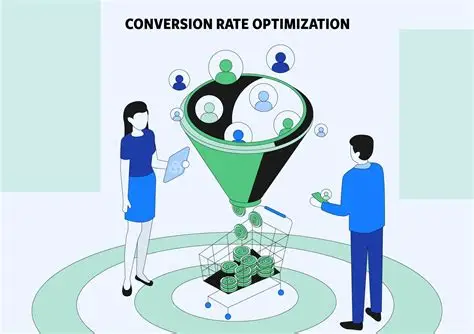
At its core, conversion rate optimization is the process of improving a website, landing page, app, or digital experience to increase the percentage of users who complete a desired action.
That action might be:
- Purchasing a product
- Subscribing to a newsletter
- Booking a consultation
- Downloading software
- Creating an account
- Clicking a call-to-action
The conversion rate itself is calculated simply:
Conversion Rate = (Conversions ÷ Total Visitors) × 100
Straightforward formula.
Complex psychology.
Because CRO is not really about buttons, colors, or headline tweaks — despite what low-quality marketing advice often implies.
It’s about reducing hesitation.
That distinction matters enormously.
Most Customers Don’t Leave Because They Hate You
This is one of the more liberating realizations in marketing.
People rarely abandon websites because they’re actively offended.
More often, they leave because:
- Something feels confusing
- Trust weakens momentarily
- Decision-making becomes tiring
- Expectations become unclear
- Friction accumulates quietly
Tiny interruptions matter more than businesses expect.
A slow-loading checkout page. Ambiguous pricing. Overcrowded navigation. Excessive form fields. Weak product photos. Strange shipping policies buried in microscopic text.
None of these issues sound catastrophic individually.
Together, they quietly erode momentum.
And conversion is fundamentally about momentum.
Why CRO Matters More Than Traffic Growth
Many businesses respond to weak sales by chasing more traffic.
More ads.
More content.
More social media campaigns.
More acquisition spending.
Sometimes that works temporarily. Often it simply increases the number of people encountering an inefficient system.
CRO asks a different question:
What if the problem isn’t traffic volume? What if the problem is experience quality?
That reframing changes everything.
Because improving conversion rates compounds financially.
A company increasing conversions from 2% to 4% effectively doubles results without doubling traffic costs. That efficiency creates operational leverage most marketing teams underestimate initially.
Acquisition scales expense.
Optimization scales efficiency.
Conversion Rate Optimization Is Really Behavioral Psychology
This is the part people often miss.
CRO isn’t purely technical.
It’s psychological observation disguised as analytics work.
The best optimization specialists understand:
- Attention patterns
- Cognitive overload
- Trust formation
- Emotional hesitation
- Decision fatigue
- Perceived risk
Humans do not navigate websites rationally in the pristine economic sense many businesses imagine.
People skim.
They hesitate.
They become distracted.
They seek reassurance constantly.
Good CRO respects those realities instead of pretending users behave like perfectly logical decision-making machines.
The Most Important CRO Metrics
Not every metric deserves equal attention.
Some metrics create useful insight.
Others become performative dashboard decoration.
Here’s where strong optimization teams usually focus:
| CRO Metric | What It Measures | Why It Matters |
|---|---|---|
| Conversion Rate | Percentage of users completing actions | Core performance indicator |
| Bounce Rate | Visitors leaving immediately | Signals weak relevance |
| Cart Abandonment Rate | Unfinished purchases | Reveals checkout friction |
| Average Session Duration | Time spent engaging | Indicates interest depth |
| Click-Through Rate | Interaction with calls-to-action | Measures message effectiveness |
| Exit Pages | Where users leave | Identifies friction points |
| Customer Lifetime Value | Long-term customer revenue | Prevents short-term optimization mistakes |
One of the most dangerous CRO mistakes involves optimizing isolated metrics without understanding broader business consequences.
Increasing clicks means very little if customer quality deteriorates afterward.
The Difference Between Good CRO and Manipulation
There’s a thin ethical line inside conversion optimization.
Good CRO clarifies decisions.
Bad CRO pressures them.
That distinction matters increasingly because consumers have become remarkably sensitive to manipulative interface tactics.
You’ve probably encountered them:
- Fake countdown timers
- Misleading urgency language
- Hidden unsubscribe buttons
- Confusing cancellation flows
- Aggressive pop-ups
- Forced scarcity messaging
These tactics sometimes increase short-term conversions.
They also degrade trust.
And degraded trust eventually becomes expensive.
The strongest CRO strategies improve user confidence rather than exploiting user anxiety.
That’s sustainable optimization.
A/B Testing: The Experimental Core of CRO
Most conversion optimization revolves around testing.
Not guessing.
A/B testing compares two versions of a page, headline, form, or design element to determine which performs better.
Version A might contain the original design.
Version B introduces one specific change.
Traffic splits between them. Performance data reveals outcomes.
Simple concept. Surprisingly difficult execution.
Because businesses often test trivial cosmetic details while ignoring structural friction entirely.
Changing button colors rarely transforms weak customer journeys.
Improving clarity often does.
What Businesses Commonly Test
The range of CRO testing possibilities is enormous.
But several areas consistently influence performance:
Headlines
Customers decide relevance quickly.
Weak headlines create immediate ambiguity.
Strong headlines reduce interpretive effort.
Calls-to-Action
Small wording shifts can alter emotional response dramatically.
“Get Started” feels different from “Schedule My Demo.”
Language influences perceived commitment levels.
Checkout Flows
Every additional step introduces potential abandonment.
Complexity compounds rapidly during purchases.
Social Proof
Reviews, testimonials, customer counts, and case studies reduce uncertainty.
Humans seek reassurance socially before committing financially.
Pricing Presentation
Price itself matters.
But framing matters too.
Monthly versus annual pricing. Anchoring strategies. Comparative plans. Payment flexibility.
Context shapes perception.
The Hidden Enemy of Conversion: Cognitive Load
Most poorly converting websites suffer from one underlying issue:
They require too much mental effort.
Customers must interpret unclear messaging, compare excessive options, navigate cluttered interfaces, and resolve unanswered questions independently.
That exhaustion matters.
Decision-making consumes psychological energy.
And once cognitive load rises too high, people postpone decisions entirely.
Sometimes permanently.
I once worked with a retailer whose product pages contained extraordinary amounts of information. Technical specifications, promotional banners, recommendation carousels, upsells, videos, certifications, loyalty messaging — every square inch attempted persuasion simultaneously.
The result wasn’t persuasion.
It was paralysis.
After simplifying the pages significantly, conversions increased despite less content existing overall.
That lesson stayed with me.
More information does not automatically create more confidence.
Sometimes it creates escape velocity.
Mobile Optimization Changed Everything
Conversion behavior shifted dramatically once mobile browsing became dominant.
Desktop users browse differently.
They tolerate complexity longer. They compare more extensively. They navigate multiple tabs more comfortably.
Mobile users behave with greater impatience.
Slow load speeds become devastating. Long forms become exhausting. Clutter becomes overwhelming almost instantly.
This is why modern CRO increasingly prioritizes:
- Faster load times
- Thumb-friendly design
- Simplified navigation
- Condensed forms
- Clear visual hierarchy
- Faster checkout systems
Mobile optimization isn’t merely responsive design anymore.
It’s behavioral adaptation.
Why Emotional Friction Matters More Than Technical Friction
Technical problems are easy to identify.
Broken pages. Slow speeds. Error messages.
Emotional friction is subtler.
And often more damaging.
Customers hesitate when:
- The brand feels untrustworthy
- Policies feel hidden
- Tone feels overly aggressive
- Design feels inconsistent
- Product descriptions sound vague
- Return processes seem complicated
Trust operates emotionally long before customers consciously articulate concerns.
This is why excellent CRO frequently overlaps with excellent brand communication.
Clarity creates confidence.
Confidence increases action.
What I Learned Watching Users Struggle
Years ago, I observed real users navigating a client’s ecommerce site during usability testing.
It was brutal.
Not because the users were unintelligent. Quite the opposite.
Because the business had designed the experience around internal assumptions instead of actual behavior.
People missed navigation cues executives considered obvious. Product categories confused them. Checkout instructions felt unclear. Policies buried beneath dropdown menus created hesitation instantly.
Watching users struggle in real time changed how the entire team thought about optimization.
Data tells you what happens.
Observation explains why.
That distinction transformed the project entirely.
The Role of AI in Conversion Optimization
AI tools now influence CRO heavily.
Platforms analyze behavioral patterns, personalize content dynamically, predict user intent, and automate experimentation at scale.
Some applications are genuinely valuable.
Others risk creating sterile optimization loops where every website begins resembling every other “high-converting” template online.
That sameness creates its own problem.
Consumers eventually become desensitized to standardized persuasion frameworks. Over-optimized experiences can feel emotionally hollow — technically efficient but strangely forgettable.
The best CRO still requires human judgment.
Because customers are not purely statistical entities.
They are emotional ones.
Conversion Optimization Is Not About Winning Every Visitor
This point deserves emphasis.
Not every visitor should convert.
Some businesses become so obsessed with maximizing conversion percentages that they accidentally attract poorly matched customers through misleading promises or excessive persuasion.
Then retention collapses later.
Strong CRO aligns the right customers with the right expectations.
That creates healthier long-term economics.
Optimization without alignment simply relocates business problems downstream.
Conclusion: CRO Is Really About Respecting Attention
People often describe conversion rate optimization as a technical marketing discipline.
That framing misses the deeper truth.
CRO is fundamentally about respecting attention.
Customers arrive with limited patience, fragmented focus, emotional uncertainty, and endless alternatives available seconds away. Optimization exists to reduce unnecessary friction inside that reality.
Not manipulate people into decisions they regret.
Not weaponize psychological pressure.
Not engineer compulsive behavior disguised as efficiency.
The best conversion optimization feels almost invisible.
Customers move through experiences naturally because the business anticipated confusion before it emerged. Questions receive answers quickly. Trust signals appear at the right moments. Decisions feel easier rather than forced.
That’s real optimization.
And ironically, the companies that obsess least over “hacking conversions” often perform best long term because they understand something more important:
People convert when they feel confident.
Not cornered.
- Arts
- Business
- Computers
- Jeux
- Health
- Domicile
- Kids and Teens
- Argent
- News
- Personal Development
- Recreation
- Regional
- Reference
- Science
- Shopping
- Society
- Sports
- Бизнес
- Деньги
- Дом
- Досуг
- Здоровье
- Игры
- Искусство
- Источники информации
- Компьютеры
- Личное развитие
- Наука
- Новости и СМИ
- Общество
- Покупки
- Спорт
- Страны и регионы
- World

 English
 Russian
 Spanish
 Portuguese
 Deutsch
 Turkish
 Dutch
Dutch
 Italiano
 Arabic
 Romaian
 Portuguese (Brazil)
 Greek
Greek
