
What is the economic impact of global warming?
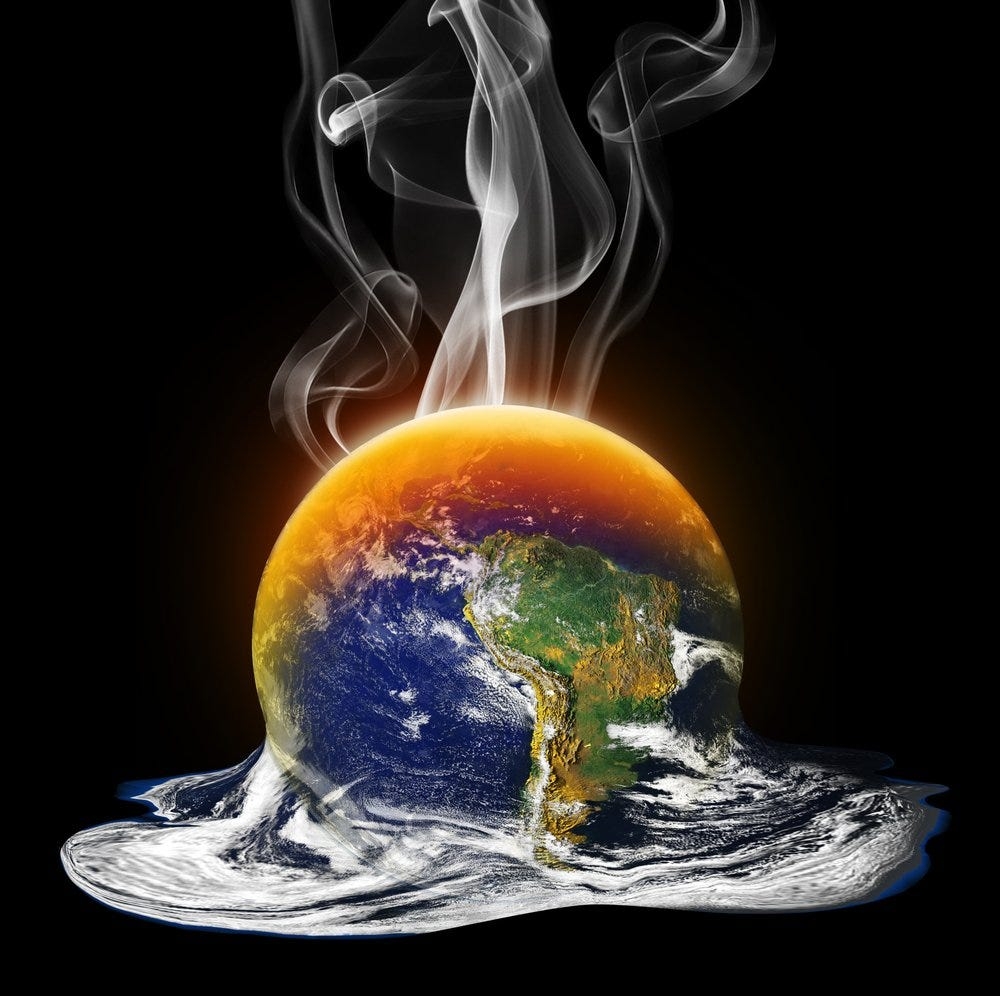
What Is the Economic Impact of Global Warming?
The first thing to disappear is not the glacier. It is the predictability.
People imagine climate change as a cinematic event: oceans climbing seawalls, forests combusting in orange weather, polar bears adrift on fractured ice. Those things are real. Yet economies do not collapse in one dramatic gesture. They fray. Quietly at first. A delayed shipment. An uninsurable house. A harvest cut short by heat that arrived two weeks early and left three weeks late. The arithmetic of modern civilization depends less on abundance than consistency, and global warming is dismantling consistency molecule by molecule.
I remember visiting a farm in California’s Central Valley during a prolonged drought years ago. The farmer, a man whose hands looked carved from walnut bark, walked me through rows of almond trees that should have been green but carried the gray fatigue of thirst. He spoke less about weather than debt. Wells had to be drilled deeper. Pumps required more electricity. Insurance premiums climbed. Seasonal workers left because smoke from nearby fires aggravated asthma in their children. “The trees survive,” he told me, “but the business doesn’t.”
That distinction matters. Nature adapts over millennia. Markets panic quarterly.
The economic impact of global warming is often discussed in trillions of dollars, percentages of GDP, or actuarial losses. Useful measures, certainly. But numbers alone conceal the deeper truth: climate change is not a sector-specific problem. It is a destabilization engine affecting agriculture, labor, migration, infrastructure, public health, finance, and geopolitics simultaneously. It is inflation carried by wind.
The Hidden Architecture of Climate Economics
Economies are ecological systems wearing suits.
Every skyscraper, semiconductor, cargo ship, mortgage, and pension fund ultimately depends on stable temperatures, predictable rainfall, functioning coastlines, and biological continuity. Remove those foundations and the abstractions wobble. Money, after all, is confidence translated into symbols.
For more than 10,000 years, human civilization evolved during an unusually stable climatic period known as the Holocene. Cities flourished because rivers behaved somewhat predictably. Crops matured within expected windows. Ports remained ports rather than flood zones. Stability became invisible because it was omnipresent.
Global warming interrupts that inheritance.
The modern economy was engineered for yesterday’s climate.
A Planet Running a Fever
The costs arrive in layers. Some are obvious and immediate. Others spread slowly through systems like smoke through insulation.
Direct Physical Damage
Hurricanes intensify over warmer oceans. Wildfires consume entire neighborhoods. Floods overwhelm drainage systems designed for a different century. Roads buckle. Power grids fail. Rail lines warp under extreme heat.
The bill is staggering.
According to multiple international assessments, climate-related disasters now generate hundreds of billions in annual losses worldwide. Yet insured losses represent only a fraction of actual damage. Informal economies, smallholder farms, and vulnerable communities absorb enormous costs that never appear neatly on spreadsheets.
A flooded factory in Thailand can interrupt automobile production in Germany. A drought in Brazil affects coffee prices in Chicago cafés. Climate volatility travels globally through supply chains with astonishing speed.
Agricultural Disruption
Agriculture occupies a peculiar place in modern economics. It contributes a relatively modest share of GDP in wealthy countries, yet underpins everything. Food inflation destabilizes societies faster than almost any other force.
Heat stress reduces crop yields. Pollinator populations decline. Soil moisture evaporates more rapidly. Water scarcity intensifies competition between cities and farms. Fisheries migrate toward cooler waters, leaving coastal economies stranded.
There is a dangerous misconception that technology will effortlessly compensate for these disruptions. Innovation helps, certainly. Drought-resistant crops, precision irrigation, regenerative farming, and vertical agriculture matter immensely. But adaptation itself requires capital, infrastructure, and time—resources unevenly distributed across nations.
A subsistence farmer in Sudan cannot pivot as easily as an agribusiness conglomerate in Iowa.
The Economics of Heat
Heat is not merely uncomfortable. It is economically corrosive.
Human productivity declines sharply at high temperatures, especially in sectors requiring outdoor labor: construction, agriculture, logistics, manufacturing, and mining. Workers slow down. Mistakes increase. Injuries multiply. Machines overheat. Energy demand surges as air-conditioning becomes less a luxury than survival equipment.
The irony is painful. The hotter the world becomes, the more electricity societies require to remain functional, often increasing fossil fuel consumption unless renewable systems scale rapidly enough.
Consider this comparison:
| Economic Sector | Climate Impact | Estimated Economic Consequence |
|---|---|---|
| Agriculture | Drought, heat stress, shifting rainfall | Lower yields, food inflation, rural displacement |
| Real Estate | Sea-level rise, wildfire risk | Property devaluation, insurance withdrawal |
| Labor Productivity | Extreme heat exposure | Reduced work hours, lower output |
| Healthcare | Heat illness, respiratory disease, vector-borne infections | Rising public health expenditures |
| Insurance | Escalating disaster claims | Premium spikes, uninsurable regions |
| Infrastructure | Flooding, storms, heat damage | Massive repair and adaptation costs |
| Finance | Climate risk repricing | Market volatility, stranded assets |
| Tourism | Coral bleaching, wildfire smoke, unstable weather | Revenue decline in vulnerable regions |
What emerges is not a single crisis but a cascade.
Insurance: The Canary in the Financial System
Insurance companies understand climate change with unnerving clarity because they convert risk into mathematics for a living.
In recent years, major insurers have retreated from parts of California, Florida, and Louisiana due to wildfire and hurricane exposure. When insurers leave, mortgages become difficult to secure. Property values decline. Municipal tax bases shrink. Local governments lose revenue precisely when infrastructure upgrades become urgently necessary.
This is how climate change migrates from environmental concern into financial architecture.
The market is beginning to distinguish between assets that exist physically and assets that remain economically viable. A beachfront property may still stand beautifully beneath a sunset, yet become functionally worthless if insurance disappears and repeated flooding renders maintenance impossible.
Economists call these stranded assets.
Nature calls them consequences.
Migration and the Geography of Instability
Climate migration may become one of the defining economic realities of the century.
People move when crops fail, water disappears, or heat becomes physiologically unbearable. Migration is often portrayed narrowly as a humanitarian issue, but it is equally an economic one. Receiving regions face housing shortages, infrastructure strain, and political tension. Departing regions experience labor depletion and declining investment.
Already, some cities are quietly preparing for climate-driven population shifts. Others pretend permanence still exists.
History suggests societies rarely collapse from one singular catastrophe. More often, systems become overstressed simultaneously: rising food prices, water scarcity, unemployment, political distrust, and resource conflict reinforcing one another in feedback loops.
Global warming accelerates those loops.
The Strange Opportunity Inside the Crisis
Yet this story is not solely about loss.
Periods of massive disruption often catalyze reinvention. The transition away from fossil fuels may become one of the largest economic transformations since the Industrial Revolution. Renewable energy, electrified transportation, battery storage, ecosystem restoration, building retrofits, and circular manufacturing systems represent enormous areas of investment and employment.
Solar and wind power, once dismissed as fringe technologies, now compete economically with fossil fuels in many regions. Entire industries are reorganizing around decarbonization. Capital is moving. Slowly, unevenly, imperfectly—but moving nonetheless.
There is an old assumption embedded deep within industrial economics: that pollution is an externality. Something peripheral. Disposable. A side effect.
Climate change demolishes that illusion.
Waste does not vanish. Carbon does not negotiate. The atmosphere keeps books with astonishing precision.
The Cost of Inaction vs. The Cost of Transition
Critics often frame climate action as prohibitively expensive. This misunderstands the equation.
The real comparison is not between spending money and spending nothing. It is between investing in transition now or paying exponentially larger damages later.
Consider the economics of prevention. Restoring wetlands may reduce flood damage more cheaply than constructing concrete barriers. Retrofitting buildings for energy efficiency lowers long-term operating costs. Expanding public transit reduces pollution, congestion, and health expenditures simultaneously.
Healthy ecosystems perform services economists rarely valued adequately: pollination, water filtration, carbon sequestration, temperature regulation, soil regeneration. Nature has always subsidized civilization. We simply failed to itemize the invoice.
The Psychological Economy
There is another dimension less discussed: the emotional impact of climate instability.
Businesses depend on confidence. Consumers spend when they believe tomorrow will resemble today closely enough to justify planning. Climate anxiety alters behavior subtly but profoundly. People reconsider where to buy homes, whether to have children, where to invest, which careers appear durable.
I have noticed this especially among younger entrepreneurs. Increasingly, they ask not merely whether a business can scale, but whether it can survive ecological reality. That shift in consciousness may become economically transformative in ways difficult to quantify.
Culture changes markets long before legislation does.
Lessons from a Burning Century
Several years ago, I stood near a forest recovering from wildfire in the Pacific Northwest. Blackened trunks pierced the hillside like charcoal spires, yet beneath them emerged impossible green shoots. Fireweed. Ferns. New pine growth. The forest was not dead. It was reorganizing.
That image stayed with me because economies behave similarly. Systems under pressure either adapt or calcify.
The central economic question of global warming is therefore not whether costs exist. They do. Enormously. Unequivocally. The deeper question is whether humanity can redesign its operating systems quickly enough to avoid permanent destabilization.
This requires abandoning an outdated fantasy: the belief that the economy and the environment are separate domains.
They never were.
The economy is wholly owned by the environment, not the reverse. Every transaction occurs inside biology. Every stock exchange depends on rainfall somewhere. Every bond market rests upon topsoil, freshwater, pollinators, coastlines, and atmospheric chemistry.
We have mistaken the branch for the tree.
Conclusion: The Invoice Arrives
Global warming is often described as a future threat. That language is obsolete.
The economic impact is already embedded in grocery receipts, insurance bills, migration patterns, energy grids, and municipal budgets. The atmosphere has become an active participant in global markets.
Yet there remains something profoundly hopeful beneath the severity of this moment.
Human beings are adaptive creatures. We are capable of redesigning systems with breathtaking speed when necessity becomes undeniable. During previous transformations—the abolition of slavery, the expansion of public sanitation, the creation of modern labor laws—people initially argued that change was economically impossible. Later generations wondered how anyone tolerated the old system at all.
The same may someday be said of fossil-fueled economics.
Perhaps the ultimate lesson of global warming is not about scarcity, but relationship. We are not separate from the living systems surrounding us. The atmosphere is not an abstraction. Oceans are not scenery. Forests are not inventory. They are active economic partners sustaining civilization in ways both visible and invisible.
Ignore that reality, and markets become unstable.
Honor it, and economies may yet become regenerative rather than extractive.
The future will likely be hotter than the past. That much is already written.
What remains unwritten is whether humanity responds with imagination equal to the scale of the crisis.
- Arts
- Business
- Computers
- Jogos
- Health
- Início
- Kids and Teens
- Money
- News
- Personal Development
- Recreation
- Regional
- Reference
- Science
- Shopping
- Society
- Sports
- Бизнес
- Деньги
- Дом
- Досуг
- Здоровье
- Игры
- Искусство
- Источники информации
- Компьютеры
- Личное развитие
- Наука
- Новости и СМИ
- Общество
- Покупки
- Спорт
- Страны и регионы
- World

 English
 Russian
 French
 Spanish
 Portuguese
 Deutsch
 Turkish
 Dutch
Dutch
 Italiano
 Arabic
 Romaian
 Greek
Greek
