
What Is a Franchise?
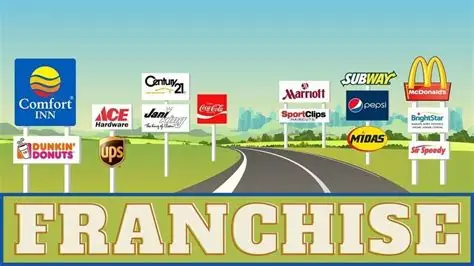
At some point during every long highway drive in America, the landscape begins repeating itself.
The same coffee chain beside the same gas station. The same fast-food signage glowing against dark asphalt. The same hotel lobby carrying that oddly familiar scent somewhere between industrial detergent and cautious optimism.
You can leave Arizona at dawn and arrive in Tennessee three days later still knowing exactly how the fries will taste.
That predictability is not accidental.
It is the product of one of the most commercially fascinating systems modern business ever produced: franchising.
And yet most people misunderstand what a franchise actually is.
They think it’s merely a business branch. A corporate clone. A convenient expansion strategy for companies wanting larger footprints without personally managing every location.
Technically, parts of that are true.
But franchising is less a business structure than a carefully negotiated relationship between control and independence. Between consistency and entrepreneurship. Between corporate identity and local ambition.
That tension is where the entire system either thrives magnificently or quietly collapses.
Because a franchise is not simply a business someone buys.
It is a business someone agrees to operate according to another company’s rules.
And those rules matter far more than many hopeful franchise owners realize at first.
A Franchise Is Essentially Borrowed Trust
Strip away the legal paperwork, operational manuals, and branded uniforms, and the core transaction becomes surprisingly simple.
A franchisee pays for access to an established system.
Not merely a logo.
A system.
That system may include:
- Brand recognition
- Operational processes
- Supplier relationships
- Marketing support
- Training programs
- Proven business models
- Technology infrastructure
- Standardized customer experiences
The franchise owner — formally called the franchisor — licenses these assets to independent operators known as franchisees.
In exchange, franchisees usually pay:
- Initial franchise fees
- Ongoing royalties
- Marketing contributions
- Operational compliance costs
Which sounds straightforward until human ambition enters the equation.
Because franchising attracts a very particular type of entrepreneur: someone who wants business ownership while reducing uncertainty.
That’s the appeal.
You are not inventing demand from scratch. Customers already recognize the name. They already understand the product. Operational mistakes have theoretically been refined through years of previous trial and error.
Or at least that is the promise.
Why Franchises Feel Safer Than Starting Alone
I once spoke with a man who opened an independent sandwich shop after leaving corporate finance.
Three years later he looked approximately fifteen years older.
The food was excellent. The location reasonable. The effort relentless.
Still, customer acquisition remained exhausting because every aspect of the business required invention simultaneously:
- Branding
- Supplier negotiation
- Staff systems
- Pricing
- Marketing
- Customer trust
- Local awareness
Nothing existed beforehand.
A year later, another sandwich chain franchise opened nearby and generated immediate traffic largely because consumers already understood what they were walking into.
That lesson stayed with me.
People underestimate how commercially valuable familiarity becomes.
Consumers are nervous creatures. They gravitate toward recognizable experiences because recognizable experiences reduce decision risk.
A franchise offers pre-established psychological reassurance.
Customers assume:
- The food will taste roughly consistent
- The service structure will feel familiar
- The pricing will make sense
- The operational standards will remain predictable
That emotional shortcut has enormous financial value.
| Franchise Model Benefit | Why It Appeals to Franchisees | Potential Hidden Cost |
|---|---|---|
| Established brand recognition | Faster customer trust | Limited creative control |
| Proven business systems | Reduced operational guesswork | Mandatory compliance rules |
| Marketing support | National advertising reach | Shared marketing fees |
| Supplier agreements | Bulk purchasing advantages | Restricted vendor flexibility |
| Training programs | Faster onboarding | Standardized operational expectations |
| Lower failure perception | Psychological security | High upfront investment |
| Replicable processes | Easier scaling opportunities | Less entrepreneurial autonomy |
This balance — security versus independence — defines nearly every franchise relationship.
Franchising Is Built on Standardization
This is where many romantic ideas about entrepreneurship begin colliding with operational reality.
Strong franchises succeed because they standardize aggressively.
The coffee tastes the same.
The uniforms look the same.
The customer interactions follow similar rhythms.
The lighting, signage, packaging, pricing structures, and menu layouts all reinforce consistency.
That consistency is not aesthetic obsession.
It is economic strategy.
A franchise’s greatest asset is predictable customer expectation. The moment experiences vary too dramatically between locations, trust weakens.
And trust is the infrastructure supporting the entire model.
This is why franchise agreements often become intensely detailed documents governing things most people would never imagine:
- Store design
- Approved suppliers
- Employee training methods
- Marketing language
- Product sourcing
- Pricing guidelines
- Operational hours
To outsiders this can appear restrictive.
To franchisors it appears necessary.
Because every franchise location represents the larger brand publicly. One poorly managed location damages perception everywhere else.
Consumers rarely distinguish between individual franchise operators and the broader brand itself.
If one location fails, the logo absorbs the blame universally.
The Franchise Fantasy Versus Reality
Franchising attracts many people partly because it appears to simplify entrepreneurship.
And to be fair, in some ways it does.
But there’s a dangerous misconception floating around that franchise ownership is somehow passive or automatically profitable.
It isn’t.
A franchise removes certain uncertainties while introducing entirely new pressures.
Some franchisees discover too late that they purchased structure rather than freedom.
That distinction matters enormously.
I remember interviewing a former franchise owner who confessed something unexpectedly blunt:
“I thought I was buying independence. I actually bought accountability.”
He wasn’t bitter exactly. Just clearer-eyed than when he began.
The franchise required operational precision constantly:
- Staffing targets
- Brand audits
- Inventory controls
- Royalty obligations
- Marketing participation
- Performance benchmarks
Success depended not on inventiveness but disciplined execution.
This surprises many people because popular entrepreneurship culture celebrates disruption, creativity, and unconventional thinking.
Franchising often rewards the opposite:
- Consistency
- Compliance
- Replication
- Process discipline
A brilliant innovator can become a terrible franchise operator.
Meanwhile highly organized managers frequently thrive within franchise systems because they excel at operational reliability.
Why Franchises Expand So Aggressively
From the franchisor’s perspective, franchising is one of the most powerful expansion mechanisms ever created.
Why?
Because growth becomes partially financed by franchisees themselves.
Instead of corporate headquarters funding every new location independently, franchise owners invest their own capital into expansion while still operating under the parent brand.
This creates remarkable scaling efficiency.
The franchisor gains:
- Geographic expansion
- Revenue from franchise fees
- Ongoing royalty income
- Increased market visibility
- Local operational investment
Meanwhile franchisees gain access to established commercial infrastructure.
At least in theory, everyone benefits.
But rapid franchise expansion creates its own dangers.
Some brands grow faster than operational quality can sustain. Others saturate markets carelessly, causing franchisees to compete against neighboring locations carrying the same logo.
And occasionally the corporate priorities of franchisors begin diverging sharply from the financial realities franchisees face locally.
That tension has fractured many franchise systems over time.
The Psychology Behind Franchise Success
One reason franchises remain so commercially powerful is because they exploit a deeply human preference for familiarity.
Consumers often claim to value originality.
Their behavior frequently suggests otherwise.
When people are tired, rushed, traveling, stressed, or uncertain, recognizable brands feel emotionally safer.
You know approximately what you’re getting.
That predictability reduces cognitive effort.
And cognitive effort matters more than businesses sometimes realize.
I once stopped at a franchise coffee chain in an unfamiliar city despite walking past several independent cafés that were probably superior.
Why?
Not quality.
Certainty.
I knew the menu. The pricing. The ordering process. Even the likely taste profile.
After a long travel day, that familiarity carried disproportionate emotional appeal.
This is one of franchising’s greatest hidden strengths:
It monetizes consumer comfort.
Not All Franchises Operate the Same Way
People often speak about franchises as though they form one uniform category.
They don’t.
Some franchise systems grant operators considerable flexibility. Others regulate nearly every operational detail with microscopic precision.
Broadly speaking, franchises tend to fall into several categories:
Product Distribution Franchises
These focus primarily on distributing branded products through licensed dealers or retailers.
Automotive dealerships are classic examples.
Business Format Franchises
This is the model most consumers recognize.
Operators receive a complete business blueprint including branding, systems, training, and operational procedures.
Fast-food chains dominate here.
Manufacturing Franchises
Franchisees manufacture products according to the franchisor’s specifications and branding requirements.
Different structures create different balances between autonomy and oversight.
And that balance often determines franchise satisfaction more than raw profitability alone.
The Emotional Trade-Off Few People Discuss
Franchising quietly asks entrepreneurs an uncomfortable question:
How much control are you willing to surrender in exchange for reduced uncertainty?
Some people answer enthusiastically.
Others discover too late that operational restrictions feel psychologically suffocating.
Neither reaction is wrong.
Certain personalities flourish inside structured systems. Others require creative ownership to remain motivated long-term.
This is why franchises cannot be evaluated purely financially.
Lifestyle compatibility matters too.
An entrepreneur craving experimentation may resent franchise limitations deeply. Meanwhile someone prioritizing operational support may find those same structures reassuring.
The mismatch between expectation and reality causes many franchise disappointments.
Not necessarily bad businesses.
Bad fits.
The Real Reason Franchises Continue Dominating Markets
Because consumers trust repetition.
That’s the uncomfortable commercial truth underneath all of this.
People like predictability more than they publicly admit.
Not always. Not everywhere. But frequently enough to sustain enormous global franchise economies across industries ranging from fitness to hospitality to education to healthcare.
A franchise transforms consistency into a scalable product.
And consistency, despite sounding unglamorous, remains commercially powerful because modern life feels increasingly chaotic.
Consumers reward businesses that reduce uncertainty.
Franchises specialize in reducing uncertainty systematically.
The Final Irony of Franchising
Here’s the paradox many people miss:
Franchises are built to feel personal while operating through standardization.
The smiling employee greeting you at the counter may genuinely care about your experience. The local franchise owner may have invested life savings into that location. There is real human ambition inside the system.
And yet the broader structure depends on replication at scale.
Individuality exists within carefully controlled boundaries.
That balance explains both the brilliance and limitation of franchising simultaneously.
A successful franchise creates the illusion of local familiarity while preserving corporate consistency.
Consumers feel comforted by recognition.
Franchisees feel protected by structure.
Franchisors feel strengthened by expansion.
When the system works, everyone participates in the same psychological exchange:
certainty traded for loyalty.
And perhaps that’s the most revealing part of all.
Because underneath the contracts, logos, royalty payments, and operational manuals, franchising succeeds for the same reason many businesses succeed:
Human beings are constantly searching for experiences that feel safely familiar in a world that rarely does.
- Arts
- Business
- Computers
- الألعاب
- Health
- الرئيسية
- Kids and Teens
- مال
- News
- Personal Development
- Recreation
- Regional
- Reference
- Science
- Shopping
- Society
- Sports
- Бизнес
- Деньги
- Дом
- Досуг
- Здоровье
- Игры
- Искусство
- Источники информации
- Компьютеры
- Личное развитие
- Наука
- Новости и СМИ
- Общество
- Покупки
- Спорт
- Страны и регионы
- World

 English
 Russian
 French
 Spanish
 Portuguese
 Deutsch
 Turkish
 Dutch
Dutch
 Italiano
 Romaian
 Portuguese (Brazil)
 Greek
Greek
