
Which skills are future-proof?
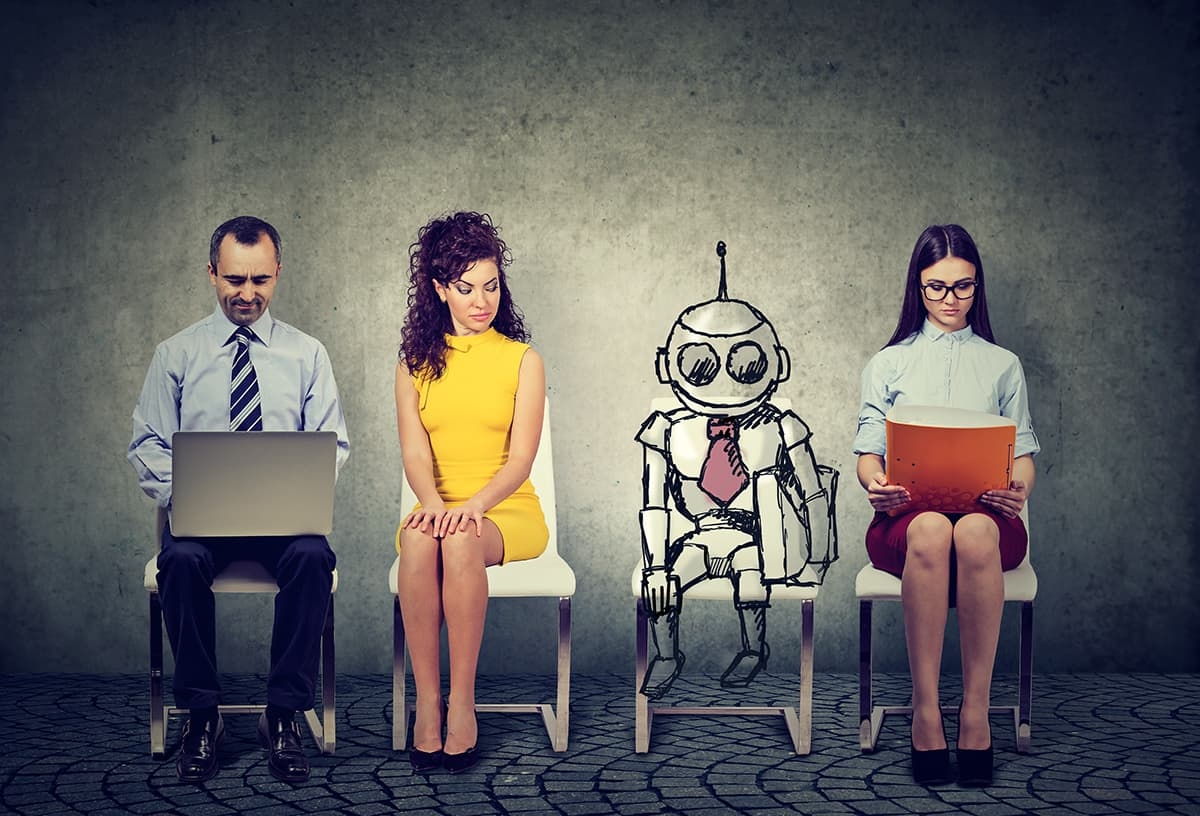
Which Skills Are Future-Proof?
People often ask this question hoping to find certainty in an uncertain world.
A skill that won't become obsolete.
A career path that won't be disrupted.
A capability that remains valuable no matter what technology arrives next.
It's an understandable goal.
The problem is that truly future-proof skills are rarely the ones people expect.
Most people look for specific tools:
-
programming languages
-
software platforms
-
technical certifications
-
industry-specific knowledge
But history shows that tools change far faster than underlying capabilities.
The spreadsheet replaced paper ledgers.
Search engines changed research.
Artificial intelligence is transforming knowledge work.
The tools evolved.
The foundational skills beneath them remained remarkably valuable.
So the real question isn't:
"What skill will never change?"
It's:
"What capabilities remain useful when everything else changes?"
That's where future-proofing begins.
The Truth About Future-Proof Skills
Future-proof doesn't mean permanent.
Nothing is truly immune to change.
Instead, future-proof skills possess three characteristics:
-
they transfer across industries
-
they adapt to new environments
-
they become more valuable as complexity increases
\text{Future-Proof Skill} = \text{Adaptability} + \text{Transferability}
These skills survive because they are not tied to a single technology or market condition.
They are useful almost everywhere.
1. Learning How to Learn
If there is one skill that consistently appears at the center of future readiness, it is learning agility.
The future will almost certainly contain:
-
new tools
-
new industries
-
new workflows
-
new problems
People who learn quickly adapt quickly.
People who adapt quickly remain valuable.
Learning how to learn includes:
-
finding information efficiently
-
testing ideas rapidly
-
seeking feedback
-
correcting mistakes
-
transferring knowledge between domains
\text{Learning Agility} = \text{Future Adaptation Capacity}
The faster you can acquire new competencies, the less vulnerable you become to change.
2. Communication
Communication has survived every major technological shift because humans still need alignment.
Organizations depend on:
-
clear instructions
-
persuasive arguments
-
effective collaboration
-
conflict resolution
-
trust building
People who communicate well:
-
reduce misunderstandings
-
accelerate execution
-
improve teamwork
-
influence decisions
And those outcomes remain valuable regardless of industry.
Technology changes.
Human coordination remains necessary.
3. Critical Thinking
Information has become abundant.
Judgment has not.
Modern environments generate:
-
endless content
-
conflicting opinions
-
incomplete data
-
uncertain outcomes
The ability to evaluate information critically is increasingly important.
Critical thinkers:
-
question assumptions
-
analyze evidence
-
identify logical flaws
-
separate signals from noise
\text{Critical Thinking} = \text{Better Decision Quality}
As information volume increases, judgment becomes more valuable.
4. Adaptability
Many people underestimate adaptability because it sounds vague.
But adaptability is often the difference between thriving and becoming obsolete.
Adaptable people:
-
update beliefs when evidence changes
-
learn unfamiliar tools
-
adjust strategies quickly
-
remain effective during uncertainty
Future environments will continue changing rapidly.
Adaptability turns change from a threat into a manageable challenge.
5. Emotional Intelligence
Technology can automate many tasks.
It struggles with human relationships.
Emotional intelligence includes:
-
self-awareness
-
empathy
-
emotional regulation
-
interpersonal understanding
These abilities affect:
-
leadership
-
collaboration
-
negotiation
-
conflict management
\text{Emotional Intelligence} = \text{Human Relationship Effectiveness}
As work becomes increasingly collaborative, emotional intelligence grows in importance.
6. Problem Solving
Organizations pay people to solve problems.
The nature of those problems changes.
The need for solutions does not.
Strong problem solvers:
-
identify root causes
-
evaluate tradeoffs
-
design solutions
-
execute improvements
Future-proof professionals do not merely follow instructions.
They improve systems.
7. Creativity
Automation excels at repetition.
Creativity thrives in novelty.
Creative thinking includes:
-
generating ideas
-
connecting unrelated concepts
-
reframing problems
-
imagining alternatives
This applies far beyond art.
Business, engineering, marketing, product development, and entrepreneurship all benefit from creative problem-solving.
\text{Creativity} = \text{Novel Value Creation}
As routine work becomes easier to automate, originality becomes more valuable.
8. Systems Thinking
Many modern challenges exist within interconnected systems.
A change in one area affects another.
Systems thinkers understand:
-
relationships
-
feedback loops
-
incentives
-
unintended consequences
Instead of asking:
"What happens next?"
they often ask:
"What happens because of what happens next?"
That perspective becomes increasingly useful as complexity grows.
9. Digital Literacy
Digital literacy is no longer optional.
But future-proof digital literacy is not memorizing specific software.
It is understanding:
-
digital workflows
-
automation concepts
-
information management
-
technology adoption
Specific tools evolve.
Digital understanding remains useful.
\text{Digital Literacy} = \text{Technology Adaptation Capability}
People who understand systems adapt more easily than people who memorize interfaces.
10. Focus and Attention Management
Attention has become one of the scarcest resources in modern life.
Distraction is abundant.
Deep concentration is increasingly rare.
People who can:
-
focus deeply
-
prioritize effectively
-
sustain effort
-
resist constant interruption
often achieve disproportionate results.
\text{Attention Control} = \text{High-Quality Output}
Focus is becoming a competitive advantage precisely because distraction is everywhere.
Skills That Are Less Future-Proof
Some skills carry higher disruption risk because they depend heavily on:
-
routine execution
-
predictable processes
-
repetitive workflows
-
rule-based decision making
Examples include:
-
simple data entry
-
repetitive administrative tasks
-
basic information retrieval
-
highly structured manual processes
This does not mean these roles disappear immediately.
It means they face greater pressure from automation.
The safest long-term strategy is combining technical skills with adaptable human capabilities.
A Comparison Worth Considering
| Skill | Transferability | Automation Resistance | Future Relevance |
|---|---|---|---|
| Learning Agility | Very High | Very High | Critical |
| Communication | Very High | High | Very High |
| Critical Thinking | Very High | High | Very High |
| Adaptability | Critical | Very High | Critical |
| Emotional Intelligence | High | Very High | Very High |
| Problem Solving | Very High | High | Very High |
| Creativity | High | High | Very High |
| Systems Thinking | Very High | High | Very High |
| Digital Literacy | High | Medium | High |
| Focus & Attention | Very High | High | Very High |
Notice a pattern.
The most future-proof skills are not tied to specific tools.
They are tied to human adaptability.
A Personal Observation on Future-Proofing
Earlier in my career, I spent a lot of time worrying about learning the "right" thing.
The perfect technology.
The perfect specialization.
The perfect path.
But over time, something became obvious.
The people who remained consistently valuable were rarely those who predicted every change correctly.
They were the people who adapted quickly whenever change arrived.
Their advantage wasn't prediction.
It was flexibility.
And that distinction is important.
Because nobody can perfectly predict the future.
But almost anyone can become better at adapting to it.
The Structural Formula for Future-Proof Skills
When you examine skills that remain valuable across decades, industries, and technological shifts, they tend to share a common foundation:
-
learning agility
-
communication
-
adaptability
-
problem solving
-
emotional intelligence
-
critical thinking
-
creativity
\text{Future-Proof Capability} = \text{Learning} + \text{Adaptability} + \text{Judgment}
These skills strengthen each other.
Together, they create resilience.
Conclusion: The Most Future-Proof Skill Is the Ability to Evolve
People often search for future-proof skills as if the goal is avoiding change.
But the most resilient professionals don't avoid change.
They navigate it.
The skills most likely to remain valuable are not tied to specific technologies or industries.
They are the capabilities that allow you to:
-
learn continuously
-
think clearly
-
communicate effectively
-
solve difficult problems
-
adapt without losing momentum
Because the future rarely rewards those who cling to stability.
It rewards those who can remain effective while everything around them evolves.
And that may be the closest thing to a truly future-proof skill set that exists.
- Arts
- Business
- Computers
- Giochi
- Health
- Home
- Kids and Teens
- Money
- News
- Personal Development
- Recreation
- Regional
- Reference
- Science
- Shopping
- Society
- Sports
- Бизнес
- Деньги
- Дом
- Досуг
- Здоровье
- Игры
- Искусство
- Источники информации
- Компьютеры
- Личное развитие
- Наука
- Новости и СМИ
- Общество
- Покупки
- Спорт
- Страны и регионы
- World

 English
 Russian
 French
 Spanish
 Portuguese
 Deutsch
 Turkish
 Dutch
Dutch
 Arabic
 Romaian
 Portuguese (Brazil)
 Greek
Greek
