
What Are the Best Online Selling Platforms?
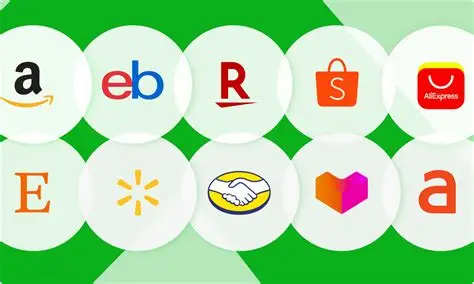
The first time I tried selling online, I made the same mistake countless new sellers make: I assumed the product would do the heavy lifting.
It didn’t.
The item was solid. The photos were decent. The pricing was competitive. Yet weeks passed with little more than a handful of views and a growing sense of confusion. The problem wasn’t the product. It was the platform.
That lesson remains surprisingly relevant. Ask ten successful online sellers where they built their business, and you’ll likely get ten different answers. Some swear by marketplaces. Others insist owning your storefront is non-negotiable. A growing number operate across several channels simultaneously, treating platforms like pieces of a larger ecosystem rather than a single destination.
The reality is simple: the best online selling platform depends on what you're selling, who you're selling to, and how much control you want over the customer experience.
So instead of searching for one perfect answer, it makes more sense to examine the strengths, weaknesses, and trade-offs of the leading contenders.
The Modern Seller's Dilemma
Online commerce has matured.
Consumers no longer browse one website and make a purchase. They discover products on social media, compare prices across marketplaces, read reviews on third-party sites, and often buy wherever the process feels easiest.
That creates opportunity. It also creates complexity.
A handmade jewelry designer faces a very different set of challenges than a retailer moving thousands of electronic accessories every month. A vintage clothing reseller needs different tools than a business launching a private-label skincare brand.
Before evaluating platforms, consider three questions:
- Do you need traffic or control?
- Are you selling products, services, or digital goods?
- How quickly do you need sales?
The answers shape everything.
Comparing the Best Online Selling Platforms
| Platform | Best For | Fees | Built-In Audience | Branding Control | Ease of Use |
|---|---|---|---|---|---|
| Shopify | Growing businesses and brands | Monthly subscription + transaction fees | Low | Very High | High |
| Amazon | High-volume product sales | Referral and fulfillment fees | Very High | Low | Medium |
| Etsy | Handmade and unique goods | Listing and transaction fees | High | Medium | High |
| eBay | Used, collectible, and niche items | Listing and final value fees | High | Low | Medium |
| WooCommerce | WordPress users | Variable | Low | Very High | Medium |
| Facebook Marketplace | Local selling | Often free | High | Low | Very High |
| TikTok Shop | Social commerce | Transaction fees | Growing rapidly | Medium | High |
| Walmart Marketplace | Established brands | Referral fees | High | Medium | Medium |
The table tells part of the story. The details matter more.
Shopify: The Brand Builder
For many entrepreneurs, Shopify occupies a unique position.
Unlike marketplaces, Shopify doesn't hand you an audience. It gives you a store.
That distinction changes everything.
A Shopify store allows complete ownership over branding, customer relationships, product presentation, and marketing strategy. You decide how the site looks, how products are displayed, and how customers move through the buying process.
Where Shopify Excels
- Professional storefront design
- Scalability
- Extensive app ecosystem
- Multi-channel selling integrations
- Strong inventory management
The biggest challenge is customer acquisition.
Launching a Shopify store is relatively straightforward. Convincing people to visit it is considerably harder. Sellers often underestimate the ongoing investment required in advertising, search engine optimization, email marketing, and content creation.
Still, for businesses aiming to build a long-term brand rather than simply process transactions, Shopify remains one of the strongest options available.
Amazon: The Traffic Giant
Amazon solves a problem that haunts nearly every independent seller: visibility.
Millions of consumers begin their product search on Amazon. That means sellers gain access to a massive stream of purchase-ready shoppers.
The upside is obvious.
The downside arrives just as quickly.
On Amazon, your product sits beside competitors, alternatives, and sponsored listings. Customer loyalty often belongs to Amazon itself rather than the seller behind the listing.
Advantages of Amazon
- Massive customer base
- High purchase intent
- Fulfillment by Amazon (FBA)
- Strong trust signals
Drawbacks
- Intense competition
- Fee structure can become expensive
- Limited brand ownership
- Margin pressure
Amazon works particularly well for standardized products with broad demand. It becomes more challenging when differentiation and brand storytelling are central to the sale.
Etsy: Where Uniqueness Wins
Etsy built its reputation around creativity.
Artists, makers, designers, and vintage sellers often find a natural audience there because shoppers arrive specifically looking for products that feel personal rather than mass-produced.
That built-in alignment is powerful.
A customer searching Etsy expects originality. That expectation creates opportunities for sellers offering handcrafted, customized, or niche products.
Ideal Products for Etsy
- Handmade goods
- Personalized gifts
- Craft supplies
- Vintage items
- Printable products
The challenge is saturation.
As Etsy has grown, competition has intensified. Success increasingly depends on photography, search optimization, customer reviews, and product differentiation.
Yet for many creative entrepreneurs, Etsy remains one of the lowest-friction ways to begin selling online.
eBay: The Marketplace Veteran
Few platforms have demonstrated the staying power of eBay.
While newer marketplaces capture headlines, eBay continues to thrive in categories where rarity, collectibility, and value hunting matter.
Think trading cards.
Vintage electronics.
Luxury watches.
Discontinued products.
Automotive parts.
These are categories where buyers often know exactly what they're looking for and are willing to spend time searching for it.
Why eBay Still Matters
The auction format remains uniquely effective for certain products. Sellers can also leverage fixed-price listings, making the platform flexible across multiple business models.
For resellers and liquidation businesses, eBay frequently remains a cornerstone sales channel.
WooCommerce: Maximum Ownership
WooCommerce is less a marketplace and more a framework.
Built for WordPress websites, it gives sellers significant flexibility without locking them into a proprietary platform.
The trade-off is complexity.
Where Shopify emphasizes simplicity, WooCommerce emphasizes customization.
WooCommerce Strengths
- Extensive control
- Open-source architecture
- Flexible integrations
- Strong SEO potential
WooCommerce Challenges
- Greater technical responsibility
- Hosting management
- Security maintenance
- Plugin compatibility issues
Businesses with technical resources often appreciate this freedom. New sellers may find the learning curve steeper than expected.
Facebook Marketplace: The Local Selling Powerhouse
Not every sale requires shipping.
Facebook Marketplace has become one of the dominant channels for local commerce, connecting buyers and sellers within specific geographic regions.
Furniture.
Home goods.
Appliances.
Vehicles.
Fitness equipment.
The platform shines when shipping costs would otherwise undermine profitability.
One unexpected advantage is speed. Listings can attract inquiries within hours, particularly in active local markets.
The downside is predictability. Communication quality varies widely, and transactions often require direct coordination between buyers and sellers.
TikTok Shop: Commerce Meets Entertainment
A significant shift is underway in online retail.
Consumers increasingly discover products through content rather than search.
TikTok Shop sits at the center of that transition.
Instead of relying on traditional product listings, sellers can generate demand through videos, creator partnerships, demonstrations, and live shopping events.
The result feels fundamentally different from marketplace shopping.
Products become part of a narrative.
When TikTok Shop Works Best
- Trend-driven products
- Beauty items
- Fashion accessories
- Home gadgets
- Impulse purchases
Businesses capable of creating engaging video content can achieve remarkable reach. Those relying on static product catalogs may struggle to gain traction.
Walmart Marketplace: The Quiet Challenger
Walmart Marketplace receives less attention than Amazon, but dismissing it would be a mistake.
The platform has expanded significantly and continues attracting both shoppers and sellers.
One reason is competitive density.
Compared with Amazon, many categories remain less crowded, creating opportunities for brands seeking visibility without entering an intensely saturated environment.
For established businesses looking to diversify beyond Amazon, Walmart Marketplace deserves consideration.
Should You Sell Everywhere?
At first glance, selling on multiple platforms sounds like the obvious solution.
More channels.
More customers.
More revenue.
Sometimes.
Yet every additional platform introduces complexity.
Inventory synchronization becomes critical. Customer service demands increase. Advertising budgets become fragmented. Reporting grows more difficult.
A better approach often involves sequencing.
Start with one primary channel.
Learn the customer.
Refine operations.
Then expand strategically.
Many successful businesses eventually adopt a hybrid model:
- Shopify for brand ownership
- Amazon for scale
- TikTok Shop for discovery
- Etsy for specialized products
The platforms complement one another rather than compete.
The Most Overlooked Factor: Customer Data
Many sellers obsess over traffic.
Far fewer think about ownership.
When customers purchase through a marketplace, the platform often controls much of the relationship. Communication options may be restricted. Retargeting capabilities may be limited.
When customers purchase through your own store, the equation changes.
You can build email lists.
Launch loyalty programs.
Create personalized experiences.
Analyze customer behavior.
That ownership becomes increasingly valuable as acquisition costs rise.
It's one reason many experienced sellers eventually invest in a dedicated storefront even if marketplaces remain important revenue drivers.
Lessons Learned From Selling Online
Looking back at my early attempts, the biggest surprise wasn't discovering which platform generated the most sales.
It was realizing that platform selection isn't a permanent decision.
Too many entrepreneurs treat the choice as irreversible. They spend weeks searching for the perfect answer when they should be testing assumptions.
The better strategy is often practical rather than theoretical.
Launch.
Measure.
Adjust.
A platform that performs brilliantly for handmade candles may disappoint a seller of automotive components. What works for a six-figure apparel brand may fail for a niche collector's business.
Data beats speculation every time.
Conclusion: Stop Looking for the Best Platform
The search for the best online selling platform is, in many ways, the wrong search.
There is no universal winner.
There is only alignment.
Shopify rewards brand builders.
Amazon rewards scale.
Etsy rewards originality.
eBay rewards niche inventory.
TikTok Shop rewards attention.
Facebook Marketplace rewards local convenience.
WooCommerce rewards control.
Walmart Marketplace rewards diversification.
The businesses that thrive online rarely discover a magical platform hidden from everyone else. They understand their customers, choose channels deliberately, and adapt as conditions change.
That may sound less exciting than finding a single silver-bullet solution.
It's also much closer to reality.
- Arts
- Business
- Computers
- Spellen
- Health
- Home
- Kids and Teens
- Money
- News
- Personal Development
- Recreation
- Regional
- Reference
- Science
- Shopping
- Society
- Sports
- Бизнес
- Деньги
- Дом
- Досуг
- Здоровье
- Игры
- Искусство
- Источники информации
- Компьютеры
- Личное развитие
- Наука
- Новости и СМИ
- Общество
- Покупки
- Спорт
- Страны и регионы
- World

 English
 Russian
 French
 Spanish
 Portuguese
 Deutsch
 Turkish
 Italiano
 Arabic
 Romaian
 Portuguese (Brazil)
 Greek
Greek
